Alkalinity support for biological treatment; Biological nutrients & process recovery; External carbon for biological denitrification
Industry application reference Process selection depends on water quality and project conditions.
Your process challenges
Chemistry matched to real operating conditions.
Match chemical support to the existing treatment stage, nutrient balance and downstream solids separation.
Treatment approach
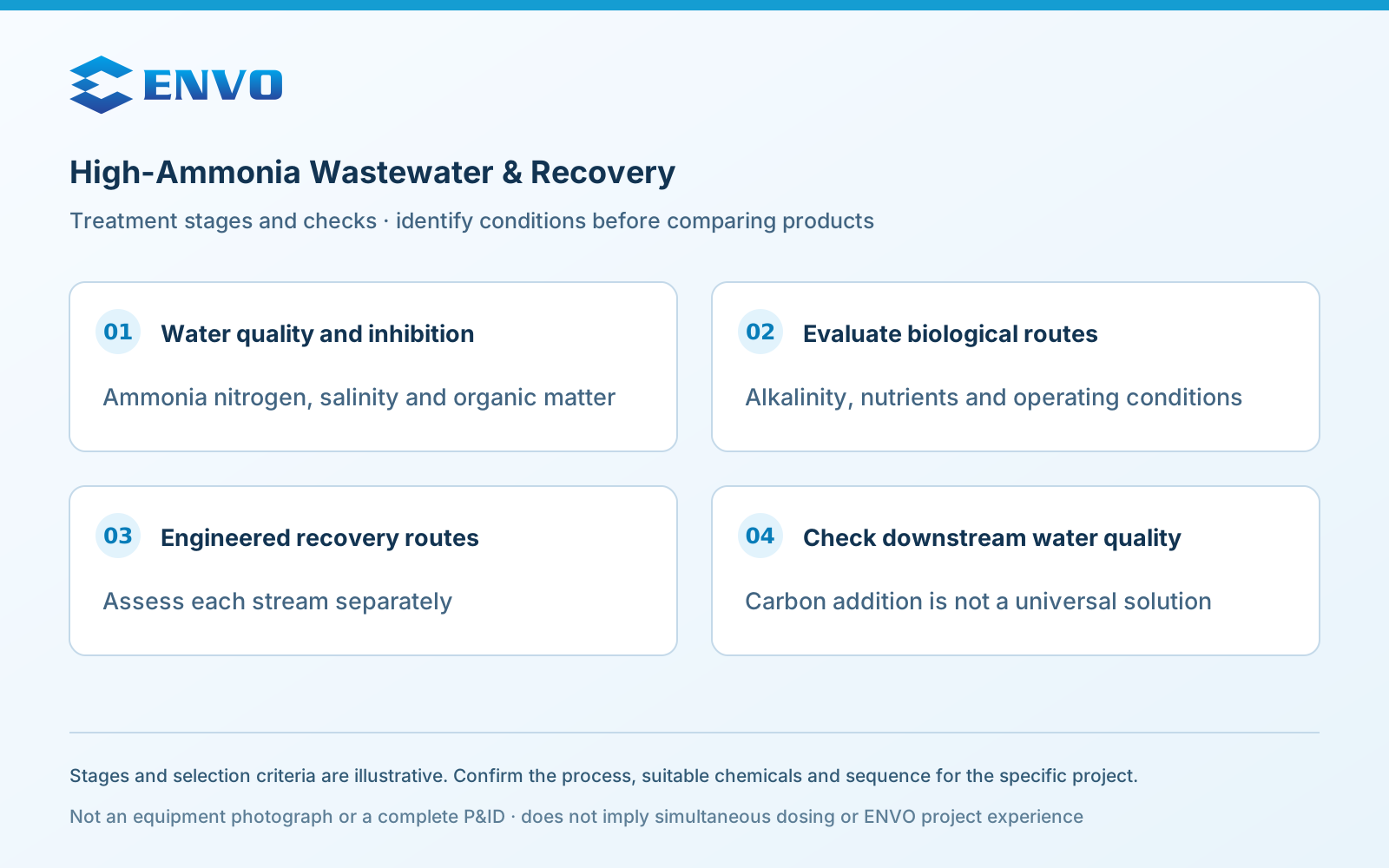
High-Ammonia Wastewater & Recovery: understand the treatment stages first.
First distinguish water suitable for biological nitrogen removal from streams requiring engineered pretreatment or ammonia recovery. Then assess alkalinity, nutrients and any conditional carbon-source requirement.
Swipe horizontally to view the full diagram.
Water quality and inhibitionAmmonia nitrogen, salinity and organic matter
Evaluate biological routesAlkalinity, nutrients and operating conditions
Engineered recovery routesAssess each stream separately
Check downstream water qualityCarbon addition is not a universal solution
Check together during selection
Confirm the biological-reaction and solid–liquid separation stages before selecting carbon sources, alkalinity supplements, phosphorus-removal chemicals and sludge-treatment chemicals. Supporting products are not automatically required.
Compare candidate products below by treatment objective. Evaluate different routes separately; the list does not imply simultaneous dosing.
High-Ammonia Wastewater & Recovery: match requirements to each treatment stage.
Compare treatment objectives, chemical functions and verification criteria stage by stage. Products in the table may be alternatives or serve different stages; they are not necessarily dosed together.
Define influent and objectives first
Share ammoniacal and total nitrogen, alkalinity, salinity, COD, process, targets and the intended use of recovered material. This helps organize biological-treatment and separation support around effluent targets and narrow the product and specification range.
Then confirm assessment limits
Locate the biological reaction and solid–liquid separation steps before selecting carbon sources, alkalinity, phosphorus-removal and sludge chemicals. Supporting options are not necessarily required items.
Compare all treatment routesProduct roles, conditions and verification
High-Ammonia Wastewater & Recovery: treatment objectives and product routes
Treatment objective / stage
Product routes to compare
Function / applicable conditions
Checks before selection
Alkalinity support for biological treatmentBiological treatment & nutrientsFilter by this objective
Evaluate ammonia load, available alkalinity and the biological process together. Influent pH alone does not establish the alkalinity requirement.
View each product's function and conditions
Sodium Bicarbonate
Function:Provides alkalinity or neutralizing capacity. Its role differs from rapid pH adjustment and hardness precipitation. Conditions:Select the acid or alkali from titration demand, buffering capacity, storage and transport, equipment materials and final use. Candidates are alternatives to compare, not instructions to mix them together.
Sodium Carbonate
Function:Provides alkalinity or neutralizing capacity. Its role differs from rapid pH adjustment and hardness precipitation. Conditions:Select the acid or alkali from titration demand, buffering capacity, storage and transport, equipment materials and final use. Candidates are alternatives to compare, not instructions to mix them together.
Calcium Hydroxide
Function:Provides alkalinity or neutralizing capacity. Its role differs from rapid pH adjustment and hardness precipitation. Conditions:Select the acid or alkali from titration demand, buffering capacity, storage and transport, equipment materials and final use. Candidates are alternatives to compare, not instructions to mix them together.
Sodium Hydroxide
Function:Provides alkalinity or neutralizing capacity. Its role differs from rapid pH adjustment and hardness precipitation. Conditions:Select the acid or alkali from titration demand, buffering capacity, storage and transport, equipment materials and final use. Candidates are alternatives to compare, not instructions to mix them together.
Magnesium Hydroxide
Function:Provides alkalinity or neutralizing capacity. Its role differs from rapid pH adjustment and hardness precipitation. Conditions:Select the acid or alkali from titration demand, buffering capacity, storage and transport, equipment materials and final use. Candidates are alternatives to compare, not instructions to mix them together.
View product-specific checks
Sodium Bicarbonate
High-Ammonia Wastewater & Recovery: Actual composition & form; Content basis; Water quality; Equipment materials; End-use requirements; Consider ammoniacal and total nitrogen, alkalinity, salinity, COD, process, targets and the intended use of recovered material.
Sodium Carbonate
High-Ammonia Wastewater & Recovery: Na₂CO₃ content; Insoluble matter; Particle form & bulk density; Impurities; Actual water quality; Consider ammoniacal and total nitrogen, alkalinity, salinity, COD, process, targets and the intended use of recovered material.
Calcium Hydroxide
High-Ammonia Wastewater & Recovery: Actual composition & form; Content basis; Water quality; Equipment materials; End-use requirements; Consider ammoniacal and total nitrogen, alkalinity, salinity, COD, process, targets and the intended use of recovered material.
Sodium Hydroxide
High-Ammonia Wastewater & Recovery: Actual composition & form; Content basis; Water quality; Equipment materials; End-use requirements; Consider ammoniacal and total nitrogen, alkalinity, salinity, COD, process, targets and the intended use of recovered material.
Magnesium Hydroxide
High-Ammonia Wastewater & Recovery: Active Mg(OH)₂ or MgO basis; Solids content; Particle size; Reactivity; Slurry stability; Impurities; Consider ammoniacal and total nitrogen, alkalinity, salinity, COD, process, targets and the intended use of recovered material.
Compare results using representative water samples or site data, retaining the test methods and operating conditions.
Identify limiting nutrients, toxic inputs and operating causes first. Add nutrient or recovery products only where the process assessment supports their use.
View each product's function and conditions
Biological-Treatment Nutrient Formulation
Function:Supplies nutrients where an actual nitrogen, phosphorus or micronutrient deficit exists in the influent; it is not a default addition for all wastewater. Conditions:Have bioavailable carbon, nitrogen and phosphorus analysis and a nutrient-demand assessment available, avoiding added effluent nitrogen or phosphorus loads.
Bioaugmentation Formulations
Function:A supporting formulation route for specified biological treatment recovery or enhancement. Conditions:Define microbial strains/composition, activity and limiting factors. This does not replace investigation of loading, dissolved oxygen, toxicity or nutrient causes.
Sodium Bicarbonate
Function:Adds alkalinity and buffering capacity to maintain biological reaction conditions where an alkalinity deficit has been confirmed. Conditions:Confirm demand from alkalinity, nitrogen conversion or VFA trends. A single pH measurement does not replace system analysis.
Magnesium Hydroxide
Function:Adds alkalinity and buffering capacity to maintain biological reaction conditions where an alkalinity deficit has been confirmed. Conditions:Confirm demand from alkalinity, nitrogen conversion or VFA trends. A single pH measurement does not replace system analysis.
View product-specific checks
Biological-Treatment Nutrient Formulation
High-Ammonia Wastewater & Recovery: Influent nitrogen, phosphorus & carbon balance; Actual composition; Discharge targets; Trials & monitoring; Consider ammoniacal and total nitrogen, alkalinity, salinity, COD, process, targets and the intended use of recovered material.
Bioaugmentation Formulations
High-Ammonia Wastewater & Recovery: Specified microbial strains or composition; Actual limiting factors; Activity & validation method; Operating conditions; Consider ammoniacal and total nitrogen, alkalinity, salinity, COD, process, targets and the intended use of recovered material.
Sodium Bicarbonate
High-Ammonia Wastewater & Recovery: Actual composition & form; Content basis; Water quality; Equipment materials; End-use requirements; Consider ammoniacal and total nitrogen, alkalinity, salinity, COD, process, targets and the intended use of recovered material.
Magnesium Hydroxide
High-Ammonia Wastewater & Recovery: Active Mg(OH)₂ or MgO basis; Solids content; Particle size; Reactivity; Slurry stability; Impurities; Consider ammoniacal and total nitrogen, alkalinity, salinity, COD, process, targets and the intended use of recovered material.
Compare results using representative water samples or site data, retaining the test methods and operating conditions.
External carbon for biological denitrificationBiological treatment & nutrientsFilter by this objective
Assess the denitrification process, readily usable COD, nitrogen load and biomass acclimation. Compare different carbon sources on the same operating basis.
View each product's function and conditions
Sodium Acetate Carbon Source
Function:Provides a bioavailable electron donor for a defined anoxic denitrification stage, compared by effective COD and biological acclimation. Conditions:Select only after defining the nitrate-nitrogen load and carbon deficit. Assess methanol, acetate, glycerol/ethanol and blended carbon sources separately.
Methanol Carbon Source for Denitrification
Function:Provides a bioavailable electron donor for a defined anoxic denitrification stage, compared by effective COD and biological acclimation. Conditions:Select only after defining the nitrate-nitrogen load and carbon deficit. Assess methanol, acetate, glycerol/ethanol and blended carbon sources separately.
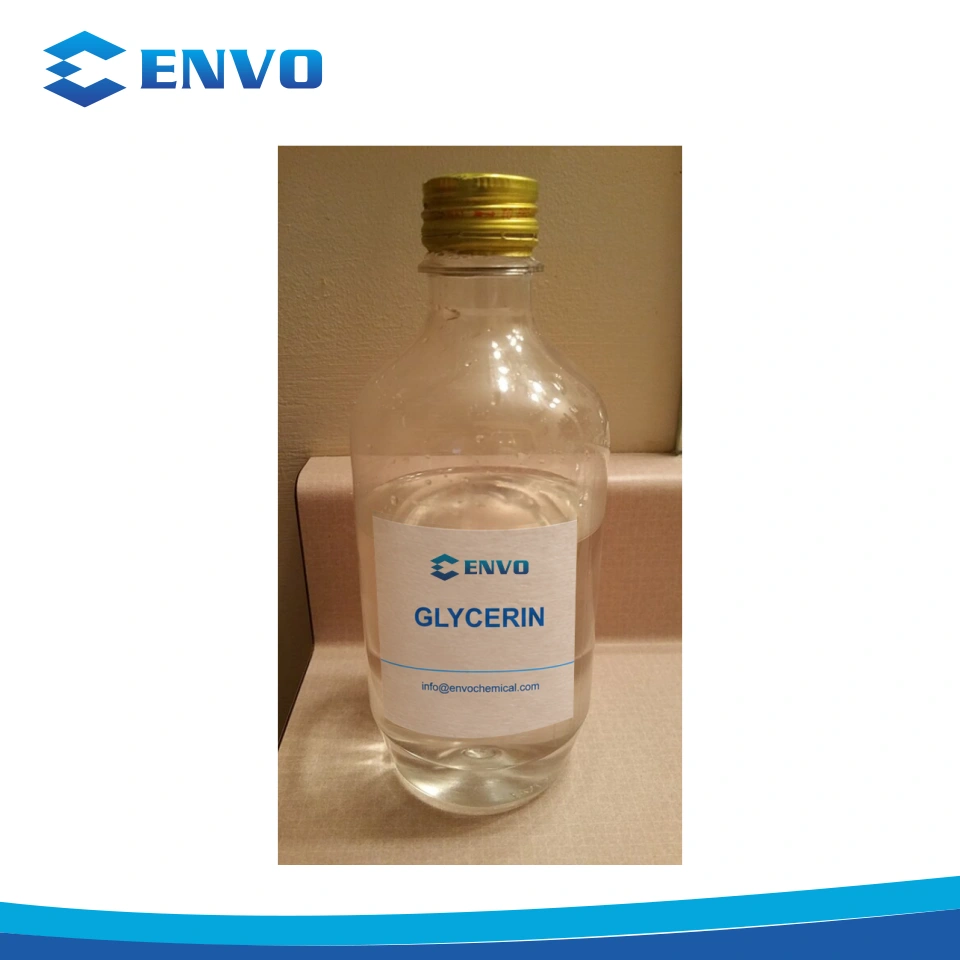
Glycerol & Ethanol Carbon Sources
Function:Provides a bioavailable electron donor for a defined anoxic denitrification stage, compared by effective COD and biological acclimation. Conditions:Select only after defining the nitrate-nitrogen load and carbon deficit. Assess methanol, acetate, glycerol/ethanol and blended carbon sources separately.
Blended External Carbon Source
Function:Provides a bioavailable electron donor for a defined anoxic denitrification stage, compared by effective COD and biological acclimation. Conditions:Select only after defining the nitrate-nitrogen load and carbon deficit. Assess methanol, acetate, glycerol/ethanol and blended carbon sources separately.
View product-specific checks
Sodium Acetate Carbon Source
High-Ammonia Wastewater & Recovery: Bioavailable COD & test method; Composition; Impurities; Biological acclimation; Storage & transport conditions; Consider ammoniacal and total nitrogen, alkalinity, salinity, COD, process, targets and the intended use of recovered material.
Methanol Carbon Source for Denitrification
High-Ammonia Wastewater & Recovery: Bioavailable COD & test method; Composition; Impurities; Biological acclimation; Storage & transport conditions; Consider ammoniacal and total nitrogen, alkalinity, salinity, COD, process, targets and the intended use of recovered material.
Glycerol & Ethanol Carbon Sources
High-Ammonia Wastewater & Recovery: Bioavailable COD & test method; Composition; Impurities; Biological acclimation; Storage & transport conditions; Consider ammoniacal and total nitrogen, alkalinity, salinity, COD, process, targets and the intended use of recovered material.
Blended External Carbon Source
High-Ammonia Wastewater & Recovery: Bioavailable COD & test method; Composition; Impurities; Biological acclimation; Storage & transport conditions; Consider ammoniacal and total nitrogen, alkalinity, salinity, COD, process, targets and the intended use of recovered material.
Compare results using representative water samples or site data, retaining the test methods and operating conditions.
Ammoniacal-nitrogen polishing & recoveryBiological treatment & nutrientsFilter by this objective
Assess biological treatment, adsorption and engineered recovery routes separately. Acids and alkalis serve their specified engineering stages; this does not mean directly mixing them into wastewater or with one another.
View each product's function and conditions
Zeolite Media for Ammonium Adsorption
Function:Provides an ammonium adsorption/exchange route where competing-ion conditions are suitable. Conditions:Define ammoniacal-nitrogen species, salinity, dynamic breakthrough, regeneration and ammonia-bearing waste disposal.
Calcium Hydroxide
Function:Serves only an engineered ammonia-recovery process's alkali-adjustment or separate acid-absorption stage. Conditions:Define the engineered route, such as stripping or membrane contactors, each separate water circuit and off-gas conditions. Do not directly mix acid with ammonia-bearing raw water or alkali.
Sodium Hydroxide
Function:Serves only an engineered ammonia-recovery process's alkali-adjustment or separate acid-absorption stage. Conditions:Define the engineered route, such as stripping or membrane contactors, each separate water circuit and off-gas conditions. Do not directly mix acid with ammonia-bearing raw water or alkali.
Sulfuric Acid
Function:Serves only an engineered ammonia-recovery process's alkali-adjustment or separate acid-absorption stage. Conditions:Define the engineered route, such as stripping or membrane contactors, each separate water circuit and off-gas conditions. Do not directly mix acid with ammonia-bearing raw water or alkali.
View product-specific checks
Zeolite Media for Ammonium Adsorption
High-Ammonia Wastewater & Recovery: Ammoniacal nitrogen species; Competing ions; Material composition; Adsorption & regeneration test methods; Consider ammoniacal and total nitrogen, alkalinity, salinity, COD, process, targets and the intended use of recovered material.
Calcium Hydroxide
High-Ammonia Wastewater & Recovery: Actual composition & form; Content basis; Water quality; Equipment materials; End-use requirements; Consider ammoniacal and total nitrogen, alkalinity, salinity, COD, process, targets and the intended use of recovered material.
Sodium Hydroxide
High-Ammonia Wastewater & Recovery: Actual composition & form; Content basis; Water quality; Equipment materials; End-use requirements; Consider ammoniacal and total nitrogen, alkalinity, salinity, COD, process, targets and the intended use of recovered material.
Sulfuric Acid
High-Ammonia Wastewater & Recovery: Actual composition & form; Content basis; Water quality; Equipment materials; End-use requirements; Consider ammoniacal and total nitrogen, alkalinity, salinity, COD, process, targets and the intended use of recovered material.
Compare results using representative water samples or site data, retaining the test methods and operating conditions.
Need to compare these routes under your operating conditions?Share influent quality, treatment objectives and the existing process to discuss which products and conditions should be validated first.
Process & product matching
Select a treatment objective to explore suitable products.
Different treatment routes may apply. Open the matching notes for each product to review its role, conditions and purchasing criteria.
Locate the biological reaction and solid–liquid separation steps before selecting carbon sources, alkalinity, phosphorus-removal and sludge chemicals. Supporting options are not necessarily required items.
An alkalinity and buffering raw material for biological treatment systems and suitable water-balance requirements.
Why this matchesConditional option
Role
Provides alkalinity or neutralizing capacity. Its role differs from rapid pH adjustment and hardness precipitation.
Conditions
Select the acid or alkali from titration demand, buffering capacity, storage and transport, equipment materials and final use. Candidates are alternatives to compare, not instructions to mix them together.
Before purchase
High-Ammonia Wastewater & Recovery: Actual composition & form; Content basis; Water quality; Equipment materials; End-use requirements; Consider ammoniacal and total nitrogen, alkalinity, salinity, COD, process, targets and the intended use of recovered material.
A carbonate alkali source for suitable pH adjustment, alkalinity support and chemical softening.
Why this matchesConditional option
Role
Provides alkalinity or neutralizing capacity. Its role differs from rapid pH adjustment and hardness precipitation.
Conditions
Select the acid or alkali from titration demand, buffering capacity, storage and transport, equipment materials and final use. Candidates are alternatives to compare, not instructions to mix them together.
Before purchase
High-Ammonia Wastewater & Recovery: Na₂CO₃ content; Insoluble matter; Particle form & bulk density; Impurities; Actual water quality; Consider ammoniacal and total nitrogen, alkalinity, salinity, COD, process, targets and the intended use of recovered material.
A calcium alkali source for suitable neutralization, chemical softening and precipitation treatment.
Why this matchesConditional option
Role
Provides alkalinity or neutralizing capacity. Its role differs from rapid pH adjustment and hardness precipitation.
Conditions
Select the acid or alkali from titration demand, buffering capacity, storage and transport, equipment materials and final use. Candidates are alternatives to compare, not instructions to mix them together.
Before purchase
High-Ammonia Wastewater & Recovery: Actual composition & form; Content basis; Water quality; Equipment materials; End-use requirements; Consider ammoniacal and total nitrogen, alkalinity, salinity, COD, process, targets and the intended use of recovered material.
A common alkali raw material for pH adjustment, certain metal-precipitation steps and specified cleaning or regeneration procedures.
Why this matchesConditional option
Role
Provides alkalinity or neutralizing capacity. Its role differs from rapid pH adjustment and hardness precipitation.
Conditions
Select the acid or alkali from titration demand, buffering capacity, storage and transport, equipment materials and final use. Candidates are alternatives to compare, not instructions to mix them together.
Before purchase
High-Ammonia Wastewater & Recovery: Actual composition & form; Content basis; Water quality; Equipment materials; End-use requirements; Consider ammoniacal and total nitrogen, alkalinity, salinity, COD, process, targets and the intended use of recovered material.
A magnesium alkali source available as powder or slurry for suitable neutralization, alkalinity and precipitation requirements.
Why this matchesConditional option
Role
Provides alkalinity or neutralizing capacity. Its role differs from rapid pH adjustment and hardness precipitation.
Conditions
Select the acid or alkali from titration demand, buffering capacity, storage and transport, equipment materials and final use. Candidates are alternatives to compare, not instructions to mix them together.
Before purchase
High-Ammonia Wastewater & Recovery: Active Mg(OH)₂ or MgO basis; Solids content; Particle size; Reactivity; Slurry stability; Impurities; Consider ammoniacal and total nitrogen, alkalinity, salinity, COD, process, targets and the intended use of recovered material.
Nitrogen, phosphorus or other nutrient formulations for industrial biological treatment with an identified nutrient deficit.
Why this matchesConditional option
Role
Supplies nutrients where an actual nitrogen, phosphorus or micronutrient deficit exists in the influent; it is not a default addition for all wastewater.
Conditions
Have bioavailable carbon, nitrogen and phosphorus analysis and a nutrient-demand assessment available, avoiding added effluent nitrogen or phosphorus loads.
Before purchase
High-Ammonia Wastewater & Recovery: Influent nitrogen, phosphorus & carbon balance; Actual composition; Discharge targets; Trials & monitoring; Consider ammoniacal and total nitrogen, alkalinity, salinity, COD, process, targets and the intended use of recovered material.
Supporting formulations for specified biological treatment recovery and enhancement tasks.
Why this matchesConditional option
Role
A supporting formulation route for specified biological treatment recovery or enhancement.
Conditions
Define microbial strains/composition, activity and limiting factors. This does not replace investigation of loading, dissolved oxygen, toxicity or nutrient causes.
Before purchase
High-Ammonia Wastewater & Recovery: Specified microbial strains or composition; Actual limiting factors; Activity & validation method; Operating conditions; Consider ammoniacal and total nitrogen, alkalinity, salinity, COD, process, targets and the intended use of recovered material.
An acetate-based external carbon source for denitrification with a defined bioavailable-carbon deficit.
Why this matchesConditional option
Role
Provides a bioavailable electron donor for a defined anoxic denitrification stage, compared by effective COD and biological acclimation.
Conditions
Select only after defining the nitrate-nitrogen load and carbon deficit. Assess methanol, acetate, glycerol/ethanol and blended carbon sources separately.
Before purchase
High-Ammonia Wastewater & Recovery: Bioavailable COD & test method; Composition; Impurities; Biological acclimation; Storage & transport conditions; Consider ammoniacal and total nitrogen, alkalinity, salinity, COD, process, targets and the intended use of recovered material.
A methanol-based external carbon source for suitable engineered denitrification procedures.
Why this matchesConditional option
Role
Provides a bioavailable electron donor for a defined anoxic denitrification stage, compared by effective COD and biological acclimation.
Conditions
Select only after defining the nitrate-nitrogen load and carbon deficit. Assess methanol, acetate, glycerol/ethanol and blended carbon sources separately.
Before purchase
High-Ammonia Wastewater & Recovery: Bioavailable COD & test method; Composition; Impurities; Biological acclimation; Storage & transport conditions; Consider ammoniacal and total nitrogen, alkalinity, salinity, COD, process, targets and the intended use of recovered material.
Glycerol- or ethanol-based carbon sources for suitable anoxic denitrification requirements.
Why this matchesConditional option
Role
Provides a bioavailable electron donor for a defined anoxic denitrification stage, compared by effective COD and biological acclimation.
Conditions
Select only after defining the nitrate-nitrogen load and carbon deficit. Assess methanol, acetate, glycerol/ethanol and blended carbon sources separately.
Before purchase
High-Ammonia Wastewater & Recovery: Bioavailable COD & test method; Composition; Impurities; Biological acclimation; Storage & transport conditions; Consider ammoniacal and total nitrogen, alkalinity, salinity, COD, process, targets and the intended use of recovered material.
A blended external carbon source supplying bioavailable carbon for a defined biological nitrogen-removal process.
Why this matchesConditional option
Role
Provides a bioavailable electron donor for a defined anoxic denitrification stage, compared by effective COD and biological acclimation.
Conditions
Select only after defining the nitrate-nitrogen load and carbon deficit. Assess methanol, acetate, glycerol/ethanol and blended carbon sources separately.
Before purchase
High-Ammonia Wastewater & Recovery: Bioavailable COD & test method; Composition; Impurities; Biological acclimation; Storage & transport conditions; Consider ammoniacal and total nitrogen, alkalinity, salinity, COD, process, targets and the intended use of recovered material.
High-Ammonia Wastewater & Recovery: Ammoniacal nitrogen species; Competing ions; Material composition; Adsorption & regeneration test methods; Consider ammoniacal and total nitrogen, alkalinity, salinity, COD, process, targets and the intended use of recovered material.
An acid option for suitable acid–alkali adjustment and specified resin-regeneration procedures.
Why this matchesConditional option
Role
Serves only an engineered ammonia-recovery process's alkali-adjustment or separate acid-absorption stage.
Conditions
Define the engineered route, such as stripping or membrane contactors, each separate water circuit and off-gas conditions. Do not directly mix acid with ammonia-bearing raw water or alkali.
Before purchase
High-Ammonia Wastewater & Recovery: Actual composition & form; Content basis; Water quality; Equipment materials; End-use requirements; Consider ammoniacal and total nitrogen, alkalinity, salinity, COD, process, targets and the intended use of recovered material.
Confirmed available
Let’s review this combination
Try another objective or product type, or send us your operating conditions.
Industry references describe general uses. Product specifications, certifications and application results require the corresponding supplier documentation.
PURCHASING QUESTIONS
More questions, answered.
How should I select water-treatment products for High-Ammonia Wastewater & Recovery?
Biological conversion, adsorption and engineered recovery are different routes. Use ammonia speciation and water quality to identify routes suitable for trials.
What information helps select products for this application?
Share ammoniacal and total nitrogen, alkalinity, salinity, COD, process, targets and the intended use of recovered material. This helps organize biological-treatment and separation support around effluent targets and narrow the product and specification range.
How are the suitable product and grade confirmed?
Locate the biological reaction and solid–liquid separation steps before selecting carbon sources, alkalinity, phosphorus-removal and sludge chemicals. Supporting options are not necessarily required items. No universal dose or treatment result is implied. Product options may serve primary, supporting, conditional or alternative roles.
ENVO CHEMICAL
Discuss your water treatment needs
Share your application, current product or purchasing requirements to discuss a suitable supply option.
Selection, purchasing & documentsShare what you know


 Base chemicals