
Coagulation, flocculation & clarification
Review water source, turbidity or suspended solids, pH, alkalinity and the settling or flotation process. Potable-water applications require product-specific end-use documentation.
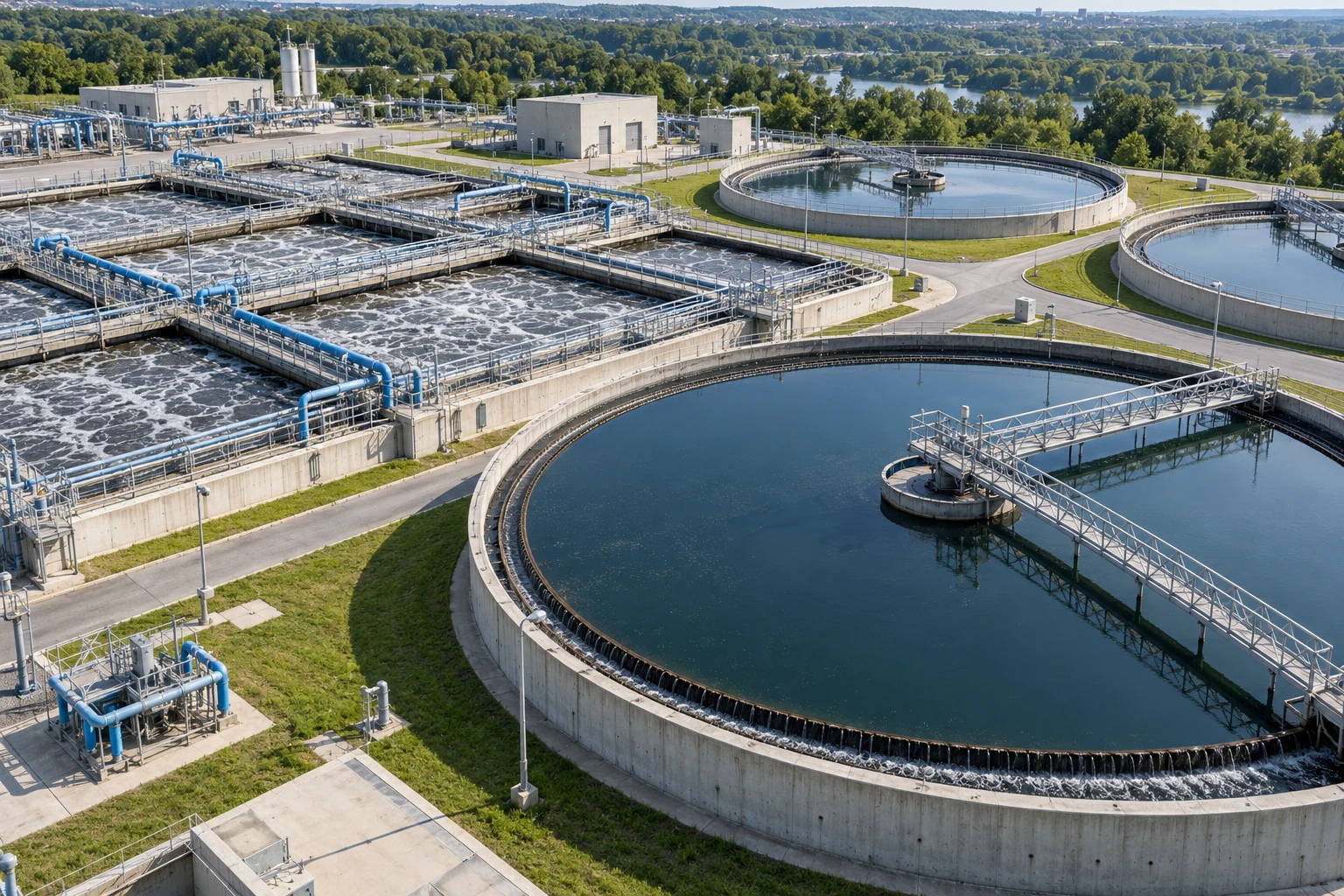
Review process stages, product roles and selection conditions for initial screening and purchasing discussions.
Build a treatment shortlist around water quality, public-water use and the documents needed for the actual product.
Review water source, turbidity or suspended solids, pH, alkalinity and the settling or flotation process. Potable-water applications require product-specific end-use documentation.
Confirm the filter design, particle-size distribution, allowable pressure drop and final water use before selecting a medium or filter aid.
Select the carbon type using target contaminants, test method and contact conditions. Powdered carbon needs a suitable downstream solids-separation step.
Match the chemical to the intended use, generation equipment and monitoring plan. Sodium chlorite is a precursor for an engineered process, not an interchangeable direct chlorine source.
Select the acid or alkali route from the water analysis and process objective. Listed products are alternatives or serve different stages; they are not a combined dosing recipe.
Build a treatment shortlist around water quality, public-water use and the documents needed for the actual product.
Determine dissolved and particulate fractions, oxidation states, oxidation conditions and downstream filtration. Removal cannot be guaranteed from a chemical name alone.
Confirm the filter design, particle-size distribution, allowable pressure drop and final water use before selecting a medium or filter aid.
Select the acid or alkali route from the water analysis and process objective. Listed products are alternatives or serve different stages; they are not a combined dosing recipe.
Build a treatment shortlist around water quality, public-water use and the documents needed for the actual product.
Provide the PFAS profile, background water chemistry, breakthrough criteria and spent-media disposal route. No universal service life or removal claim is implied.
Select the carbon type using target contaminants, test method and contact conditions. Powdered carbon needs a suitable downstream solids-separation step.
Define As(III)/As(V), phosphate, silica, organic matter and preoxidation first. Any general-purpose resin must be shown to have the corresponding arsenic selectivity.
Evaluate fluoride load, pH, competing ions and breakthrough or regeneration behavior. Compare adsorption separately from high-load precipitation routes.
Evaluate nitrate, competing ions such as sulfate and the regenerant-waste route. Regeneration salt serves only the equipment-specified regeneration program.
Select the resin using boron speciation, pH, salinity and coexisting organics. Acids and alkalis serve only the designated regeneration or pH stages and must be reviewed separately.
Build a treatment shortlist around water quality, public-water use and the documents needed for the actual product.
Assess pipe materials, water chemistry, lead/copper objectives and system trials. Verify the documentation for the specific product and potable-water application.
Select the acid or alkali route from the water analysis and process objective. Listed products are alternatives or serve different stages; they are not a combined dosing recipe.
Match the chemical to the intended use, generation equipment and monitoring plan. Sodium chlorite is a precursor for an engineered process, not an interchangeable direct chlorine source.
Build a treatment shortlist around water quality, public-water use and the documents needed for the actual product.
Use only within a defined engineering program and approved end use. Ammonia sources and chlorine sources have different roles; this website does not provide preparation or blending instructions.
Confirm local policy and project requirements before reviewing the salt form, product documentation and monitoring. Fluoridation is not a default step for all water supplies.
Build a treatment shortlist around water quality, public-water use and the documents needed for the actual product.
Review water source, turbidity or suspended solids, pH, alkalinity and the settling or flotation process. Potable-water applications require product-specific end-use documentation.
Confirm the filter design, particle-size distribution, allowable pressure drop and final water use before selecting a medium or filter aid.
Match the chemical to the intended use, generation equipment and monitoring plan. Sodium chlorite is a precursor for an engineered process, not an interchangeable direct chlorine source.
Select the carbon type using target contaminants, test method and contact conditions. Powdered carbon needs a suitable downstream solids-separation step.
Connect the raw-water problem with the right clarification, softening, ion-exchange or media route before comparing supply specifications.
Review water source, turbidity or suspended solids, pH, alkalinity and the settling or flotation process. Potable-water applications require product-specific end-use documentation.
Confirm the filter design, particle-size distribution, allowable pressure drop and final water use before selecting a medium or filter aid.
Select the acid or alkali route from the water analysis and process objective. Listed products are alternatives or serve different stages; they are not a combined dosing recipe.
Connect the raw-water problem with the right clarification, softening, ion-exchange or media route before comparing supply specifications.
Distinguish lime–soda precipitation from ion-exchange softening. Regeneration salt and resin serve different functions.
Select the acid or alkali route from the water analysis and process objective. Listed products are alternatives or serve different stages; they are not a combined dosing recipe.
Review the medium source, solids content, particle characteristics, return water and equipment. Compare using representative sample trials.
Connect the raw-water problem with the right clarification, softening, ion-exchange or media route before comparing supply specifications.
Softening resin performs ion exchange; regeneration salt serves its specified regeneration step. Lime-precipitation chemicals do not belong in an operating resin bed.
Connect the raw-water problem with the right clarification, softening, ion-exchange or media route before comparing supply specifications.
Review resin type and ionic form, feedwater, contaminants and the regeneration program. High-purity applications require appropriate impurity and rinse-performance documentation.
Choose the formulation from foulant analysis and the membrane manufacturer’s procedure. Acid and alkaline cleaners serve different needs and must not be treated as a mixed recipe.
Connect the raw-water problem with the right clarification, softening, ion-exchange or media route before comparing supply specifications.
Confirm cartridge loading, dimensions, dissolution, composition and final water use. Polyphosphate-ball media do not replace an RO antiscalant program.
Connect the raw-water problem with the right clarification, softening, ion-exchange or media route before comparing supply specifications.
Use only in an evaluated precipitation-softening route. Compare silica form, magnesium-source reactivity, temperature and solids separation; a magnesium ingredient is not a ready-to-use silica-removal formulation.
Distinguish dissolved reactive silica from colloidal silica before selecting a strong-base anion resin or demineralization route. Alkali serves only the approved regeneration program.
Confirm the filter design, particle-size distribution, allowable pressure drop and final water use before selecting a medium or filter aid.
Balance deposit control, corrosion protection and microbial management with the materials and operating conditions of the actual loop.
Distinguish a finished treatment formulation from formulation raw materials. Review makeup water, concentration cycles, metallurgy, temperature and discharge requirements.
Distinguish active substances by their actual registered use and material compatibility. Industrial chemicals cannot be used directly as drinking-water or liquid-cooling chemicals.
Define the cleaning objective, formulation and materials. Chelants control metal ions; they do not establish the separation of contaminant metals from wastewater.
Assess the foam source, temperature and biological, membrane or coating process. Selection must consider downstream effects as well as initial foam knockdown.
Balance deposit control, corrosion protection and microbial management with the materials and operating conditions of the actual loop.
Check system design, metals, seals and equipment-manufacturer requirements. Open cooling-tower chemistry must not be transferred directly to a closed loop.
Define the cleaning objective, formulation and materials. Chelants control metal ions; they do not establish the separation of contaminant metals from wastewater.
Balance deposit control, corrosion protection and microbial management with the materials and operating conditions of the actual loop.
Check system design, metals, seals and equipment-manufacturer requirements. Open cooling-tower chemistry must not be transferred directly to a closed loop.
Distinguish a finished treatment formulation from formulation raw materials. Review makeup water, concentration cycles, metallurgy, temperature and discharge requirements.
Distinguish active substances by their actual registered use and material compatibility. Industrial chemicals cannot be used directly as drinking-water or liquid-cooling chemicals.
Define the cleaning objective, formulation and materials. Chelants control metal ions; they do not establish the separation of contaminant metals from wastewater.
Balance deposit control, corrosion protection and microbial management with the materials and operating conditions of the actual loop.
Distinguish a finished treatment formulation from formulation raw materials. Review makeup water, concentration cycles, metallurgy, temperature and discharge requirements.
Check system design, metals, seals and equipment-manufacturer requirements. Open cooling-tower chemistry must not be transferred directly to a closed loop.
Distinguish active substances by their actual registered use and material compatibility. Industrial chemicals cannot be used directly as drinking-water or liquid-cooling chemicals.
Balance deposit control, corrosion protection and microbial management with the materials and operating conditions of the actual loop.
Use the equipment manufacturer's specified formulation, materials and inspection documents. Before suitability is confirmed, do not offer a generic corrosion inhibitor or industrial-grade ethylene glycol as a substitute.
Coordinate feedwater, boiler and condensate chemistry around the pressure, steam purity and final steam use.
Distinguish lime–soda precipitation from ion-exchange softening. Regeneration salt and resin serve different functions.
Select the formulation for boiler pressure, temperature, steam purity and steam use. Different boiler systems do not share one universal oxygen-scavenger specification.
Assess boiler type and water/steam limits. Identify individual ingredients separately from finished internal-treatment formulations.
Coordinate feedwater, boiler and condensate chemistry around the pressure, steam purity and final steam use.
Review resin type and ionic form, feedwater, contaminants and the regeneration program. High-purity applications require appropriate impurity and rinse-performance documentation.
Follow the high-purity water/steam program and equipment documentation. Sulfite-based formulations are not a default recommendation for this application.
Review the specific amine or film-forming formulation, steam use and system validation. Food- or pharmaceutical-contact uses require separate checks.
Coordinate feedwater, boiler and condensate chemistry around the pressure, steam purity and final steam use.
Review the specific amine or film-forming formulation, steam use and system validation. Food- or pharmaceutical-contact uses require separate checks.
Select the formulation for boiler pressure, temperature, steam purity and steam use. Different boiler systems do not share one universal oxygen-scavenger specification.
Coordinate feedwater, boiler and condensate chemistry around the pressure, steam purity and final steam use.
Define the cleaning objective, formulation and materials. Chelants control metal ions; they do not establish the separation of contaminant metals from wastewater.
Select the formulation for boiler pressure, temperature, steam purity and steam use. Different boiler systems do not share one universal oxygen-scavenger specification.
Review the specific amine or film-forming formulation, steam use and system validation. Food- or pharmaceutical-contact uses require separate checks.
Protect the intended membrane process by separating pretreatment, scale inhibition, cleaning and maintenance requirements.
Coagulant suitability depends on pretreatment, downstream filtration and membrane-manufacturer requirements. Polymer carryover may foul or affect RO membranes.
Specify how the oxidant is measured, the treatment location, monitoring method and downstream use. Reducing agents are not automatically interchangeable.
Review complete ion analysis, membrane model, recovery rate and concentrate scaling risk. Raw materials do not automatically qualify as membrane treatment formulations.
Protect the intended membrane process by separating pretreatment, scale inhibition, cleaning and maintenance requirements.
Review complete ion analysis, membrane model, recovery rate and concentrate scaling risk. Raw materials do not automatically qualify as membrane treatment formulations.
Specify how the oxidant is measured, the treatment location, monitoring method and downstream use. Reducing agents are not automatically interchangeable.
Choose the formulation from foulant analysis and the membrane manufacturer’s procedure. Acid and alkaline cleaners serve different needs and must not be treated as a mixed recipe.
Verify the exact membrane, chemical compatibility and online, shutdown or storage program. A general industrial biocide is not a direct substitute.
Protect the intended membrane process by separating pretreatment, scale inhibition, cleaning and maintenance requirements.
Coagulant suitability depends on pretreatment, downstream filtration and membrane-manufacturer requirements. Polymer carryover may foul or affect RO membranes.
Specify how the oxidant is measured, the treatment location, monitoring method and downstream use. Reducing agents are not automatically interchangeable.
Review complete ion analysis, membrane model, recovery rate and concentrate scaling risk. Raw materials do not automatically qualify as membrane treatment formulations.
Choose the formulation from foulant analysis and the membrane manufacturer’s procedure. Acid and alkaline cleaners serve different needs and must not be treated as a mixed recipe.
Verify the exact membrane, chemical compatibility and online, shutdown or storage program. A general industrial biocide is not a direct substitute.
Protect the intended membrane process by separating pretreatment, scale inhibition, cleaning and maintenance requirements.
Review water source, turbidity or suspended solids, pH, alkalinity and the settling or flotation process. Potable-water applications require product-specific end-use documentation.
Follow the module and membrane-material operating limits. Oxidant use permitted for a UF membrane must not be assumed acceptable for polyamide RO.
Protect the intended membrane process by separating pretreatment, scale inhibition, cleaning and maintenance requirements.
Choose the formulation from foulant analysis and the membrane manufacturer’s procedure. Acid and alkaline cleaners serve different needs and must not be treated as a mixed recipe.
Verify the exact membrane, chemical compatibility and online, shutdown or storage program. A general industrial biocide is not a direct substitute.
Protect the intended membrane process by separating pretreatment, scale inhibition, cleaning and maintenance requirements.
Choose the engineering route from the actual water chemistry, stability target and final use. Confirm product-specific end-use documentation.
Assess pipe materials, water chemistry, lead/copper objectives and system trials. Verify the documentation for the specific product and potable-water application.
Protect the intended membrane process by separating pretreatment, scale inhibition, cleaning and maintenance requirements.
Assess the denitrification process, readily usable COD, nitrogen load and biomass acclimation. Compare different carbon sources on the same operating basis.
Evaluate ammonia load, available alkalinity and the biological process together. Influent pH alone does not establish the alkalinity requirement.
Identify limiting nutrients, toxic inputs and operating causes first. Add nutrient or recovery products only where the process assessment supports their use.
Review phosphorus speciation, alkalinity, sludge and solid–liquid separation conditions. Not all chemicals or processes are interchangeable.
Follow membrane-material limits and the module manufacturer’s approved program. Separate the operating bioreactor, offline cleaning and return to service. Evaluate both membrane and biological compatibility of defoamers.
Review the medium source, solids content, particle characteristics, return water and equipment. Compare using representative sample trials.
Match chemical support to the existing treatment stage, nutrient balance and downstream solids separation.
Review water source, turbidity or suspended solids, pH, alkalinity and the settling or flotation process. Potable-water applications require product-specific end-use documentation.
Review the medium source, solids content, particle characteristics, return water and equipment. Compare using representative sample trials.
Select the acid or alkali route from the water analysis and process objective. Listed products are alternatives or serve different stages; they are not a combined dosing recipe.
Assess the foam source, temperature and biological, membrane or coating process. Selection must consider downstream effects as well as initial foam knockdown.
Match chemical support to the existing treatment stage, nutrient balance and downstream solids separation.
Review phosphorus speciation, alkalinity, sludge and solid–liquid separation conditions. Not all chemicals or processes are interchangeable.
Review the medium source, solids content, particle characteristics, return water and equipment. Compare using representative sample trials.
Select the acid or alkali route from the water analysis and process objective. Listed products are alternatives or serve different stages; they are not a combined dosing recipe.
Match chemical support to the existing treatment stage, nutrient balance and downstream solids separation.
Assess the denitrification process, readily usable COD, nitrogen load and biomass acclimation. Compare different carbon sources on the same operating basis.
Identify limiting nutrients, toxic inputs and operating causes first. Add nutrient or recovery products only where the process assessment supports their use.
Match chemical support to the existing treatment stage, nutrient balance and downstream solids separation.
Evaluate ammonia load, available alkalinity and the biological process together. Influent pH alone does not establish the alkalinity requirement.
Identify limiting nutrients, toxic inputs and operating causes first. Add nutrient or recovery products only where the process assessment supports their use.
Match chemical support to the existing treatment stage, nutrient balance and downstream solids separation.
Review the medium source, solids content, particle characteristics, return water and equipment. Compare using representative sample trials.
Select the acid or alkali route from the water analysis and process objective. Listed products are alternatives or serve different stages; they are not a combined dosing recipe.
Match chemical support to the existing treatment stage, nutrient balance and downstream solids separation.
Match the chemical to the intended use, generation equipment and monitoring plan. Sodium chlorite is a precursor for an engineered process, not an interchangeable direct chlorine source.
Treat the product as a candidate only when its specific formulation and engineered end use have been confirmed. It is not a direct substitute for every chlorine treatment procedure.
Specify how the oxidant is measured, the treatment location, monitoring method and downstream use. Reducing agents are not automatically interchangeable.
Match chemical support to the existing treatment stage, nutrient balance and downstream solids separation.
Identify sulfide sources, hydraulics, enclosed spaces, nitrogen loading and a verification method. Alternative treatment routes are not a mixed-chemical recipe.
Select the acid or alkali route from the water analysis and process objective. Listed products are alternatives or serve different stages; they are not a combined dosing recipe.
Match chemical support to the existing treatment stage, nutrient balance and downstream solids separation.
Evaluate ammonia load, available alkalinity and the biological process together. Influent pH alone does not establish the alkalinity requirement.
Identify limiting nutrients, toxic inputs and operating causes first. Add nutrient or recovery products only where the process assessment supports their use.
Assess the denitrification process, readily usable COD, nitrogen load and biomass acclimation. Compare different carbon sources on the same operating basis.
Assess biological treatment, adsorption and engineered recovery routes separately. Acids and alkalis serve their specified engineering stages; this does not mean directly mixing them into wastewater or with one another.
Match chemical support to the existing treatment stage, nutrient balance and downstream solids separation.
Assess the denitrification process, readily usable COD, nitrogen load and biomass acclimation. Compare different carbon sources on the same operating basis.
Evaluate ammonia load, available alkalinity and the biological process together. Influent pH alone does not establish the alkalinity requirement.
Review phosphorus speciation, alkalinity, sludge and solid–liquid separation conditions. Not all chemicals or processes are interchangeable.
Identify limiting nutrients, toxic inputs and operating causes first. Add nutrient or recovery products only where the process assessment supports their use.
Review the medium source, solids content, particle characteristics, return water and equipment. Compare using representative sample trials.
Assess the foam source, temperature and biological, membrane or coating process. Selection must consider downstream effects as well as initial foam knockdown.
Match chemical support to the existing treatment stage, nutrient balance and downstream solids separation.
Assess the denitrification process, readily usable COD, nitrogen load and biomass acclimation. Compare different carbon sources on the same operating basis.
Evaluate ammonia load, available alkalinity and the biological process together. Influent pH alone does not establish the alkalinity requirement.
Identify limiting nutrients, toxic inputs and operating causes first. Add nutrient or recovery products only where the process assessment supports their use.
Review phosphorus speciation, alkalinity, sludge and solid–liquid separation conditions. Not all chemicals or processes are interchangeable.
Assess the foam source, temperature and biological, membrane or coating process. Selection must consider downstream effects as well as initial foam knockdown.
Improve the basis for slurry-treatment selection by connecting particle behavior, separation equipment and return-water needs.
Review the medium source, solids content, particle characteristics, return water and equipment. Compare using representative sample trials.
Distinguish a finished treatment formulation from formulation raw materials. Review makeup water, concentration cycles, metallurgy, temperature and discharge requirements.
Improve the basis for slurry-treatment selection by connecting particle behavior, separation equipment and return-water needs.
Review the medium source, solids content, particle characteristics, return water and equipment. Compare using representative sample trials.
Review water source, turbidity or suspended solids, pH, alkalinity and the settling or flotation process. Potable-water applications require product-specific end-use documentation.
Select the acid or alkali route from the water analysis and process objective. Listed products are alternatives or serve different stages; they are not a combined dosing recipe.
Improve the basis for slurry-treatment selection by connecting particle behavior, separation equipment and return-water needs.
Select the acid or alkali route from the water analysis and process objective. Listed products are alternatives or serve different stages; they are not a combined dosing recipe.
Metal type, oxidation state and complexation state determine the route. Chelated metals require a separate decomplexation assessment.
Review the medium source, solids content, particle characteristics, return water and equipment. Compare using representative sample trials.
Improve the basis for slurry-treatment selection by connecting particle behavior, separation equipment and return-water needs.
Review the medium source, solids content, particle characteristics, return water and equipment. Compare using representative sample trials.
Distinguish a finished treatment formulation from formulation raw materials. Review makeup water, concentration cycles, metallurgy, temperature and discharge requirements.
Select the acid or alkali route from the water analysis and process objective. Listed products are alternatives or serve different stages; they are not a combined dosing recipe.
Assess the foam source, temperature and biological, membrane or coating process. Selection must consider downstream effects as well as initial foam knockdown.
Distinguish oil separation, solids control and system protection for the specific produced-water or industrial-water circuit.
Identify free versus emulsified oil, surfactants and separation equipment. Compare demulsification and subsequent coagulation/separation using representative wastewater.
Review water source, turbidity or suspended solids, pH, alkalinity and the settling or flotation process. Potable-water applications require product-specific end-use documentation.
Assess the foam source, temperature and biological, membrane or coating process. Selection must consider downstream effects as well as initial foam knockdown.
Distinguish oil separation, solids control and system protection for the specific produced-water or industrial-water circuit.
Identify free versus emulsified oil, surfactants and separation equipment. Compare demulsification and subsequent coagulation/separation using representative wastewater.
Review the medium source, solids content, particle characteristics, return water and equipment. Compare using representative sample trials.
Distinguish a finished treatment formulation from formulation raw materials. Review makeup water, concentration cycles, metallurgy, temperature and discharge requirements.
Distinguish active substances by their actual registered use and material compatibility. Industrial chemicals cannot be used directly as drinking-water or liquid-cooling chemicals.
Distinguish oil separation, solids control and system protection for the specific produced-water or industrial-water circuit.
Review the medium source, solids content, particle characteristics, return water and equipment. Compare using representative sample trials.
Distinguish a finished treatment formulation from formulation raw materials. Review makeup water, concentration cycles, metallurgy, temperature and discharge requirements.
Distinguish active substances by their actual registered use and material compatibility. Industrial chemicals cannot be used directly as drinking-water or liquid-cooling chemicals.
Use an injection-water-specific formulation and validate formation compatibility. Suitability established for a boiler program does not transfer automatically to reinjection.
Distinguish oil separation, solids control and system protection for the specific produced-water or industrial-water circuit.
Identify free versus emulsified oil, surfactants and separation equipment. Compare demulsification and subsequent coagulation/separation using representative wastewater.
Review water source, turbidity or suspended solids, pH, alkalinity and the settling or flotation process. Potable-water applications require product-specific end-use documentation.
Separate coagulation and adsorption routes from advanced oxidation. Confirm applicability, by-products and downstream compatibility by testing.
Identify limiting nutrients, toxic inputs and operating causes first. Add nutrient or recovery products only where the process assessment supports their use.
Assess the foam source, temperature and biological, membrane or coating process. Selection must consider downstream effects as well as initial foam knockdown.
Account for changing process streams, contaminant forms and downstream treatment before choosing the chemical route.
Separate coagulation and adsorption routes from advanced oxidation. Confirm applicability, by-products and downstream compatibility by testing.
Review water source, turbidity or suspended solids, pH, alkalinity and the settling or flotation process. Potable-water applications require product-specific end-use documentation.
Select the acid or alkali route from the water analysis and process objective. Listed products are alternatives or serve different stages; they are not a combined dosing recipe.
Identify limiting nutrients, toxic inputs and operating causes first. Add nutrient or recovery products only where the process assessment supports their use.
Assess the foam source, temperature and biological, membrane or coating process. Selection must consider downstream effects as well as initial foam knockdown.
Account for changing process streams, contaminant forms and downstream treatment before choosing the chemical route.
Compare reducing agents only when hexavalent chromium is detected and a reduction route has been selected. Select trivalent-chromium precipitation, pH adjustment and downstream separation separately.
Metal type, oxidation state and complexation state determine the route. Chelated metals require a separate decomplexation assessment.
Review water source, turbidity or suspended solids, pH, alkalinity and the settling or flotation process. Potable-water applications require product-specific end-use documentation.
Identify limiting nutrients, toxic inputs and operating causes first. Add nutrient or recovery products only where the process assessment supports their use.
Assess the foam source, temperature and biological, membrane or coating process. Selection must consider downstream effects as well as initial foam knockdown.
Account for changing process streams, contaminant forms and downstream treatment before choosing the chemical route.
Review water source, turbidity or suspended solids, pH, alkalinity and the settling or flotation process. Potable-water applications require product-specific end-use documentation.
Review the medium source, solids content, particle characteristics, return water and equipment. Compare using representative sample trials.
Separate coagulation and adsorption routes from advanced oxidation. Confirm applicability, by-products and downstream compatibility by testing.
Distinguish active substances by their actual registered use and material compatibility. Industrial chemicals cannot be used directly as drinking-water or liquid-cooling chemicals.
Assess the foam source, temperature and biological, membrane or coating process. Selection must consider downstream effects as well as initial foam knockdown.
Account for changing process streams, contaminant forms and downstream treatment before choosing the chemical route.
Review paint chemistry, detackification, coagulation, sludge separation and recirculating-water requirements as distinct selection criteria.
Select the acid or alkali route from the water analysis and process objective. Listed products are alternatives or serve different stages; they are not a combined dosing recipe.
Assess the foam source, temperature and biological, membrane or coating process. Selection must consider downstream effects as well as initial foam knockdown.
Account for changing process streams, contaminant forms and downstream treatment before choosing the chemical route.
Review the medium source, solids content, particle characteristics, return water and equipment. Compare using representative sample trials.
Review water source, turbidity or suspended solids, pH, alkalinity and the settling or flotation process. Potable-water applications require product-specific end-use documentation.
Select the acid or alkali route from the water analysis and process objective. Listed products are alternatives or serve different stages; they are not a combined dosing recipe.
Account for changing process streams, contaminant forms and downstream treatment before choosing the chemical route.
Select the acid or alkali route from the water analysis and process objective. Listed products are alternatives or serve different stages; they are not a combined dosing recipe.
Review the medium source, solids content, particle characteristics, return water and equipment. Compare using representative sample trials.
Review water source, turbidity or suspended solids, pH, alkalinity and the settling or flotation process. Potable-water applications require product-specific end-use documentation.
Account for changing process streams, contaminant forms and downstream treatment before choosing the chemical route.
Identify free versus emulsified oil, surfactants and separation equipment. Compare demulsification and subsequent coagulation/separation using representative wastewater.
Review water source, turbidity or suspended solids, pH, alkalinity and the settling or flotation process. Potable-water applications require product-specific end-use documentation.
Identify limiting nutrients, toxic inputs and operating causes first. Add nutrient or recovery products only where the process assessment supports their use.
Evaluate ammonia load, available alkalinity and the biological process together. Influent pH alone does not establish the alkalinity requirement.
Select the carbon type using target contaminants, test method and contact conditions. Powdered carbon needs a suitable downstream solids-separation step.
Assess the foam source, temperature and biological, membrane or coating process. Selection must consider downstream effects as well as initial foam knockdown.
Account for changing process streams, contaminant forms and downstream treatment before choosing the chemical route.
Identify free versus emulsified oil, surfactants and separation equipment. Compare demulsification and subsequent coagulation/separation using representative wastewater.
Review water source, turbidity or suspended solids, pH, alkalinity and the settling or flotation process. Potable-water applications require product-specific end-use documentation.
Identify limiting nutrients, toxic inputs and operating causes first. Add nutrient or recovery products only where the process assessment supports their use.
Evaluate ammonia load, available alkalinity and the biological process together. Influent pH alone does not establish the alkalinity requirement.
Select the carbon type using target contaminants, test method and contact conditions. Powdered carbon needs a suitable downstream solids-separation step.
Review complete ion analysis, membrane model, recovery rate and concentrate scaling risk. Raw materials do not automatically qualify as membrane treatment formulations.
Assess the foam source, temperature and biological, membrane or coating process. Selection must consider downstream effects as well as initial foam knockdown.
Account for changing process streams, contaminant forms and downstream treatment before choosing the chemical route.
Identify free versus emulsified oil, surfactants and separation equipment. Compare demulsification and subsequent coagulation/separation using representative wastewater.
Review water source, turbidity or suspended solids, pH, alkalinity and the settling or flotation process. Potable-water applications require product-specific end-use documentation.
Metal type, oxidation state and complexation state determine the route. Chelated metals require a separate decomplexation assessment.
Identify limiting nutrients, toxic inputs and operating causes first. Add nutrient or recovery products only where the process assessment supports their use.
Separate coagulation and adsorption routes from advanced oxidation. Confirm applicability, by-products and downstream compatibility by testing.
Assess the foam source, temperature and biological, membrane or coating process. Selection must consider downstream effects as well as initial foam knockdown.
Review complete ion analysis, membrane model, recovery rate and concentrate scaling risk. Raw materials do not automatically qualify as membrane treatment formulations.
Account for changing process streams, contaminant forms and downstream treatment before choosing the chemical route.
Check volatile fatty acids, alkalinity, loading and inhibitory inputs first. Add nutrients or recovery aids for an identified gap; do not default to denitrification carbon addition in a high-COD anaerobic reactor.
Assess the foam source, temperature and biological, membrane or coating process. Selection must consider downstream effects as well as initial foam knockdown.
Review the medium source, solids content, particle characteristics, return water and equipment. Compare using representative sample trials.
Identify metal and contaminant forms first, then connect the reaction step with reliable solids separation and sludge handling.
Metal type, oxidation state and complexation state determine the route. Chelated metals require a separate decomplexation assessment.
Identify the complexing agents and metal forms before comparing verifiable treatment routes. No universal decomplexation rate is claimed.
Compare reducing agents only when hexavalent chromium is detected and a reduction route has been selected. Select trivalent-chromium precipitation, pH adjustment and downstream separation separately.
Select the acid or alkali route from the water analysis and process objective. Listed products are alternatives or serve different stages; they are not a combined dosing recipe.
Review the medium source, solids content, particle characteristics, return water and equipment. Compare using representative sample trials.
Identify metal and contaminant forms first, then connect the reaction step with reliable solids separation and sludge handling.
Identify free versus emulsified oil, surfactants and separation equipment. Compare demulsification and subsequent coagulation/separation using representative wastewater.
Metal type, oxidation state and complexation state determine the route. Chelated metals require a separate decomplexation assessment.
Review water source, turbidity or suspended solids, pH, alkalinity and the settling or flotation process. Potable-water applications require product-specific end-use documentation.
Assess the foam source, temperature and biological, membrane or coating process. Selection must consider downstream effects as well as initial foam knockdown.
Identify metal and contaminant forms first, then connect the reaction step with reliable solids separation and sludge handling.
Metal type, oxidation state and complexation state determine the route. Chelated metals require a separate decomplexation assessment.
Identify the complexing agents and metal forms before comparing verifiable treatment routes. No universal decomplexation rate is claimed.
Select the acid or alkali route from the water analysis and process objective. Listed products are alternatives or serve different stages; they are not a combined dosing recipe.
Review the medium source, solids content, particle characteristics, return water and equipment. Compare using representative sample trials.
Identify metal and contaminant forms first, then connect the reaction step with reliable solids separation and sludge handling.
Evaluate fluoride species, calcium demand and the treated-water target. Do not assume that a general ion-exchange resin is a fluoride-removal resin.
Metal type, oxidation state and complexation state determine the route. Chelated metals require a separate decomplexation assessment.
Identify the complexing agents and metal forms before comparing verifiable treatment routes. No universal decomplexation rate is claimed.
Select the acid or alkali route from the water analysis and process objective. Listed products are alternatives or serve different stages; they are not a combined dosing recipe.
Review the medium source, solids content, particle characteristics, return water and equipment. Compare using representative sample trials.
Identify metal and contaminant forms first, then connect the reaction step with reliable solids separation and sludge handling.
Compare reducing agents only when hexavalent chromium is detected and a reduction route has been selected. Select trivalent-chromium precipitation, pH adjustment and downstream separation separately.
Metal type, oxidation state and complexation state determine the route. Chelated metals require a separate decomplexation assessment.
Review the medium source, solids content, particle characteristics, return water and equipment. Compare using representative sample trials.
Identify metal and contaminant forms first, then connect the reaction step with reliable solids separation and sludge handling.
Review only within controlled engineering and professional assessment. Distinguish free from complexed cyanide and assess side reactions. Cyanide-bearing water must not be directly mixed with acid.
Follow professional engineering documentation. Hydrochloric acid, sulfuric acid and other acid sources are not recommended in this treatment requirement.
Review the medium source, solids content, particle characteristics, return water and equipment. Compare using representative sample trials.
Select wastewater chemicals around fats, solids, biological loading and process variations in the actual production stream.
Identify free versus emulsified oil, surfactants and separation equipment. Compare demulsification and subsequent coagulation/separation using representative wastewater.
Review water source, turbidity or suspended solids, pH, alkalinity and the settling or flotation process. Potable-water applications require product-specific end-use documentation.
Identify limiting nutrients, toxic inputs and operating causes first. Add nutrient or recovery products only where the process assessment supports their use.
Review phosphorus speciation, alkalinity, sludge and solid–liquid separation conditions. Not all chemicals or processes are interchangeable.
Assess the foam source, temperature and biological, membrane or coating process. Selection must consider downstream effects as well as initial foam knockdown.
Select wastewater chemicals around fats, solids, biological loading and process variations in the actual production stream.
Select the acid or alkali route from the water analysis and process objective. Listed products are alternatives or serve different stages; they are not a combined dosing recipe.
Identify limiting nutrients, toxic inputs and operating causes first. Add nutrient or recovery products only where the process assessment supports their use.
Assess the denitrification process, readily usable COD, nitrogen load and biomass acclimation. Compare different carbon sources on the same operating basis.
Assess the foam source, temperature and biological, membrane or coating process. Selection must consider downstream effects as well as initial foam knockdown.
Review the medium source, solids content, particle characteristics, return water and equipment. Compare using representative sample trials.
Select wastewater chemicals around fats, solids, biological loading and process variations in the actual production stream.
Identify free versus emulsified oil, surfactants and separation equipment. Compare demulsification and subsequent coagulation/separation using representative wastewater.
Review water source, turbidity or suspended solids, pH, alkalinity and the settling or flotation process. Potable-water applications require product-specific end-use documentation.
Review the medium source, solids content, particle characteristics, return water and equipment. Compare using representative sample trials.
Match the chemical to the intended use, generation equipment and monitoring plan. Sodium chlorite is a precursor for an engineered process, not an interchangeable direct chlorine source.
Assess the foam source, temperature and biological, membrane or coating process. Selection must consider downstream effects as well as initial foam knockdown.
Select wastewater chemicals around fats, solids, biological loading and process variations in the actual production stream.
Review water source, turbidity or suspended solids, pH, alkalinity and the settling or flotation process. Potable-water applications require product-specific end-use documentation.
Review the medium source, solids content, particle characteristics, return water and equipment. Compare using representative sample trials.
Identify limiting nutrients, toxic inputs and operating causes first. Add nutrient or recovery products only where the process assessment supports their use.
Select the acid or alkali route from the water analysis and process objective. Listed products are alternatives or serve different stages; they are not a combined dosing recipe.
Assess the foam source, temperature and biological, membrane or coating process. Selection must consider downstream effects as well as initial foam knockdown.
Select wastewater chemicals around fats, solids, biological loading and process variations in the actual production stream.
Review the medium source, solids content, particle characteristics, return water and equipment. Compare using representative sample trials.
Review phosphorus speciation, alkalinity, sludge and solid–liquid separation conditions. Not all chemicals or processes are interchangeable.
Identify limiting nutrients, toxic inputs and operating causes first. Add nutrient or recovery products only where the process assessment supports their use.
Select the acid or alkali route from the water analysis and process objective. Listed products are alternatives or serve different stages; they are not a combined dosing recipe.
Connect the treatment objective with the required water purity, equipment conditions and intended-use documents.
Select the acid or alkali route from the water analysis and process objective. Listed products are alternatives or serve different stages; they are not a combined dosing recipe.
Separate coagulation and adsorption routes from advanced oxidation. Confirm applicability, by-products and downstream compatibility by testing.
Identify limiting nutrients, toxic inputs and operating causes first. Add nutrient or recovery products only where the process assessment supports their use.
Metal type, oxidation state and complexation state determine the route. Chelated metals require a separate decomplexation assessment.
Assess the foam source, temperature and biological, membrane or coating process. Selection must consider downstream effects as well as initial foam knockdown.
Connect the treatment objective with the required water purity, equipment conditions and intended-use documents.
Review water source, turbidity or suspended solids, pH, alkalinity and the settling or flotation process. Potable-water applications require product-specific end-use documentation.
Match the chemical to the intended use, generation equipment and monitoring plan. Sodium chlorite is a precursor for an engineered process, not an interchangeable direct chlorine source.
Specify how the oxidant is measured, the treatment location, monitoring method and downstream use. Reducing agents are not automatically interchangeable.
Select the acid or alkali route from the water analysis and process objective. Listed products are alternatives or serve different stages; they are not a combined dosing recipe.
Connect the treatment objective with the required water purity, equipment conditions and intended-use documents.
Coagulant suitability depends on pretreatment, downstream filtration and membrane-manufacturer requirements. Polymer carryover may foul or affect RO membranes.
Specify how the oxidant is measured, the treatment location, monitoring method and downstream use. Reducing agents are not automatically interchangeable.
Review complete ion analysis, membrane model, recovery rate and concentrate scaling risk. Raw materials do not automatically qualify as membrane treatment formulations.
Choose the formulation from foulant analysis and the membrane manufacturer’s procedure. Acid and alkaline cleaners serve different needs and must not be treated as a mixed recipe.
Review resin type and ionic form, feedwater, contaminants and the regeneration program. High-purity applications require appropriate impurity and rinse-performance documentation.
Select chemistry for the reuse destination or concentrate-management route, including temperature, salt loading and downstream product requirements.
Review water source, turbidity or suspended solids, pH, alkalinity and the settling or flotation process. Potable-water applications require product-specific end-use documentation.
Confirm the filter design, particle-size distribution, allowable pressure drop and final water use before selecting a medium or filter aid.
Match the chemical to the intended use, generation equipment and monitoring plan. Sodium chlorite is a precursor for an engineered process, not an interchangeable direct chlorine source.
Specify how the oxidant is measured, the treatment location, monitoring method and downstream use. Reducing agents are not automatically interchangeable.
Review complete ion analysis, membrane model, recovery rate and concentrate scaling risk. Raw materials do not automatically qualify as membrane treatment formulations.
Select chemistry for the reuse destination or concentrate-management route, including temperature, salt loading and downstream product requirements.
Review complete ion analysis, membrane model, recovery rate and concentrate scaling risk. Raw materials do not automatically qualify as membrane treatment formulations.
This formulation category requires engineering assessment. Confirm against the actual evaporator, temperature, ions and crystal-product requirements; cooling-water formulations must not be assumed suitable for direct use.
Select the acid or alkali route from the water analysis and process objective. Listed products are alternatives or serve different stages; they are not a combined dosing recipe.
Metal type, oxidation state and complexation state determine the route. Chelated metals require a separate decomplexation assessment.
Select chemistry for the reuse destination or concentrate-management route, including temperature, salt loading and downstream product requirements.
This formulation category requires engineering assessment. Confirm against the actual evaporator, temperature, ions and crystal-product requirements; cooling-water formulations must not be assumed suitable for direct use.
Select the acid or alkali route from the water analysis and process objective. Listed products are alternatives or serve different stages; they are not a combined dosing recipe.
Define the cleaning objective, formulation and materials. Chelants control metal ions; they do not establish the separation of contaminant metals from wastewater.
Assess the foam source, temperature and biological, membrane or coating process. Selection must consider downstream effects as well as initial foam knockdown.
Select chemistry for the reuse destination or concentrate-management route, including temperature, salt loading and downstream product requirements.
Select the acid or alkali route from the water analysis and process objective. Listed products are alternatives or serve different stages; they are not a combined dosing recipe.
Separate coagulation and adsorption routes from advanced oxidation. Confirm applicability, by-products and downstream compatibility by testing.
Identify limiting nutrients, toxic inputs and operating causes first. Add nutrient or recovery products only where the process assessment supports their use.
Review complete ion analysis, membrane model, recovery rate and concentrate scaling risk. Raw materials do not automatically qualify as membrane treatment formulations.
Choose the formulation from foulant analysis and the membrane manufacturer’s procedure. Acid and alkaline cleaners serve different needs and must not be treated as a mixed recipe.
Assess the foam source, temperature and biological, membrane or coating process. Selection must consider downstream effects as well as initial foam knockdown.
Match the water-treatment program to the equipment, temperature, public-contact conditions and documented end use.
Check the chlorine source, tablet weight or particle form, dosing equipment, stabilizer and local end-use documents separately. Chlorine products must not be mixed.
Consider cyanuric acid only within an appropriate pool program. Dechlorination, pH adjustment and stabilization have separate roles.
Confirm the filter design, particle-size distribution, allowable pressure drop and final water use before selecting a medium or filter aid.
Match the water-treatment program to the equipment, temperature, public-contact conditions and documented end use.
Follow the locally permitted spa program and specific product directions. Do not transfer stabilized-chlorine or cyanuric-acid pool recommendations to hot tubs.
Confirm the filter design, particle-size distribution, allowable pressure drop and final water use before selecting a medium or filter aid.
Match the water-treatment program to the equipment, temperature, public-contact conditions and documented end use.
Review water source, turbidity or suspended solids, pH, alkalinity and the settling or flotation process. Potable-water applications require product-specific end-use documentation.
Confirm the filter design, particle-size distribution, allowable pressure drop and final water use before selecting a medium or filter aid.
Select the acid or alkali route from the water analysis and process objective. Listed products are alternatives or serve different stages; they are not a combined dosing recipe.
Establish public-contact, aerosol and aquatic-life boundaries first. Unapproved industrial biocides are not substitutes for an appropriate landscape-water program.
Match the water-treatment program to the equipment, temperature, public-contact conditions and documented end use.
Review water source, turbidity or suspended solids, pH, alkalinity and the settling or flotation process. Potable-water applications require product-specific end-use documentation.
Identify free versus emulsified oil, surfactants and separation equipment. Compare demulsification and subsequent coagulation/separation using representative wastewater.
Select the acid or alkali route from the water analysis and process objective. Listed products are alternatives or serve different stages; they are not a combined dosing recipe.
Assess the foam source, temperature and biological, membrane or coating process. Selection must consider downstream effects as well as initial foam knockdown.
Confirm the filter design, particle-size distribution, allowable pressure drop and final water use before selecting a medium or filter aid.
Start with the contaminant profile and project boundary, then compare a selective, testable treatment route.
Review water source, turbidity or suspended solids, pH, alkalinity and the settling or flotation process. Potable-water applications require product-specific end-use documentation.
Review the medium source, solids content, particle characteristics, return water and equipment. Compare using representative sample trials.
Select the acid or alkali route from the water analysis and process objective. Listed products are alternatives or serve different stages; they are not a combined dosing recipe.
Confirm the filter design, particle-size distribution, allowable pressure drop and final water use before selecting a medium or filter aid.
Start with the contaminant profile and project boundary, then compare a selective, testable treatment route.
Review phosphorus speciation, alkalinity, sludge and solid–liquid separation conditions. Not all chemicals or processes are interchangeable.
Review the medium source, solids content, particle characteristics, return water and equipment. Compare using representative sample trials.
Select the carbon type using target contaminants, test method and contact conditions. Powdered carbon needs a suitable downstream solids-separation step.
Start with the contaminant profile and project boundary, then compare a selective, testable treatment route.
Provide the PFAS profile, background water chemistry, breakthrough criteria and spent-media disposal route. No universal service life or removal claim is implied.
Select the carbon type using target contaminants, test method and contact conditions. Powdered carbon needs a suitable downstream solids-separation step.
Separate coagulation and adsorption routes from advanced oxidation. Confirm applicability, by-products and downstream compatibility by testing.
Define As(III)/As(V), phosphate, silica, organic matter and preoxidation first. Any general-purpose resin must be shown to have the corresponding arsenic selectivity.
Evaluate fluoride load, pH, competing ions and breakthrough or regeneration behavior. Compare adsorption separately from high-load precipitation routes.
Evaluate nitrate, competing ions such as sulfate and the regenerant-waste route. Regeneration salt serves only the equipment-specified regeneration program.
Select the resin using boron speciation, pH, salinity and coexisting organics. Acids and alkalis serve only the designated regeneration or pH stages and must be reviewed separately.
Start with the contaminant profile and project boundary, then compare a selective, testable treatment route.
Select the acid or alkali route from the water analysis and process objective. Listed products are alternatives or serve different stages; they are not a combined dosing recipe.
Review the medium source, solids content, particle characteristics, return water and equipment. Compare using representative sample trials.
Distinguish a finished treatment formulation from formulation raw materials. Review makeup water, concentration cycles, metallurgy, temperature and discharge requirements.
Metal type, oxidation state and complexation state determine the route. Chelated metals require a separate decomplexation assessment.
Assess the foam source, temperature and biological, membrane or coating process. Selection must consider downstream effects as well as initial foam knockdown.
Start with the contaminant profile and project boundary, then compare a selective, testable treatment route.
Select the resin using boron speciation, pH, salinity and coexisting organics. Acids and alkalis serve only the designated regeneration or pH stages and must be reviewed separately.
Confirm the filter design, particle-size distribution, allowable pressure drop and final water use before selecting a medium or filter aid.
Coordinate the designated chemical with the actual water circuit, equipment and use-specific requirements.
Distinguish lime–soda precipitation from ion-exchange softening. Regeneration salt and resin serve different functions.
Select the formulation for boiler pressure, temperature, steam purity and steam use. Different boiler systems do not share one universal oxygen-scavenger specification.
Assess boiler type and water/steam limits. Identify individual ingredients separately from finished internal-treatment formulations.
Check system design, metals, seals and equipment-manufacturer requirements. Open cooling-tower chemistry must not be transferred directly to a closed loop.
Define the cleaning objective, formulation and materials. Chelants control metal ions; they do not establish the separation of contaminant metals from wastewater.
Coordinate the designated chemical with the actual water circuit, equipment and use-specific requirements.
Match the chemical to the intended use, generation equipment and monitoring plan. Sodium chlorite is a precursor for an engineered process, not an interchangeable direct chlorine source.
Specify how the oxidant is measured, the treatment location, monitoring method and downstream use. Reducing agents are not automatically interchangeable.
Coordinate the designated chemical with the actual water circuit, equipment and use-specific requirements.
Confirm the filter design, particle-size distribution, allowable pressure drop and final water use before selecting a medium or filter aid.
Select the acid or alkali route from the water analysis and process objective. Listed products are alternatives or serve different stages; they are not a combined dosing recipe.
Define the cleaning objective, formulation and materials. Chelants control metal ions; they do not establish the separation of contaminant metals from wastewater.
Coordinate the designated chemical with the actual water circuit, equipment and use-specific requirements.
Confirm the filter design, particle-size distribution, allowable pressure drop and final water use before selecting a medium or filter aid.
Match the chemical to the intended use, generation equipment and monitoring plan. Sodium chlorite is a precursor for an engineered process, not an interchangeable direct chlorine source.
Specify how the oxidant is measured, the treatment location, monitoring method and downstream use. Reducing agents are not automatically interchangeable.
Share your application, current product or purchasing requirements to discuss a suitable supply option.