

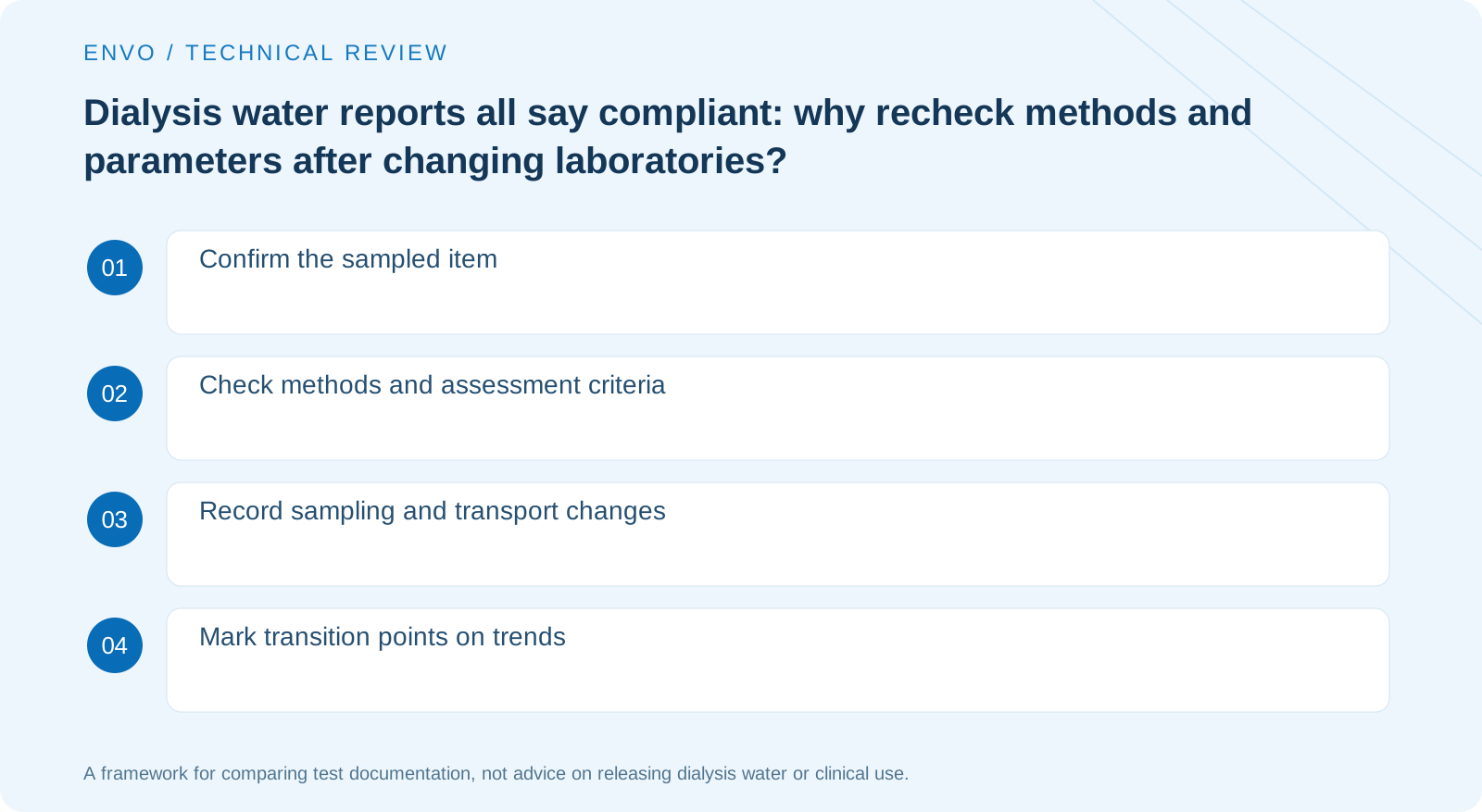
First align the analyte and sample identity
Clarify whether a report tests treated water, water from a specific distribution-system section or another dialysis-related fluid, retaining sampling point, equipment identifier and time. Samples all called ‘dialysis water’ may come from different stages. If old and new laboratories receive samples representing different targets, their results cannot directly assess whether cleaning improved. Ask the testing organization to confirm sample descriptions during handover so internal shorthand is not mistaken for a standardized test target.
Compare methods and reporting bases item by item
Create a comparison table covering test parameters, methods, units, reporting capability and assessment criteria. CDC dialysis-water information discusses microbial quality and endotoxins separately, illustrating their different roles. Historical standards cited there cannot be treated without verification as current universal requirements. The institution and testing specialists must confirm the applicable standard edition, methods and limits; this page offers no globally applicable pass value.
Check whether sampling and transport changed at the same time
Changing laboratories may also change sampling containers, preservation, transport and submission schedules. Record these changes and have the quality manager arrange a comparability assessment where necessary, rather than treating one higher result as sudden equipment deterioration. Sample handling and testing have defined method requirements; website guidance should not prompt improvised changes. Ask the reporting organization to explain expressions such as ‘less than,’ ‘not detected’ and ‘indeterminate’ rather than rewriting all of them as zero.
Mark method changes on the trend chart
After confirming the documentation, mark laboratory or method change dates on trends and explain which data are directly comparable and which require caution. Contracts for testing services can include consistent reporting formats, communication of anomalies and notification of method changes. When assessing changes to sanitation consumables or equipment at the same time, distinguish their dates to avoid false attribution. The healthcare institution remains responsible for water-quality release and corrective actions; the website provides an information-organization and procurement-review framework.
Explore further
Can two reports be compared directly if their units are the same?
Also check sampling locations, parameters, methods and reporting capability; identical units are not sufficient.
Can one passing report establish long-term effectiveness of a disinfectant product?
No. A report covers only its specific samples and conditions. Long-term judgments require ongoing evidence specified by the organization.
References
This article draws on publicly available technical information. Third-party sources do not establish ENVO product approvals, field testing or project experience. Confirm each use against actual supply documents and site conditions.