

Compare active ingredient quantities, not just the number of drums purchased
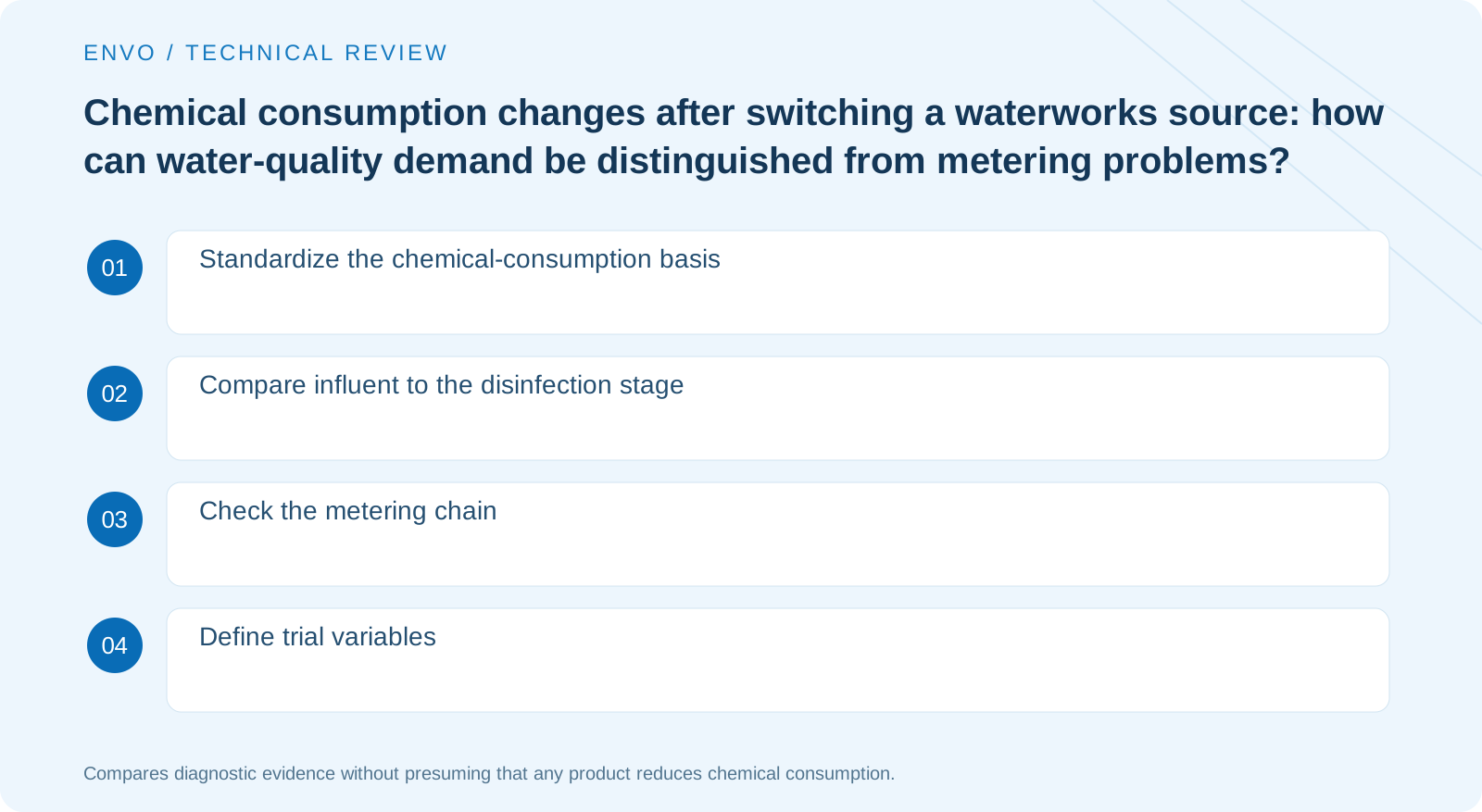
Record actual chemical consumption, concentration basis and treated-water volume separately. Charging by container, metering by volume and accounting by active content are different bases; level estimates may also be affected by replenishment and remaining stock. Verify batches, units and reporting periods before inferring declining performance from purchase orders for different periods. Mark supply changes separately from source-water changes.
Check whether pretreatment changed at the same time
WHO drinking-water-treatment information notes that chlorine reacts with water constituents. After a source change, examine water entering disinfection as well as intake data. Plot coagulation and filtration operation, turbidity, organic-related indicators and other existing control parameters on a timeline. This article recommends first locating the stage where changes arise; the waterworks should select tests according to source risks and established procedures.
Rule out false signals in the metering chain
Operators can check pump logs, flowmeter calibration, chemical suction conditions and alarms under existing maintenance procedures. Verify whether increased setpoints produce corresponding actual dosing rather than compare screen percentages alone. Obtain batch test documents if concentration evidence is missing. Separate consumption for line flushing or other tasks to establish a comparable trial baseline.
Design a supplier assessment whose results can be explained
Give candidate suppliers comparable water-quality data before and after the change, actual consumption, product information and control objectives. Keep confirmed test conditions constant during sample assessment, compare defined variables only, and record the conditions and associated effects required to achieve the objective. Reports should allow an ‘insufficient evidence to judge’ outcome. General source-water experience cannot become a guaranteed chemical-savings percentage for this plant. State the testing organization and operating conditions; performance in another project is not evidence of this plant’s results.
Record water-source switches separately from supplier changes
If a source-water change coincides with a change of supply batch, record the exact times, relevant documents and known differences for both changes separately. A single change point cannot establish that one party caused the problem. The assessment should allow multiple explanations and specify the evidence needed next to rule them out. For historical events that cannot be reproduced under identical conditions, retain conclusions as investigative leads rather than performance rankings, preventing uncertain analysis from becoming a technical justification for permanently replacing a supplier.
Explore further
Does increased chemical consumption always require a different chemical?
Not necessarily. First distinguish water-quality reaction demand, product concentration and metering error, then determine the assessment scope.
Is total daily consumption alone sufficient for assessment?
It can only suggest a trend. Interpretation improves when source-water switching times, treated volumes and product batches are aligned.
References
This article draws on publicly available technical information. Third-party sources do not establish ENVO product approvals, field testing or project experience. Confirm each use against actual supply documents and site conditions.