

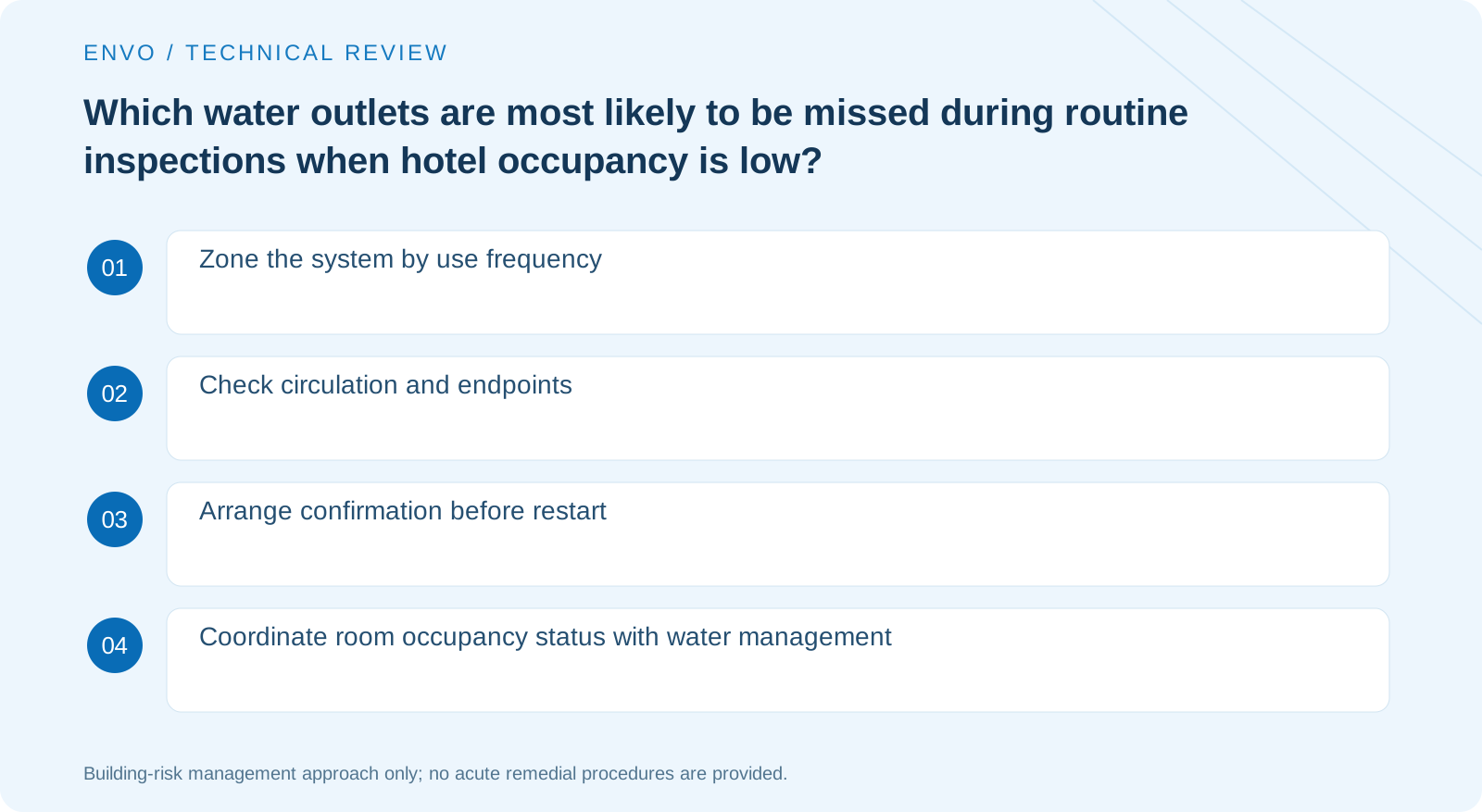
Redefine zones according to actual use frequency
Record occupancy, cleaning-water use and prolonged closures by floor or circuit. Rooms being cleaned does not mean every outlet is used. Bathtubs, separate showers, staff facilities and standby equipment may have different states. This article suggests regular-use, intermittent-use and out-of-service categories, with the water-management team determining checks and maintenance rather than planning solely by room count.
Inspect the flow paths as well as the temperature gauge
CDC includes water age, temperature, residuals and deposits in building-water risk assessment. Normal plant-room hot-water readings do not establish identical conditions in remote circuits or mixing components. Review recirculation connections, valves and terminal-maintenance records, distinguishing main-loop indicators from point-of-use readings. Do not copy one plant-room temperature into every floor’s inspection record.
Allow confirmation steps before reopening
Include reopening areas in the water-management plan in advance, confirming maintenance, inspection, necessary testing and responsible personnel. Do not discover unmanaged branches only when guests arrive. Supplementary disinfection systems require professional assessment; purchasing equipment does not automatically remove every risk. Chemical or thermal procedures must respect facility constraints and cannot be prescribed directly from this page.
Communicate guest-room changes to operations and maintenance staff
Sales, reception, housekeeping and engineering can share an area-status table with closure and reopening dates. Engineering records should trace to actual water circuits rather than merely state ‘whole-building inspection completed.’ Area-use plans, circuits and existing control records help technical advisers identify management gaps. Suspected associated illness should follow public-health response procedures; routine maintenance cannot replace investigation.
Turn occupancy changes into actionable notifications
Once reception confirms that an area is ready to reopen, it can notify engineering with the area identifier and planned date, and the responsible person can return the status of required checks. The notice need not include guest names or other personal information. If reopening is brought forward, reconfirm whether maintenance and verification can be completed rather than changing the date on old records. Incorporating this handover into routine room-status workflows reduces information gaps where facilities have been unused for some time but operations assumes maintenance continues at normal occupancy levels.
Explore further
Is starting the water heater daily sufficient?
Not enough. Confirm whether water reaches the relevant branches and endpoints and establish their respective control conditions.
Does low occupancy always require additional disinfection equipment?
Do not conclude directly; first review flow paths, use patterns and existing management measures.
References
This article draws on publicly available technical information. Third-party sources do not establish ENVO product approvals, field testing or project experience. Confirm each use against actual supply documents and site conditions.