

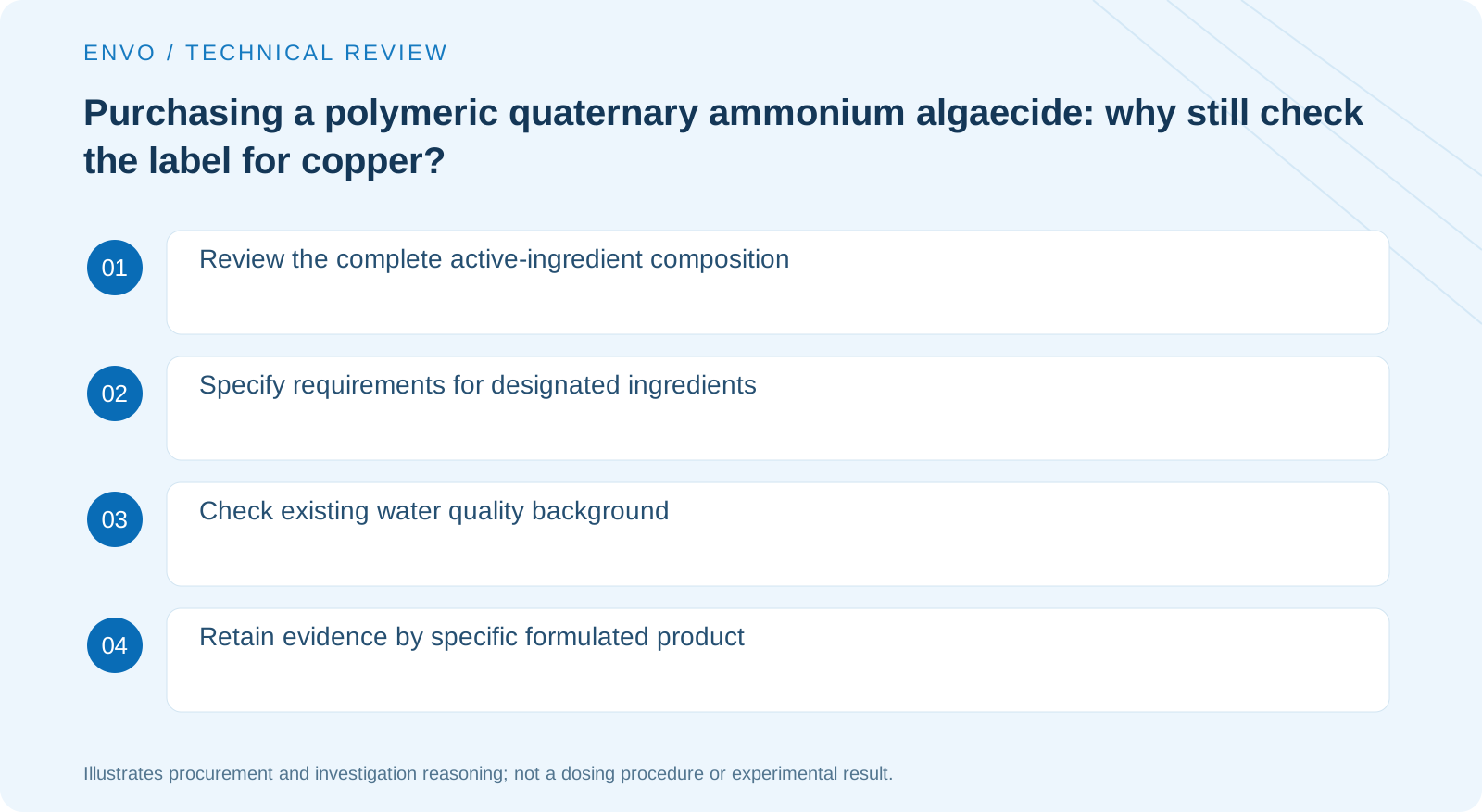
A category name cannot describe the full composition
BioGuard Algae Complete’s public description gives an example of a commercial product combining polymeric quaternary ammonium compounds with copper-related ingredients, showing that formulated algaecides may contain blends. This does not mean all Polyquat products contain copper or that this formulation suits every pool. Buyers should request complete composition and relevant use information for the specific model, rather than relying on a shared search-result keyword to determine whether a product meets a copper-free requirement.
Translate the desire to avoid copper into explicit requirements
Customers may be concerned about existing materials, historical stains or water management. Record the actual reason before defining supplier checks. Copper-free does not automatically mean stain-free or maintenance-free because site problems may have other causes. If a particular ingredient must be controlled, agree on corresponding documents or tests rather than merely requiring ‘metal-free’ packaging. Marketing names cannot replace verifiable composition evidence.
Distinguish deliberate addition from the testing basis
Active-ingredient tables, formulation descriptions and individual impurity tests answer different questions. An element absent from the active list has not thereby been proven zero in every sense. Required declarations and specifications should match the actual use, with the supplier explaining their supported scope. Do not rewrite ‘not listed’ as ‘absent’ or create untested zero-residue or absolute-safety promises for product pages.
Check the existing treatment background when changing products
Even when a new product meets composition requirements, water may retain substances from previous treatment or other sources. Responsible personnel should assess water quality and materials; switching one algaecide container cannot promise removal of every historical stain. Follow product and facility requirements when changing programs. This page provides no generic mixing or neutralization procedure that would simply layer different systems together.
File purchasing information by complete formulated product
Retain product name, active composition, compliance with specified ingredient requirements, scope and evidence sources together. Inquiries should include the current product and material or water-quality concerns for targeted supplier responses. Customers should receive an identifiable product with clear composition and matching documents, not an unverifiable generic Polyquat description assembled from several brands’ advantages.
For unexplained copper-free requests, first establish whether the reason is material limits, existing quality problems or purchasing standards, then identify the necessary declaration or test. Evidence levels may differ. A copper-free promotional screenshot is not a universal answer, and relabeling an image of a copper blend cannot create a copper-free product.
Explore further
Are all polymeric quaternary ammonium algaecides copper-free?
Do not infer from the category. Examine the specific formulation’s composition.
Does being copper-free guarantee that no staining can occur?
That guarantee cannot be made. Causes of staining and water quality require independent examination.
References
This article draws on publicly available technical information. Third-party sources do not establish ENVO product approvals, field testing or project experience. Confirm each use against actual supply documents and site conditions.