

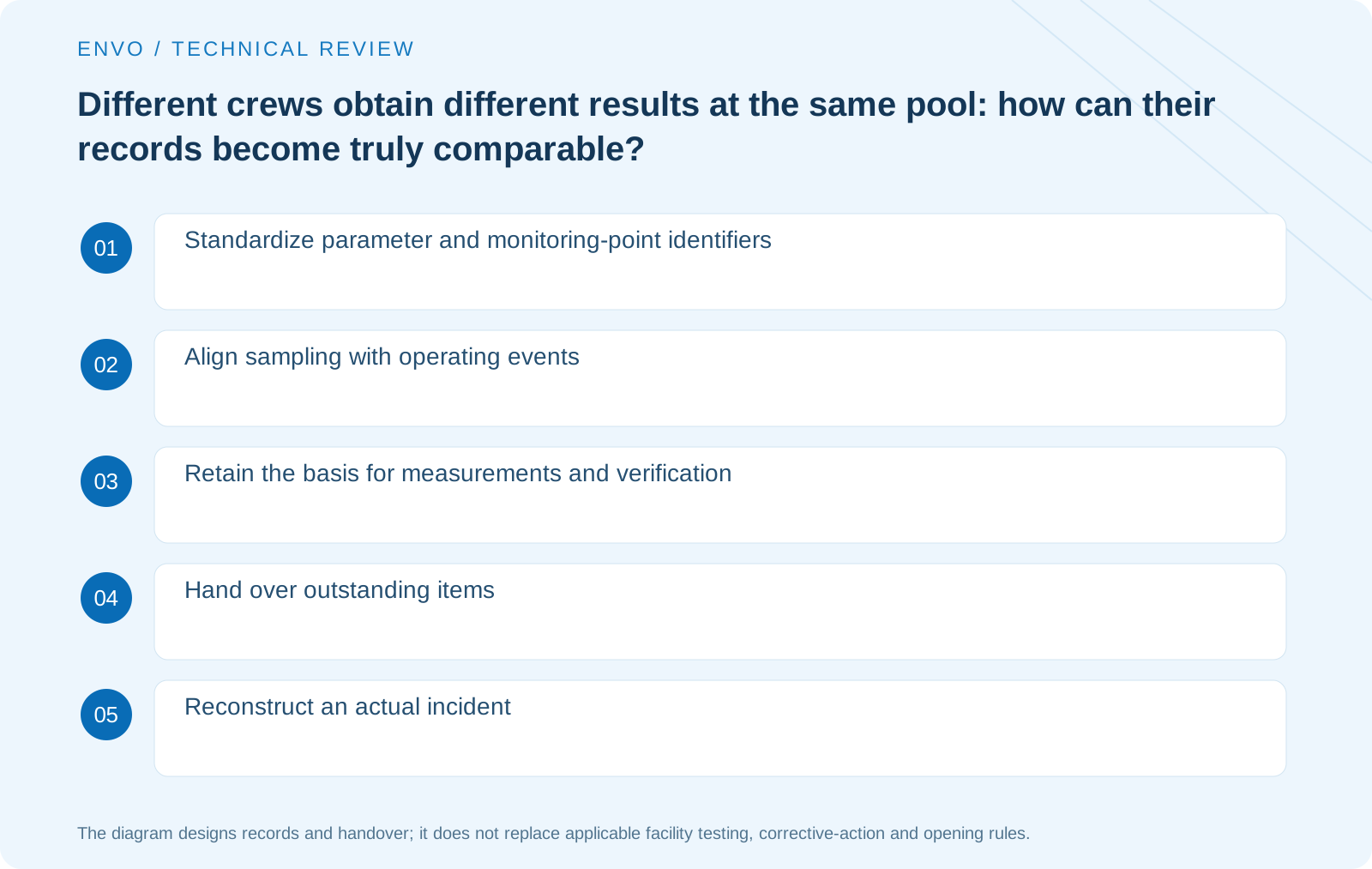
First standardize names for parameters and monitoring points
List free chlorine, total chlorine, pH and other site control parameters separately instead of calling them all chlorine values. Assign identifiers to representative pool points, locations before and after recirculation treatment, and online-instrument sampling points, and mark them on a plan. These locations serve different observation tasks and need not yield identical values; each number must correspond to its actual sampling point. CDC pool-operation information emphasizes ongoing monitoring and operational management; the numbering system is this article’s suggested site-recording approach.
Record time alongside operating events
Record both sampling and measurement times, noting shift attendance changes, makeup water, equipment maintenance and treatment adjustments completed under procedures. Handovers should retain data before and after anomalies, not merely copy the latest passing result. Explain time differences between handheld tests and online records; values from different moments do not directly establish instrument error. Daily averages must not conceal short-term changes requiring action.
Record the measurement chain to maintain method traceability
The table can include instrument identifier, test method, reagent batch and expiry date, and operator. When two people use different instruments, first check measurement conditions and applicable ranges against equipment instructions. Retain original and review records and the reason for review, without deleting unexpected values. This article concerns data management and gives no universal dilution, additional-dosing or retesting steps; follow facility procedures and equipment instructions for methods.
Hand over abnormal conditions to the next shift, not just a form
Handover should state that the issue remains under investigation, management measures already taken, responsibility for the next step and the basis for restoration. Equipment restart, reagent replacement and water-quality recovery are separate events; one ‘resolved’ checkbox cannot replace them. If the next shift lacks necessary results, keep the system status explicit and manage use under facility rules. The responsible person can arrange further investigation of recurring locations or periods rather than asking shift staff to change products from experience.
Test the form’s adequacy against an actual incident
Choose a resolved incident and attempt to reconstruct parameters, location, time, equipment, operating conditions and response responsibilities using archived records alone. If a call to those involved is still needed to complete the account, add missing fields to the forms. Supplier inquiries can include a redacted timeline and product label, specifying whether testing support, equipment inspection or compatibility documentation is needed. This creates a concrete inquiry without turning every discrepancy into an unsupported recommendation to change chemicals.
Explore further
Must readings from different shifts be identical?
Not necessarily. Compare parameters, locations, times and operating context first, then determine whether the difference is explained or requires investigation.
Can the original records be overwritten after they are organized?
This is not advisable. Retain links between original records and organized versions; verification or correction should document the reason, time and responsibility.
References
This article draws on publicly available technical information. Third-party sources do not establish ENVO product approvals, field testing or project experience. Confirm each use against actual supply documents and site conditions.