

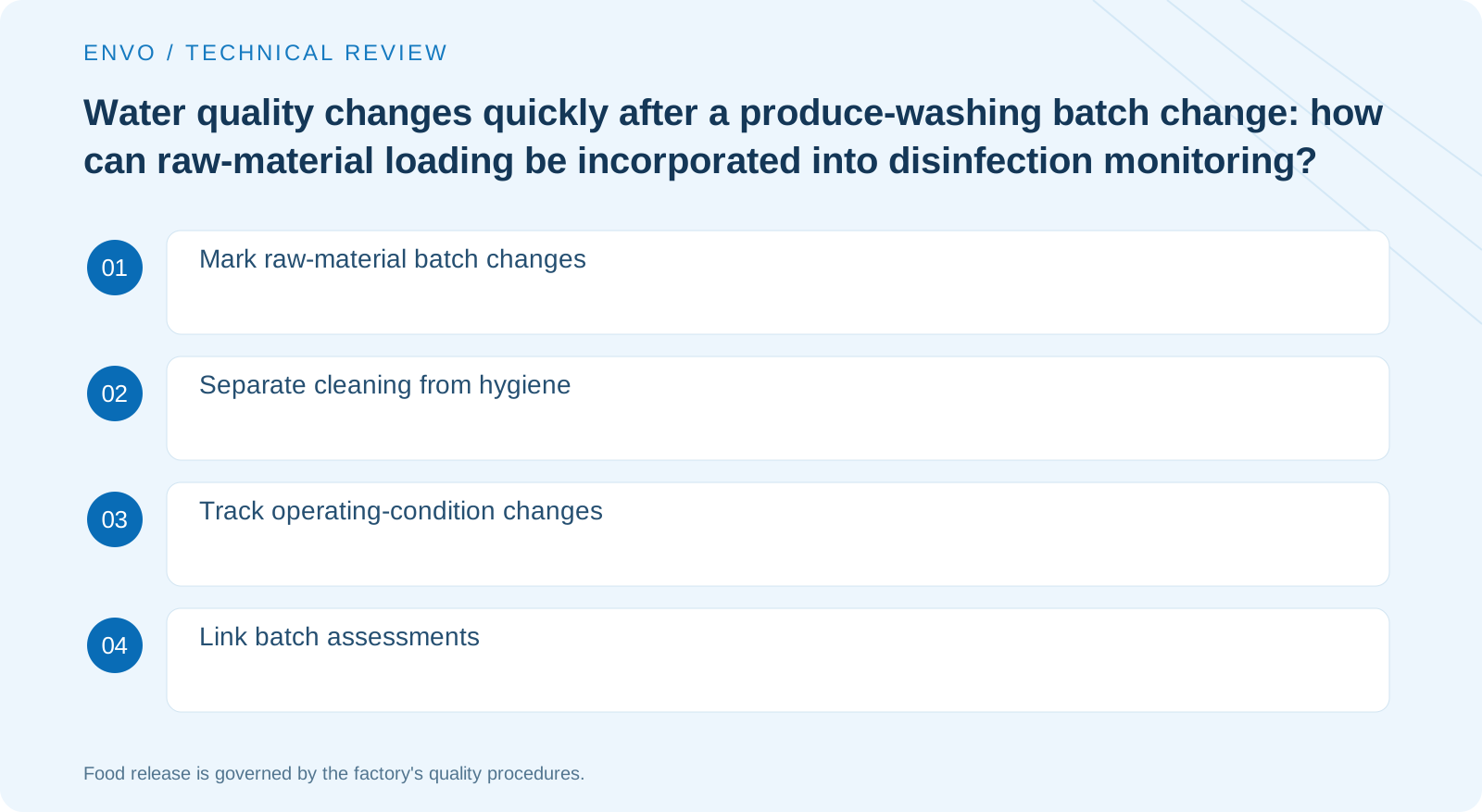
Record operating events associated with raw-material changes
Record raw-material categories, introduction periods, obvious carryover and cleaning processes by batch without disclosing irrelevant proprietary formulations in initial discussions. Place screen cleaning, makeup, water replacement and line stoppages on the same timeline. One end-of-day sample may miss brief batch-change effects. The plant should determine monitoring from risk and validated processes.
Do not equate a clean appearance with hygiene control
FDA produce guidance identifies process water as a possible cross-contamination pathway, while washing also performs physical removal. Absence of visible soil does not establish microbial control; good microbial results do not remove debris and process-load management. Record visible cleanliness, water condition and food-safety requirements separately for the quality team to assess together.
A batch-change log can record raw material sources, precleaning status, visible sediment and water replacement or makeup events. If throughput is unchanged but incoming loads differ, recording chemical consumption only per tonne of raw material may conceal the difference. Linking incoming water, return water and operating conditions for the same batch makes it possible to assess whether fluctuations arise from raw materials, recirculating accumulation or operational changes.
Confirm that test parameters reflect this batch’s operating conditions
Each parameter needs a defined method, location and timing, with awareness of measurement effects from raw materials or formulations. If online and manual results differ, check the measurement chain first. If monitoring misses fluctuations, review frequency rather than continually increase chemical delivery by experience. This page provides no universal dosing values for all produce.
Assign separate responsibilities for anomaly response and food release
Process adjustments, identification of affected products and subsequent release during an anomaly must follow factory procedures. One normal sample after dosing resumes does not resolve assessment of products made during the abnormal period. Record anomaly onset and confirmed recovery for responsible personnel to define batch scope, preventing suppliers from giving safety guarantees without production data.
Provide the supplier with the water sample’s context, not just one concentration
Attach circuit details, raw-material changes, monitoring trends and actual product documents to inquiries, identifying the stage where fluctuation occurs. Trials should address both water-management targets and raw-material quality; improving a disinfection indicator cannot replace product-quality assessment. Batch-verifiable records are more useful than purchasing a product advertised only as broad spectrum.
Explore further
Does washing raw materials clean mean cross-contamination is controlled?
No. Validate physical cleaning and water-hygiene management separately.
Must the chemical be changed whenever the batch changes?
Do not presume this. Confirm operating conditions, applicability and monitoring results first.
References
This article draws on publicly available technical information. Third-party sources do not establish ENVO product approvals, field testing or project experience. Confirm each use against actual supply documents and site conditions.