

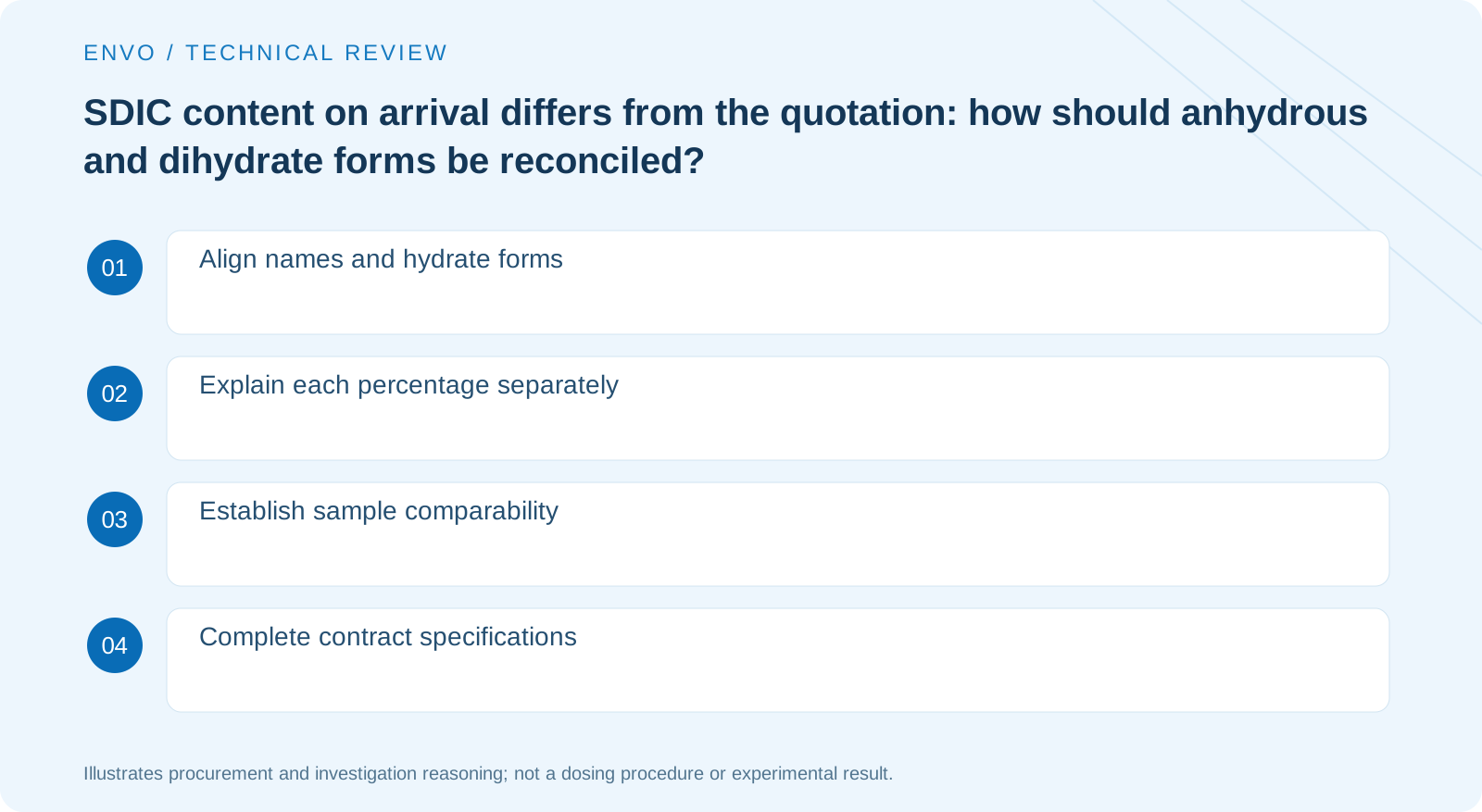
First match the three names to the same product
Compare the contract, label and COA for the complete English SDIC or NaDCC name, hydration state, batch number and model. Anhydrous and dihydrate forms are not one specification merely because they share a Chinese common name. Clarify incomplete contractual identity before declaring an incorrect delivery from powder appearance. Appearance cannot reliably establish water of crystallization either.
Distinguish active ingredients from available chlorine
Quoted percentages may describe raw-material purity, finished-product content or available chlorine; these are different measures. Compare parameter name, unit, method and dry-basis or as-received basis in four columns, asking the laboratory to identify what its report measures. OxyChem chlorinated isocyanurate literature separately lists forms and specifications and helps explain these differences, but its values cannot become ENVO batch guarantees.
Establish traceable conditions for disputed samples
Agree sampling, retention, sample sealing and testing organizations, preserving original containers and transport information. Do not directly judge conformity by comparing an old pre-purchase sample report with another delivery batch; first confirm comparability of different methods. Testing personnel should assess moisture or packaging anomalies rather than infer every cause from one content value.
How to write the next purchase order
State, in sequence, the use, full chemical identity, anhydrous or dihydrate form, required dosage form, agreed available-chlorine parameter, method, packaging and batch documents. Drinking-water and pool uses also need their own finished-product documents; correct identity does not confirm use. Suppliers can then respond item by item and buyers can assess delivery differences without vague questions about whether SDIC quality is good.
Map documents to the anhydrous and dihydrate forms separately
Compare the current order, packaging label, technical specifications and batch report item by item, confirming that each clearly identifies the form concerned. If only an abbreviation appears without the hydration state, establish the identity first; a lower available chlorine figure alone does not establish adulteration or nonconformity. Confirm the definitions and reporting basis used in the analysis report. When comparing purchases of different forms, distinguish product quality, active quantity and specific equipment requirements. Both candidates may remain in the quotation table, but they must be identified as different products; do not combine one supplier’s anhydrous specification with another’s dihydrate packaging into a single commitment. At receipt, quality personnel should check the agreed items rather than infer water of crystallization from appearance or a damp feel. Once identity and methods are aligned, buyers can discuss price differences and subsequent substitution on a sound basis, without mistaking normal specification differences for quality fraud.
Explore further
Do the different names SDIC and NaDCC necessarily indicate the wrong product?
They are usually different abbreviations for the same active ingredient; the hydrate form, CAS number and formulated-product model still need checking.
Does a different dihydrate content necessarily mean noncompliance?
That conclusion cannot be drawn. First confirm consistency among the purchasing agreement, hydrate form and reporting basis of the parameters.
References
This article draws on publicly available technical information. Third-party sources do not establish ENVO product approvals, field testing or project experience. Confirm each use against actual supply documents and site conditions.