

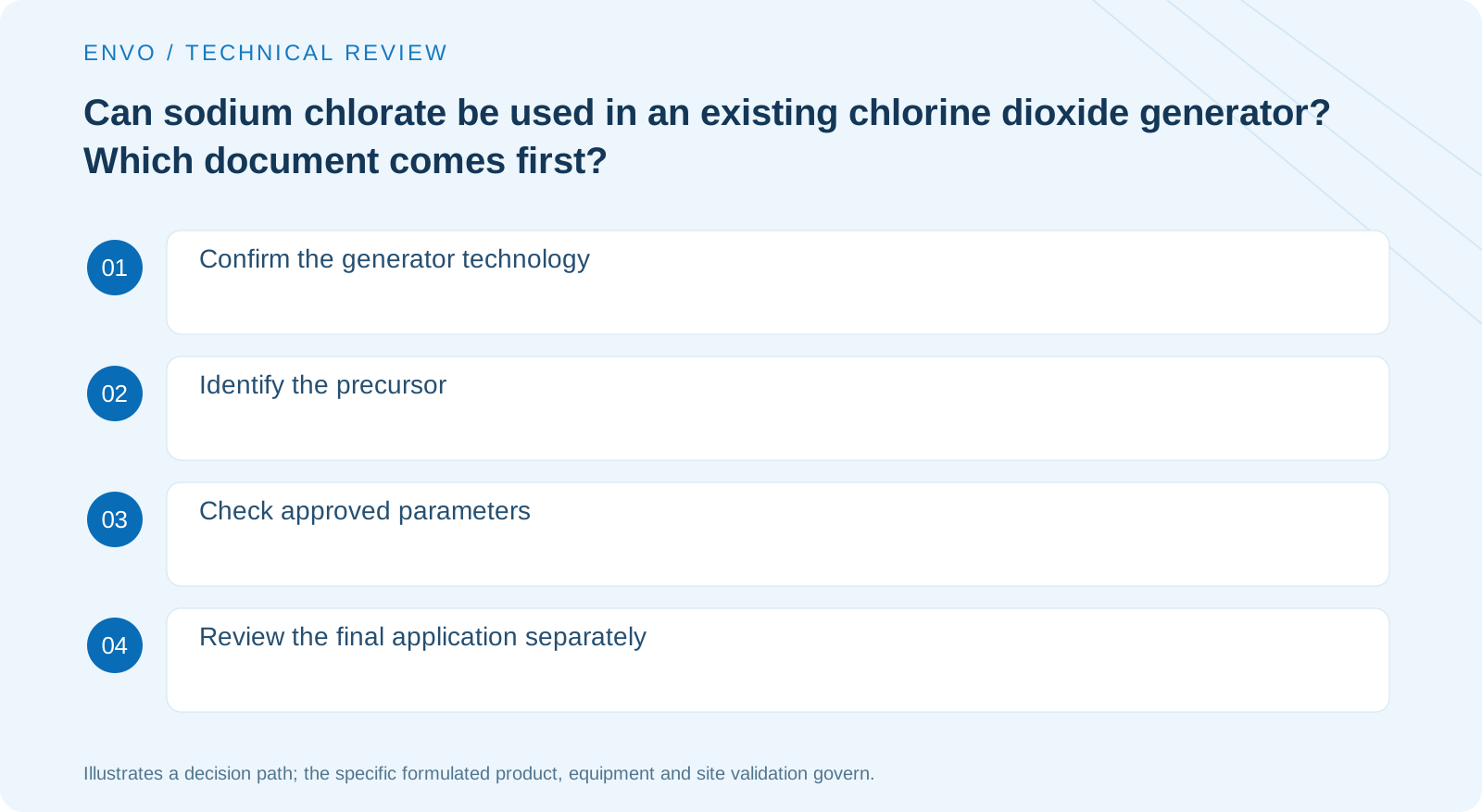
First confirm complete equipment identification
Collect the manufacturer, model, process design and raw material list, especially the latest version after equipment modifications. Daily output or a housing photograph alone cannot determine the raw material. EPA sodium chlorate information distinguishes its industrial precursor use but cannot replace specific equipment approval.
Identify substantive differences between raw materials
Sodium chlorate and sodium chlorite are distinct chemical identities and may involve different equipment processes and conditions. A more familiar name or lower price does not justify substitution. If the generator label and manual disagree, the equipment supplier should clarify rather than purchasing staff guessing.
Compare specifications against the equipment list
Check physical form, principal content, relevant impurities and receiving packaging. For parameters absent from the supplier’s report, clarify whether they were untested, not guaranteed or inapplicable. Missing values cannot default to zero, and limits allowed by another unit cannot fill the current checklist.
Review the final use separately
Generation for papermaking and other water-treatment applications may have different final objectives. An industrial precursor supply record does not establish suitability of the generated product for drinking water. Check use and by-product requirements separately; equipment operation alone does not establish compliance for every final application.
Set a hold point before changing materials
Require clear answers to three procurement questions: does the equipment provider accept the chemical identity in writing; does the supplied batch meet every approved criterion; and is there applicable evidence for the final use? Any unresolved answer prevents formal substitution. This check does not prescribe generation processes; it keeps commercial purchasing within equipment technical limits.
Distinguish requesting suitability advice from approving substitution
First send the equipment supplier a technical inquiry with the full raw material name, form, specification and proposed purchasing purpose, asking whether the existing process covers it. A generic response such as ‘it is a chlorine-based raw material’ still does not approve substitution. What is needed is an explicit compatibility scope for the equipment version and the relevant validation requirements.
If equipment documents approve only other precursors, mark sodium chlorate as an unapproved candidate rather than experiment with operating settings. Treat supplier-proposed modifications as a separate engineering change, assessing scope, output validation and responsibility. This allows commercial comparison without mistaking a price advantage for existing system compatibility.
Explore further
Does producing the same output make raw materials interchangeable?
No. Follow the generator’s specified process route and approved specifications.
What if equipment retains an old label?
First obtain written confirmation of the current configuration from the equipment supplier.
References
This article draws on publicly available technical information. Third-party sources do not establish ENVO product approvals, field testing or project experience. Confirm each use against actual supply documents and site conditions.