

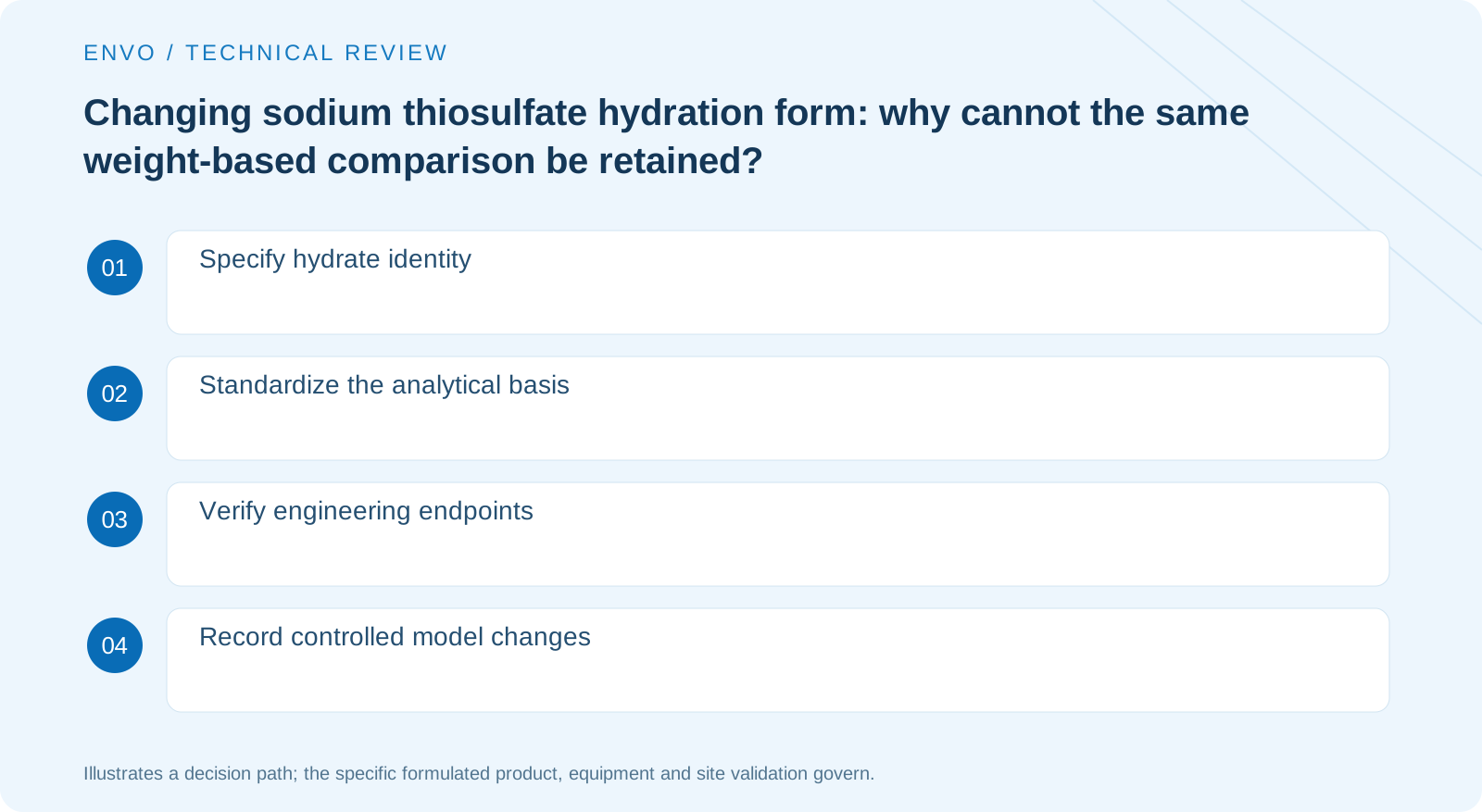
First complete the specification name
Cross-check hydrate form and chemical identity on inquiries, labels and reports. If documentation states only Na₂S₂O₃, ask whether this denotes the actual delivered form or the analytical result basis. Crystalline appearance in a packaging photograph cannot replace identity confirmation.
Distinguish compound content from the analytical basis
Suppliers may report on different bases, so purchasing tables should identify as-received, dry-basis or other agreed expressions. Water of crystallization is part of a hydrate’s chemical composition and should not be arbitrarily deducted as an impurity. Obtain a clear basis of correspondence before comparing, rather than directly ranking purity figures.
Review equipment and testing endpoints together
Even after aligning active-content bases, site acceptance, metering and target oxidants may differ. Use validation must match actual water and analytical methods; raw-material mass conversion does not directly yield engineering doses. This page provides no neutralization recipe.
Treat model substitution as a controlled change
Retain complete documentation for both old and new models, identifying comparable items and those requiring revalidation. If existing procedures or equipment approve only one form, obtain technical confirmation first. Batch reports should use the same identity and methods as the order to avoid disputes over calculation bases after delivery.
Avoid a complete name paired with an unclear calculation basis
When comparing specifications, separately list the actual hydration state, chemical formula expressed in the report, content calculation basis and delivered net mass. If a report expresses content on an anhydrous basis but the packaged material is hydrated, mark this clearly in the comparison. Similar English names do not make two content figures identical in meaning.
At the quotation stage, ask the supplier to explain the calculation basis in its report and have competent personnel review it rather than directly retaining the old raw material’s weighing settings on site. This specification comparison only explains procurement differences; it does not provide neutralization doses. Acceptance of a substitute by the actual process also depends on analytes, system conditions and appropriate validation.
At receipt, confirm that labels, batch reports and orders agree on hydration form, retaining sample-condition descriptions. Resolve contradictory identity and specification documents before discussing price or use. Include hydration state in material codes so warehouse and purchasing software do not merge products with different mass bases under one vague name.
Explore further
Can crystalline products be substituted in equal quantities because both look like crystals?
No. Confirm hydrate form and the basis for active-component content.
Does correctly converting content establish engineering suitability?
Equipment, the target oxidant and validation with water samples are also required.
References
This article draws on publicly available technical information. Third-party sources do not establish ENVO product approvals, field testing or project experience. Confirm each use against actual supply documents and site conditions.