

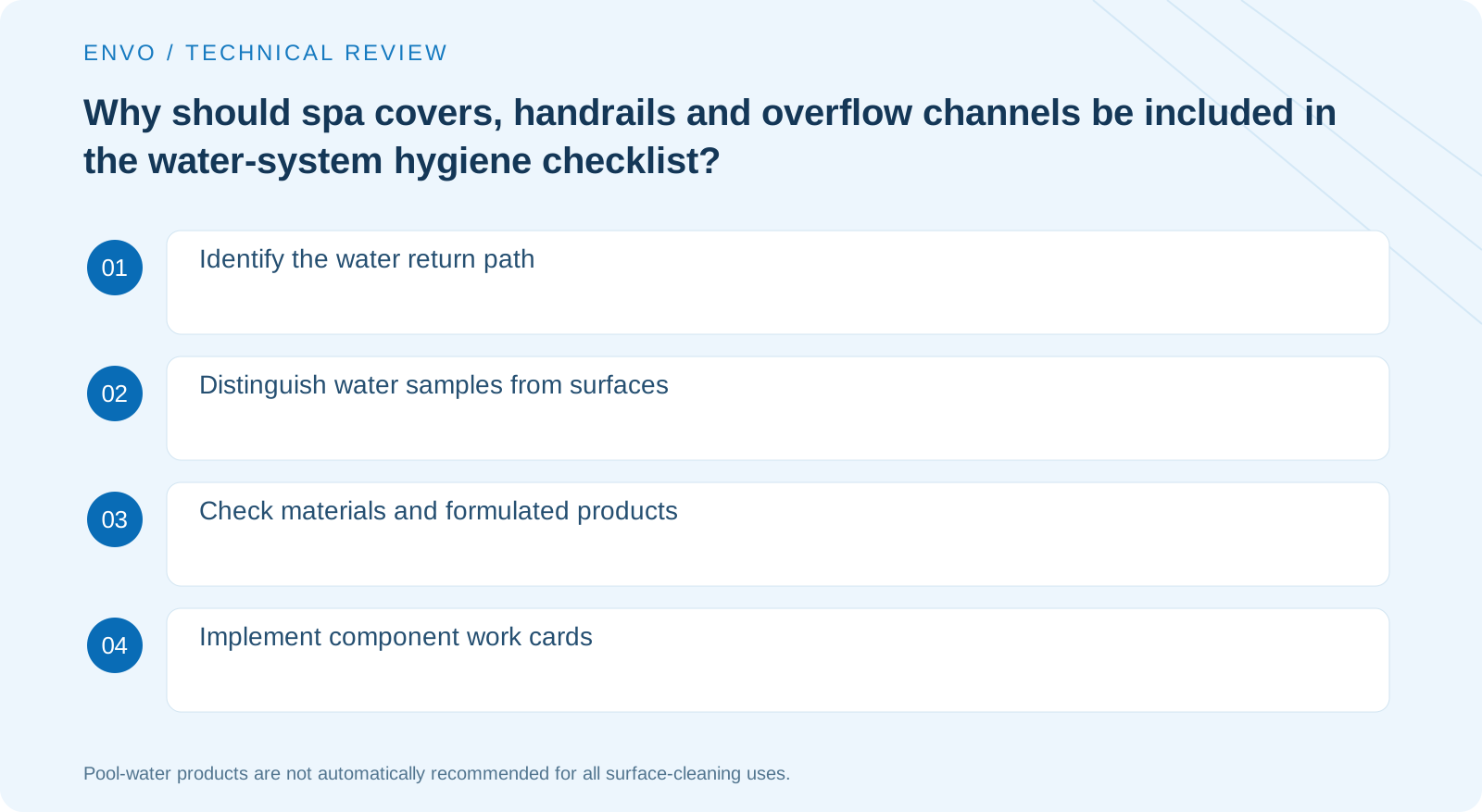
Inspect contact surfaces along the return-flow path
List cover undersides, overflow channels, balance tanks, nozzle rims and water-contact components, noting drainability and soil-retention points. The proposed inspection sequence runs from potential return interfaces to the main circuit; it is not a contamination diagnosis. Repair damaged or uncleanable parts under equipment requirements rather than hide structural defects behind one chemical treatment.
For recurring water beneath a cover, distinguish condensation, pool splashes and water remaining after cleaning, mapping return flow. These may require different structural or maintenance measures; more frequent cleaning may not solve a persistently inaccessible wet layer. Use the same photographic locations and angles for later comparison.
Record pool water parameters separately from surface condition
CDC calls for regular hot-tub slime-layer checks and recirculation-component maintenance, showing that water samples and surfaces are different observation targets. Routine records can include component condition and maintenance, but visible cleanliness is not microbial validation. Normal water indicators likewise do not justify prolonged neglect of surfaces or concealed layers. Professionals should determine further inspection methods where needed.
Check materials before selecting a cleaning product
Cover foam, coatings, plastics and metals may have different limits. Surface-cleaner inquiries should include materials and actual contact methods and clarify whether residues enter pool water. Pool-water concentrations or another facility’s surface procedure cannot be copied directly. Labels, equipment recommendations and approved site procedures should align.
Distinguish routine maintenance from abnormal events
Routine cleaning plans should address accumulation-prone locations and operating responsibility. Anomalies require facility procedures to determine shutdown, expanded inspection or sampling. Suspected health events need the appropriate professional response rather than ordinary cleaning work orders. Record locations and exposure routes to provide traceable evidence for later assessment.
Give the checklist to the people doing the work
Create work cards using numbered component photographs, showing permitted actions, tools, completion checks and incident contacts. State whether tools are dedicated and where cleaning wastewater goes. Supply material lists and contact interfaces with inquiries so suppliers can distinguish surface-hygiene products from water-treatment chemicals instead of assigning every task to one product name.
Explore further
Must every component be soaked for treatment?
There is no blanket answer; determine the contact method under applicable equipment and formulated-product procedures.
Do cleaning tools also require management?
Yes. Tool storage and use routes should avoid reintroducing contamination to treated areas.
References
This article draws on publicly available technical information. Third-party sources do not establish ENVO product approvals, field testing or project experience. Confirm each use against actual supply documents and site conditions.