

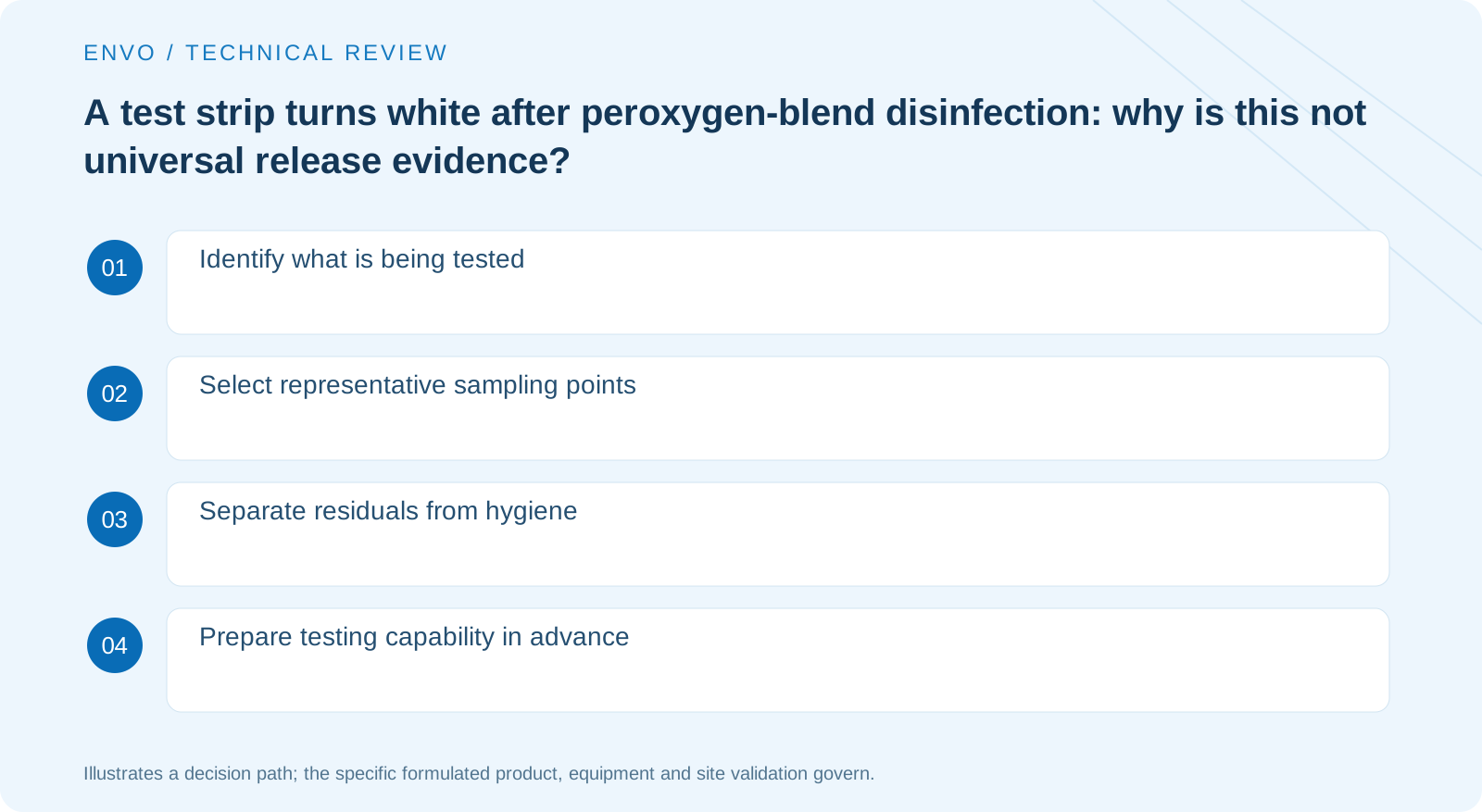
First identify the substance measured by the test strip
Check the analyte, range, interference and result expression in the instructions. Hydrogen-peroxide test strips are not automatically a complete residual test for every peroxide blend. If the product contains multiple actives or other components requiring control, formulation and equipment documentation should define the assessment method.
Position sampling points where they are actually needed
Conditions may differ at the equipment-circuit outlet, storage tank and least favorable branch. Sampling only at the flushing-water inlet does not establish compliance throughout the contact system. Record flushing status, sampling time and equipment procedures so results correspond to actual conditions before return to use.
Separate chemical residuals from hygiene results
An agreed residual does not automatically establish conformity of microbial or other use-related parameters; hygiene results likewise cannot replace residual measurements. WHO pharmaceutical-water guidance emphasizes system validation and operating controls. Distinguish these forms of evidence in advance during procurement.
Prepare the correct testing capability when purchasing
Confirm that the site has access to the corresponding method, staff training and result-interpretation basis before delivery, rather than discovering afterward that suitable testing tools are unavailable. Release thresholds and procedures must come from specific equipment and quality requirements, not generic websites or other brands’ labels.
Create a verifiable release-testing record
Records should at least include product code, analyte, test device, reagent batch, result units, sampling point and final use. Test-strip photographs should preserve reading context specified by instructions rather than only an already-faded image. For low instrument readings, confirm that range and method suit the water; not every low reading means conformity.
If methods disagree, first compare measurands and possible effects from other blend components, then obtain laboratory verification. Do not choose the lower value independently for release. Where one test lacks demonstrated coverage of a mixed-active system, state the unanswered parts and use relevant equipment and product documentation to complete the assessment.
Release forms should separately list microbial requirements, chemical-residual requirements and equipment-procedure completion with evidence for each. These conditions cannot replace one another. Such records help distinguish unsuitable testing, unfinished procedures and documentation gaps and identify whether technical documents, laboratory support or equipment checks are needed next.
Explore further
Does absence of color mean absolutely no residual?
Interpret this only within the method’s detection capability; do not extend it to all components.
Can release be based on conductivity alone?
It depends on the specific product and use; conductivity does not cover all chemical residuals.
References
This article draws on publicly available technical information. Third-party sources do not establish ENVO product approvals, field testing or project experience. Confirm each use against actual supply documents and site conditions.