

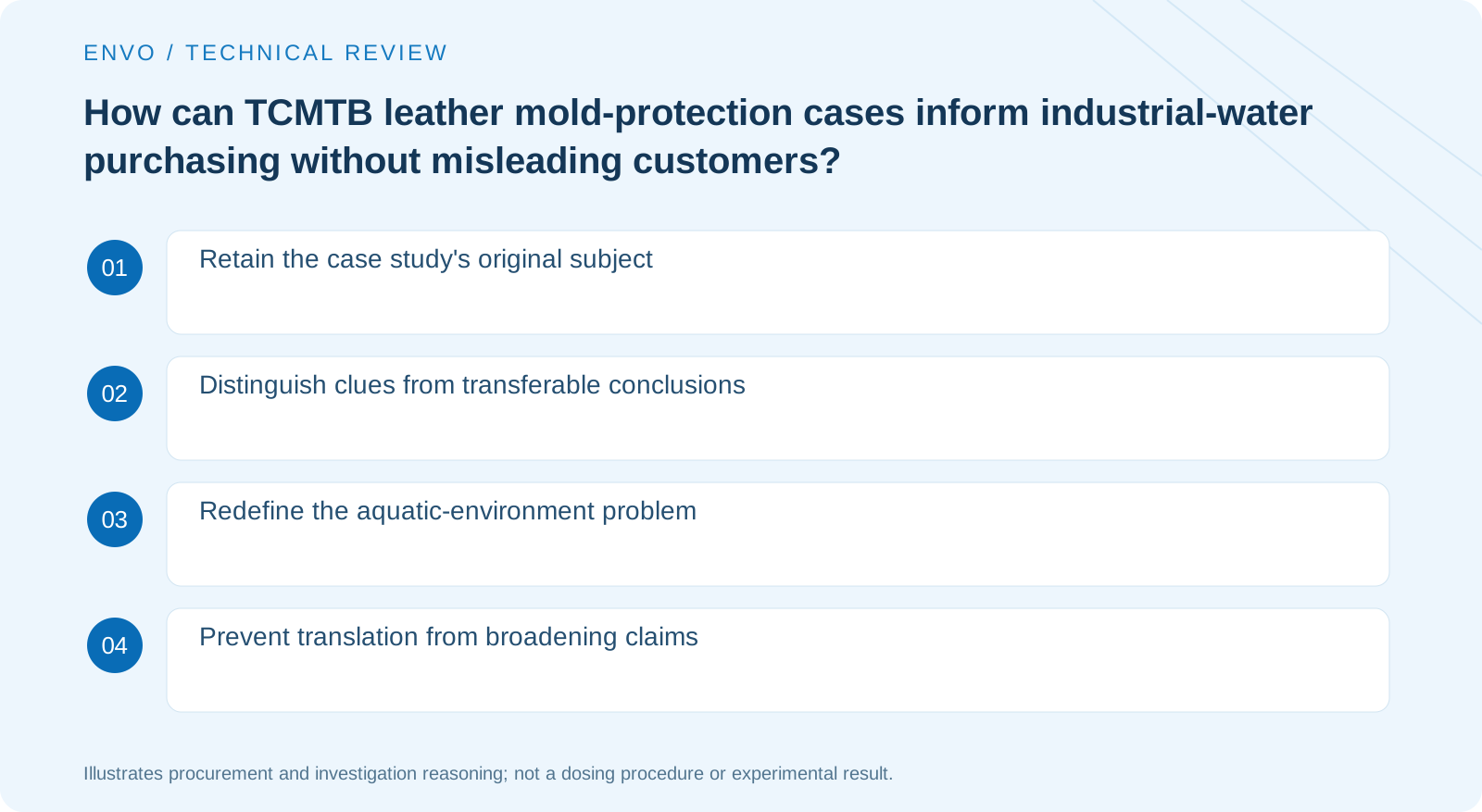
Retain the original application context of case studies
Buckman’s leather information discusses its fungal-protection technology within specific material, product and treatment-stage contexts. Identify it as leather-preservation information when citing it, not water-treatment field performance. Even with the same active name, leather and recirculating water differ in contact method, medium and objectives. A reputable manufacturer’s case cannot replace evidence for the current project.
Identify what can inform the project and what cannot be transferred
Useful transferable information includes the application areas of a chemical approach and questions about which models suit the customer’s process. Specific doses, durations, efficacy percentages, material compatibility and use approvals cannot be copied directly. Separating these categories lets customers obtain leads without assuming that a reference case has already validated their project.
Redefine validation questions for the aquatic environment
For metalworking fluids, focus on actual contamination targets and process conditions; for other industrial waters, first verify that the specific formulated product covers the use. Do not automatically recommend TCMTB for every water system simply to fill a product catalog. The website may retain clear technology information and inquiry access, but unconfirmed uses must not be supported with invented compatibility cases or unrelated factory photographs.
Prevent translation from extending the original claim
When translating, do not interchange mold protection, preservation, microbial control and water disinfection. A source concerning fungal control must not become effective against all microbes; a specific product must not become every formulation with the same active. Retain document title, source, year and original scope so later editors can verify claims and prevent repeated marketing revisions from drifting away from facts.
Present documentation at two levels
Product pages can present verified chemical and technical-route background first, then separately list the application-specific documentation customers should request. Customers can provide their target environment and current problem, with technical replies supplying evidence for the actual product. Keep unsupported areas explicit instead of filling pages with achievements from other industries. This structure supports professional purchasing better than extensive content with confused scope.
The documentation library can add columns for the original industry and the purpose of citation on this page: the former preserves the facts, while the latter explains that the source is used only to identify a technical approach. If genuine aquatic-use evidence becomes available later, link it separately to the relevant article or product rather than revising the original leather case to make it appear to have supported water treatment all along.
Explore further
Can a genuine third-party case establish ENVO’s track record?
No. Retain the actual entity and original application scope.
Does leather-industry information have no reference value at all?
It provides useful technical background but cannot replace evidence for the target water environment.
References
This article draws on publicly available technical information. Third-party sources do not establish ENVO product approvals, field testing or project experience. Confirm each use against actual supply documents and site conditions.