

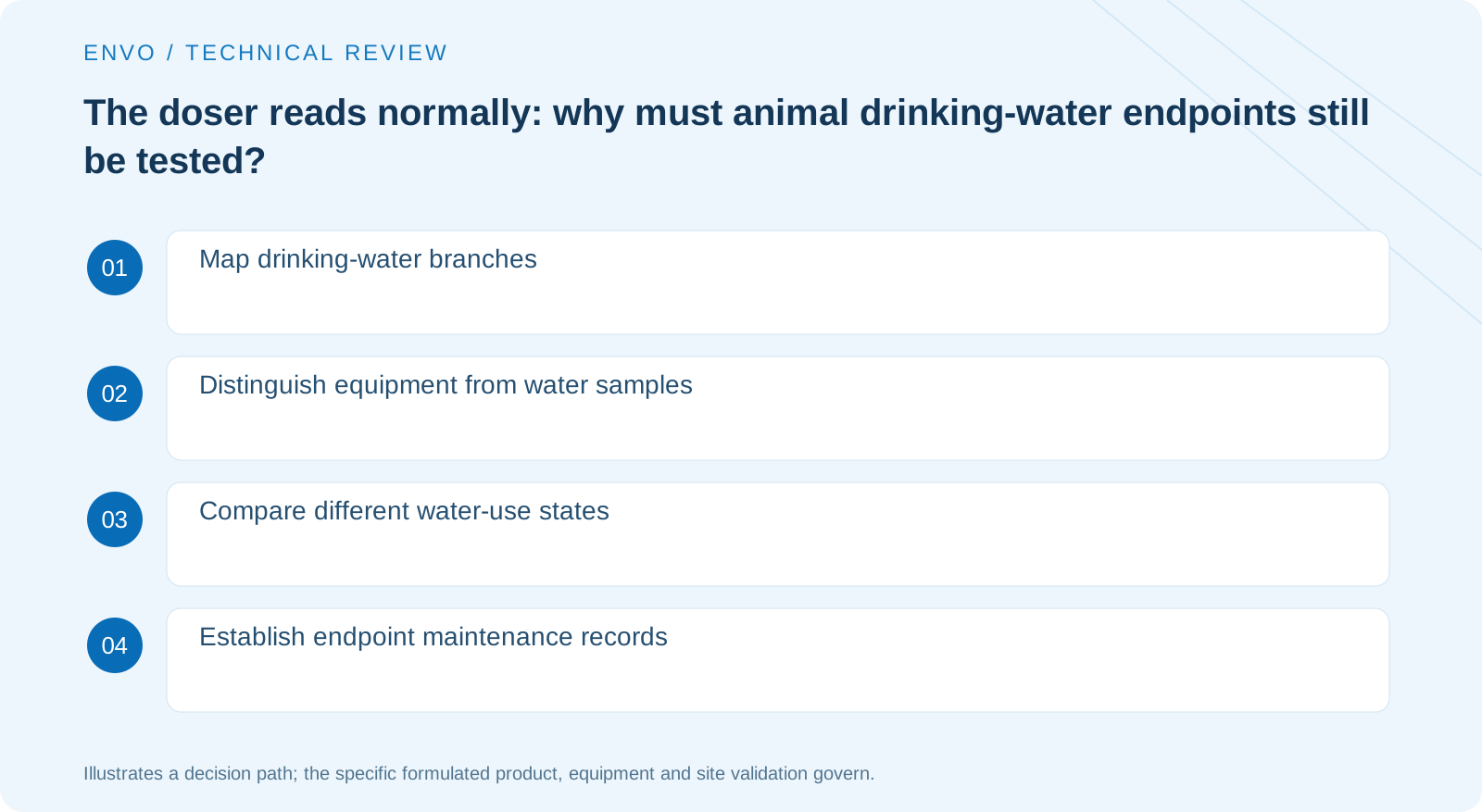
First map endpoint distribution
Mark the water source, tanks, branches, low-use areas and distant drinkers, checking actual flow against drawings. Mark new and out-of-service branches separately. Sampling only near the chemical feeder is generally insufficient to represent the entire animal-rearing area.
Separate equipment readings from water-sample results
Record equipment operating signals, formulated-product dosing, relevant endpoint water quality and microbiological results separately. LANXESS animal drinking-water materials include water-line hygiene within the application, but the existence of a product does not replace validation of site coverage. Measuring a residual does not establish that every hygiene issue is resolved.
Explain differences in terms of actual changes in use
Compare high- and low-demand periods and different branch locations. If abnormalities cluster in stagnant zones, investigate water age, deposits and hydraulics rather than only adjusting main-line dosing. Any change must follow product-specific and on-site professional requirements.
Use monitoring results to guide maintenance
Maintain records of locations, methods, times and follow-up of abnormalities, supported by water-line cleaning and equipment maintenance where necessary. Confirm the testing support needed for the product before purchasing to reduce difficulties evaluating performance after arrival. Abnormal animal water consumption or health requires veterinary assessment and cannot be explained through chemical parameters alone.
Place chemical-feeder and drinking-point results on the same water circuit
First number locations according to actual flow direction, recording drinking frequency, recent periods out of service and conditions before sampling. If endpoint drinker and storage-tank samples serve different sampling purposes, explain this in the table. Without this context, differences between readings may be mistaken for changes in product quality when it is actually unclear which water section each represents.
If abnormalities occur near the chemical feeder and at several endpoints simultaneously, review shared water-supply and metering records. If only a few low-use branches differ, inspect conditions in those sections. If chemical tests are normal but microbiological results are unsatisfactory, analyze how the two types of evidence relate in scope. These branches organize the investigation; this article alone should not be used to adjust on-site dosing.
For post-correction review, retain the same points and methods where possible while recording cleaning, water replacement and maintenance. Do not attribute all combined-measure effects to one formulation. Procurement conclusions should specify validations completed for the current model and endpoints still needing management, giving repeat purchases a traceable application basis.
Explore further
Is sampling unnecessary when the dosing device’s ratio is normal?
Actual endpoint water quality and coverage still require verification.
Do remote-endpoint anomalies necessarily indicate insufficient chemical strength?
Not necessarily. Hydraulics, retention and deposits also need investigation.
References
This article draws on publicly available technical information. Third-party sources do not establish ENVO product approvals, field testing or project experience. Confirm each use against actual supply documents and site conditions.