

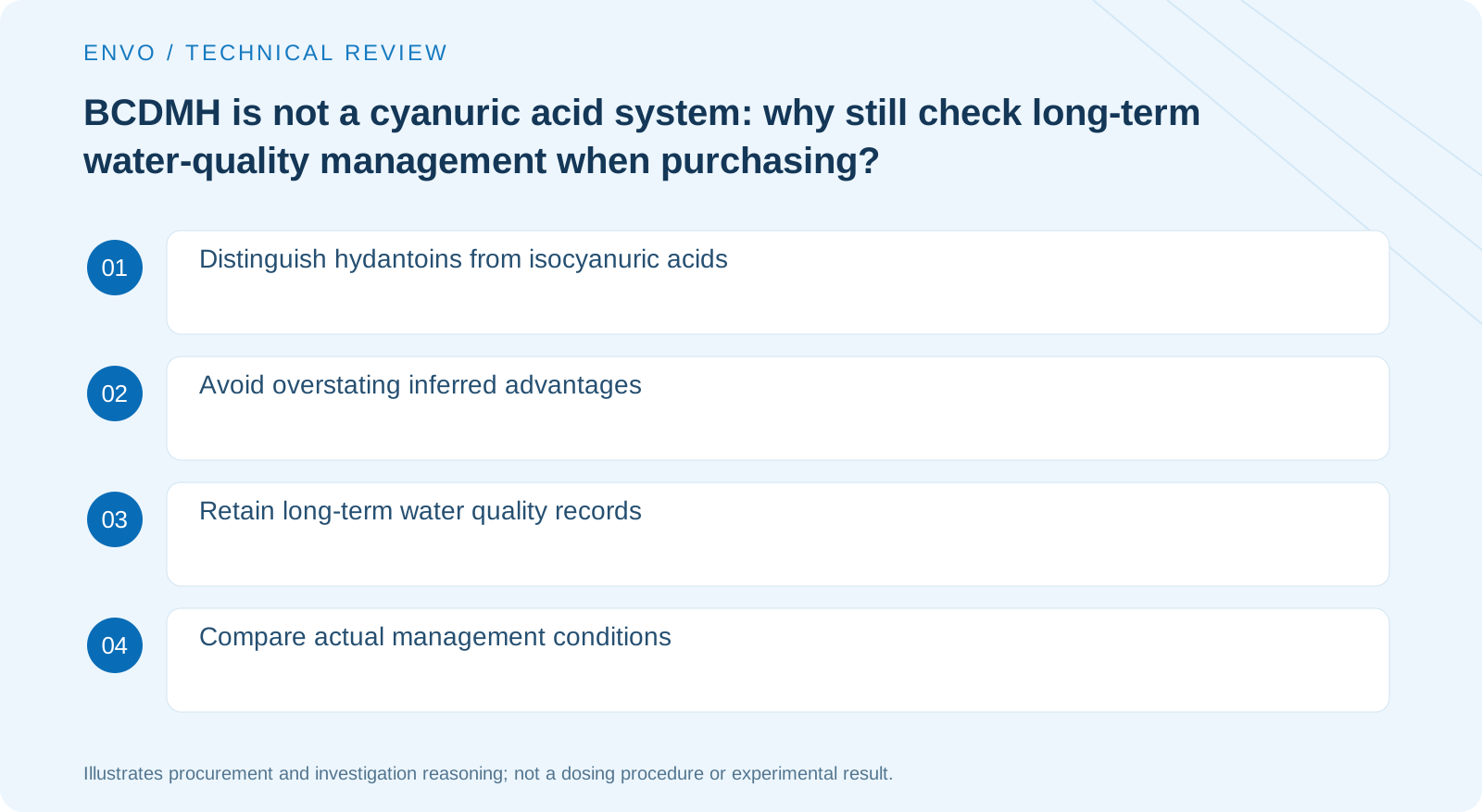
Resolve naming confusion with complete chemical identification
BCDMH is a halogenated hydantoin, whereas TCCA is a chlorinated isocyanurate; they are different chemicals. EPA halohydantoin information identifies relevant members and transformation constituents, while CDC stabilized-chlorine information discusses cyanuric acid. These sources explain category differences, not universal superiority of one route. They also do not authorize different chemicals to share an unapproved feeder.
Do not infer every advantage from the absence of one ingredient
Purchasing claims sometimes turn absence of cyanuric acid into absence of all accumulation or maintenance issues, exceeding what identity establishes. Actual products still require consideration of actives, transformation products, impurities and final quality requirements, with parameters selected by use and documentation. Customers need an implementable management plan, not a chemical name suggesting maintenance-free operation.
Retain complete long-term operating records
Track actual product usage, makeup/blowdown, principal quality parameters and maintenance changes against facility load. Keeping records is not a recommendation for a fixed water-replacement ratio; follow local requirements and operating procedures. Switching to hydantoins requires assessment of old-system residues, equipment and testing compatibility. Two white-tablet products are not necessarily routine replenishment equivalents.
Distinguish species and formulated products when reviewing evidence
Historical information may cover several hydantoin compounds or blends; conclusions cannot all be attributed to BCDMH raw material alone. Reports should match the actual model, with specific checks of permitted uses and limits for recreational water contacting people. Product photographs show reference form only, not current-batch composition, content or compliance status.
Turn the choice into a comparison of management capabilities
When comparing TCCA and BCDMH, first identify facility type, equipment, current water quality and testing capability, then check each system’s management requirements. For customers already committed to BCDMH, inquiries can focus on dosage form, documentation and delivery. Customers seeking to change chemistry should state that change separately. This recognizes chemical differences without turning the absence of an ingredient into an unsupported performance claim.
Compare basic chemical identity, long-term water-management items and actual facility procedures separately; a cyanuric-acid-free label cannot replace the whole review. When changing from an existing system to a hydantoin product, record the previous product and water-quality background. Even if the new product is not an isocyanurate, previously introduced constituents cannot be assumed to have disappeared. Verify actual site conditions.
Explore further
Does BCDMH produce the same cyanuric acid as TCCA?
They are different chemical systems and should be understood through their respective identities and formulated-product documents.
Does the absence of cyanuric acid eliminate the need to manage makeup and drainage?
That conclusion does not follow. Overall water-quality and operating requirements still need management.
References
This article draws on publicly available technical information. Third-party sources do not establish ENVO product approvals, field testing or project experience. Confirm each use against actual supply documents and site conditions.