

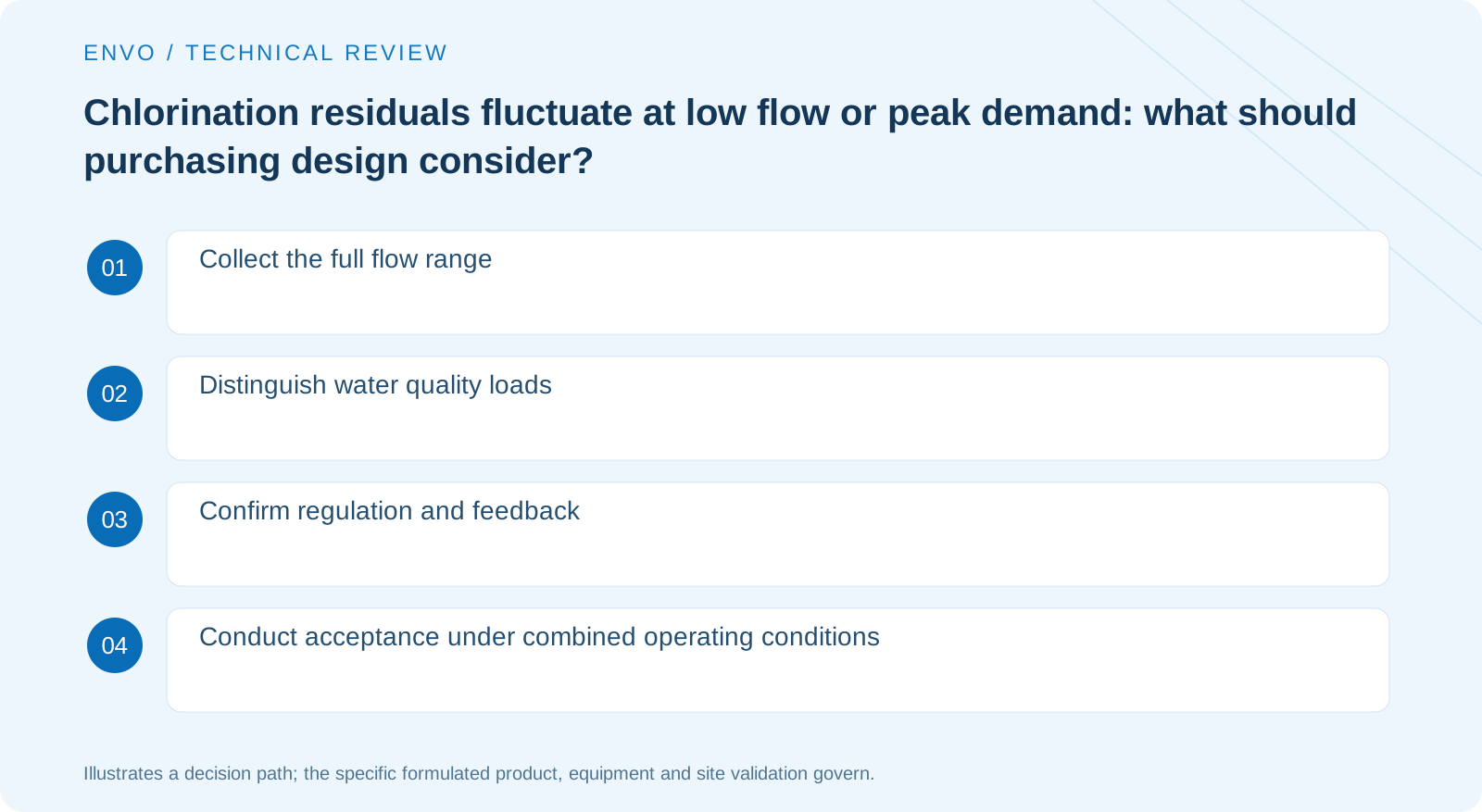
First collect the complete flow range
Record normal, low-load, peak and start/stop conditions rather than only daily average throughput. Identical daily throughput can involve entirely different short-term peaks. Designers need the operating distribution to assess whether the equipment’s adjustment range covers the project.
Separate flow changes from water quality load
Residual fluctuations may arise from flow, changes in reactive substances in the water or upstream treatment changes. Place inlet, outlet and process records on one timeline rather than letting daily averages conceal short-term changes. Do not directly attribute abnormalities to gas-source quality.
Check metering and feedback coverage
Ask for the metering, testing and control basis throughout the actual operating range and how abnormalities are detected and handled. This article provides no interlock or alarm setpoints; these are determined by professional design and equipment specifications. Do not independently bypass safety or protective functions to maintain a reading.
Express acceptance criteria as combinations of operating conditions
Acceptance should cover design-approved representative low-load, normal and peak conditions, with clear analytical methods and treatment targets. Passing under one stable condition does not establish suitability across the full range. Purchasing comparisons should list capacity alongside verifiable adjustment limits.
Review turndown capability against the actual demand curve
Provide site operating conditions at minimum, normal and peak demand and during supply interruptions, including how long each lasts and how transitions occur. A daily average flow alone may conceal low nighttime loads or intermittent demand. The equipment proposal should explain the approved operating range and control method rather than displaying only maximum rated capacity.
Check whether metering, mixing, contact and testing cover the same range. Equipment producing the required flow does not establish that the complete contact and monitoring chain works at low load. Conversely, readable monitoring does not establish stable metering. Require model-specific documentation and a validation plan rather than generic promotional curves.
Acceptance arrangements should define loads requiring professional validation and abnormal states checked only through approved simulation. Record differences from design expectations and corrective responsibilities; do not claim full-range acceptance for untested conditions. Buyers can then distinguish configuration changes from missing operating evidence without attributing every issue to feed-gas purity.
Explore further
Does sufficient daily treatment capacity guarantee capacity for peak demand?
No. Short-term flow and load ranges need separate checking.
Do residual fluctuations simply require larger equipment?
First investigate water quality, metering, mixing, monitoring and other relevant factors.
References
This article draws on publicly available technical information. Third-party sources do not establish ENVO product approvals, field testing or project experience. Confirm each use against actual supply documents and site conditions.