

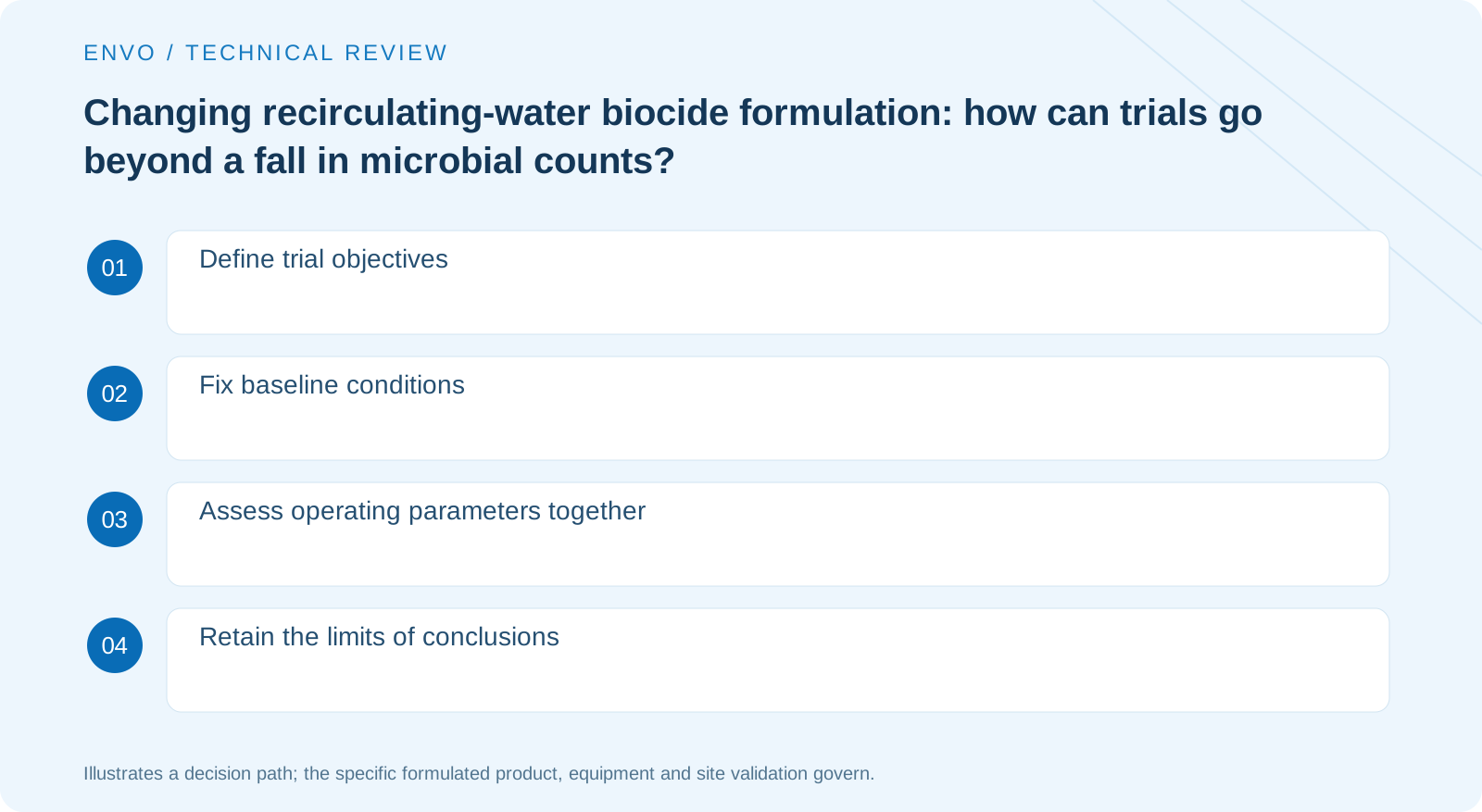
First define the problem the trial should solve
The objective may be to suppress seasonal biological load, reduce slime, improve a local operating issue or reduce recurrent abnormalities. Defining the problem enables selection of relevant indicators. Suppliers should not replace the customer’s actual equipment concerns with water-sample data that are convenient to present.
Establish a consistent, comparable baseline
Record existing chemicals, makeup and blowdown, temperature, pH, production load and sampling points. If trial and baseline conditions differ substantially, state this in the conclusion rather than attributing every improvement to the new formulation. Note changes in test methods separately, because different microbial-count results may otherwise be incomparable.
Involve microbiology and operations and maintenance personnel together
Select surface observations, differential pressure, heat transfer or other appropriate parameters according to system objectives, recording abnormalities and maintenance events. CDC cooling-tower guidance emphasizes ongoing water management. A product trial does not replace the full management plan, and a single result cannot establish sustained control.
Create records reusable in the next round
State the formulated product used, test scope, objectives achieved and parameters not observed sufficiently in the conclusion. Do not fabricate quantified cases belonging to other companies; report figures must come from actual records. When source water, load or formulation later changes, this structure supports reassessment without restarting a general argument over whether a chemical is ‘good.’
How to avoid selecting only favorable data in a trial summary
Before starting, define the objective, baseline, observation methods, representative locations and abnormalities to be reported. At completion, address each item using the same structure. Note any changes in load, sampling method or other chemicals beside the results. Retain items that did not meet expectations rather than selecting only the best dates to represent the entire trial period.
Classify conclusions as target achieved, inconclusive or unassessed. Inconclusive findings may need better sampling or more representative conditions; unassessed means no evidence, not presumed acceptance. Water-phase microbial evidence should stay within that scope rather than become improved heat-transfer efficiency or long-term Legionella control claims.
The most useful outcome for customers is the next decision: which operating conditions can proceed to validation, which gaps require documentation, and which unmet parameters require a different candidate. Linking decisions to actual product models and report versions is more reliable than inventing an overall score without site evidence, and supports tracking repeat purchases.
Explore further
Must every parameter improve during a trial?
Set objective-related acceptance criteria beforehand rather than selecting favorable parameters afterward.
Can an external case study be presented as this site’s trial result?
No. Third-party information must clearly identify its source and scope of applicability.
References
This article draws on publicly available technical information. Third-party sources do not establish ENVO product approvals, field testing or project experience. Confirm each use against actual supply documents and site conditions.