

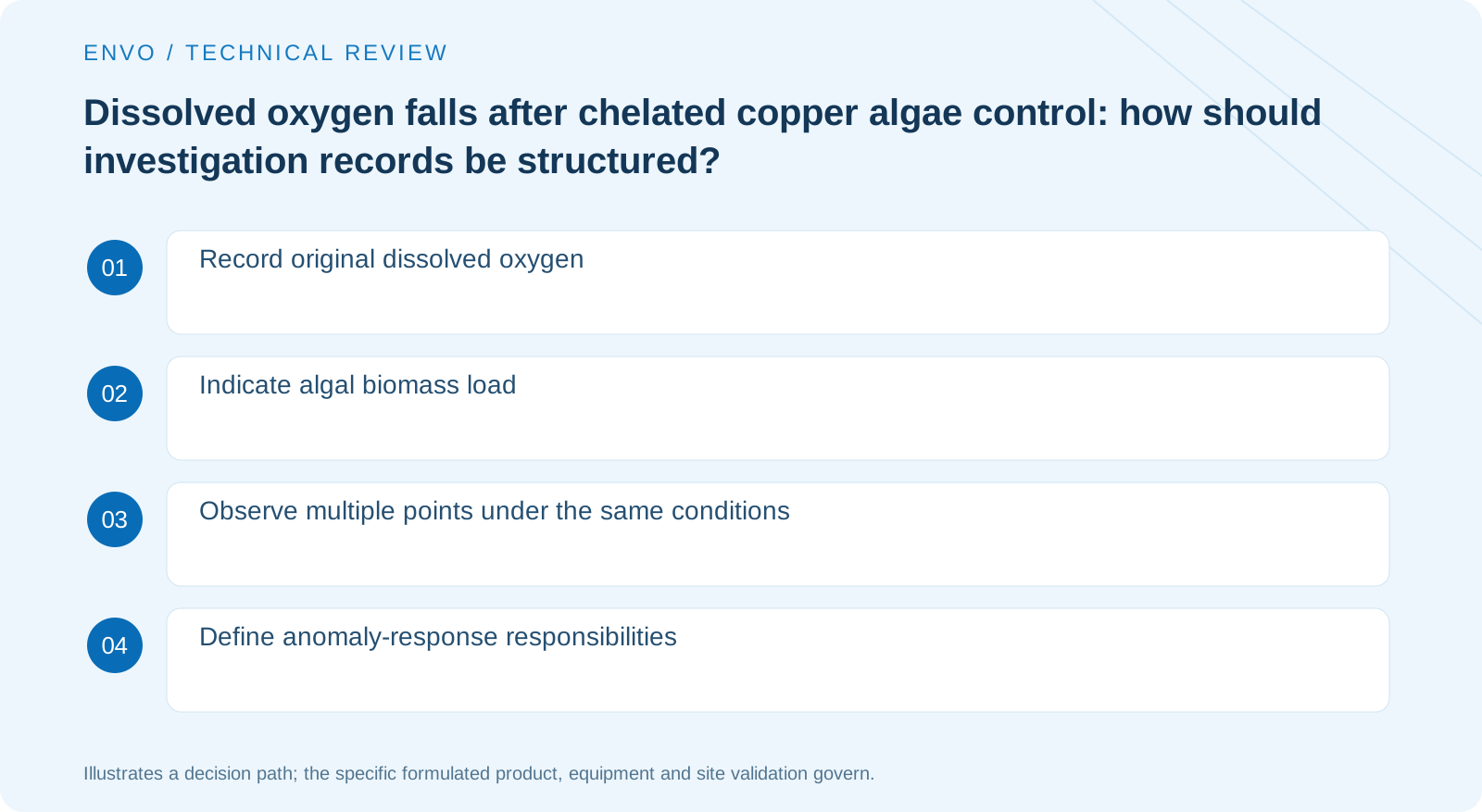
First retain pretreatment oxygen conditions
Include pretreatment dissolved-oxygen records in the planned assessment, noting water temperature, time of day, depth and instrument condition. Daytime surface readings and early-morning bottom readings are not directly comparable conditions. Without a baseline, one post-treatment result describes only the condition at that time and cannot establish the magnitude of change.
Include algal load in the explanation
The SePRO label example explicitly warns that decomposition of dead aquatic plants and algae can consume oxygen. This mechanism shows why ‘less algae’ does not mean ‘immediately more stable water.’ Investigations can record algal distribution, floating material, bottom accumulation and water exchange together to distinguish local phenomena from overall changes.
Do not use a single point to represent an entire water body
Select treated areas, untreated reference areas and areas used by sensitive organisms, and record them using the same methods. If an abnormality appears only in one corner, check its circulation, deposits and load. If several locations change simultaneously, investigate shared factors such as weather, makeup water and total biomass. Site specialists should determine any emergency response according to the actual conditions.
Specify monitoring responsibilities in the purchasing proposal
Specify in purchasing attachments who monitors, who decides whether to suspend treatment, who communicates with the water-body manager and how abnormal results are retained. Check the treatment scope and ecological restrictions on the product label instead of copying arrangements for another product. This allows the next assessment to compare the complete process rather than leaving only a vague conclusion that ‘oxygen was depleted after use.’
Separate low-dissolved-oxygen investigation from product-quality investigation
Dissolved-oxygen records should also include depth, water temperature, period, location, instrument verification and weather, with treatment extent and algal-load observations. A low reading one morning after treatment without a same-period baseline cannot accurately quantify treatment-related change. Gather comparable site information first, then let management decide which further tests are needed.
Changes across several areas on one day may warrant investigation of weather and overall load; changes confined to treatment areas suggest closer review of biomass, flow and treatment records there. Both are investigative directions, not confirmed causes. Raw-material batch conformity still depends on relevant quality criteria and must remain separate from aquatic ecological condition.
Link investigation findings to the next purchasing requirements, such as completing aquatic-use restrictions, requesting full ecological information or adjusting validation scope. Do not delete unexplained abnormalities and continue with the same generic ‘pond algae control’ requirements.
Explore further
Does complexed copper cause no ecological problems?
Chelation does not mean absence of ecological effects. Assessment must still follow the formulated-product label.
Can observation end after one normal dissolved-oxygen result?
Assess water-body conditions and the monitoring plan rather than a single result.
References
This article draws on publicly available technical information. Third-party sources do not establish ENVO product approvals, field testing or project experience. Confirm each use against actual supply documents and site conditions.