

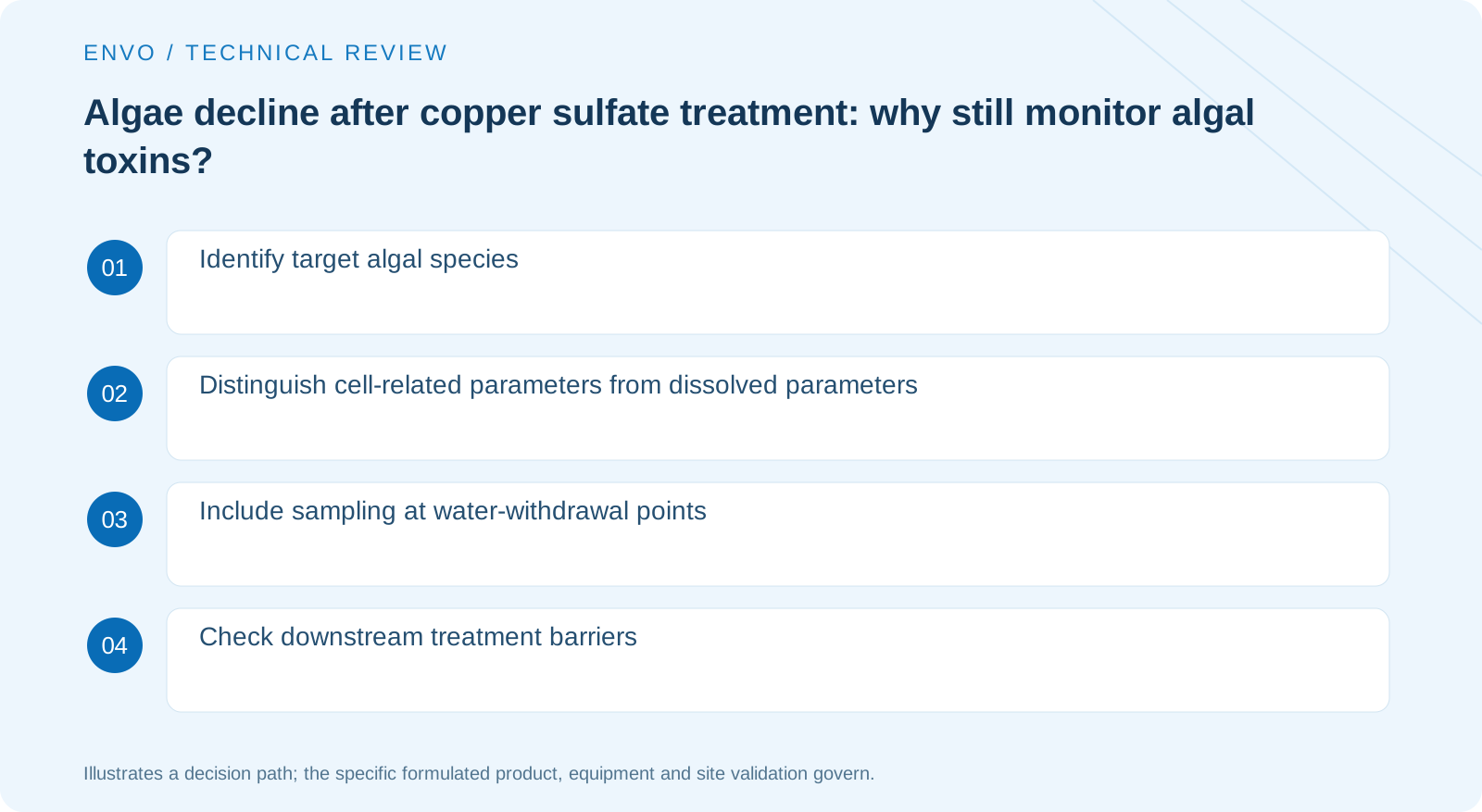
First establish whether toxin-producing cyanobacteria are involved
Record algae-identification results and water-intake uses; do not infer the presence or absence of toxins from visible color. Even among green water bodies, the organisms causing the color and the treatment targets may differ. EPA bloom-control materials present measures alongside their limitations, reminding managers to look beyond short-term visual changes.
Separate cell-related parameters from water-phase parameters
When selecting tests, ask the laboratory to clarify whether results represent algal cells, related intracellular parameters or dissolved toxins in the water. Cell changes caused by algae control do not necessarily mean that toxins have been effectively removed. A request stating only ‘water quality compliant’ may not enable the laboratory to answer the actual question, so define the specific analytes in advance.
Make sampling cover the treatment process
Establish a pretreatment baseline, post-treatment observations and checks before water abstraction resumes, covering both treated areas and potentially affected abstraction points. Avoid sampling only visibly clear surface water. Record wind direction, stratification and flow changes to determine whether result changes reflect treatment, spatial movement or altered sampling conditions.
Link algae control with downstream barriers
For drinking-water sources, downstream treatment capability and operating changes need independent confirmation. Better clarity cannot replace toxin control, disinfection or release testing. Where evidence is insufficient, procurement advice should defer use conclusions explicitly. Separate algae control, toxin management and final use so one indicator does not substitute for all risk assessment.
How to define the three algae-control evaluation endpoints
Commissioned assessments can separate endpoints into three columns: target algal biomass or cell changes, associated toxin indicators and final abstraction-use requirements. Each should state method, location, sampling time and responsible organization. Explicitly mark untested columns; improvement in the other two cannot be entered as ‘conforming.’ This prevents reports from containing only visually appealing before-and-after water-surface photographs.
For ‘less algae but missing toxin data,’ confirm visual or algal-indicator changes while withholding toxin and abstraction conclusions. For ‘less algae locally but no intake improvement,’ investigate water movement and sample representativeness. These need different next steps; neither should automatically mean another dose. Deleting unfavorable sampling points cannot make results validly better.
Water-source managers and intake operators can join the purchasing meeting to confirm these endpoints together. Shared terminology among treatment, testing and water-use parties reduces misunderstanding from mixing terms such as ‘disinfection,’ ‘algae control’ and ‘potable.’
Explore further
Must treatment necessarily increase algal toxins?
There is no blanket answer; it depends on algal species, the water body and treatment conditions, and requires targeted testing.
Can water intake resume when the water looks clear?
Decide through actual-use and water-quality assessment, not appearance alone.
References
This article draws on publicly available technical information. Third-party sources do not establish ENVO product approvals, field testing or project experience. Confirm each use against actual supply documents and site conditions.