

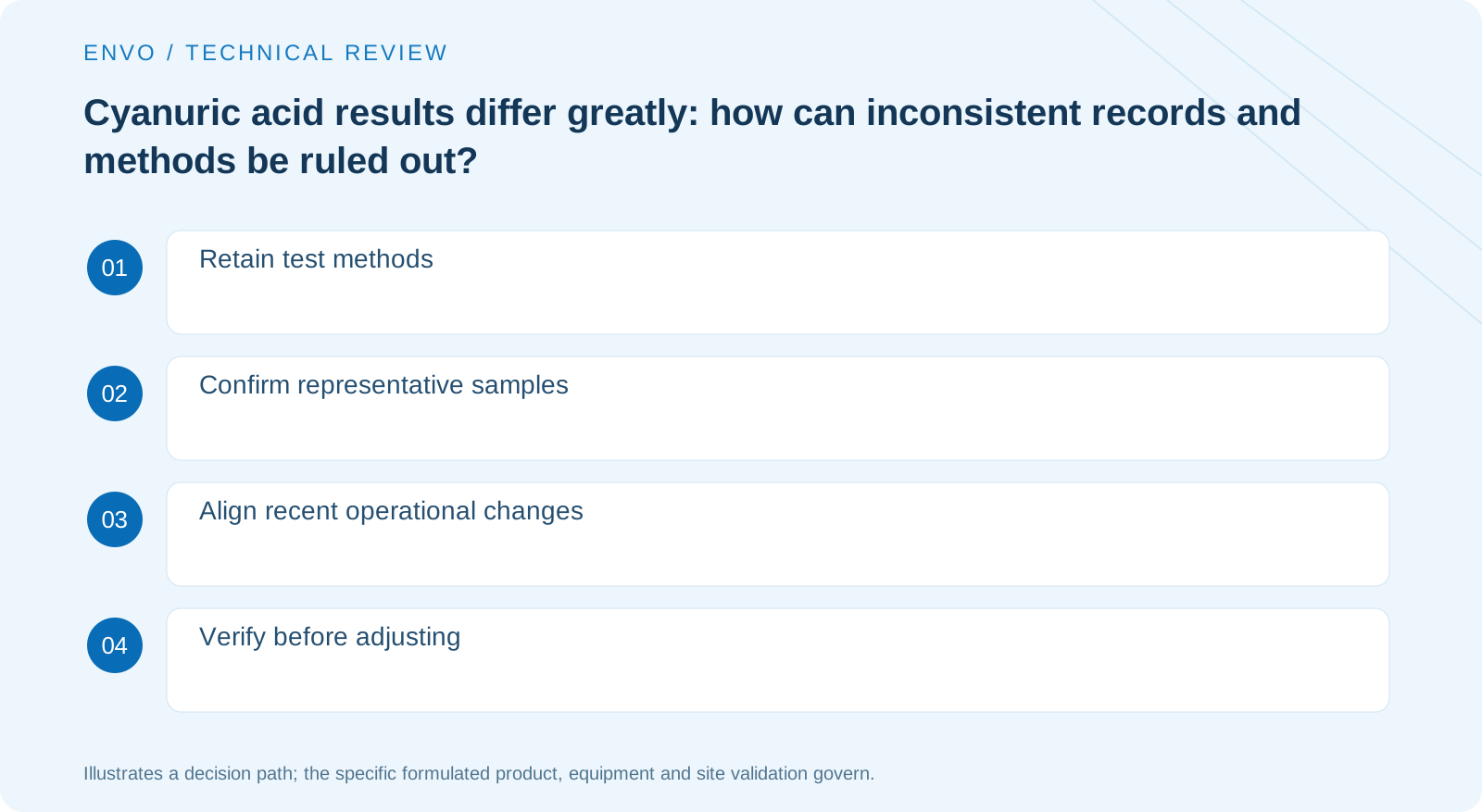
Retain methods as well as numerical values
Record the reagent or instrument model, range, sampling location and date. If reports use different test methods, ask whether results are directly comparable. Photographs are supplementary; one color or turbidity image cannot replace complete test conditions.
Check whether samples represent the same body of pool water
Changes in makeup water, local dosing and circulation may alter sampling conditions. Select representative samples under testing and operating procedures, recording relevant conditions. A local sample taken as treatment begins cannot be directly compared with a sample after stable circulation to establish overall change.
Align recent inputs with water-volume changes
Compile records of stabilized-chlorine products, separately added stabilizer, makeup and discharge water, and maintenance events as context for data interpretation. These records distinguish actual water-quality changes from noncomparable testing; they are not intended to derive a universal website dosing rate.
Verify before deciding when uncertainty remains
When abnormal jumps occur, arrange parallel testing under the method instructions or verification by a reliable laboratory. Do not continue adding stabilizer based on one result before confirmation. CDC notes that cyanuric acid affects chlorine-disinfection management, so a misread figure may influence later decisions and warrants resolving the measurement issue first.
Establish comparable conditions for repeat testing
Record the sampling point, time, appearance, method, reagents and reading conditions together for each water sample. Initially retain results from different locations or methods separately rather than averaging them immediately. For methods relying on visual judgment, check reading conditions against the instructions; do not change the procedure based on personal experience and then compare the result directly with the original.
Ask the testing provider to clarify applicability, interference and verification for contradictory results. Report above-range or below-capability findings under the method instead of inventing exact numbers. If stabilizer results materially affect purchasing, clarify reliability before decisions rather than choose the result closest to expectations.
Compare verified data with recent pool makeup, product changes and operating conditions as explanatory clues, not proven causes. State what current data establish and whether further checks are needed. This helps avoid rushed purchases of large stabilizer quantities during analytical uncertainty or rejecting an entire program because of one anomalous value.
Explore further
Can results from different test kits be joined directly into a trend line?
First confirm the method, range and comparability.
Can stabilizer be added based on experience when readings are unclear?
Recheck testing and pool-water procedures first; do not decide on uncertain results.
References
This article draws on publicly available technical information. Third-party sources do not establish ENVO product approvals, field testing or project experience. Confirm each use against actual supply documents and site conditions.