

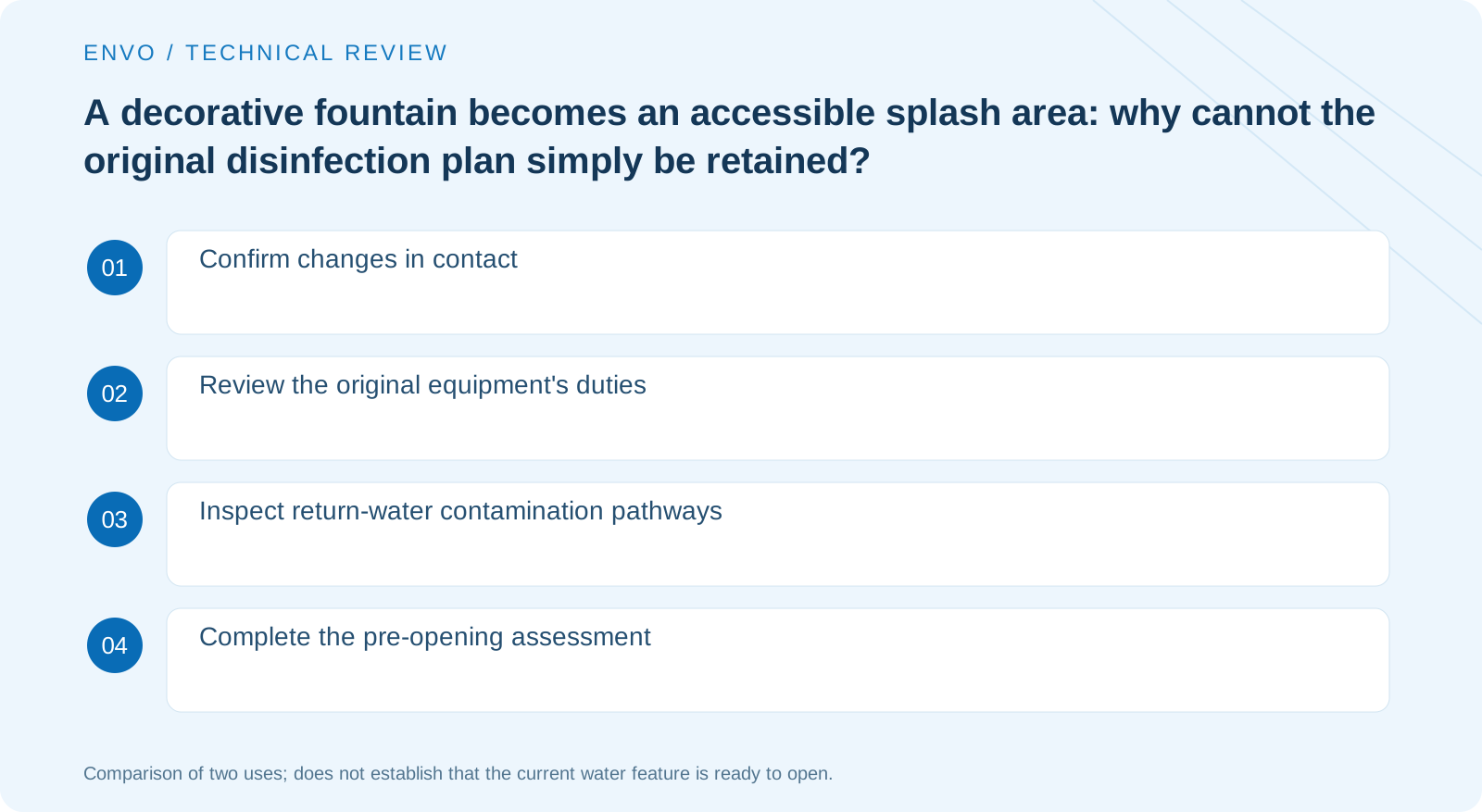
Identify application changes from the mode of contact
Decorative water may create mist or close-range exposure; people entering the water add direct contact and contamination inputs. State whether walking, play or spray contacting mouths and noses is allowed and whether water recirculates. Shallow, clear-looking or small pools do not define management requirements. Actual behavior determines use, not merely the original construction name.
List the original system’s capabilities again
Compile filtration, disinfection, circulation, storage and drainage configurations and confirm maintenance and sampling access. CDC provides separate guidance for decorative fountains and interactive water features, showing that their records cannot automatically substitute for one another. Compare each component’s original role with new needs, marking confirmed suitability, modification needs and professional-assessment needs.
During retrofit meetings, operations, equipment and property teams can mark responsibilities on one plan, particularly checking floor returns against landscape makeup and stormwater connections. Resolve conflicting destinations by site inspection before deciding opening arrangements. More product purchases cannot fill responsibility or design gaps while routes remain unclear.
Check contamination introduced by surfaces and return water
How water moves between the ground, nozzles, drains and storage tanks determines which areas belong within hygiene management. If return water may mix with rainwater or site-cleaning water, clearly define isolation and treatment boundaries. Do not overlook the return-flow arrangement while simply purchasing a stronger chemical. The site operations team should be able to identify unusual contamination events and respond under the facility’s rules.
Define personnel responsibilities before reopening
Before opening, assign testing, routine inspection, maintenance, user-load management and abnormal-condition closure responsibilities. Supplier commissioning reports do not replace operating arrangements, and completed landscape construction does not establish suitability for a new contact use. The project team and relevant professionals should confirm requirements and opening conditions; this page does not determine operating authorization.
Include the intended use in the retrofit inquiry
Provide drawings, planned activities, recirculation volume and maintenance capability, asking suppliers to distinguish reusable equipment from new support. If opening permission remains unresolved, do not advertise an ordinary fountain product for children’s splash play. A change-of-use checklist focuses discussion on missing barriers and avoids indiscriminately adding accessories to existing systems.
Explore further
Do shallow-water facilities require no complex management?
Depth alone cannot determine this; actual contact patterns and return-water circulation are equally important.
Can satisfactory decorative-fountain testing directly support acceptance of a splash-play area?
No. Recheck requirements and validation scope for the changed use.
References
This article draws on publicly available technical information. Third-party sources do not establish ENVO product approvals, field testing or project experience. Confirm each use against actual supply documents and site conditions.