

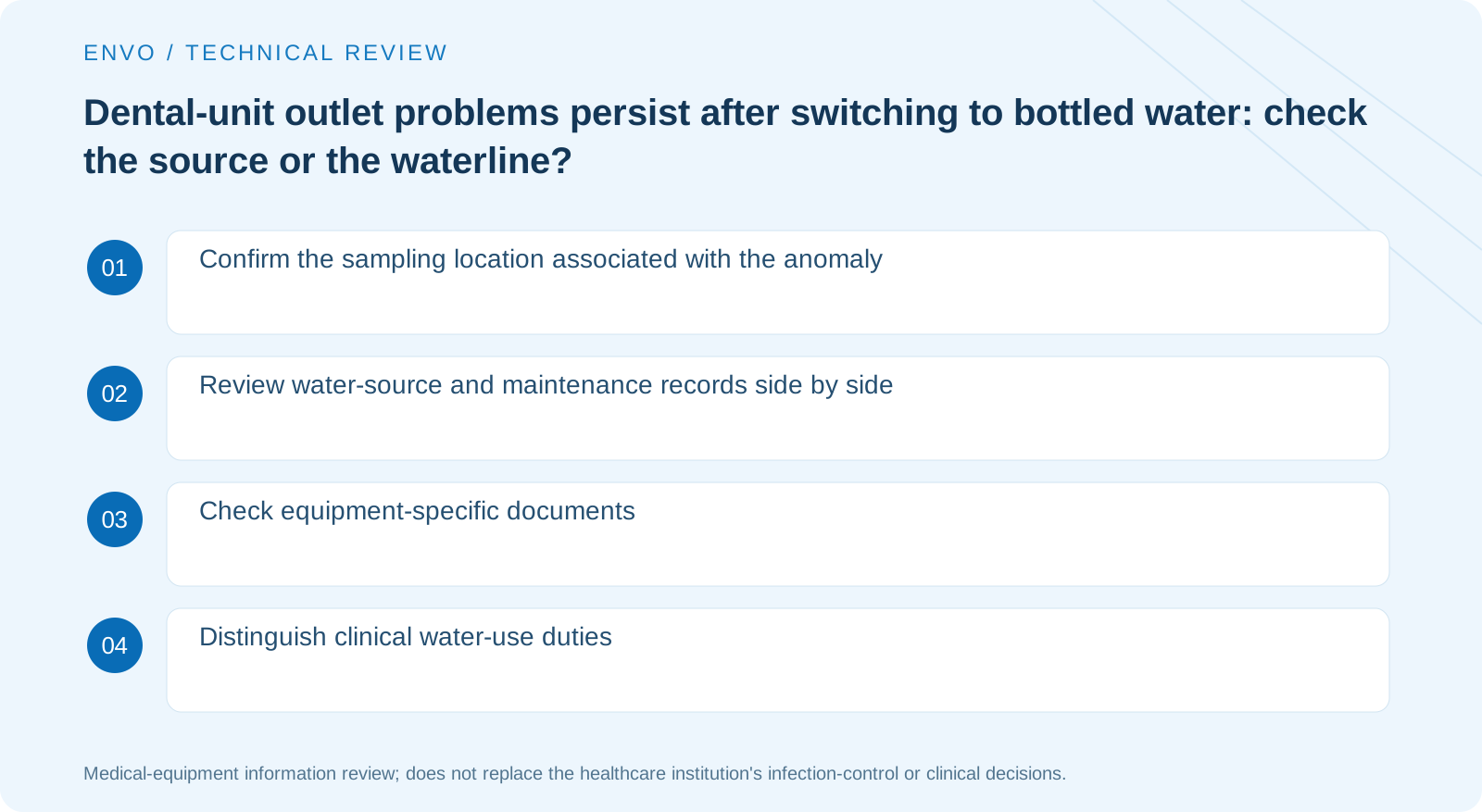
Describe precisely where the anomaly occurred
Link each report to the dental-chair identifier, sampling location and actual period of use, stating whether water came from newly opened packaging, a reservoir bottle or the equipment outlet. Do not directly compare one source-water report with an outlet result from a different chair as before-and-after data. Even when multiple units share a water source, retain individual equipment identities to determine whether anomalies cluster at a particular location. Sampling and analytical methods should be confirmed by the facility’s quality or infection-control lead and the testing provider; do not change sampling locations casually while retaining old conclusions.
Review water-source changes alongside maintenance history
Compile recent records of source changes, reservoir-container treatment, equipment shutdowns and maintenance-product use, identifying any associated changes. Where information is incomplete, separate known facts from outstanding checks instead of immediately blaming a brand. The condition of internal waterlines and incoming water quality are related but distinct. Suppliers need the specific model and actual maintenance conditions to assess whether a dedicated product falls within the manufacturer’s permitted scope.
Verify the maintenance product’s actual equipment scope
Obtain maintenance and monitoring recommendations for the current dental-equipment model from its manufacturer, then assess candidate product documentation. General industrial biocides, raw materials with the same ingredient and dedicated dental-waterline products cannot be considered equivalent from names or concentrations alone. This article does not recommend applying ENVO general chemicals directly to dental chairs. Inquiries may address documentation, identity and compatibility, but the healthcare institution must determine clinical use and incident response under professional procedures.
Record different clinical water-use duties separately
Routine dental-treatment water and sterile irrigation for surgery have different requirements; CDC explicitly describes sterile fluid delivery for the latter. Completing routine waterline maintenance therefore does not automatically satisfy every clinical task. Purchasing lists should identify the equipment and use served, with scope confirmed by the responsible personnel. Subsequent checks should rely on relevant reports and continuing maintenance records, not a photograph of a replaced bottle or one normal reading as a substitute for overall equipment water-quality management.
Explore further
Does using bottled water mean water-line maintenance can stop?
This does not justify stopping. Follow equipment-manufacturer recommendations and the organization’s water-quality management procedures.
Can an inquiry simply specify dental disinfectant solution?
Also state the equipment model and specific use so specialized products and equipment documents can be checked first.
References
This article draws on publicly available technical information. Third-party sources do not establish ENVO product approvals, field testing or project experience. Confirm each use against actual supply documents and site conditions.