

Do not copy conclusions across columns when reading the table
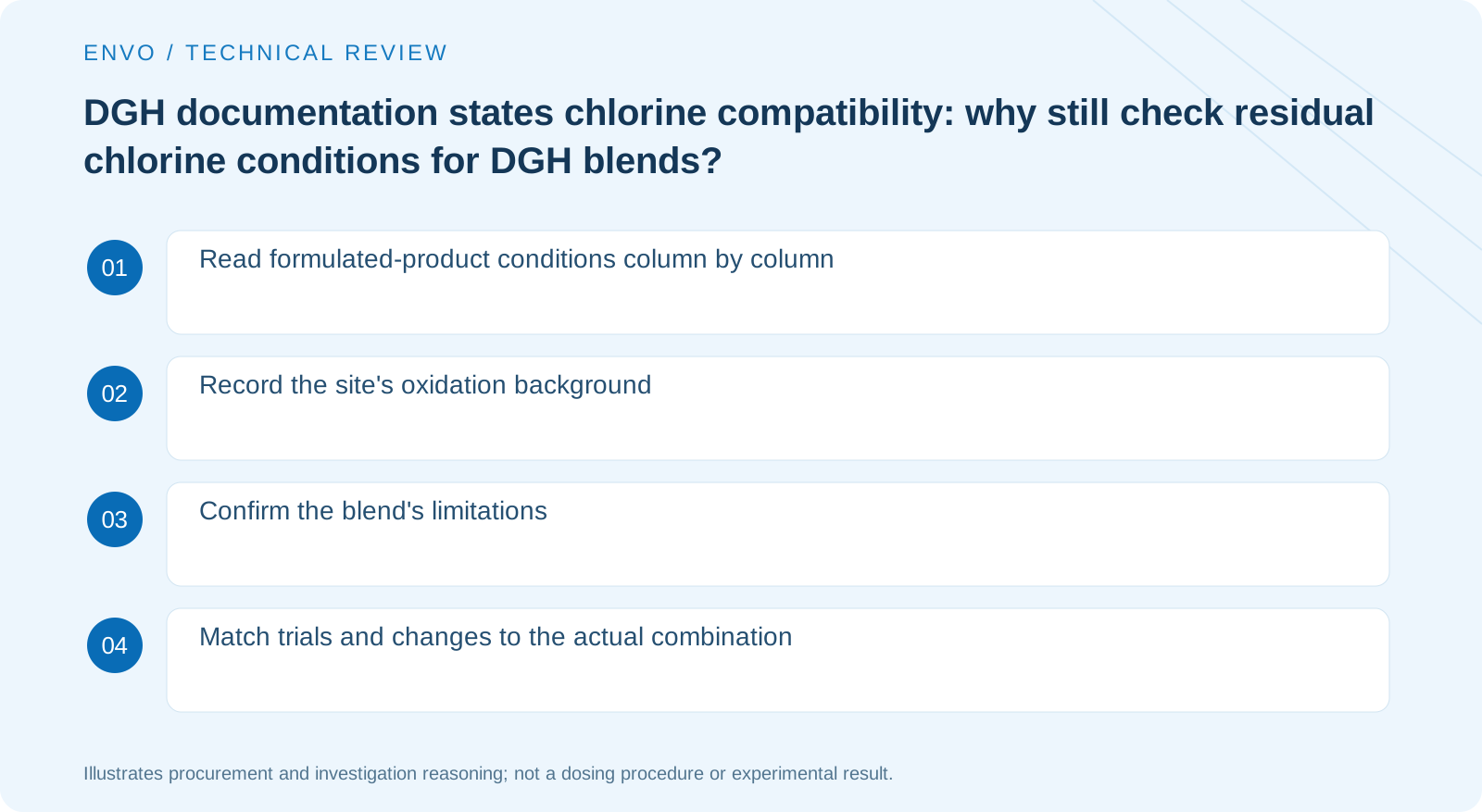
LANXESS’s DGH product comparison shows differences in application conditions and chlorine-related statements among formulations. This directly illustrates why conditions in one column cannot be copied into another merely because both headings say DGH. Review the actual model item by item without omitting other actives; a manufacturer’s specific values cannot become universal operating limits for all DGH combinations.
Record the actual status of existing oxidation treatment
Describe the system’s existing oxidative treatment, monitoring and operating arrangements to the supplier rather than merely saying chlorine is present or absent. Qualified site personnel should collect and interpret data; one sample should not represent an entire day’s conditions. The objective is to determine whether current product information covers actual conditions, not to obtain website instructions for simultaneous dosing or residual adjustment. Responsible personnel should perform such work under valid procedures.
Check whether other ingredients become limiting factors
Another active ingredient, stabilizing system or carrier in a blend may change applicable conditions, but specific reactions should not be guessed from an unknown formulation. Ask the supplier which conditions are validated and which need site confirmation, with corresponding evidence. If only DGH background information exists without blend-specific technical documents, state the gap clearly. A broad claim of compatibility with common water-treatment chemicals cannot replace verification of the actual combination.
Retain the oxidation background when reporting trial results
Reports should record the actual product, water matrix, relevant monitoring and trial conditions so later readers can assess site similarity. Trials in clean water without existing oxidative treatment do not automatically establish performance during combined operation. When effects differ, first check conditions and methods rather than immediately declaring blend instability or adding chemicals. Missing context can make additional testing equally inconclusive.
Turn compatibility confirmation into inquiry and change-control fields
Product inquiries should retain current disinfection and other chemical information so customers can submit key conditions without understanding the complete mechanism. Technical replies should address the actual formulation and permitted uses and define validation limits. Review those limits again when adding ingredients or changing the existing treatment. This makes compatibility statements usable technical information rather than marketing claims without a defined subject.
If a formulation also contains Bronopol or other actives, include its full product name in inquiries rather than DGH alone. Technical personnel can then identify relevant application conditions, avoiding single-agent information being misapplied to a blend. Combination details on the page must come from actual documents, not assumptions about common market formulations.
Explore further
Can basic DGH compatibility information cover every blend?
No. Check the complete conditions for the actual formulated product.
Can combination compatibility be assessed without existing chlorine-residual records?
The information may be insufficient; add actual operating context before reassessment.
References
This article draws on publicly available technical information. Third-party sources do not establish ENVO product approvals, field testing or project experience. Confirm each use against actual supply documents and site conditions.