

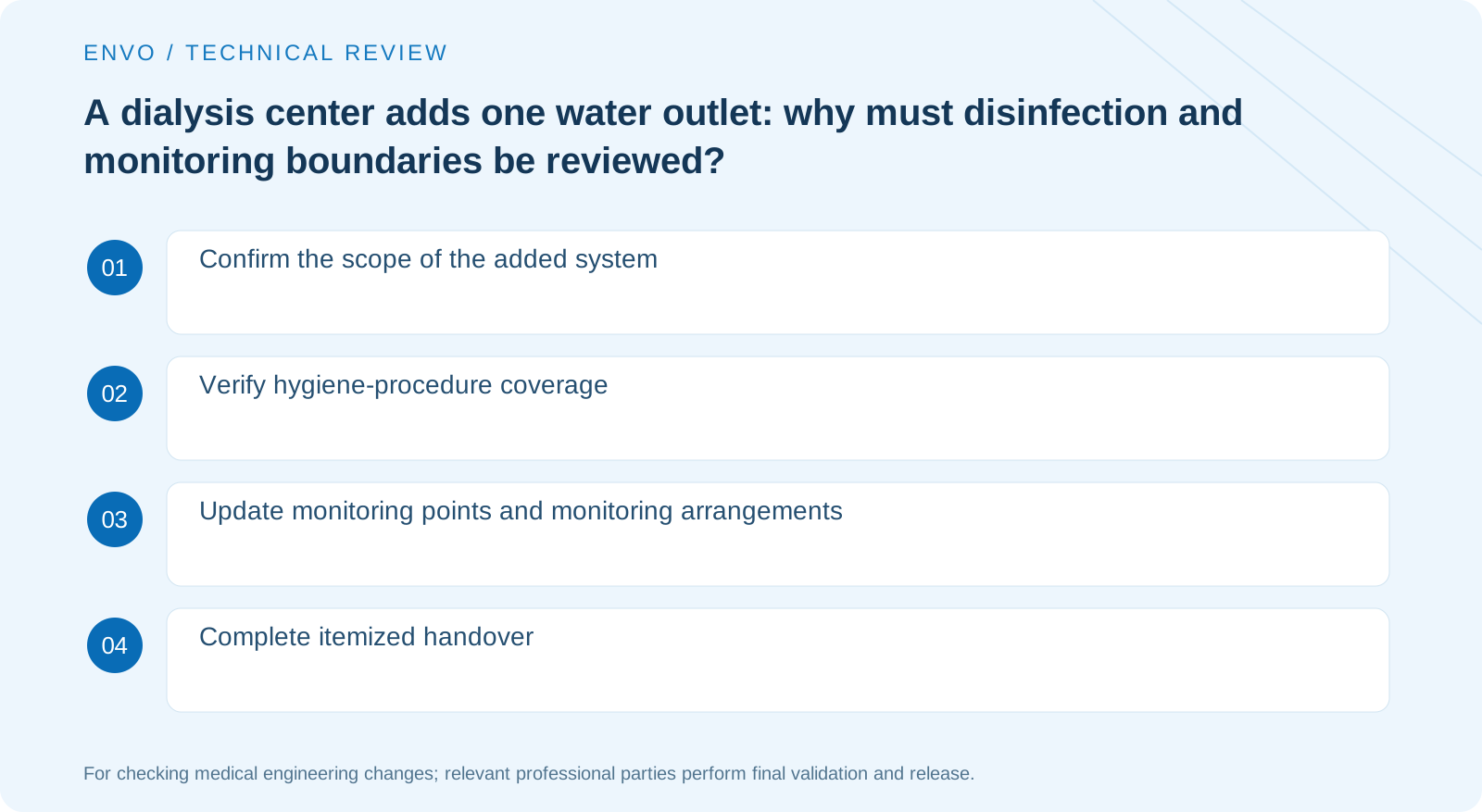
First identify which system section the change connects to
Have the engineering team mark new connections, branches, connected equipment and isolation points on the actual system drawing and check it against site conditions. Include how new endpoints are used and how long they remain idle; pipe length alone is insufficient. CDC dialysis-water guidance highlights design concerns such as unused branches that encourage microbial retention. Engineering decisions remain with the responsible team; do not modify piping directly from a website description.
Review coverage of the existing hygiene procedure
Compare the area served by the original approved procedure with the modified area, and check whether new components fall within permitted materials and equipment. Successful completion of a cycle in the original system does not establish equivalent treatment of additions. Both thermal and chemical hygiene approaches require equipment and institutional specialists to confirm actual coverage and return-to-service conditions. Suppliers can provide accurate product or component information, but identical material or ingredient descriptions alone cannot establish full equivalence to the previous validation.
Update labeling and sampling lists together
Add new point identifiers, drawing versions, maintenance assets and responsible people to the handover package, and have the quality lead review monitoring arrangements. Construction personnel or chemical suppliers alone should not determine sampling locations or result interpretation. Continued use of old equipment names in daily records can prevent later anomalies from being located. Agreeing names before the change reduces repeated form revisions, misfiled reports and missed maintenance.
Include outstanding items in project handover
At acceptance, separately review installation documents, relevant confirmation records and personnel handover, identifying open items and responsible parties. Project completion, water flow through equipment and release for medical use are three distinct conclusions that cannot substitute for each other. Inquiries can provide the approved change scope and existing sanitation approach before discussing formulated products, consumables or documentation support. If changes remain at the design stage, clearly identify the discussion as proposal review; a generic supplier certificate cannot establish the suitability of the entire proposed system in advance.
Involve the maintenance team in receipt and handover
At handover, ask the actual maintenance personnel to check new location names against site labels and confirm that they can find the relevant documents. Completing design and purchasing does not mean routine operators understand the scope of changes. Clear handover reduces later misassignment of records.
Explore further
Can change review be omitted if the new outlet is very close?
Distance alone cannot determine this. The organization and engineering specialists should confirm actual impacts and required validation.
If the chemical model is unchanged, can document updates be skipped?
Also check for changes in system coverage, components and monitored analytes. An unchanged product does not mean an unchanged system.
References
This article draws on publicly available technical information. Third-party sources do not establish ENVO product approvals, field testing or project experience. Confirm each use against actual supply documents and site conditions.