

Translate descriptions of user experience into testable conditions
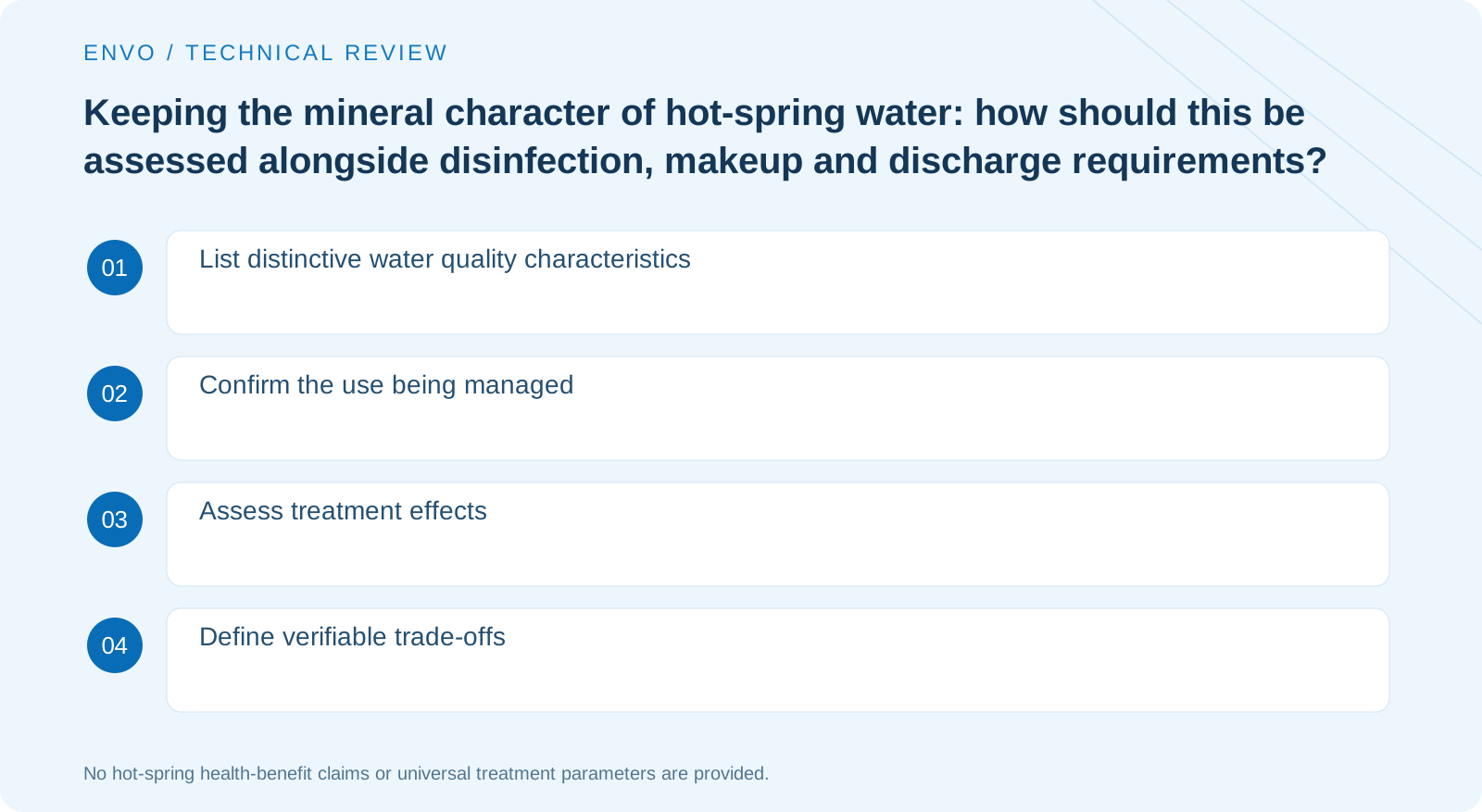
‘Preserve the mineral feel’ or ‘leave spring water unchanged’ is too broad for procurement. Operators should list actual water-quality, appearance, odor and equipment concerns, separating promotional language from verifiable criteria. Raw-water reports should identify sampling point and time, with seasonal source changes recorded. A report from years ago cannot represent every operating state.
It is also necessary to identify raw water, pool water and makeup water separately. A raw-water composition report does not directly represent pool water after circulation, makeup and treatment. If marketing describes particular minerals, verify which water stream and test the description refers to, rather than combining source-water characteristics and pool hygiene control into one unverified conclusion.
Confirm the management category applicable to the bathing pool
Recirculation, human contact, temperature, load and spray formation affect management scope. CDC hot-tub information emphasizes challenges from high temperature, small volume and bather load, while individual projects must follow local requirements. Thermal-spring origin, wellness advertising or the pool’s name does not automatically change required controls or opening conditions.
Compare the overall effects on water quality and materials
Ask each candidate proposal how methods, residuals, deposits and material compatibility require validation. Confirm method suitability for unusually colored or mineral-rich water. Clean-water demonstrations or improvement in one parameter are insufficient. Retain source-water and treated-water comparisons and distinguish user-experience changes from safety-control results.
Discuss makeup and blowdown alongside treatment duties
If operations seeks lower makeup-water use, describe current replacement, filtration and cleaning practices rather than treating water savings as the sole objective. Review personnel load, storage and circulation, wastewater destinations and recovery conditions together. Project responsibility and applicable management requirements determine whether changes are permitted. A chemical supplier cannot promise removal of necessary steps from the product name alone.
Define evidence limits for external statements
Customer-facing descriptions can explain source-water characteristics and implemented management, but natural constituents do not mean natural sterility and must not generate invented health claims. Retain product documents, actual tests and equipment validation internally, using only supported language externally. Procurement can focus on water characteristics to preserve and defined control objectives, leading to an operating plan that explains tradeoffs.
Explore further
Can natural hot springs remain untreated?
Water-source name alone cannot determine this; assess the use, process and local management requirements.
Do all disinfection methods affect mineral water in the same way?
No. Validation must use the specific water sample, formulation and treatment approach; no generalized promise is made.
References
This article draws on publicly available technical information. Third-party sources do not establish ENVO product approvals, field testing or project experience. Confirm each use against actual supply documents and site conditions.