

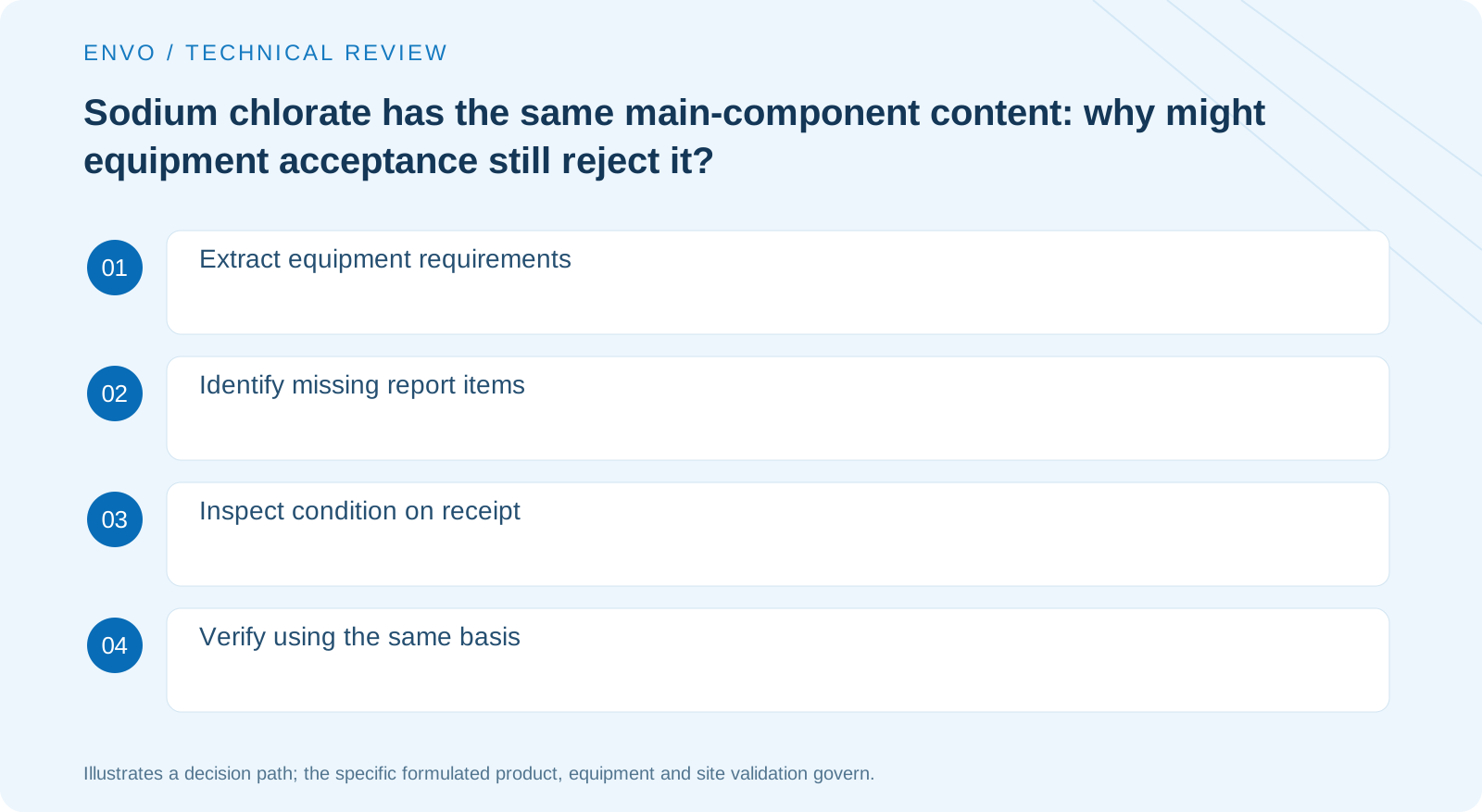
Turn equipment requirements into a purchasing checklist
Obtain the complete raw-material specification rather than extracting only the main-assay line. List each parameter’s name, expression basis, method and guaranteed range. Mark supplier-listed parameters absent from equipment requirements as supplementary information, avoiding combination of two different documents into an assumed standard.
Distinguish an untested parameter from a compliant one
An impurity omitted from a report is not necessarily absent. Detection limits, result formats and method applicability also require explanation. If the equipment supplier requires a specific analysis, confirm during procurement whether the supplier can provide it rather than introducing new acceptance criteria at receipt.
Separate solid appearance from chemical quality
Caking, damaged packaging and foreign matter are arrival conditions requiring investigation, but visual inspection cannot determine every component. Record photographs, batch numbers and sampling conditions and let the quality process determine retesting. Do not independently treat abnormal raw material before connecting it to the generation system.
Retain consistent batch evidence
After a sample passes testing, the order should specify the same model and agreed acceptance parameters. If later batches have abbreviated reports, check for omitted critical parameters. EPA precursor descriptions help confirm the material’s role but are not equipment acceptance criteria.
How to make rejection discussions more specific
Document nonconformities as order item, equipment basis, supplier guarantee, delivery result and retest conclusion. Resolve comparability first when methods differ; handle specification deviations under the contract. Clear dispute records distinguish equipment incompatibility, missing documents and actual chemical nonconformity and help prevent recurrence in future procurement.
Turn rejection risks into explicit terms in advance
Mark each critical quoted parameter guaranteed, typical or not provided. Better-looking typical values are not batch commitments. Align methods and bases before comparing method-dependent parameters rather than immediately rank suppliers. Define tolerances, retesting and dispute handling clearly in purchasing documents.
A report missing an equipment-required parameter means that parameter is unproven, not automatically excessive or acceptable. Additional tests require representative samples from the batch. Archive accepted specifications as a separate version and update them with equipment requirements to prevent omissions from repeated copying of old orders.
Explore further
Can a batch be accepted if the COA states only purity?
Check whether it covers every critical parameter specified by the equipment and order.
Can an impurity omitted from a report be treated as zero?
No. State whether testing was performed, the method and its detection capability.
References
This article draws on publicly available technical information. Third-party sources do not establish ENVO product approvals, field testing or project experience. Confirm each use against actual supply documents and site conditions.