

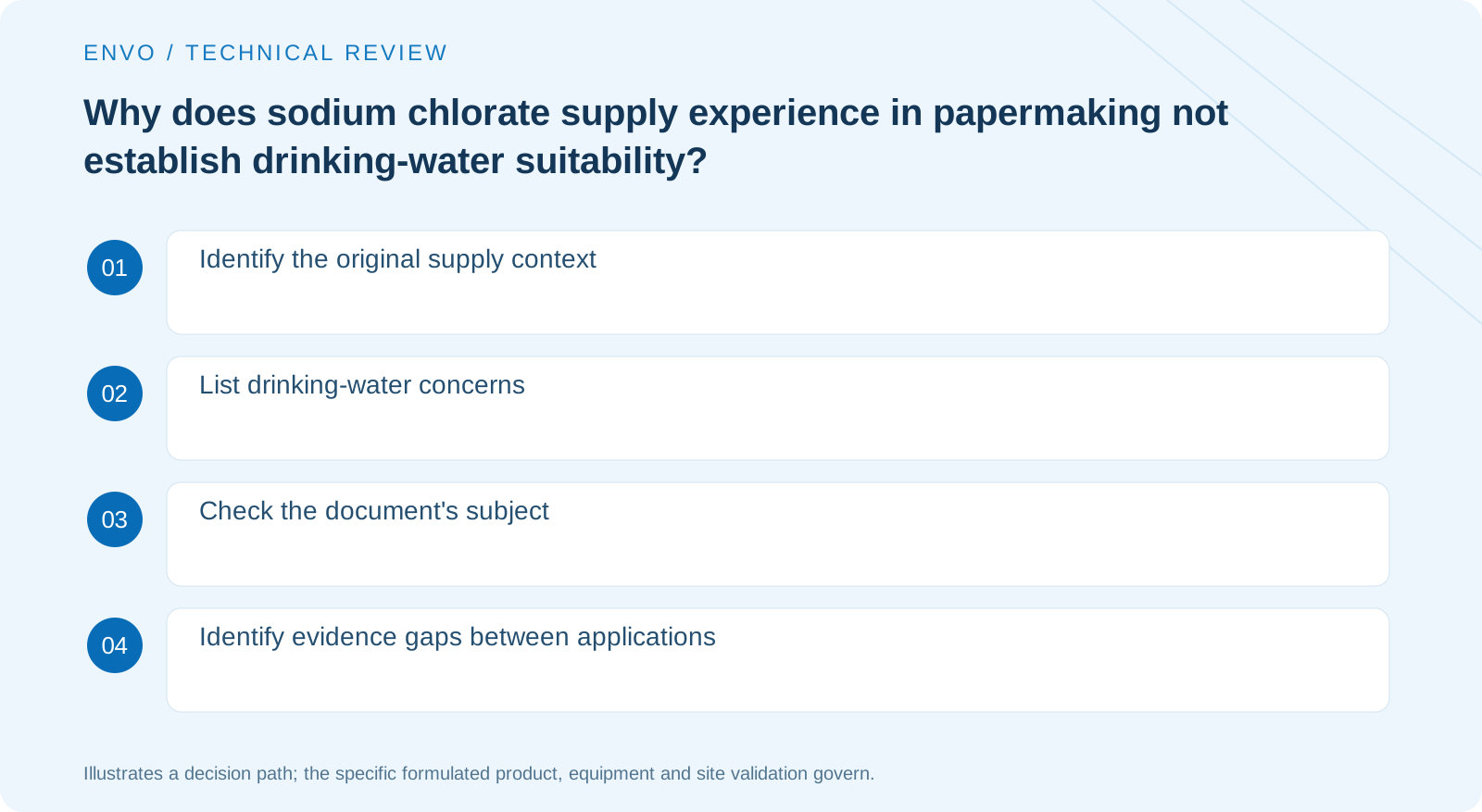
First identify the stage to which the experience applies
A supplier’s longstanding business with pulp mills may involve particular generation and bleaching processes. Ask which system uses the raw material, what product it generates and what final objective it serves. ‘The customer is a large factory’ is not universal technical evidence for every water use.
List drinking-water concerns as separate requirements
Raw-material impurities, generated-product by-products and final water quality should be confirmed against the specific system and destination requirements. No cross-regional limits are given here because limits must match use conditions and current requirements. A shared chemical name resolves identity only, not the conditions for use.
Check that the documents apply to the product being purchased
Check manufacturers, models and batch numbers in reports, distinguishing industrial raw-material tests, equipment technical documentation and use-related evidence. Historical third-party supply-chain reports provide industry context only. They neither represent ENVO batches nor establish that a supplier’s current product is approved in the target market.
Trigger reassessment when requirements span different applications
If a project moves from pulp-industry use to drinking water, create a new documentation and validation checklist rather than merely changing the application name on an old acceptance form. List questions the supplier cannot answer clearly instead of substituting an unrelated major-customer list for evidence.
How purchasing staff can organize the gaps
Use two columns for ‘existing industrial-supply evidence’ and ‘items still requiring confirmation for this water use,’ listing raw-material specifications, equipment suitability, product identification, by-product analysis and final use. Identify which column each document supports. This preserves existing experience while focusing technical teams on substantive gaps instead of repeatedly requesting irrelevant promotional information.
Specify exactly which capability the project experience demonstrates
When reviewing cases, identify final industry, raw-material role, specification, supply scope and performance criteria. Suppliers need not disclose client secrets but should explain experience limits. Pulp-mill delivery photographs support logistics context, not drinking-water suitability. A raw-material content report does not validate a generator’s final-water performance.
New water projects should separately identify equipment approval, raw-material quality, product analysis and final-use evidence and match existing documents item by item. Reuse valid supply-chain information without recreating it, while explicitly filling application-evidence gaps. This respects genuine industrial experience without converting one industry’s capability into unvalidated universal qualification.
Explore further
Does export to many countries establish drinking-water suitability?
No. Documentation must correspond to the specific product, process and destination.
Are industrial-grade raw materials necessarily excluded from drinking-water treatment?
A grade name alone is insufficient; check requirements and evidence item by item.
References
This article draws on publicly available technical information. Third-party sources do not establish ENVO product approvals, field testing or project experience. Confirm each use against actual supply documents and site conditions.