

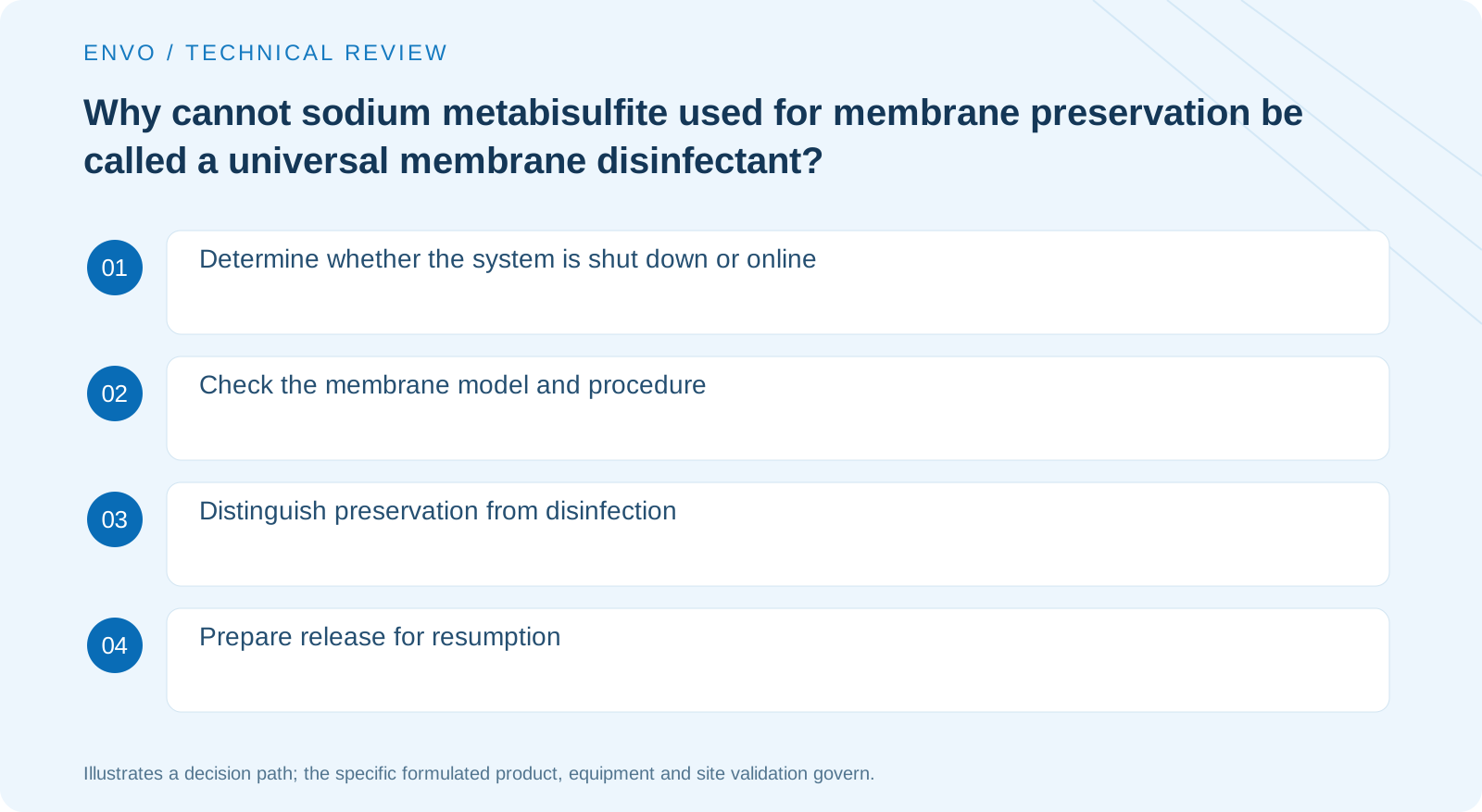
Determine objectives from equipment status
Confirm whether the system requires shutdown preservation, restart or dechlorination during normal water production. Different tasks require different documentation and acceptance endpoints. DuPont manuals describe multiple treatment procedures separately, indicating that purchasers should not merge uses merely by chemical name.
Check the specific membrane model and procedure
Confirm permitted formulated products and conditions under the membrane manufacturer’s requirements for that model. Generic preservation experience cannot apply to every membrane material. Also consider system seals, piping and other contact components. This webpage provides no preservation formulation or timed procedure across different equipment.
Separate preservation records from hygiene performance
Preservation-procedure records show whether a process was completed as required; they do not automatically establish removal of existing biofilm or compliance for every microorganism. If the system is already contaminated, diagnose the contamination and determine appropriate cleaning and hygiene measures first. Switching to a ‘preservation solution’ alone does not resolve the issue.
Define requirements for resuming operation
Prepare the relevant flushing, testing and performance-restoration basis before procurement to avoid releasing product water immediately after preservation ends. Link batch quality, equipment procedures and final-use documentation. Sodium metabisulfite’s role in the project can be accurately described only when the objective and evidence align.
Create a separate documentation package for shutdown preservation
The documentation package should include the membrane model, shutdown status, manufacturer-approved preservation instructions, the identity of the chemical actually used and restart requirements. Record whether the membranes are new, used or have undergone cleaning, as these conditions may affect what needs confirmation. An article describing sodium metabisulfite uses cannot directly establish a preservation procedure for every membrane system.
Separate preservation acceptance from disinfection assessment: the former concerns equipment-approved procedures and preservation conditions, the latter specific microbial objectives and evidence. Even the same raw material cannot make the tasks validate each other. For post-preservation anomalies, provide preservation and restart records so the membrane provider can determine further checks.
Orders should specify sodium metabisulfite and its intended task rather than merely ‘membrane biocide.’ Review documents when manufacturer-approved conditions, membrane models or chemical identity change. This aligns raw-material identity, process role and customer expectations, preventing preservation-support materials from being advertised as unvalidated universal disinfection solutions.
Explore further
Can a preservation solution be used as a universal biocide?
No. Distinguish the duties and check the membrane manufacturer’s procedure.
Does completing a preservation procedure prove contamination has been removed?
No. Contamination removal and hygiene verification require separate judgments.
References
This article draws on publicly available technical information. Third-party sources do not establish ENVO product approvals, field testing or project experience. Confirm each use against actual supply documents and site conditions.