

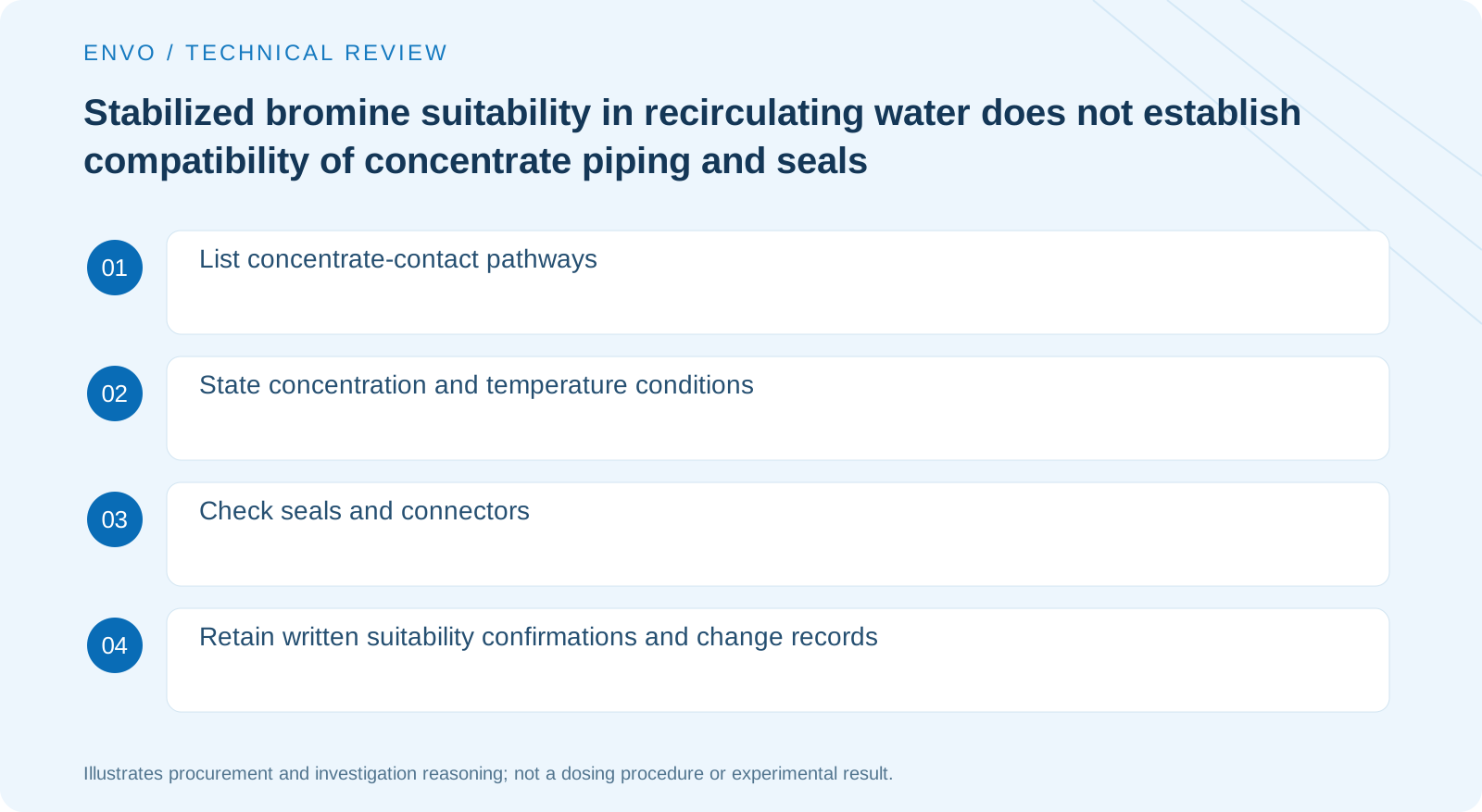
List materials component by component along the chemical path
Record materials and contact conditions throughout packaging connections, unloading fittings, tanks, metering pumps, seals and injection points. Describing the system simply as stainless steel or plastic is insufficient because components may use different grades or elastomers. ICL documentation for a specific stabilized bromine product distinguishes material behavior with concentrate and under use conditions. This underscores the need to establish contact conditions rather than approve an entire installation on an industrial-water suitability statement.
Include concentration and temperature in the inquiry
Give equipment and chemical suppliers the actual product model, contact conditions, temperature range, continuous or intermittent exposure and cleaning and maintenance conditions. A materials table without the relevant concentration or temperature may not apply to the current component. Do not copy diluted-use compatibility information into concentrate-storage requirements or treat one third-party formulation’s result as universal for stabilized bromine. Stabilizing ingredients and other formulation differences require verification.
Pay particular attention to small components and connections
Leaks or failures may involve hoses, gaskets, valve seats or connections rather than the tank body itself. Qualified personnel should review equipment inventories and maintenance history instead of asking suppliers to guess materials from one tank photograph. All inspection and replacement should follow site safety and equipment procedures. The webpage gives no instructions for dismantling equipment containing chemicals or temporary repairs with alternative materials. A short period without anomalies cannot establish long-term reliability.
Retain compatibility conclusions in writing
Valid confirmation should specify materials, product, conditions and source. A verbal statement that it can be used warrants further scope clarification. Equipment or materials specialists must determine validation for undocumented combinations; do not invent a generic recommendation. Separating confirmed, information-pending and unsuitable items during procurement helps avoid discovering incompatible critical connections after equipment arrives.
Extend change review into subsequent purchasing
A product with the same name but a changed formulation or source, or equipment with a different seal model, may require reassessment. Maintain material records linked to purchase orders, including versions and change reasons. A simplified chemical-path diagram helps inquiries focus on components actually contacting concentrate and is more likely to produce actionable advice than asking whether a metal always resists stabilized bromine.
File material-confirmation records by component identifier rather than retaining only a generic corrosion-resistance table. Maintenance personnel can then find the relevant conclusion directly when replacing a gasket or hose. If a spare part’s material changes, even with identical shape, check whether it still meets the stock-solution contact conditions.
Explore further
Does compatibility of the system’s main material establish compatibility of all components?
No. Seals, hoses and connections require separate checks.
Can another stabilized-bromine brand’s materials table be used directly?
It cannot be transferred directly. Confirm the corresponding formulation and conditions.
References
This article draws on publicly available technical information. Third-party sources do not establish ENVO product approvals, field testing or project experience. Confirm each use against actual supply documents and site conditions.