

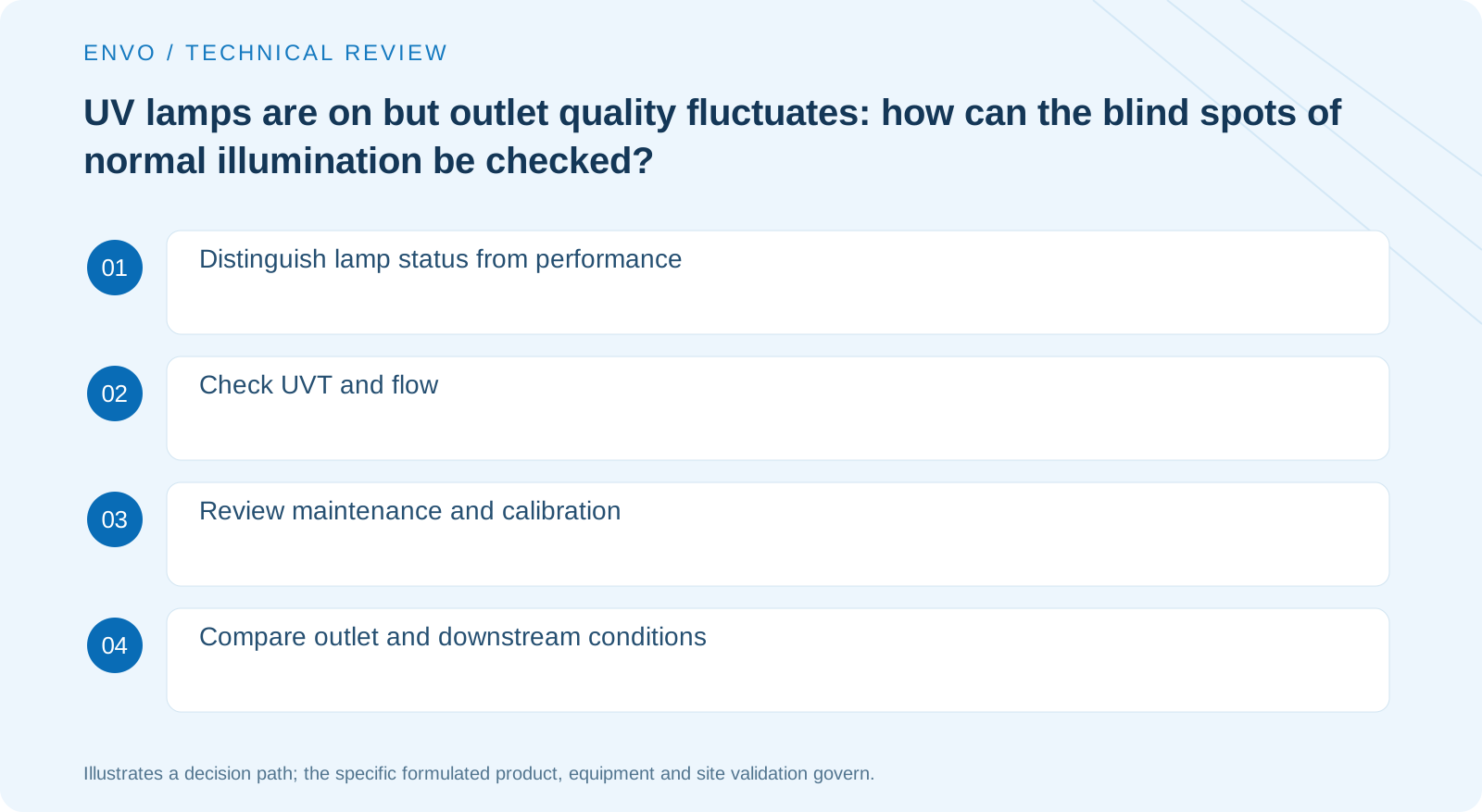
Separate powered-on status from performance status
A lamp indicator describes a particular operating status; validated performance also depends on other conditions. A green indicator is not a certificate of microbiological compliance. Record specific alarms and operating data instead of only photographing a lit lamp.
Review actual water quality and flow
Changes in feedwater UVT, particles and flow may affect irradiation conditions. If problems occur only in certain seasons or at peak demand, compare the corresponding records to check whether equipment validation limits were exceeded. Clear-looking water does not establish that every UV-related parameter is suitable.
Check sleeve and sensor maintenance
Check fouling, lamp aging and sensor condition under the manufacturer’s procedures, confirming complete cleaning and verification records. Appropriate personnel should operate and maintain the equipment as specified; this page gives no disassembly or alarm-bypass instructions. After component replacement, also confirm that the configuration remains within the approved scope.
Investigate downstream recontamination
If results at the equipment outlet and after the tank differ, the reactor may not be the sole source of the problem. Mark sampling points along the circuit to distinguish reactor performance from downstream hygiene management. DWI explains that UV provides no persistent distribution-network residual, so downstream storage and distribution require independent management.
Confirm power status separately from treatment status
A fault record should first distinguish whether the lamp is on, monitoring is normal, flow and water quality fall within the validated range, and a bypass exists. Visible light or a green panel indicator provides only partial status information. Do not dismantle equipment or bypass protection to observe it. Checks should use manufacturer-approved displays, records and service procedures.
If the lamp is on but monitoring is abnormal, check sensing and equipment documentation first. If monitoring is normal but water quality lies outside the validated range, focus on the conditions of applicability. If a post-treatment sample is abnormal, investigate downstream storage and sample representativeness as well. This classification avoids attributing every problem to lamp failure or declaring treatment necessarily effective simply because the lamp is intact.
Post-repair acceptance should record replacements, equipment-required checks, restored operating ranges and outstanding water tests. Repair orders and microbial-conformity reports are separate records. Base maintenance on actual equipment and water quality; a generic lamp-life figure is not a common safe-use period for all units.
Explore further
Does a normal indicator light prove inactivation performance?
No. Validated operating conditions and operational monitoring must also be considered.
Equipment outlet is normal but the tank is abnormal: should power be increased first?
Investigate downstream circuits and recontamination first rather than attributing the cause directly.
References
This article draws on publicly available technical information. Third-party sources do not establish ENVO product approvals, field testing or project experience. Confirm each use against actual supply documents and site conditions.