

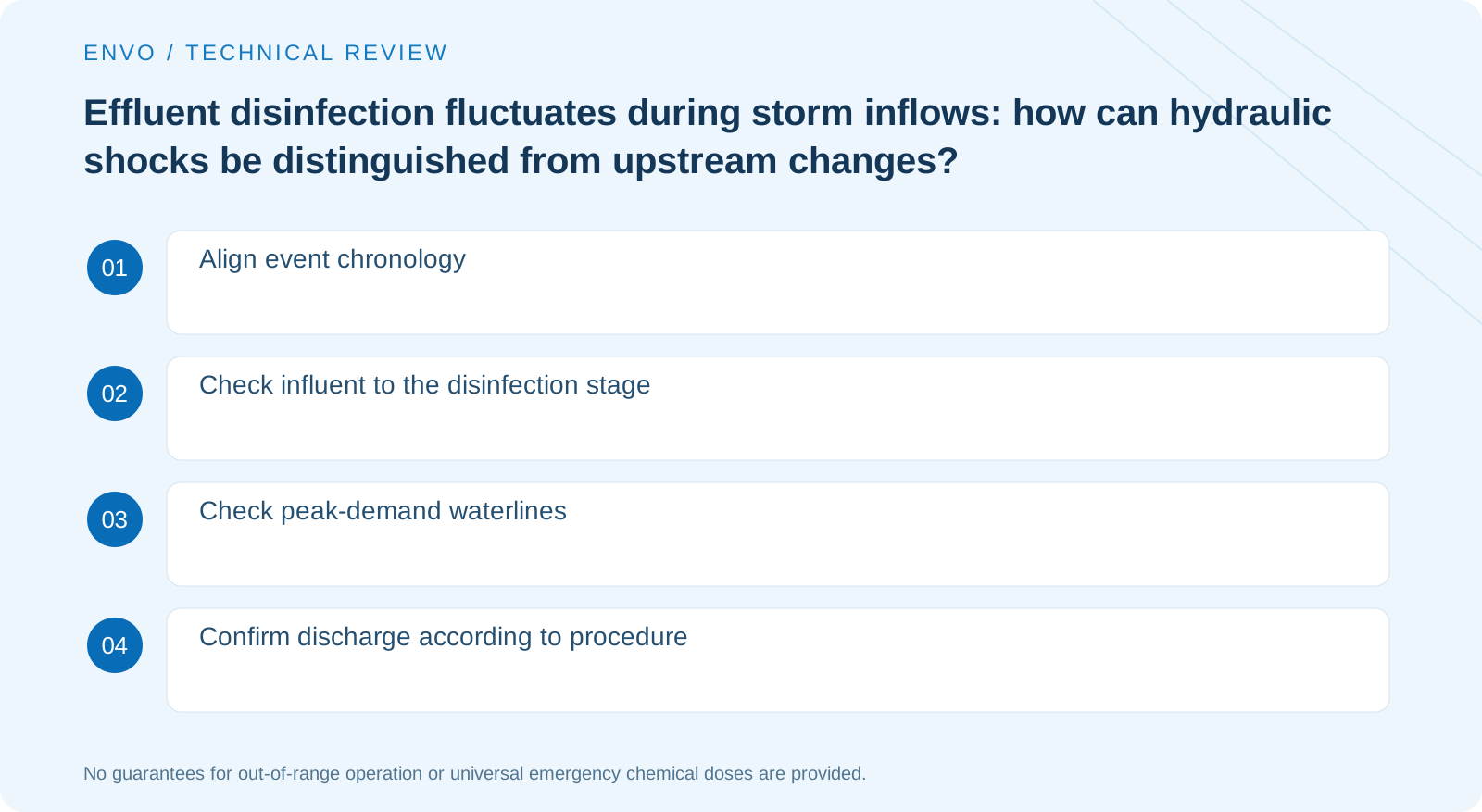
Create an event timeline from rainfall to outlet water
Record influent and effluent flow, basin levels, upstream operation and disinfection status. Upstream and downstream data at the same clock time do not necessarily represent the same water. Establish approximate process lag and sampling locations, with process specialists confirming where needed. Daily averages alone may hide shock-load duration and extent.
An event reconstruction can begin before rainfall, marking increased inflow, activation of flow-balancing facilities, bypass changes and the timing of final monitoring. If samples represent only recovery after rainfall, they cannot establish treatment performance throughout the peak period. Retaining unmonitored periods on the chart helps determine whether additional monitoring capability or actual process capacity is needed.
Identify changes in pretreated water entering disinfection
EPA small-system guidance notes effects of suspended solids and organic loading on disinfection. Investigate water entering disinfection and upstream anomalies rather than final results alone. Respond under plant emergency procedures when capacity exceeds validated conditions. Increased dosing cannot be claimed to replace all upstream treatment or guarantee compliant discharge during every shock load.
Check contact conditions separately from equipment supply
Check actual routing, bypasses and alarms at peak flow, confirming the basis for chemical or energy delivery. Normal control signals do not establish unchanged flow paths. Professionals should assess contact structures and equipment capacity. This page neither derives universal doses from total volume nor recommends disabling or bypassing necessary treatment.
Base discharge decisions on permits and procedures
Check contaminant control, disinfection performance, residuals and other conditions separately against applicable requirements. Rain does not automatically justify relaxing targets, and passing one test does not cover every parameter. Record when the abnormality began, measures taken, verification and the decision to resume normal operation. Retain unresolved issues rather than including only favorable post-recovery data in retrospective reports.
Include extreme operating conditions in the retrofit quotation request
Provide historical event scope, actual water quality and equipment limits, asking suppliers which conditions their proposal covers and what adjustment and monitoring it requires. Separate routine operation from emergency support in quotations. Normal-condition tests cannot guarantee suitability for all weather. Post-modification validation should cover agreed limits so purchasing addresses the capacity actually missing.
Explore further
Do fluctuations during rain necessarily indicate insufficient chemical dosing?
Not necessarily. Water volume, pretreatment, flow paths and equipment condition may all affect the assessment.
Can a higher dose replace pretreatment?
It is not a universal substitute. Confirm actual water quality and the validated treatment scope.
References
This article draws on publicly available technical information. Third-party sources do not establish ENVO product approvals, field testing or project experience. Confirm each use against actual supply documents and site conditions.