Identify purchasing items by their respective duties
Raw-material procurement usually means that the user still has formulation, processing or further validation to perform; a liquid product is not necessarily ready for every operating condition either. LANXESS's oil-and-gas catalog lists solid and liquid Bronopol options, showing different delivery forms, but their concentrations and performance belong to the respective brands. ENVO models, forms and acceptance criteria require separate confirmation; public catalogs are not ENVO supply specifications.
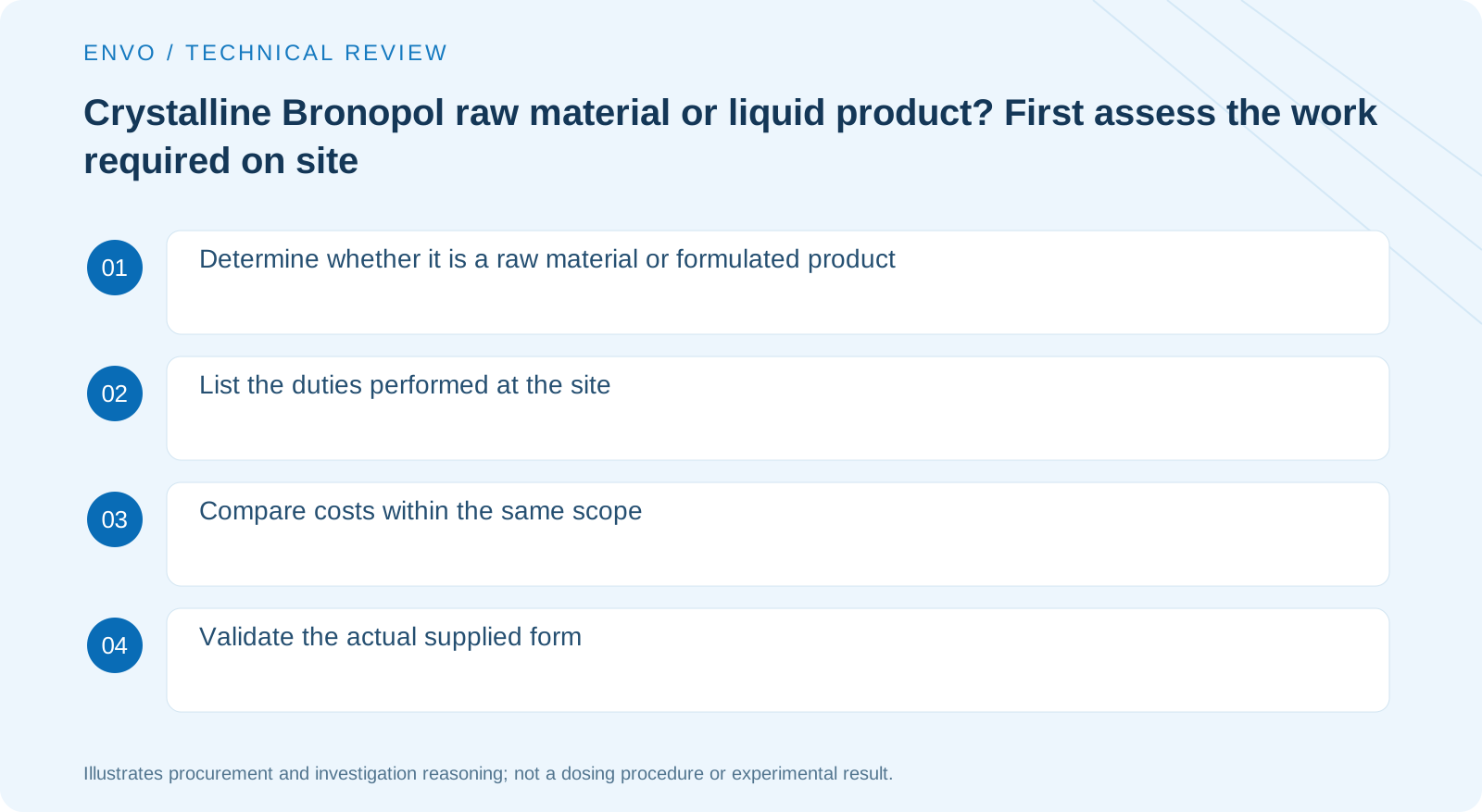
Assess whether the site provides the required conditions
List receipt, storage, withdrawal, metering and testing stages, confirming facilities, personnel and responsibilities for each. Solid raw-material handling involves actual SDS and process requirements, not labor time alone. Liquid products require compatibility with tanks, pumps and materials. If the site lacks formulation and validation capability, a lower raw-material price does not make those tasks resolved.
Use the same scope when comparing costs
Compare materials, packaging and transport, facilities, quality testing, losses and required technical services within the same scope. If one quotation covers raw material and another includes product support, state that difference before discussing cost. A common active basis clarifies quantities but does not establish functional equivalence. Formulation, procedures and use boundaries may differ, so price per kilogram of active is insufficient.
Sample validation must correspond to the final supplied form
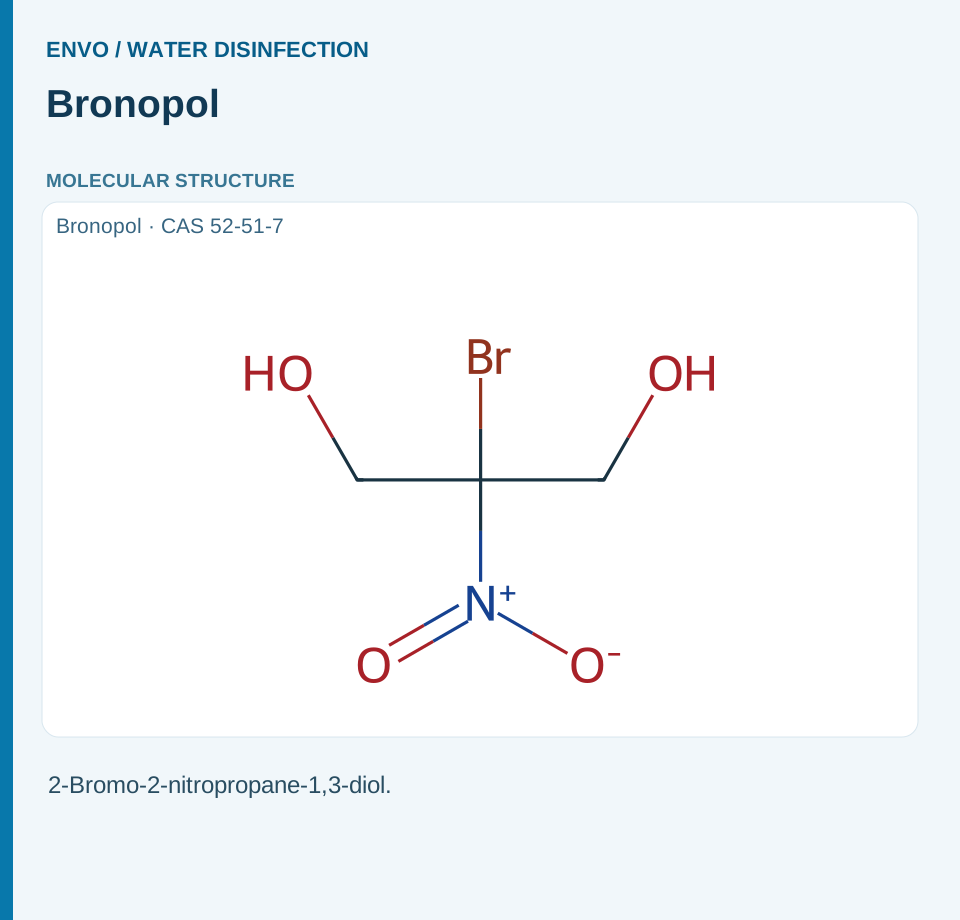
If production intends to use a liquid product, a solid raw-material report alone cannot support release; if the purchase is solid, testing only another manufacturer's prepared solution is insufficient. Trials should record actual model, batch, composition identification and treatment conditions, retaining form-specific use observations. Photographs communicate appearance, but a white-crystal image cannot establish that all liquid formulations are colorless or equally stable.
Update the purchasing list with confirmed findings
Final requirements should identify raw material or finished product, delivery form, intended circuit, quality criteria, packaging and site responsibilities. If supporting capabilities have not been assessed, request information or samples before committing to bulk purchases. Tell ENVO about existing equipment, intended use and stages needing technical support so the quotation reflects the full task and avoids discovering missing formulation or metering capability after delivery.
If customers buy a liquid to match an existing automated metering system, quotations should explicitly cover a fully formulated product rather than suggest processing solid raw material into liquid themselves. Buyers with formulation capability should have their raw-material requirements assessed separately. Both customer types may choose the same active chemistry, but orders must distinguish documentation, packaging and technical responsibilities rather than cover both with one generic description.
Explore further
Is a liquid always more suitable for the site than a solid?
Not necessarily; it depends on formulated-product uses, equipment and site responsibility boundaries.
Can a solid raw material report establish the quality of a liquid formulated product?
It cannot substitute directly. Documentation must match the actual formulation model and batch.
References
This article draws on publicly available technical information. Third-party sources do not establish ENVO product approvals, field testing or project experience. Confirm each use against actual supply documents and site conditions.