
ENVO · Disinfection for Water Applications
Disinfection chemicals,
matched to your needs.
Start with a product or a water application. Bring specifications, intended use and supporting documents together for a clearer purchasing decision.
Quick search
Products · Applications · Documents
Make every selection
fit the actual operating conditions.
Illustrative water-treatment process scene
Request a quote by product Review conditions by application Connect technical and purchasing documents
01 / Products
Find your product. Start your inquiry.
Already know what you need?
Choose a product to request a quote or matching documents.
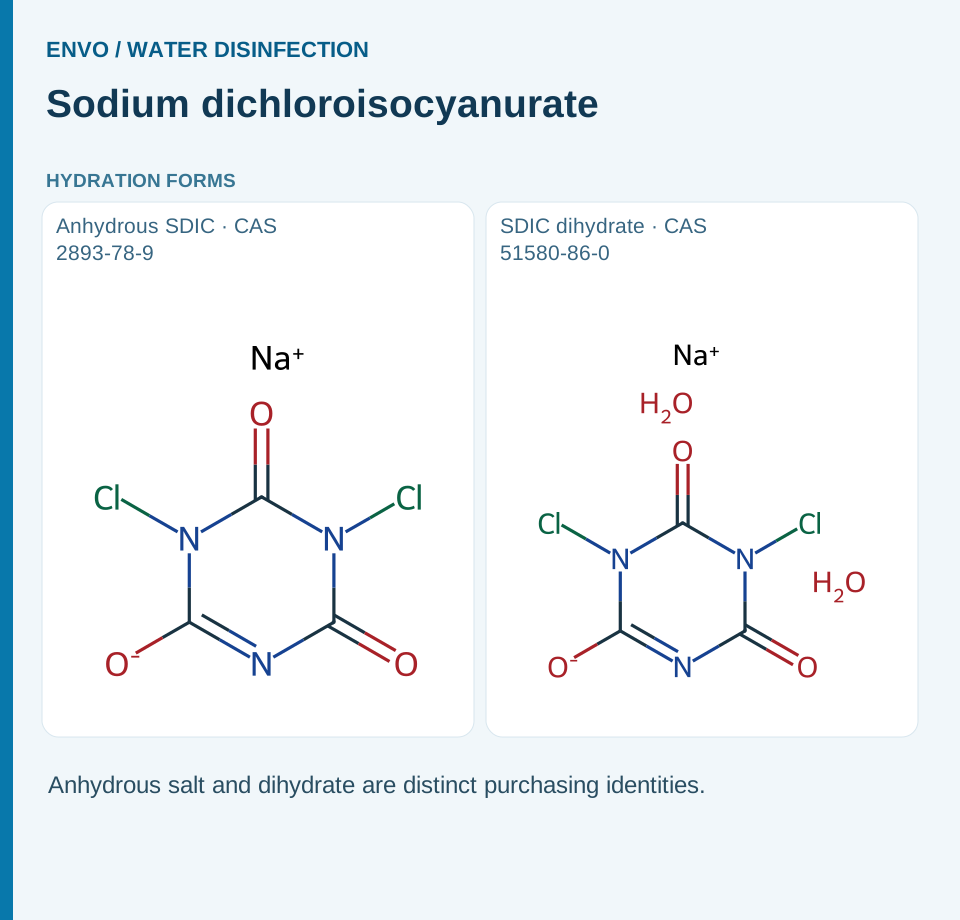
Sodium Dichloroisocyanurate
Match the formulated product and specification to its use
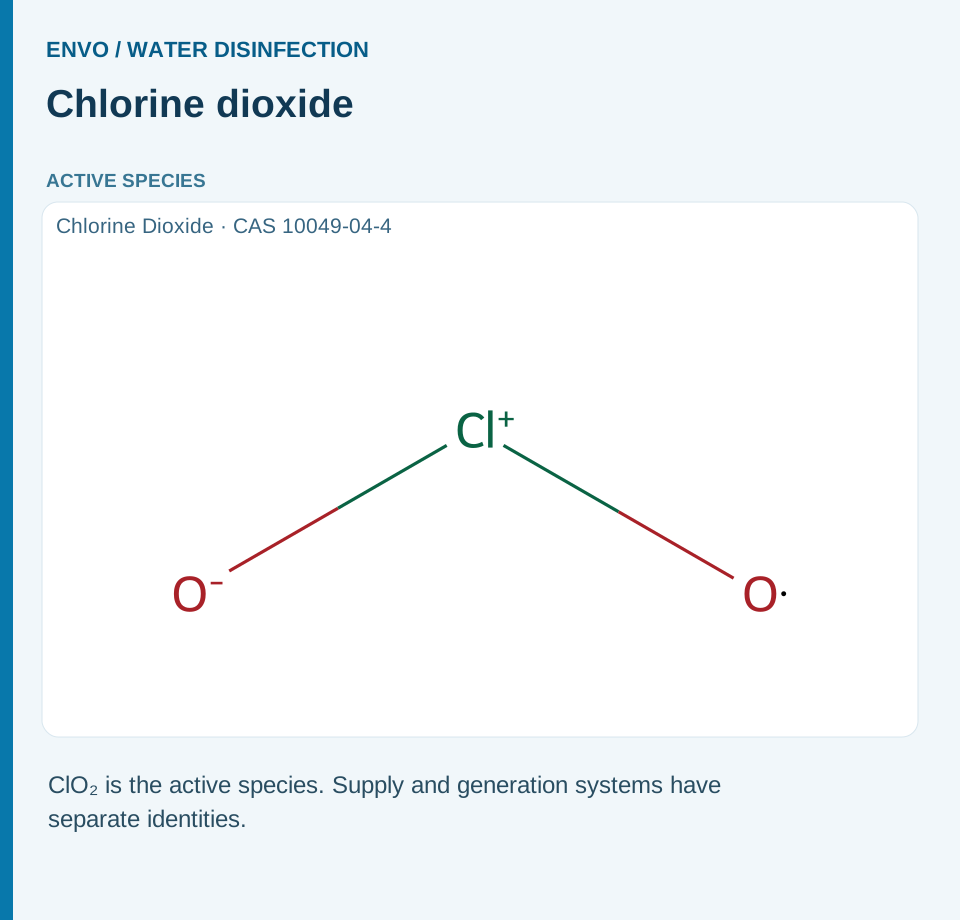
Chlorine Dioxide Systems
Distinguish products, precursors and generation systems
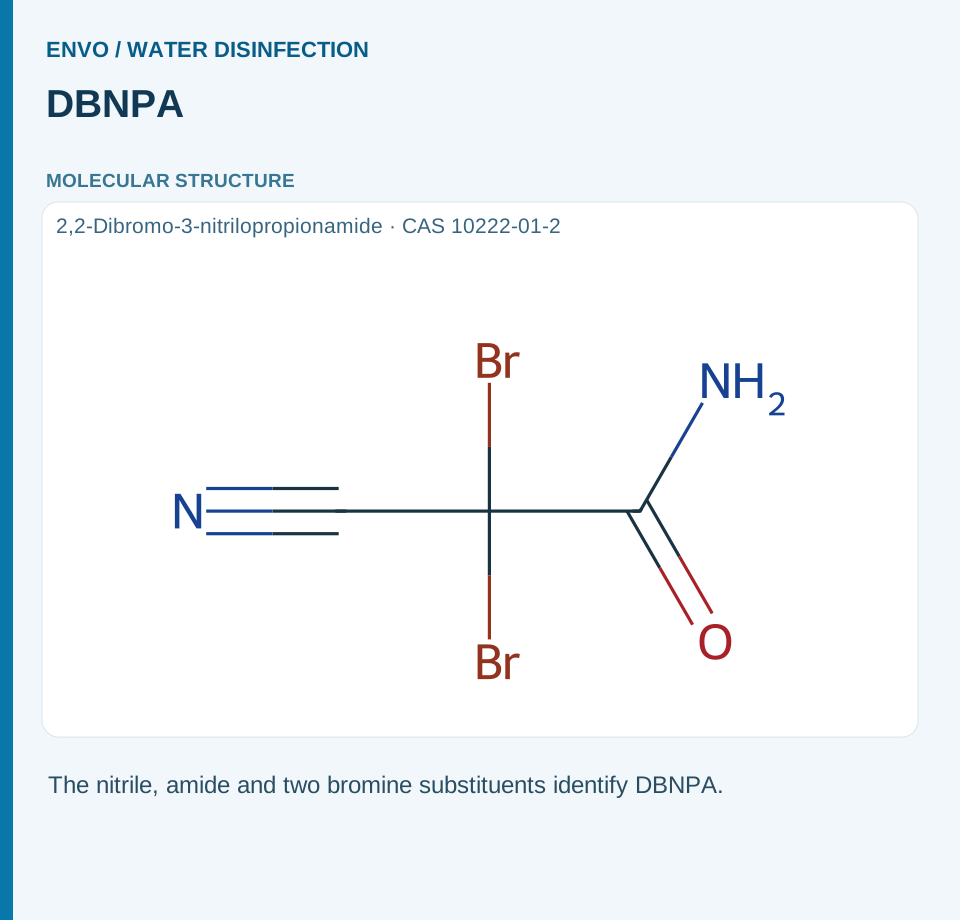
2,2-Dibromo-3-nitrilopropionamide
Check industrial-water and membrane-system compatibility
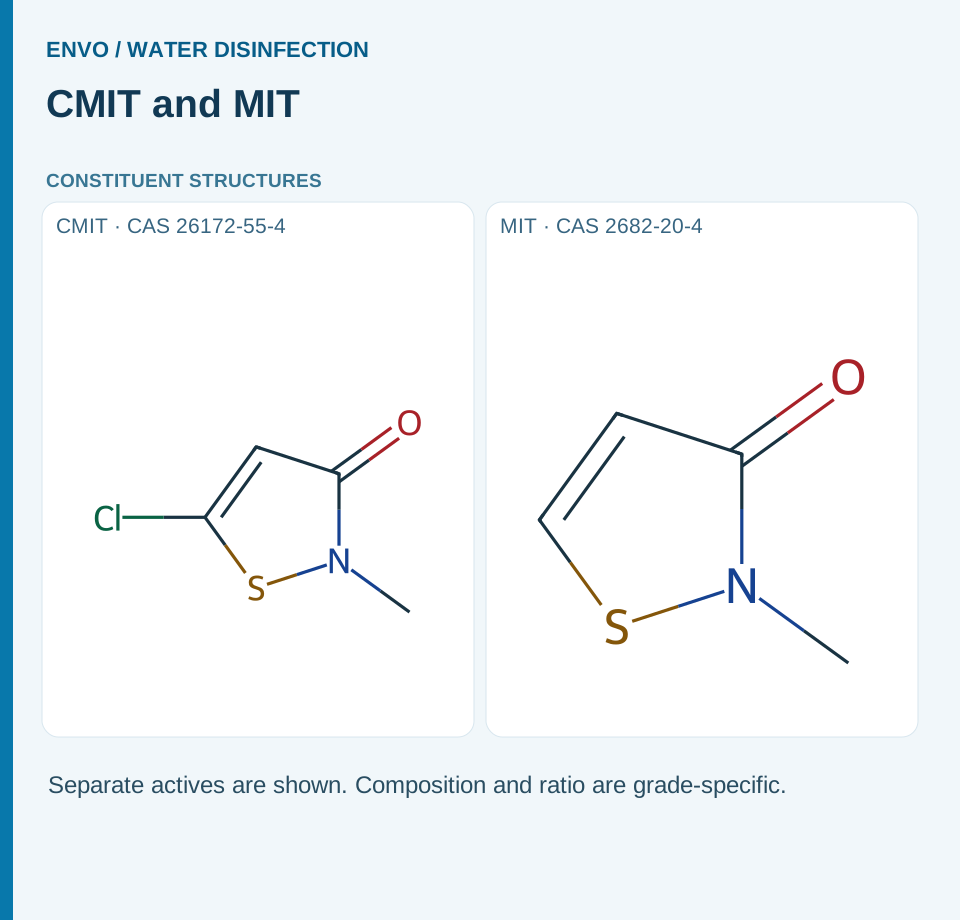
Isothiazolinone Formulations
Microbial control in industrial recirculating water
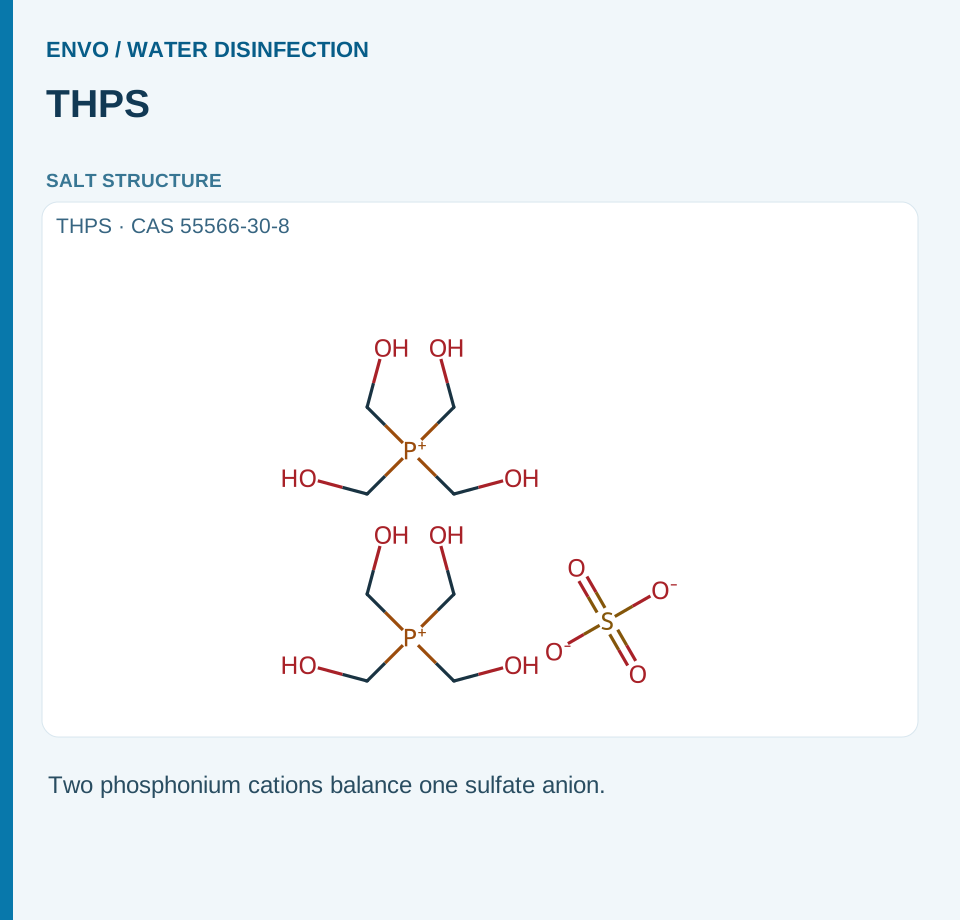
Tetrakis(hydroxymethyl)phosphonium Sulfate
Review against actual oilfield-water samples
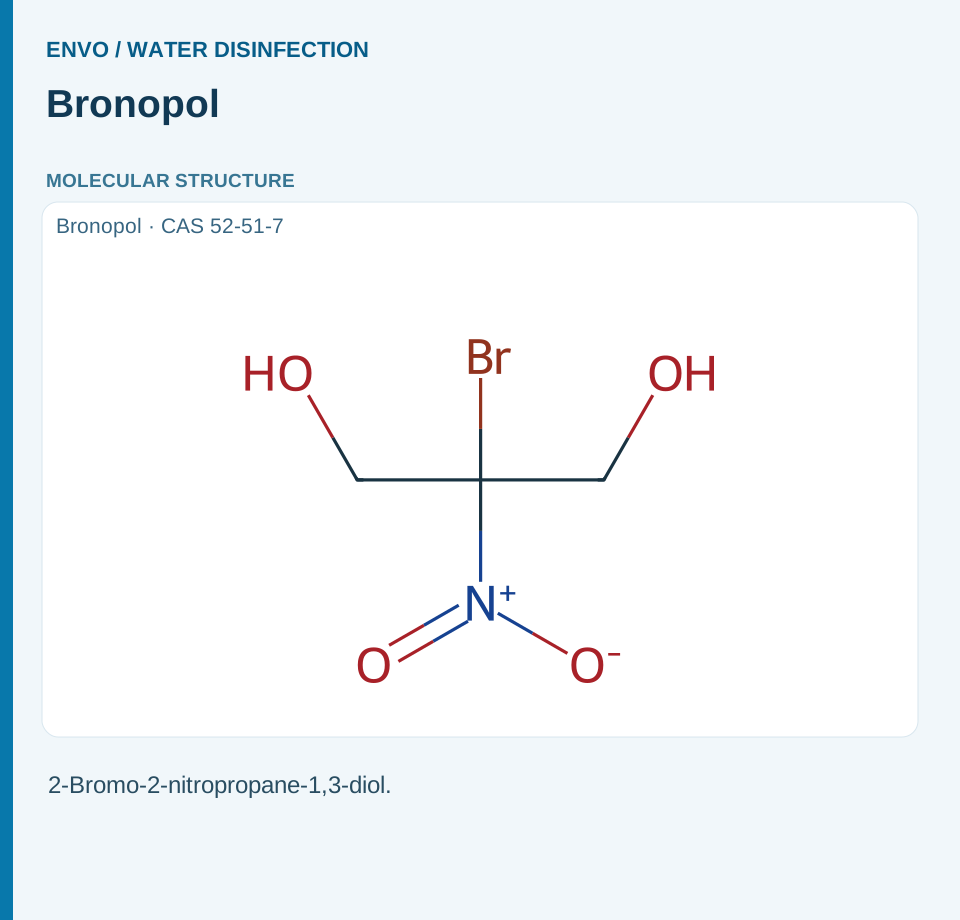
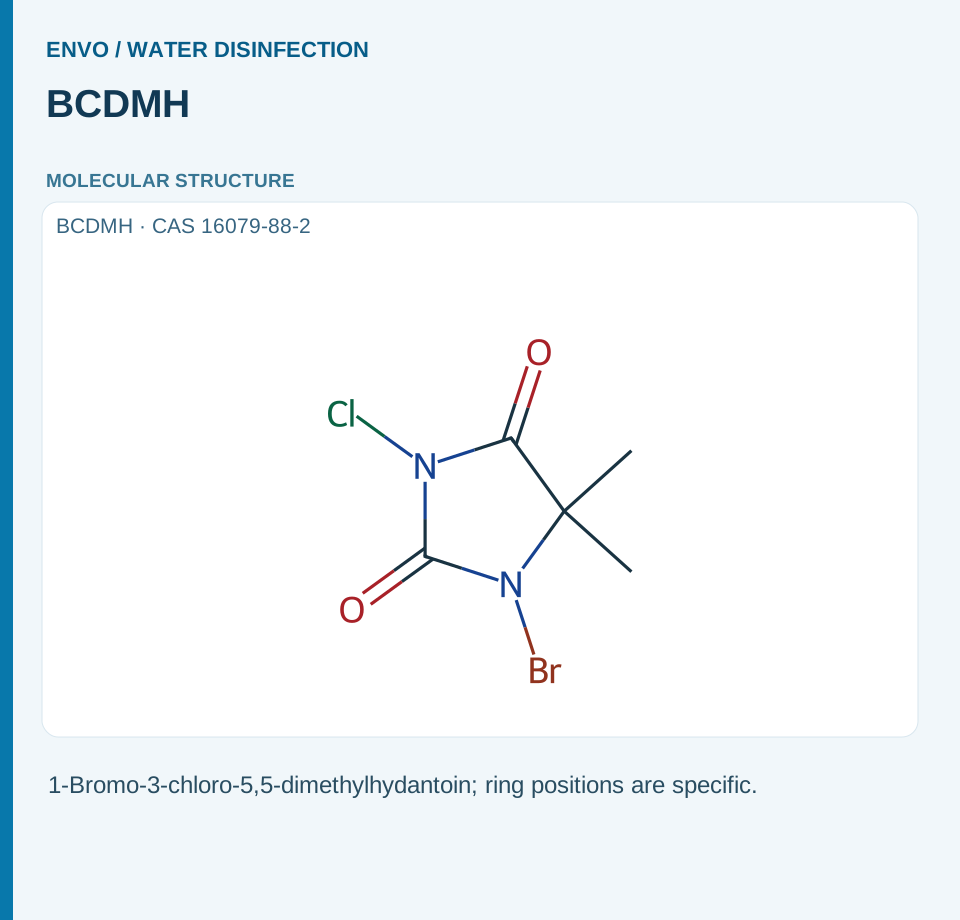
Bromochlorodimethylhydantoin
Formulated products for pools and recirculating water
No matching name in the quick index.
Search the full directory or tell us directly what you need.
Search all 60 products & treatment options →Confirm specifications, packaging and uses against the corresponding product documents and supply confirmation.
View the complete product & technology scope8 categories
01Disinfection & oxidationChlorine & Chlorine Dioxide
TCCA · SDIC · Calcium hypochlorite · Sodium hypochlorite · Hypochlorous acid · Chlorine dioxide
Chlorine & Chlorine Dioxide
TCCA · SDIC · Calcium hypochlorite · Sodium hypochlorite · Hypochlorous acid · Chlorine dioxide
Further options include bleaching powder, DCDMH and engineered chlorine-gas systems. Check solid/liquid form, active ingredients and intended-use documents separately. Similar names do not make hypochlorous-acid solutions equivalent to any sodium hypochlorite product.
02Cooling & pool waterBromine Products
BCDMH · DBDMH · Stabilized bromine · Halogenated hydantoin formulations
Bromine Products
BCDMH · DBDMH · Stabilized bromine · Halogenated hydantoin formulations
Screen by the specific formulated product's intended use and dosing system. Sodium bromide is a precursor, not automatically a stand-alone disinfectant.
03Products for defined usesPeroxygen Products
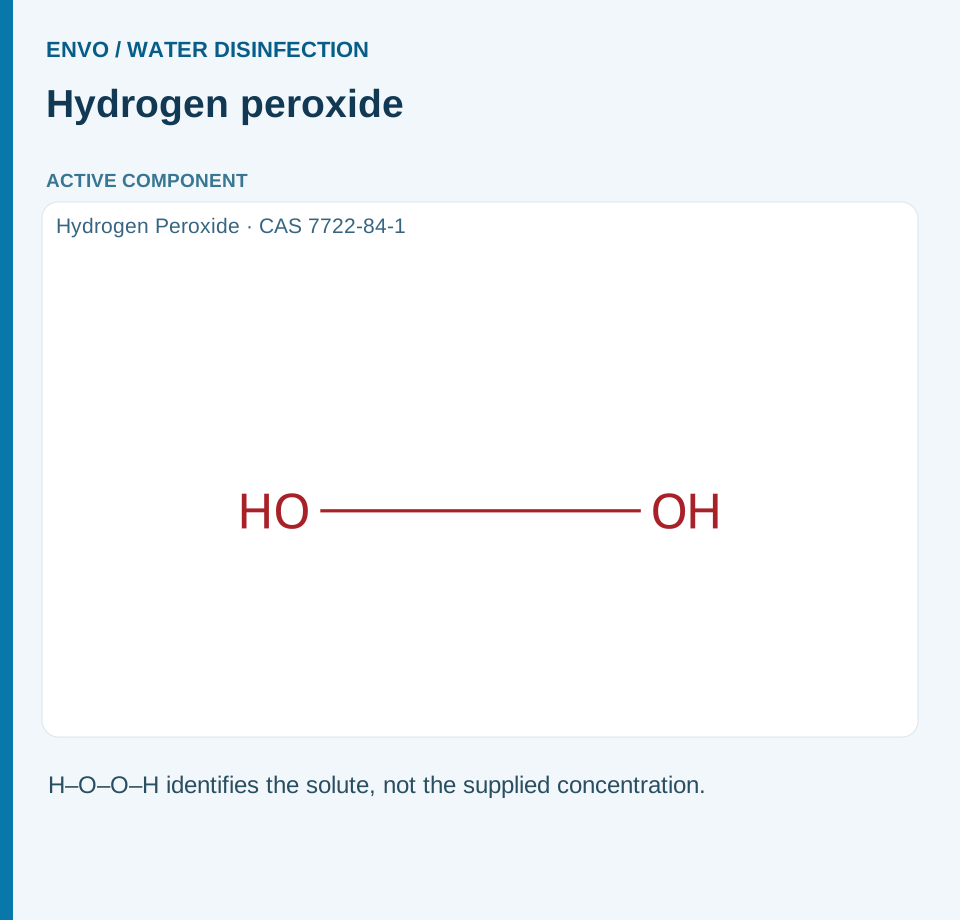
Peracetic acid · Hydrogen peroxide · Specialist peroxygen formulations
Peroxygen Products
Peracetic acid · Hydrogen peroxide · Specialist peroxygen formulations
General oxidation differs from validated disinfection. Check formulation, impurities, temperature, materials and residual-removal requirements.
04Industrial microbial controlNon-Oxidizing Biocides
CMIT/MIT · DBNPA · Bronopol · Glutaraldehyde · THPS · TTPC
Non-Oxidizing Biocides
CMIT/MIT · DBNPA · Bronopol · Glutaraldehyde · THPS · TTPC
Further options include BKC/BAC, DDAC, Polyquat, PHMB and DGH. MBT/MTC (methylene dithiocyanate), TCMTB, dazomet and DCOIT enter specialist screening only where specific-use evidence exists; they are not automatically suitable for every application.
05Targeted algae managementAlgae-Control Products
Copper sulfate · Chelated copper · Aquatic sodium percarbonate · Specialist quaternary ammonium / Polyquat products
Algae-Control Products
Copper sulfate · Chelated copper · Aquatic sodium percarbonate · Specialist quaternary ammonium / Polyquat products
Algae control does not establish comprehensive pathogen disinfection. Restricted industrial options such as terbuthylazine require a current, specific label; they are not automatically recommended for natural water bodies.
06Assess the complete formulationSpecialist Blended Products
Cooling-water · Oilfield-water · Membrane-system · Application-specific formulations
Specialist Blended Products
Cooling-water · Oilfield-water · Membrane-system · Application-specific formulations
Technical formulation types for review include glutaraldehyde/quaternary ammonium, CMIT/MIT/bronopol, DGH/bronopol and TTPC/Polyquat. These are not on-site mixing instructions or a commitment that ENVO supplies a particular fixed formulation.
07Supporting functions identified separatelyPrecursors & Supporting Products
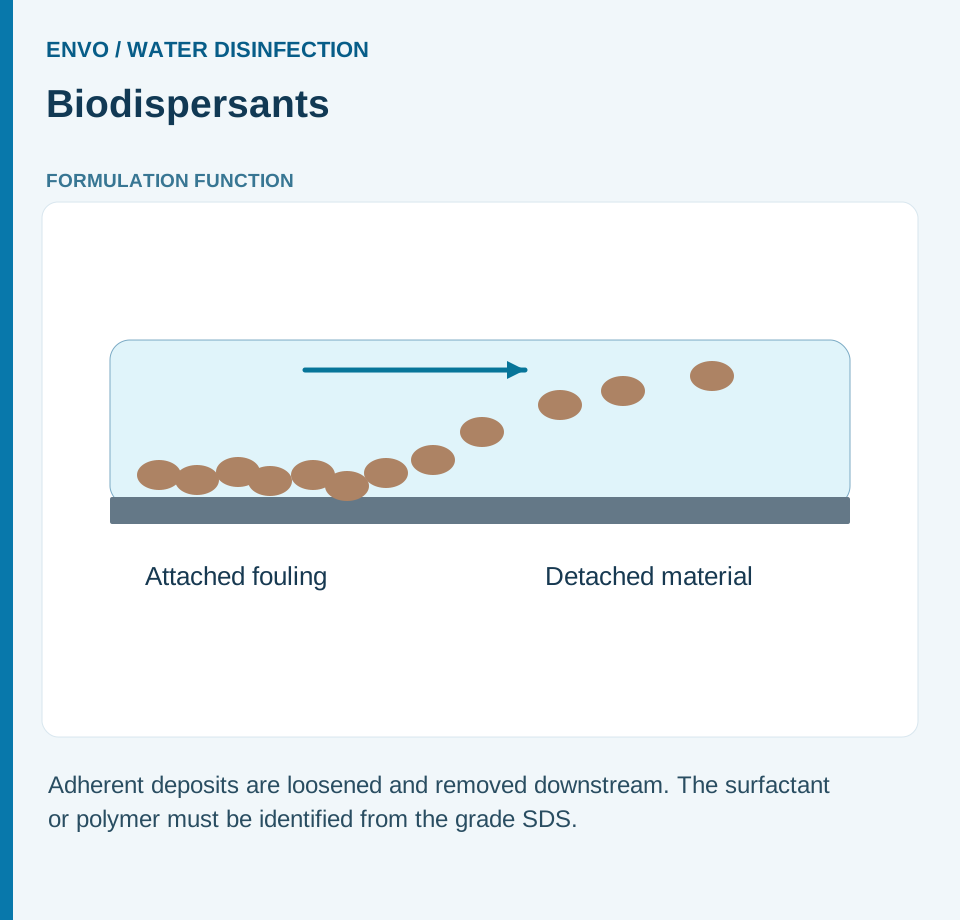
Sodium chlorite · Sodium bromide · Electrolysis salt · Dechlorination agents · Biodispersants
Precursors & Supporting Products
Sodium chlorite · Sodium bromide · Electrolysis salt · Dechlorination agents · Biodispersants
Sodium chlorate is matched only to specific generators. Cyanuric acid is a stabilizer; the usual pool role of MPS is supplementary oxidation. Check sodium bisulfite, sodium metabisulfite and sodium thiosulfate against the specific removal objective.
08Engineered systems, not packaged chemicalsEquipment & Engineered Treatment
UV · Ozone · Electrochlorination · Chlorine dioxide generation · Monochloramine
Equipment & Engineered Treatment
UV · Ozone · Electrochlorination · Chlorine dioxide generation · Monochloramine
Copper–silver ionization and thermal sanitation require system-specific assessment, including design, equipment validation, monitoring and operating/maintenance documents. This page does not claim that ENVO holds every equipment-supply qualification.
Review chemicals, formulations, precursors and equipment separately. Supporting products are not automatically substitutes for the primary disinfectant.
02 / Applications
Find your application. Start your selection.
Choose the intended use, then review candidate products, conditions and documents. Select an application below to continue on this page.
Unsure about a detail? We can clarify it together.
Illustrative application scenes · Full directory covers 25 water environmentsView all applications
Explore 25 applications and compare suitable optionsOpen selection guide
Popular searches
Application / A01
Centralized Drinking-Water Treatment
Define the separate roles of primary disinfection and distribution-system residuals based on source water and treatment barriers.
IncludesSurface-water and groundwater treatment plants; post-treatment of desalinated water; blended sources.
Confirm before selection
Check raw-water turbidity, pH, temperature, organics, ammonia nitrogen and target microorganisms. Distinguish pre-oxidation, final disinfection and distribution-system residuals.
Disinfectant
Sodium hypochlorite, calcium hypochlorite and engineered chlorination
Options for plant chlorination and residual-control requirements.
Conditions & documents to check
Conditions for suitability
Use the appropriate drinking-water grade. Chlorine gas requires dedicated engineered facilities. Performance depends on water quality and contact conditions.
Also check
Drinking-water use documents; available-chlorine and relevant-impurity COA; contact process and residual monitoring; by-product control plan
Disinfection option
Chlorine dioxide with a matched generation system
Compare as an engineered disinfection or oxidation option.
Conditions & documents to check
Conditions for suitability
Distinguish on-site generation from supplied product systems. Monitor relevant by-products, including chlorite and chlorate.
Also check
Generator documents; precursor purity; product and by-product testing; target-market intended-use documents
Engineered treatment option
Monochloramine Systems
May provide a more persistent secondary disinfection residual in water-distribution systems.
Conditions & documents to check
Conditions for suitability
This is not unrestricted on-site mixing of chlorine and ammonia. Control chloramine species, nitrification and treated-water quality.
Also check
System design and operating records; chloramine-species, ammonia-nitrogen and nitrification monitoring; water-plant approval requirements
Equipment-based option
UV and ozone
May provide validated disinfection barriers within the overall treatment process.
Conditions & documents to check
Conditions for suitability
Do not assume a persistent distribution-system residual. Check UV transmittance or ozone contact and off-gas treatment.
Also check
Equipment performance validation; design flow; raw-water testing; downstream protection and by-product assessment
References for this application
CDC · Chlorine and chloramine in drinking waterWHO · Drinking-water treatment methods and performanceUS EPA · Monochloramine and secondary disinfection
Public references explain treatment options. They do not establish intended-use approval, certification or performance records for ENVO's specific products.
Not sure which option fits? Start by sharing your operating conditions.
Ask about this applicationApplication / A02
Decentralized & Point-of-Use Water Treatment
Establish a monitored water-disinfection process suited to available operating and maintenance capabilities.
IncludesRural supplies, wells, small water stations, island camps and point-of-use storage.
Confirm before selection
First establish whether the water is for drinking and whether storage, filtration and reliable power are available. Disinfection does not resolve chemical contamination.
Disinfectant
Sodium hypochlorite and calcium hypochlorite for drinking-water use
Suitable for small supply systems with controlled dosing and contact conditions.
Conditions & documents to check
Conditions for suitability
Review active-ingredient stability, incoming turbidity, storage and operator capabilities together.
Also check
Intended-use and grade documentation; available-chlorine COA; water report; dosing and contact-equipment documents
Disinfectant
NaDCC products intended for drinking-water treatment
A portable disinfection option for specific point-of-use or temporary supplies.
Conditions & documents to check
Conditions for suitability
Only for drinking-water uses explicitly covered by the product label. Pool-grade SDIC is not a direct substitute.
Also check
Complete product label; drinking-water use evidence; available-chlorine and cyanuric-acid controls; expiry date
Equipment-based option
UV systems
Suitable for point-of-use disinfection following pretreatment, where ongoing maintenance is available.
Conditions & documents to check
Conditions for suitability
Appropriate UV transmittance and flow are required. Stored water may be recontaminated, so downstream hygiene remains important.
Also check
Rated conditions and validation documents; UVT testing; lamp-maintenance and alarm records
Specialist option
Chlorine dioxide systems for drinking-water use
An optional treatment approach for a specific small-scale system.
Conditions & documents to check
Conditions for suitability
Establish whether the purchase is a formulated product or an on-site generation system. A raw-material name alone does not prove drinking-water suitability.
Also check
Product/equipment instructions; intended-use evidence; residual and by-product test methods
References for this application
CDC · Chlorine and chloramine in drinking waterWHO · Drinking-water treatment methods and performanceCDC · Emergency drinking-water safety
Public references explain treatment options. They do not establish intended-use approval, certification or performance records for ENVO's specific products.
Not sure which option fits? Start by sharing your operating conditions.
Ask about this applicationApplication / A03
Water Storage, Distribution & Secondary Supply
Reduce recontamination during storage and distribution, distinguishing routine maintenance from return to service after repairs.
IncludesTanks, reservoirs, pump rooms, distribution networks, low-flow endpoints and transport tanks.
Confirm before selection
Confirm water age, distal residuals, deposits and shutdown duration. Chemical dosing cannot replace cleaning and hydraulic management.
Disinfectant
Sodium hypochlorite and calcium hypochlorite
For residual replenishment or out-of-service cleaning/disinfection under the relevant intended use.
Conditions & documents to check
Conditions for suitability
Continuous potable-water use and out-of-service cleaning require different approved procedures. Test before restoring supply.
Also check
Intended-use label; cleaning and restart procedure; distal microbial/residual reports; available-chlorine COA
Engineered treatment option
Chlorine dioxide systems
May be evaluated for microbial control in storage and distribution.
Conditions & documents to check
Conditions for suitability
Subject to pipe materials, operating conditions and by-product limits. Specify generation and dosing locations.
Also check
Pipe-material compatibility; chlorite/chlorate testing; operating and maintenance documents
Engineered treatment option
Engineered monochloramine treatment
For distribution systems designed or approved to use chloramine.
Conditions & documents to check
Conditions for suitability
Not an automatic addition to every tank. Consider the supplying plant's disinfection process and nitrification management.
Also check
Upstream process information; system design; ammonia-nitrogen and chloramine monitoring; management-authority permission
References for this application
CDC · Chlorine and chloramine in drinking waterCDC · Legionella control in building water systemsUS EPA · Monochloramine and secondary disinfection
Public references explain treatment options. They do not establish intended-use approval, certification or performance records for ENVO's specific products.
Not sure which option fits? Start by sharing your operating conditions.
Ask about this applicationApplication / A04
Building Hot- and Cold-Water Systems
Build a water hygiene program around temperature, water age, deposits and disinfectant residuals.
IncludesDomestic water, hot-water circulation, showers and humidification equipment in hotels, schools, offices and healthcare buildings.
Confirm before selection
Distinguish potable water from non-potable equipment. Record aerosol exposure, vulnerable occupants, stagnant areas and temperature distribution.
Disinfectant
Chlorine-based systems approved for the intended use
May form one control measure within a building water-management program.
Conditions & documents to check
Conditions for suitability
Combine with temperature, stagnation and cleaning management. Do not claim that a single chemical eliminates Legionella risk.
Also check
Water-management plan; intended-use evidence; pipe-material compatibility; sampling points and monitoring records
Specialist option
Supplemental chlorine dioxide or monochloramine systems
For supplemental disinfection needs identified through assessment.
Conditions & documents to check
Conditions for suitability
Confirm suitability against building design and local requirements; do not recommend automatically for every building.
Also check
Engineering design; water-quality and by-product assessment; operating approvals and continuous-monitoring plan
Supporting measures
Point-of-use filtration, temperature and hydraulic management
Address vulnerable use points, stagnation and system hygiene.
Conditions & documents to check
Conditions for suitability
Follow the equipment and water-management plan. Temporary treatment cannot replace long-term operational management.
Also check
Equipment technical information; replacement and maintenance procedures; risk assessment and verification records
References for this application
Public references explain treatment options. They do not establish intended-use approval, certification or performance records for ENVO's specific products.
Not sure which option fits? Start by sharing your operating conditions.
Ask about this applicationApplication / A05
Swimming Pools & Water Parks
Balance bather exposure, recirculating filtration and a measurable disinfectant residual.
IncludesPublic, hotel and residential pools, water parks, splash areas and saltwater pools.
Confirm before selection
Distinguish indoor/outdoor operation, bather load, recirculating filtration, cyanuric acid and calcium hardness. Saltwater pools still require effective disinfection.
Disinfectant
TCCA and SDIC pool-disinfection products
For label-permitted chlorine disinfection of pools, particularly where sunlight exposure is relevant.
Conditions & documents to check
Conditions for suitability
Manage cyanuric-acid accumulation. Assess indoor pools and splash areas under local rules rather than assuming universal suitability.
Also check
Pool-use label; available-chlorine and physical-form specifications; cyanuric-acid monitoring; feeder compatibility
Disinfectant
Sodium hypochlorite and calcium hypochlorite
Chlorination options that do not add cyanuric acid through the chemical itself.
Conditions & documents to check
Conditions for suitability
Check storage degradation, pH effects and calcium hardness separately. Never mix different concentrated treatment chemicals.
Also check
Available-chlorine COA; product label; dosing equipment; hardness, pH and residual testing
Application-specific formulation
Complete bromine or PHMB pool-water programs
Compare as alternative disinfection systems for suitable pool types.
Conditions & documents to check
Conditions for suitability
Use a complete, authorized program. Do not arbitrarily interchange or combine it with an existing chlorine system.
Also check
Specific formulation label; supporting products and changeover procedure; local pool permissions; monitoring method
Equipment & supporting treatment
UV, ozone and dedicated algae-control support
Supplement recirculating treatment or address algae. Do not replace the required in-pool disinfectant residual.
Conditions & documents to check
Conditions for suitability
Select algaecides by intended use. MPS is a supplementary oxidizer, not automatically a primary disinfectant.
Also check
Equipment validation; algaecide label; residue control; maintenance and water-quality records
References for this application
CDC · Operating public pools, hot tubs and splash padsCDC · Home pool and hot-tub water treatmentLANXESS · Oxone oxidation for pools and spasICC PHTA · PHMB as an alternative pool-disinfection systemWatertech · BCDMH product uses
Public references explain treatment options. They do not establish intended-use approval, certification or performance records for ENVO's specific products.
Not sure which option fits? Start by sharing your operating conditions.
Ask about this applicationApplication / A06
Spas, Hot Tubs & Specialty Bathing Pools
Choose a pool-water program suited to higher temperatures, aerosols and concentrated bather loads.
IncludesSpas, hot tubs, thermal pools, hot/cold therapy pools and high-temperature recirculating baths.
Confirm before selection
Confirm circulation, water temperature, mineral composition, water replacement and filtration. Thermal spring water is not inherently exempt from disinfection.
Disinfectant
Sodium hypochlorite or calcium hypochlorite for the intended use
A chlorine-based disinfection option for hot tubs.
Conditions & documents to check
Conditions for suitability
Use a management procedure appropriate to the pool type. CDC advises against cyanuric acid and cyanuric-acid-containing chlorine products in hot tubs.
Also check
Hot-tub use label; chlorine-residual/pH monitoring; material compatibility; circulation and water-replacement plan
Disinfectant
Bromine products such as BCDMH
Candidates for hot-tub bromine-disinfection systems.
Conditions & documents to check
Conditions for suitability
Check the specific label, feeder, monitoring and local requirements. Not every bromide is a disinfectant.
Also check
Composition and available halogen; hot-tub use; dosing-system instructions; total-bromine test method
Supporting measures
UV, ozone and supplementary oxidizers
May supplement recirculating filtration and contaminant management.
Conditions & documents to check
Conditions for suitability
Do not replace the primary disinfectant residual. Check the MPS use scope and formulated-product label.
Also check
Equipment performance documents; supporting-product label; ozone isolation and off-gas control; maintenance records
References for this application
CDC · Operating public pools, hot tubs and splash padsCDC · Home pool and hot-tub water treatmentLANXESS · Oxone oxidation for pools and spasWatertech · BCDMH product uses
Public references explain treatment options. They do not establish intended-use approval, certification or performance records for ENVO's specific products.
Not sure which option fits? Start by sharing your operating conditions.
Ask about this applicationApplication / A07
Decorative Water, Fountains & Misting Systems
Assess human contact and aerosol exposure first, then distinguish disinfection from algae control.
IncludesDecorative and interactive fountains, artificial waterfalls, recirculating landscape water and misting installations.
Confirm before selection
Manage interactive water features as human-contact water. Systems containing fish or aquatic plants require different recommendations from unoccupied decorative water.
Disinfectant
Chlorine disinfectants matched to the intended use
For hygiene management in appropriate recirculating fountain systems.
Conditions & documents to check
Conditions for suitability
Control residuals and regularly remove deposits and biofilm. Confirm human contact and equipment instructions.
Also check
Fountain-use documents; maintenance plan; residual and microbiological monitoring; material information
Application-specific formulation
Specialist industrial non-oxidizing biocide formulations
For non-human-contact decorative recirculating systems explicitly covered by the label.
Conditions & documents to check
Conditions for suitability
Do not automatically extend use to interactive fountains, inhalable mist or water containing fish. Assess exposure.
Also check
Specific intended-use label; aerosol and discharge assessment; composition and compatibility data
Algae-control support
Copper sulfate, chelated copper or peroxygen aquatic algaecides
For application-specific comparison against a confirmed algae problem.
Conditions & documents to check
Conditions for suitability
Algae control is not pathogen disinfection. Fish, plants and natural water bodies require separate assessment.
Also check
Algaecide-use label; ecological restrictions; copper/residue monitoring; water-body and algae information
Supporting equipment
Filtration and UV
Support recirculating-water treatment and reduce recontamination loads.
Conditions & documents to check
Conditions for suitability
Equipment names alone do not establish efficacy. Cleaning, flow control and operational management remain necessary.
Also check
Equipment validation; circulation diagram; water quality and UVT; maintenance records
References for this application
CDC · Legionella control in decorative fountainsItalmatch · Bellacide microbial control for industrial and oil-and-gas applicationsUS EPA · Cyanobacterial bloom control in natural waters and its limitations
Public references explain treatment options. They do not establish intended-use approval, certification or performance records for ENVO's specific products.
Not sure which option fits? Start by sharing your operating conditions.
Ask about this applicationApplication / A08
Recirculating Cooling Water & Heat Exchangers
Compare control options for slime, biofilm, heat-transfer performance and microbiologically influenced corrosion.
IncludesOpen cooling towers, closed loops, evaporative condensers, seawater cooling and data-center utility water circuits.
Confirm before selection
Distinguish open from closed systems. Check pH, temperature, concentration cycles, blowdown, metals and corrosion/scale-control formulations. Data-center liquid-cooling systems also require equipment-manufacturer approval.
Oxidizing biocides
Sodium hypochlorite, chlorine dioxide and bromine products
Candidate options for recirculating water systems compatible with oxidative treatment.
Conditions & documents to check
Conditions for suitability
Assess chemical demand, metal corrosion, blowdown residuals and generation/dosing facilities.
Also check
Intended-use label; active-ingredient COA; system water quality; corrosion and blowdown monitoring
Non-oxidizing biocides
CMIT/MIT, DBNPA, bronopol and glutaraldehyde
For selecting microbial-control formulations intended for specific industrial recirculating-water applications.
Conditions & documents to check
Conditions for suitability
Check pH, temperature, reducing-agent effects and contact conditions separately. Active-ingredient names alone do not establish interchangeability.
Also check
Formulation TDS/SDS; active-ingredient content; compatibility/efficacy trials using actual water; discharge information
Application-specific formulation
Quaternary ammonium, quaternary phosphonium and restricted-use blends
May supplement bacteria, algae or slime control in specific systems.
Conditions & documents to check
Conditions for suitability
Check foaming, interactions with anionic chemicals, materials and locally permitted uses for the specific formulation.
Also check
Composition statement; foaming and compatibility trials; intended-use label; water-treatment program
Supporting products
Biodispersants and cleaning support
Help address adherent deposits alongside system cleaning and biocide programs.
Conditions & documents to check
Conditions for suitability
Dispersion does not establish microbial kill. Provide filtration and blowdown routes for detached deposits.
Also check
Evidence of formulation function; compatibility with the primary treatment; cleaning, filtration and blowdown plan
References for this application
LANXESS · Cooling-water microbial-control productsItalmatch · Bellacide microbial control for industrial and oil-and-gas applications
Public references explain treatment options. They do not establish intended-use approval, certification or performance records for ENVO's specific products.
Not sure which option fits? Start by sharing your operating conditions.
Ask about this applicationApplication / A09
General Industrial Process Water
Identify contact between process water and the product before selecting microbial control that will not disrupt the process.
IncludesMetal cleaning, textile processing, plastics washing, water curtains, wet scrubbers and process-water reuse.
Confirm before selection
Check contact with finished products, color/odor requirements, existing additives and downstream biological treatment. Water-circuit treatment is not the same as finished-product preservation.
Non-oxidizing biocides
DBNPA, bronopol, CMIT/MIT and glutaraldehyde formulations
Candidates for comparison in industrial process-water microbial control within the label scope.
Conditions & documents to check
Conditions for suitability
Process suitability varies by formulation. Test effects on color, foaming and process compatibility.
Also check
TDS specifying the process use; formulation and COA; compatibility and actual-water trials
Oxidizing biocides
Chlorine, bromine or chlorine dioxide systems
For process-water circuits compatible with oxidative treatment.
Conditions & documents to check
Conditions for suitability
Protect dyes, metals, resins and product quality. Address residual oxidants.
Also check
Intended-use label; material and product-quality trials; residual testing; wastewater requirements
Application-specific formulation
Quaternary ammonium / phosphonium products and biodispersant support
Supplementary options for some industrial water circuits without direct human exposure.
Conditions & documents to check
Conditions for suitability
Check anionic components, foaming and final water use. Do not assume food-contact suitability.
Also check
Formulation compatibility; intended-use statement; discharge and residue information
References for this application
LANXESS · Cooling-water microbial-control productsItalmatch · Bellacide microbial control for industrial and oil-and-gas applicationsItalmatch · TTPC and polymeric quaternary ammonium blends
Public references explain treatment options. They do not establish intended-use approval, certification or performance records for ENVO's specific products.
Not sure which option fits? Start by sharing your operating conditions.
Ask about this applicationApplication / A10
Pulp & Paper Water Systems
Reduce slime-related sheet breaks, odors and process instability, with clear dosing-location and paper-grade requirements.
IncludesWhite water, wet-end systems, shower and seal water, reuse water and process tanks.
Confirm before selection
Confirm wet-end chemistry, pulp, organic load, food-contact paper requirements and wastewater routing. Pulp preservation requires separate confirmation.
Non-oxidizing biocides
DBNPA, Bronopol, CMIT/MIT
Candidates for formulations intended for specific paper-machine water circuits and slime control.
Conditions & documents to check
Conditions for suitability
Validate against paper grade and additive chemistry. A raw active ingredient is not a validated formulation.
Also check
Papermaking-use TDS; actual-water trials; component residues and paper-grade requirements
Application-specific formulation
Glutaraldehyde and validated blended products
For microbial and slime management in specific papermaking processes.
Conditions & documents to check
Conditions for suitability
Check wet-end chemical compatibility. A blend's use scope and performance cannot be attributed to a single raw ingredient.
Also check
Formulation label; active-ingredient COA; compatibility and performance records
Engineered treatment option
Chlorine dioxide and engineered halogen / chloramine options
For incoming-water or process-water stages compatible with oxidative treatment.
Conditions & documents to check
Conditions for suitability
Dosing location affects fibers, dyes and additives. Do not assume suitability throughout the wet end.
Also check
Process design; quality/corrosion validation; by-product, residual and discharge monitoring
Supporting products
Biodispersants
Support deposit, slime and recirculating-water cleaning control.
Conditions & documents to check
Conditions for suitability
Confirm removal pathways and effects on finished-product quality. This does not replace effective biocidal treatment.
Also check
Compatibility and cleaning trials; filtration/blowdown plan
References for this application
LANXESS · Microbial control in pulp and paperLANXESS · Papermaking biocide product informationLANXESS · Bronopol for industrial cooling water and papermakingSolenis · Microbial control in industrial process water
Public references explain treatment options. They do not establish intended-use approval, certification or performance records for ENVO's specific products.
Not sure which option fits? Start by sharing your operating conditions.
Ask about this applicationApplication / A11
Food & Beverage Process Water
Select separately for direct food contact, drinking-water quality and utility-water applications.
IncludesIngredient water, washing and conveyance water, ice-making water, CIP water circuits and non-contact cooling loops.
Confirm before selection
Establish direct food contact, food category, rinsing requirements and destination first. Food-grade raw material does not automatically establish an authorized disinfection use.
Water-supply treatment
Drinking-water chlorine systems, UV and related options
For ingredient-water or ice-making supplies meeting the relevant water-quality requirements.
Conditions & documents to check
Conditions for suitability
Validate against the final food and process requirements. Drinking-water compliance alone does not establish suitability for every food process.
Also check
Water-quality and microbiological tests; intended-use documents; process flow and food category
Application-specific formulation
Application-specific peracetic acid formulations
For food-processing water or CIP sanitation procedures explicitly covered by the label.
Conditions & documents to check
Conditions for suitability
Direct food-contact permissions differ from equipment-sanitation permissions. Check formulation components and residue/rinsing requirements.
Also check
Evidence for the specific food use; complete formulation label; efficacy and residue testing; CIP validation
Specialist option
Sodium hypochlorite, chlorine dioxide or ozone
Options for food-processing water where the label and applicable regulations permit their use.
Conditions & documents to check
Conditions for suitability
Confirm each food category and water-circuit purpose. Do not describe a product as suitable for all foods.
Also check
Food-use evidence; process validation; by-products/residues; equipment and contact materials
Industrial support
Chemicals for non-contact utility water
Assess cooling towers and external pasteurizer recirculating-water circuits under the corresponding industrial-water application.
Conditions & documents to check
Conditions for suitability
Confirm separation from food and assess cross-contamination risks.
Also check
Water-circuit isolation diagram; industrial-use documents; leakage and residual controls
References for this application
FDA · Produce-processing water and antimicrobial treatmentsSolvay · Peracetic acid formulations for food and process hygieneItalmatch · Bellacide microbial control for industrial and oil-and-gas applications
Public references explain treatment options. They do not establish intended-use approval, certification or performance records for ENVO's specific products.
Not sure which option fits? Start by sharing your operating conditions.
Ask about this applicationApplication / A12
Pharmaceutical, Bioprocess & Clean Process Water
Define a practical disinfection procedure starting with system validation and quality requirements.
IncludesPurified-water and water-for-injection systems, storage/distribution and shutdown sanitation.
Confirm before selection
Identify the pharmacopoeial water grade and equipment model first. Validate chemical removal after disinfection; do not replace system-approved products with industrial biocides.
Equipment-based option
Validated hot-water or steam sanitation procedures
For sanitation control supported by system design and validation.
Conditions & documents to check
Conditions for suitability
Validate temperature tolerance, dead legs, complete coverage and operating status.
Also check
Design/operational qualification; thermal-distribution and cycle validation; microbiological/endotoxin monitoring
Application-specific formulation
System-approved hydrogen peroxide / peracetic acid formulations
Candidates for chemical disinfection of a specific system.
Conditions & documents to check
Conditions for suitability
Do not arbitrarily dose industrial-grade products into final process water. Validate compatibility and removal.
Also check
Equipment-manufacturer acceptance; formulation purity; disinfection efficacy and residual-removal validation
Engineered treatment option
Validated ozone and UV support
For suitable storage/distribution sanitation and downstream treatment designs.
Conditions & documents to check
Conditions for suitability
Follow the specific purified-water or water-for-injection system design. Do not directly transfer another system's approach.
Also check
System validation; ozone residual/removal; online monitoring; water-grade specifications
References for this application
Public references explain treatment options. They do not establish intended-use approval, certification or performance records for ENVO's specific products.
Not sure which option fits? Start by sharing your operating conditions.
Ask about this applicationApplication / A13
Electronics, Semiconductor & Laboratory Water
Maintain consistency between microbial control and limits for ions, particles and TOC.
IncludesUltrapure-water pretreatment, storage/distribution, laboratory purified water and precision-cleaning supplies.
Confirm before selection
Separate pretreatment from ultrapure point-of-use water. Final specifications and equipment-manufacturer acceptance take priority over general disinfection practice.
Equipment-based option
UV, thermal sanitation and physical controls accepted by system design
Reduce chemical introduction while supporting high-purity water-system hygiene.
Conditions & documents to check
Conditions for suitability
Confirm the specific UV function, equipment temperature tolerance and operating procedure.
Also check
Equipment instructions and validation; microbiological, TOC, particle and ion specifications; maintenance rules
Application-specific formulation
System-approved high-purity peroxygen disinfection formulations
For specific equipment or piping that permits chemical sanitation.
Conditions & documents to check
Conditions for suitability
Do not release water for final use without validated removal. Confirm purity and material requirements for the equipment.
Also check
Impurity COA; material compatibility; residual-removal validation; equipment-manufacturer acceptance
Treatment-stage support
Chemicals specific to the pretreatment stage
Select pretreatment options according to incoming water and the membrane system.
Conditions & documents to check
Conditions for suitability
Do not directly recommend a pretreatment chemical for ultrapure point-of-use water.
Also check
Stage-by-stage flow diagram; membrane/resin instructions; removal-barrier validation; final-water testing
References for this application
Samsung Semiconductor · Uses and purity requirements of semiconductor ultrapure waterDuPont · FilmTec RO/NF membrane technical manual
Public references explain treatment options. They do not establish intended-use approval, certification or performance records for ENVO's specific products.
Not sure which option fits? Start by sharing your operating conditions.
Ask about this applicationApplication / A14
Membranes, Filtration & Ion Exchange
Identify membrane and resin models first, then distinguish pretreatment, treatment within the membrane system, online operation and shutdown treatment.
IncludesRO/NF, UF/MF, filter media, activated carbon, softening resins and shutdown preservation.
Confirm before selection
Polyamide membranes have different oxidant tolerance from UF/MF membranes. Biodispersion, cleaning, disinfection and preservation are separate tasks.
Non-oxidizing biocides
DBNPA-based products formulated for membrane systems
Candidates for initial microbial-control screening in some RO/NF systems.
Conditions & documents to check
Conditions for suitability
Check membrane-manufacturer instructions, complete formulation, reducing-agent effects and permeate handling. Suitability is not universal across membranes.
Also check
Approval for the membrane model; formulation TDS; permeate/residue requirements; actual water quality and compatibility validation
Application-specific formulation
Equipment-approved hydrogen peroxide / peracetic acid
A possible controlled sanitation approach for certain membrane systems.
Conditions & documents to check
Conditions for suitability
Subject to temperature, materials, metal impurities and exposure limits. Follow the membrane manufacturer's procedure.
Also check
Membrane/equipment instructions; impurities and active ingredients; disinfection and rinsing validation
Treatment-stage option
Pretreatment chlorination, chlorine dioxide or electrochlorination
Control microbial load in the water circuit upstream of membranes.
Conditions & documents to check
Conditions for suitability
Remove and verify residuals before oxidant-sensitive downstream membranes. Do not assume dosing within the membrane system is permitted.
Also check
Pretreatment and removal process; online residual monitoring; membrane-manufacturer limits
Supporting products
Disinfection and preservation products for specific filter media / resins
Maintain the system according to filter medium, resin and shutdown conditions.
Conditions & documents to check
Conditions for suitability
Preservation chemicals such as bisulfites should not be described as universal disinfectants. Follow the media manufacturer's procedure.
Also check
Filter-media/resin grade; accepted disinfection/preservation method; cleaning, return-to-service and residual testing
References for this application
Public references explain treatment options. They do not establish intended-use approval, certification or performance records for ENVO's specific products.
Not sure which option fits? Start by sharing your operating conditions.
Ask about this applicationApplication / A15
Wastewater Treatment & Effluent Discharge
Match the disinfection contact stage to effluent targets and receiving-water requirements.
IncludesMunicipal and industrial effluent, hospital wastewater, decentralized sewage and specified segregated waste streams.
Confirm before selection
Distinguish final-effluent disinfection from specialist pretreatment. Do not directly apply disinfectants to biological reactors that depend on active microorganisms.
Disinfectant
Sodium hypochlorite, calcium hypochlorite and corresponding chlorination systems
Candidates for effluent-disinfection stages suitable for chlorination.
Conditions & documents to check
Conditions for suitability
Check suspended solids, ammonia nitrogen, organic load and effective contact. Dechlorination may be needed before discharge.
Also check
Discharge targets; water quality/flow; available-chlorine COA; microbial and chlorine-residual monitoring
Application-specific formulation
Peracetic acid formulations for wastewater disinfection
A non-chlorine disinfection option for certain effluents.
Conditions & documents to check
Conditions for suitability
Do not claim an absence of adverse effects in every water matrix. Check chemical demand, residuals, oxygen demand and ecological effects.
Also check
Wastewater-use label; active-ingredient content; efficacy trials with actual water; discharge-impact data
Engineered treatment option
Chlorine dioxide systems
Evaluate for effluent disinfection under suitable contact and monitoring conditions.
Conditions & documents to check
Conditions for suitability
Include actual by-product and residual management in the program.
Also check
Generator documents; disinfection validation; by-product and residual testing
Equipment-based option
UV or ozone
Equipment-based candidates for effluent disinfection.
Conditions & documents to check
Conditions for suitability
UV performance is affected by transmittance and particles. Ozone requires contact and off-gas management.
Also check
Water-sample UVT/suspended solids; equipment validation; disinfection targets; operating and maintenance records
References for this application
Solvay · Peracetic acid for wastewater disinfectionWHO · Drinking-water treatment methods and performance
Public references explain treatment options. They do not establish intended-use approval, certification or performance records for ENVO's specific products.
Not sure which option fits? Start by sharing your operating conditions.
Ask about this applicationApplication / A16
Reclaimed Water, Greywater & Rainwater Reuse
Set disinfection barriers and storage/distribution protection according to the reuse pathway and human exposure.
IncludesToilet flushing, washing, landscape irrigation, industrial reuse, cooling make-up and greywater/rainwater storage.
Confirm before selection
Different reuse pathways have different requirements. Potable reuse needs a separate specialist assessment and must not be grouped with ordinary non-potable reuse.
Disinfectant
Hypochlorite and other chlorine systems matched to the intended use
For comparison in reuse systems requiring a storage/distribution residual.
Conditions & documents to check
Conditions for suitability
Check chlorine demand, odor, corrosion and sensitivity of vegetation or downstream processes.
Also check
Reuse pathway and water-quality requirements; product documents; residual/by-product monitoring
Disinfectant
Application-specific options such as peracetic acid and chlorine dioxide
Assess for the specific reclaimed-water quality and disinfection contact stage.
Conditions & documents to check
Conditions for suitability
Disinfection efficacy alone is insufficient. Meet final-contact, residual and downstream requirements.
Also check
Intended-use evidence; actual-water efficacy trials; residues and compatibility
Supporting equipment
UV, ozone and downstream storage/distribution management
Provide validated treatment barriers for reuse systems.
Conditions & documents to check
Conditions for suitability
Water may be recontaminated between equipment discharge and the point of use. Check storage time and circulation.
Also check
Equipment validation; storage/distribution flow; operational and point-of-use testing
Supporting products
Water-treatment support specific to the downstream use
For reuse in cooling, membranes or irrigation, continue selection under the relevant operating conditions.
Conditions & documents to check
Conditions for suitability
Meeting disinfection requirements does not establish compliance with every process-water specification.
Also check
Downstream equipment and water-quality specifications; residual compatibility; target-application information
References for this application
US EPA · Water-reuse treatment requirements by intended useSolvay · Peracetic acid for wastewater disinfectionWHO · Drinking-water treatment methods and performance
Public references explain treatment options. They do not establish intended-use approval, certification or performance records for ENVO's specific products.
Not sure which option fits? Start by sharing your operating conditions.
Ask about this applicationApplication / A17
Oil & Gas Production Water Systems
Develop a tested control program around microbial populations, corrosion and fluid compatibility.
IncludesProduced water, reinjection water, fracturing-fluid make-up water, drilling/completion support water and stored reuse water.
Confirm before selection
Confirm temperature, salinity, sulfides, oil content, residence time and polymer/demulsifier use. Validation with actual water is essential.
Non-oxidizing biocides
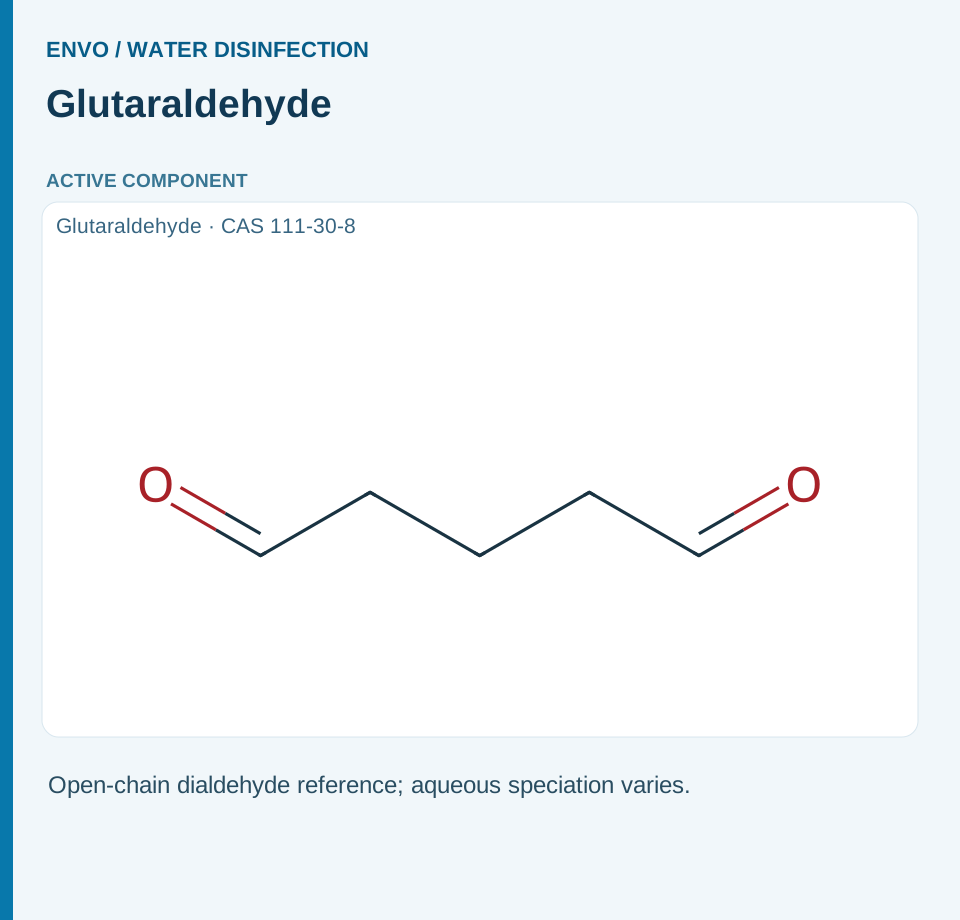
THPS and glutaraldehyde
Common candidate active ingredients in specific oilfield-water biocide formulations.
Conditions & documents to check
Conditions for suitability
A product name cannot guarantee performance in high-salinity, high-temperature or anaerobic conditions. Obtain field-water and fluid-compatibility data.
Also check
Oilfield-use TDS; active-ingredient content; target-organism tests such as SRB/APB; corrosion/compatibility reports
Non-oxidizing biocides
DBNPA, Bronopol
For specific oil-and-gas formulations and process-water control requirements.
Conditions & documents to check
Conditions for suitability
Check reactive components, stability, contact time and the actual formulation.
Also check
Intended-use label; efficacy and stability in actual water; fluid compatibility
Application-specific formulation
TTPC, quaternary ammonium products and validated blends
Supplementary microbial-control options for certain oil-and-gas water systems.
Conditions & documents to check
Conditions for suitability
Validate salinity, anionic components, foaming and reinjection compatibility individually.
Also check
Specific formulation documents; compatibility and efficacy; destination-market use evidence
Specialist option
Oxidative treatment and biodispersant support
Evaluate as part of a combined process where the treatment location and water quality permit.
Conditions & documents to check
Conditions for suitability
Strongly reducing water affects chemical demand. Biodispersion does not replace microbial kill.
Also check
Chemical-demand trials; corrosion and discharge assessment; dosing locations and deposit-removal pathways
References for this application
Italmatch · Bellacide microbial control for industrial and oil-and-gas applicationsItalmatch · TTPC and polymeric quaternary ammonium blendsLANXESS · Biocides for oil-and-gas water treatmentSMC Global · THPS products and industrial uses
Public references explain treatment options. They do not establish intended-use approval, certification or performance records for ENVO's specific products.
Not sure which option fits? Start by sharing your operating conditions.
Ask about this applicationApplication / A18
Mining, Mineral Processing & Utility Water
Select treatment for confirmed bacteria, algae or slime problems while preserving mineral-processing stability.
IncludesMineral-processing return water, mine storage, cooling water, tailings-water reuse and recovered mine water.
Confirm before selection
Not all mining water requires disinfection. First rule out solids, scaling and inorganic corrosion as causes.
Industrial chemicals
Oxidizing biocides suitable for cooling circuits
For confirmed microbial problems in mine utility cooling water.
Conditions & documents to check
Conditions for suitability
This does not justify use throughout mineral-processing circuits. Check reactions with flotation chemicals and minerals.
Also check
Water-circuit boundaries; intended-use label; compatibility and corrosion trials
Application-specific formulation
Specific industrial formulations such as DBNPA or CMIT/MIT
For screening in relevant industrial water circuits with identified biological contamination.
Conditions & documents to check
Conditions for suitability
Validate actual pH, metals, suspended solids and mineral-processing conditions. Do not finalize selection without application-specific evidence.
Also check
Efficacy in actual water; process compatibility; formulation intended-use and discharge data
Supporting products
Permitted algaecides and biodispersants
For defined problems such as exposed water storage and adherent deposits.
Conditions & documents to check
Conditions for suitability
Check effluent ecological effects, mineral interactions and downstream biological treatment.
Also check
Algae/deposit diagnosis; intended-use label; discharge and non-target-effect assessment
References for this application
LANXESS · Cooling-water microbial-control productsUS EPA · Cyanobacterial bloom control in natural waters and its limitations
Public references explain treatment options. They do not establish intended-use approval, certification or performance records for ENVO's specific products.
Not sure which option fits? Start by sharing your operating conditions.
Ask about this applicationApplication / A19
Agricultural & Horticultural Irrigation
Reduce waterborne risks and irrigation blockage while protecting crops and nutrient systems.
IncludesGreenhouses, nurseries, drip irrigation, microsprinklers, hydroponics and recirculating nutrient solutions.
Confirm before selection
Distinguish source-water treatment, water-line cleaning and use with crops present. Check crop sensitivity, nutrient-solution compatibility and edible-crop uses.
Disinfectant
Sodium hypochlorite and calcium hypochlorite
Candidates for biological-contamination control in suitable irrigation water and pipelines.
Conditions & documents to check
Conditions for suitability
Confirm crop, intended-use label, water quality and residuals. Cleaning an empty line does not establish suitability for direct irrigation.
Also check
Irrigation-use label; crop compatibility; water quality and end-of-line residual data
Specialist option
Chlorine Dioxide Systems
For comparison in specific irrigation-water or water-line sanitation applications.
Conditions & documents to check
Conditions for suitability
Check crop-specific residual and by-product requirements. Do not make universal crop-suitability claims.
Also check
Intended-use and equipment documents; residual/by-product testing; crop-compatibility trials
Application-specific formulation
Hydrogen peroxide / peracetic acid formulations for agricultural use
Candidates for irrigation-water microbial control.
Conditions & documents to check
Conditions for suitability
Do not directly substitute ordinary industrial hydrogen peroxide for an agricultural product. Validate effects on roots and nutrient solutions.
Also check
Crop and intended-use label; complete formulation; active-ingredient content; compatibility and residue data
Equipment-based option
Filtration, UV, ozone and related treatment
Provide verifiable treatment barriers for recirculating irrigation.
Conditions & documents to check
Conditions for suitability
UV requires suitable transmittance. Control ozone residuals before water returns to the root zone.
Also check
Equipment validation; target pathogens; flow/water quality; nutrient-solution effects and residuals
References for this application
Public references explain treatment options. They do not establish intended-use approval, certification or performance records for ENVO's specific products.
Not sure which option fits? Start by sharing your operating conditions.
Ask about this applicationApplication / A20
Livestock & Poultry Water Systems
Distinguish products and procedures used during animal drinking from those used for empty-house cleaning.
IncludesLivestock and poultry source water, storage, water lines, drinkers and empty-house maintenance.
Confirm before selection
Confirm animal species, age, water intake and vaccination/medication schedules. A surface-disinfection label does not establish suitability for animal drinking water.
Application-specific formulation
Chlorine or chlorine dioxide drinking-water products permitted by the label
Compare supply-water hygiene options for the specifically identified animal drinking-water use.
Conditions & documents to check
Conditions for suitability
Follow the formulated-product label, veterinary advice and local rules. Do not infer suitability from human drinking-water or environmental-disinfection uses.
Also check
Animal drinking-water use evidence; label; active-ingredient content; water quality and residuals; veterinary requirements
Application-specific formulation
Peroxygen or monopersulfate blends formulated for animal drinking-water systems
Relevant formulated-product options exist and may be considered for specific uses.
Conditions & documents to check
Conditions for suitability
Use evidence for a formulated blend does not transfer to pure MPS raw material. Check conflicts with vaccines and medications.
Also check
Complete formulation and intended-use label; compatibility; efficacy data; veterinary/farm-management procedures
Out-of-service maintenance
Water-line cleaning and disinfection between flocks or herds
For water-line sanitation between production cycles.
Conditions & documents to check
Conditions for suitability
Define rinsing, return to drinking-water service and verification after cleaning. Do not substitute procedures intended for use with animals present.
Also check
Empty-house procedure; cleaning/disinfection label; residual-removal and restart records
References for this application
LANXESS · Livestock drinking-water and water-line hygieneLANXESS · Peroxygen formulations for animal drinking-water systems
Public references explain treatment options. They do not establish intended-use approval, certification or performance records for ENVO's specific products.
Not sure which option fits? Start by sharing your operating conditions.
Ask about this applicationApplication / A21
Aquaculture & Hatcheries
Identify the treatment stage. Keep intake and effluent disinfection separate from water containing live aquatic animals.
IncludesFreshwater and seawater intake, hatcheries, recirculating aquaculture, empty ponds, quarantine facilities and effluent.
Confirm before selection
Record species, life stage, salinity and biological filtration. Do not automatically recommend generic chemical treatments for water containing live animals.
Treatment-stage disinfection
Chlorine-based or chlorine dioxide options for intake / effluent
May be evaluated for intake and effluent treatment stages that contain no farmed animals.
Conditions & documents to check
Conditions for suitability
Control and verify residuals before water enters the production system. Do not apply the same approach directly to occupied culture water.
Also check
Process-stage diagram; target pathogens; efficacy and removal validation; residual testing and intended-use documents
Equipment-based option
Filtration, UV and ozone
For appropriately designed intake or recirculating-treatment barriers.
Conditions & documents to check
Conditions for suitability
Assess seawater ozonation by-products and effects on biological filters. Validate treatment efficacy.
Also check
Salinity / UVT; equipment validation; residual and by-product control; animal exposure assessment
Out-of-service maintenance
Dedicated disinfectants for empty ponds and water lines
For approved sanitation procedures when animals are absent.
Conditions & documents to check
Conditions for suitability
Define cleaning, rinsing, refilling and verification before restocking.
Also check
Empty-pond use label; residual removal; material compatibility; restart records
Application-specific review
Products specifically intended for occupied culture water
List a specific formulated product only after species, use and market documentation are established.
Conditions & documents to check
Conditions for suitability
Antimicrobial activity of a raw material does not establish aquaculture safety. Distinguish veterinary medicines, environmental treatments and water disinfection.
Also check
Species / life stage; relevant use authorization; safety and efficacy studies; residues and professional guidance
References for this application
Public references explain treatment options. They do not establish intended-use approval, certification or performance records for ENVO's specific products.
Not sure which option fits? Start by sharing your operating conditions.
Ask about this applicationApplication / A22
Ships, Ports & Offshore Facilities
Select by the specific water-circuit use. For ballast water, follow the approved treatment system's chemical requirements.
IncludesShipboard domestic water, seawater cooling, offshore utility water, ballast water and ship sewage.
Confirm before selection
Drinking water, cooling water, ballast water and sewage have different requirements. Generic chemicals cannot be freely substituted in ballast-water systems.
Disinfection option
Chlorine / chlorine dioxide systems for shipboard water supply
For disinfection within engineered shipboard domestic-water supplies.
Conditions & documents to check
Conditions for suitability
Confirm vessel, flag-state, port and water-supply management requirements.
Also check
Domestic-water use documents; water-circuit diagram; water quality and residuals; equipment maintenance
Engineered treatment option
Seawater electrochlorination and related cooling-water antifouling options
For seawater cooling-intake and biofouling problems.
Conditions & documents to check
Conditions for suitability
Check seawater composition, materials, discharge and plant design. This does not establish suitability for every marine water use.
Also check
Equipment design; materials/corrosion; residual-oxidant monitoring; discharge requirements
System-specific support
Active substances and neutralizers specified for an approved BWMS
Match the chemical to the specific ballast-water management system model.
Conditions & documents to check
Conditions for suitability
Approval of an active substance does not approve every device or every supplier's chemical.
Also check
System type approval; applicable active-substance documents; equipment-manufacturer specifications; trading-route requirements
System-specific support
UV or chemical-disinfection support for ship sewage
Assess within the approval scope of the ship's sewage-treatment plant.
Conditions & documents to check
Conditions for suitability
Meet treatment-plant and discharge requirements. Do not simply apply land-based wastewater parameters.
Also check
Plant approval; effluent standards; chemical compatibility; operational validation
References for this application
IMO · Ballast Water Management Convention and system-approval guidanceCDC · Chlorine and chloramine in drinking water
Public references explain treatment options. They do not establish intended-use approval, certification or performance records for ENVO's specific products.
Not sure which option fits? Start by sharing your operating conditions.
Ask about this applicationApplication / A23
Natural Water Bodies & Source-Water Management
Diagnose algae and water-body problems before deciding whether chemical or non-chemical intervention is appropriate.
IncludesLakes, reservoirs, ponds, canals, source-water intakes and constructed ecological water bodies.
Confirm before selection
Do not describe whole-body treatment of natural waters as routine disinfection. Identify target algae, organisms, drinking-water intakes and receiving-water uses.
Targeted algae control
Aquatic algaecides such as copper sulfate and chelated copper
For permitted algae-control uses after ecological assessment.
Conditions & documents to check
Conditions for suitability
May affect non-target organisms and release algal toxins. This is not a substitute for routine pathogen disinfection in drinking-water treatment.
Also check
Specific intended-use label; water hardness/alkalinity and other quality data; ecological assessment; copper and algal-toxin monitoring
Targeted algae control
Hydrogen peroxide or sodium percarbonate aquatic products
May be evaluated for specifically permitted water bodies and algae conditions.
Conditions & documents to check
Conditions for suitability
Do not substitute detergent-grade or industrial raw materials for authorized products. Trials and non-target-effect assessment are required.
Also check
Water-body use label; actual efficacy; ecological and residual data; field validation
Non-chemical measures
Source isolation, physical removal and nutrient-load management
Management approaches addressing bloom causes and intake exposure.
Conditions & documents to check
Conditions for suitability
Plan according to water-body conditions and algal species. Do not promise that a single chemical treatment will resolve recurring blooms.
Also check
Algal-species and toxin testing; water-body survey; intake strategy; continuing monitoring
References for this application
US EPA · Cyanobacterial bloom control in natural waters and its limitationsNHMRC · Copper sulfate as a water-treatment chemicalSolvay · Water treatment and sodium percarbonate aquatic algaecides
Public references explain treatment options. They do not establish intended-use approval, certification or performance records for ENVO's specific products.
Not sure which option fits? Start by sharing your operating conditions.
Ask about this applicationApplication / A24
Emergency & Temporary Water Supply
Identify the contamination first, then select an emergency drinking-water process that can be operated and verified under a defined procedure.
IncludesDisaster recovery, temporary camps, mobile treatment, water tankers and flexible storage tanks.
Confirm before selection
Standard disinfection cannot be relied on to make water contaminated with fuels, toxic chemicals or radioactive materials safe to drink.
Portable disinfection
NaDCC products intended for drinking-water treatment
For emergency or point-of-use treatment covered by the product label.
Conditions & documents to check
Conditions for suitability
Check expiry, actual available chlorine, water quality and the label. Do not substitute swimming-pool tablets.
Also check
Drinking-water use label; active-ingredient COA; expiry and packaging; post-treatment testing
Disinfectant
Sodium hypochlorite and calcium hypochlorite for drinking-water use
For temporary supplies with filtration, contact, dosing and monitoring provisions.
Conditions & documents to check
Conditions for suitability
Turbid water requires appropriate pretreatment. Do not infer a dosing procedure from a generic product name.
Also check
Emergency procedure; water-quality and chlorine-residual testing; active-ingredient content; dosing equipment
Specialist option
Chlorine dioxide products or mobile systems for drinking-water use
Candidates within the stated label scope and equipment capabilities.
Conditions & documents to check
Conditions for suitability
Different products have different target-organism and treatment-condition requirements.
Also check
Intended-use label; equipment capacity; efficacy data; residual and by-product requirements
Equipment & physical treatment
Boiling, filtration and validated UV
Emergency treatment options selected according to energy availability, flow and contamination.
Conditions & documents to check
Conditions for suitability
Filtration and disinfection have distinct limitations. Prevent recontamination during subsequent storage and transport.
Also check
Emergency-authority guidance; equipment validation; source-water risk and storage/transport management
References for this application
Public references explain treatment options. They do not establish intended-use approval, certification or performance records for ENVO's specific products.
Not sure which option fits? Start by sharing your operating conditions.
Ask about this applicationApplication / A25
Healthcare-Specific Water Systems
Start with equipment instructions and healthcare quality requirements. Do not automatically match generic industrial chemicals.
IncludesDialysis water treatment and distribution, dental water lines and internal water systems in medical equipment.
Confirm before selection
Validate dialysis, dental and equipment water circuits separately. Treatment-water quality, cleaning/disinfection and residual-related release criteria are distinct stages.
Application-specific review
Equipment-approved specialist products, including peracetic acid / hydrogen peroxide
Candidates only for sanitation of an identified equipment model.
Conditions & documents to check
Conditions for suitability
This does not establish suitability of industrial raw materials or every product with the same active ingredients. Complete disinfection and rinsing according to instructions.
Also check
Equipment IFU; specialist-product scope of use; residual testing; efficacy/material validation
Equipment-based option
Equipment-approved thermal disinfection or another specified method
For the specific equipment design and maintenance procedure.
Conditions & documents to check
Conditions for suitability
Do not transfer procedures between models. Define criteria for return to service.
Also check
Equipment instructions; cycle validation; water-quality, microbiological and endotoxin requirements
Application-specific review
Dental water-line maintenance products
Match the product to a method accepted by the dental equipment manufacturer.
Conditions & documents to check
Conditions for suitability
Maintenance products, treatment water and sterile surgical irrigation are not interchangeable. Ongoing testing is required.
Also check
Dental equipment IFU; product intended-use documents; maintenance and water-monitoring methods
References for this application
CDC · Dental water-line quality managementCDC · Dialysis water and dialysis safetyCDC · Disinfection of medical equipment and dialysis systems
Public references explain treatment options. They do not establish intended-use approval, certification or performance records for ENVO's specific products.
Not sure which option fits? Start by sharing your operating conditions.
Ask about this applicationThis page supports initial purchasing assessment. A candidate treatment option does not establish that a specific grade is approved for every region or application. Check product documents and site conditions before final selection.
03 / ENVO · Selection & Purchasing Support
Connect product selection,
documents and delivery.
ENVO is a chemical products and services provider. Our disinfection section brings product selection, application conditions and purchasing documents together to help you define requirements step by step.
About ENVO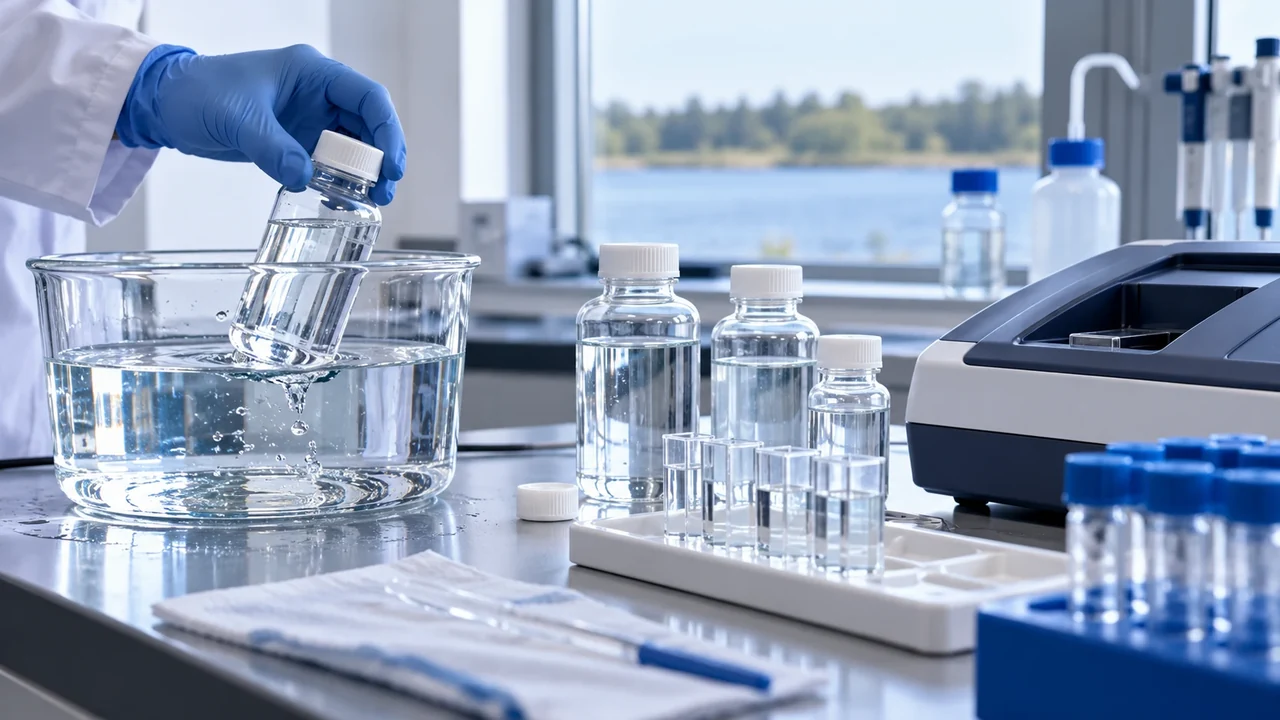
Align requirements and key specifications.
A product name, current grade or water report is enough to start.

Check the grade, revision and batch.
TDS, SDS and COA serve different purposes. Review each as needed.
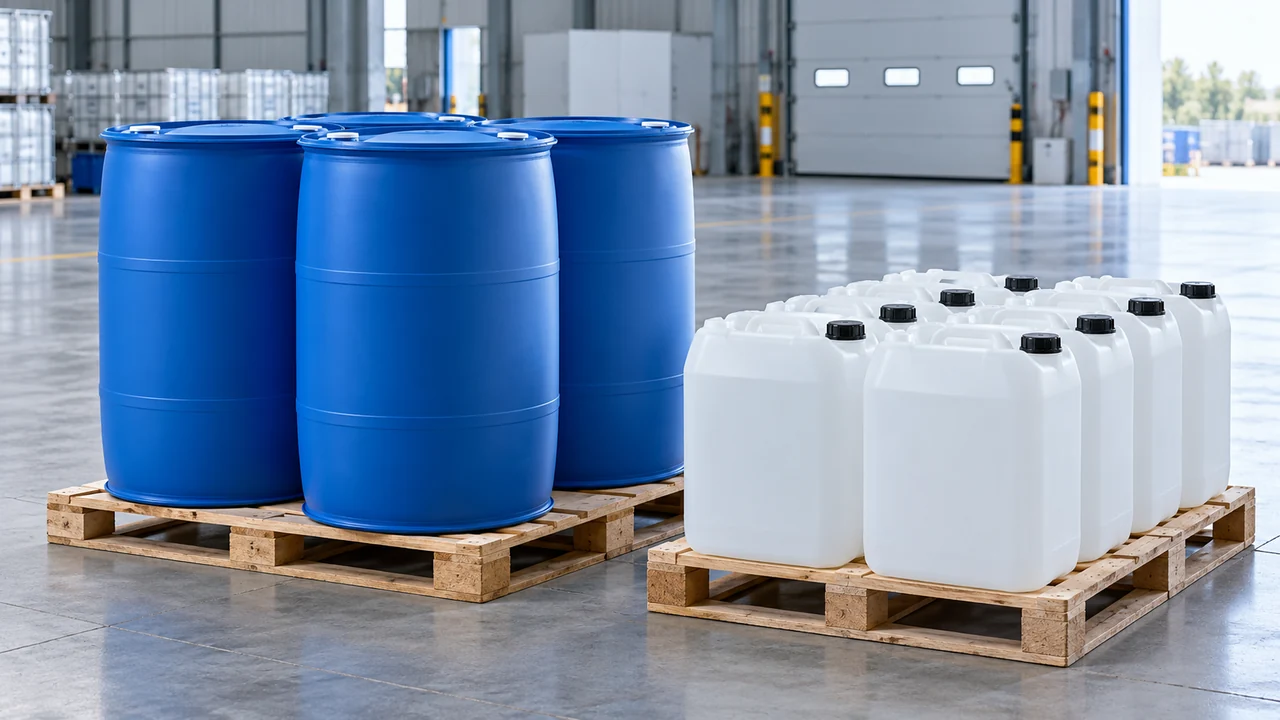
Consider packaging and destination together.
Include quantity, labeling and delivery requirements in the same purchasing discussion.
Service illustrations. Product documents, packaging and delivery conditions are confirmed for each order.
Discuss your requirements04 / Blog
Practical questions. Better purchasing decisions.
Understand product differences, application limits and document purposes.
Start with a topic relevant to your current requirements.
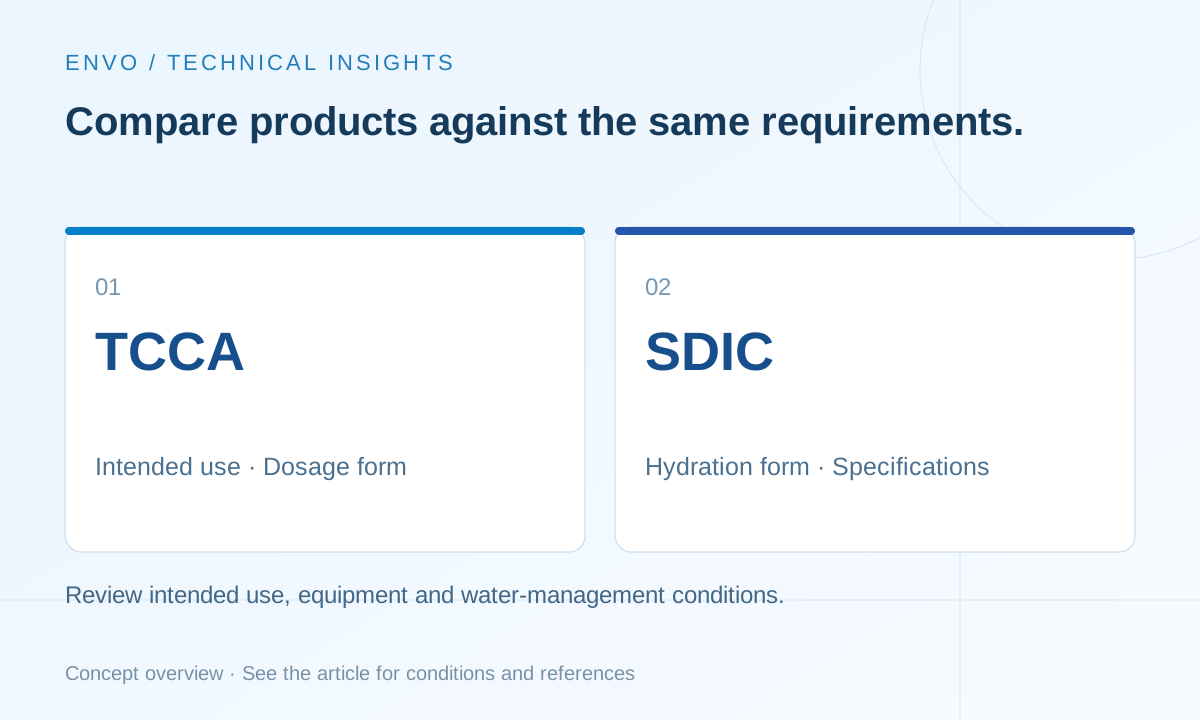 Original explanatory diagram
Product Selection
TCCA vs. SDIC: What should you check before buying?
Translate product names into purchasing criteria—from intended use and physical form to cyanuric-acid management.
Read the guide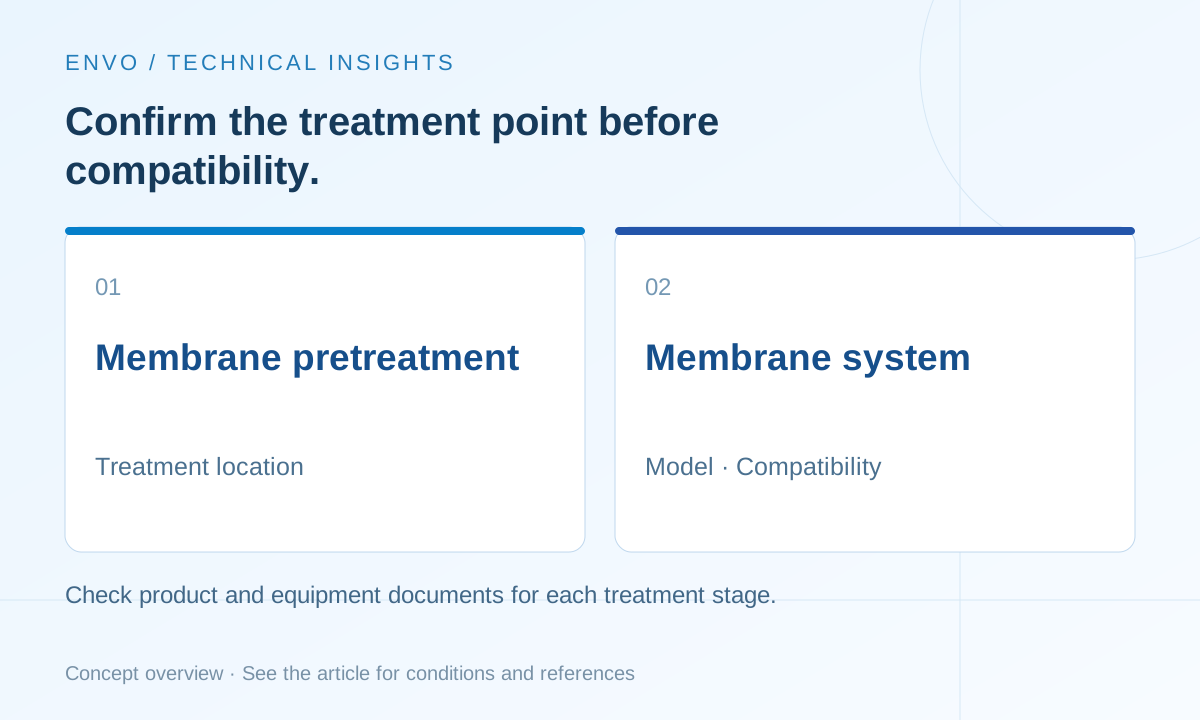 Original explanatory diagram
Application Insights
Why distinguish upstream biocide treatment from disinfection inside a membrane system?
Treatment location and membrane model often matter more than a biocide name alone.
Read the guide Original explanatory diagram
Purchasing Documents
TDS, SDS and COA: What does each document tell you?
Technical specifications, safety information and batch results answer different purchasing questions.
Read the guide05 / Technical Resources
Match the documents to the product.
Review the specific grade and intended use.
Read public references directly and request company documents as needed.
Start with the same product grade
TDSTechnical specificationsSDSSafety informationCOAActual batch
Product name → Grade / Revision → Batch information
Have a grade or water report?
Start with the documents you have.
You do not need every detail before contacting us. Identifying what is known and what still needs confirmation can move selection forward.
Tell us which documents you needTDS · Technical Data
Check composition, physical form, specifications, scope of use and revision.
SDS · Safety Information
Check formulated-product hazards, storage/transport, emergency information and destination language.
COA · Batch Results
Check the supplied batch number, test parameters, methods and results.
Intended-Use & Market-Access Documents
Confirm required documents by destination, intended use and specific formulated product.
Application & Efficacy Evidence
Distinguish test conditions, validation results and field-operating evidence.
System & Compatibility Documents
Check membrane, resin, pipe-material and equipment instructions.
View public references & source notes
The following sources support review of treatment options; they are not ENVO certifications, customer cases or product approvals. Check the latest version and destination requirements before use. Compiled: 2026-10-26.
CDC · Chlorine and chloramine in drinking waterWHO · Drinking-water treatment methods and performanceCDC · Legionella control in building water systemsCDC · Operating public pools, hot tubs and splash padsCDC · Home pool and hot-tub water treatmentCDC · Legionella control in decorative fountainsLANXESS · Cooling-water microbial-control productsLANXESS · Microbial control in pulp and paperLANXESS · Papermaking biocide product informationFDA · Produce-processing water and antimicrobial treatmentsSolvay · Peracetic acid formulations for food and process hygieneWHO · GMP guidance for pharmaceutical waterDuPont · FilmTec RO/NF membrane technical manualSamsung Semiconductor · Uses and purity requirements of semiconductor ultrapure waterSolvay · Peracetic acid for wastewater disinfectionUS EPA · Water-reuse treatment requirements by intended useItalmatch · Bellacide microbial control for industrial and oil-and-gas applicationsItalmatch · TTPC and polymeric quaternary ammonium blendsLANXESS · Biocides for oil-and-gas water treatmentPNW University Extension · Treatment of water-mold pathogens in irrigation waterLANXESS · Livestock drinking-water and water-line hygieneWOAH · Aquatic Animal Health Code: DisinfectionIMO · Ballast Water Management Convention and system-approval guidanceUS EPA · Cyanobacterial bloom control in natural waters and its limitationsCDC · Emergency drinking-water safetyCDC · Dental water-line quality managementCDC · Dialysis water and dialysis safetySMC Global · THPS products and industrial usesLANXESS · Oxone oxidation for pools and spasNHMRC · Copper sulfate as a water-treatment chemicalLANXESS · Bronopol for industrial cooling water and papermakingUS EPA · Monochloramine and secondary disinfectionICC PHTA · PHMB as an alternative pool-disinfection systemWatertech · BCDMH product usesSolenis · Microbial control in industrial process waterSolvay · Water treatment and sodium percarbonate aquatic algaecidesCDC · Disinfection of medical equipment and dialysis systemsLANXESS · Peroxygen formulations for animal drinking-water systems
Frequently Asked Questions
Before you choose,
clarify what matters.
Can one disinfectant be used in every water environment?
An active-ingredient name alone is not enough. Final use, water quality, materials, contact conditions, formulation and destination requirements can all affect suitability. This page offers candidate options for review; each specific grade needs matching documentation.
Can I start product selection without a complete water report?
Yes. Start with the application, treatment objective and existing product or equipment model. Mark unknown details as uncertain, then add the key information needed for your application.
Are precursors, algaecides and biodispersants also disinfectants?
They have different roles. Generation precursors require the appropriate equipment or procedure; algaecides target algae; biodispersants help address adherent deposits. None automatically replaces the primary disinfectant or biocide.
Why is there no universal dosing rate on the homepage?
Effective dose and contact conditions depend on the formulated product, target microorganisms, water quality and system. This page supports initial purchasing assessment. Operating programs must follow product labels, equipment requirements and validation results.
Do the references represent ENVO certifications or customer cases?
No. Public references explain treatment options and application limits. ENVO product documents, supply specifications and cases require separate verification. We do not present another company's certificates or results as our own performance record.
06 / Contact
Tell us what you need.
We can start there.
A known product, current grade, water report or purchasing list
can be the starting point.
Organize requirements, copy the list or open email / WhatsApp, then confirm sending yourself.