
Labeled chlorine dioxide but not directly usable
Check components and product type; a trade name cannot replace identity confirmation.
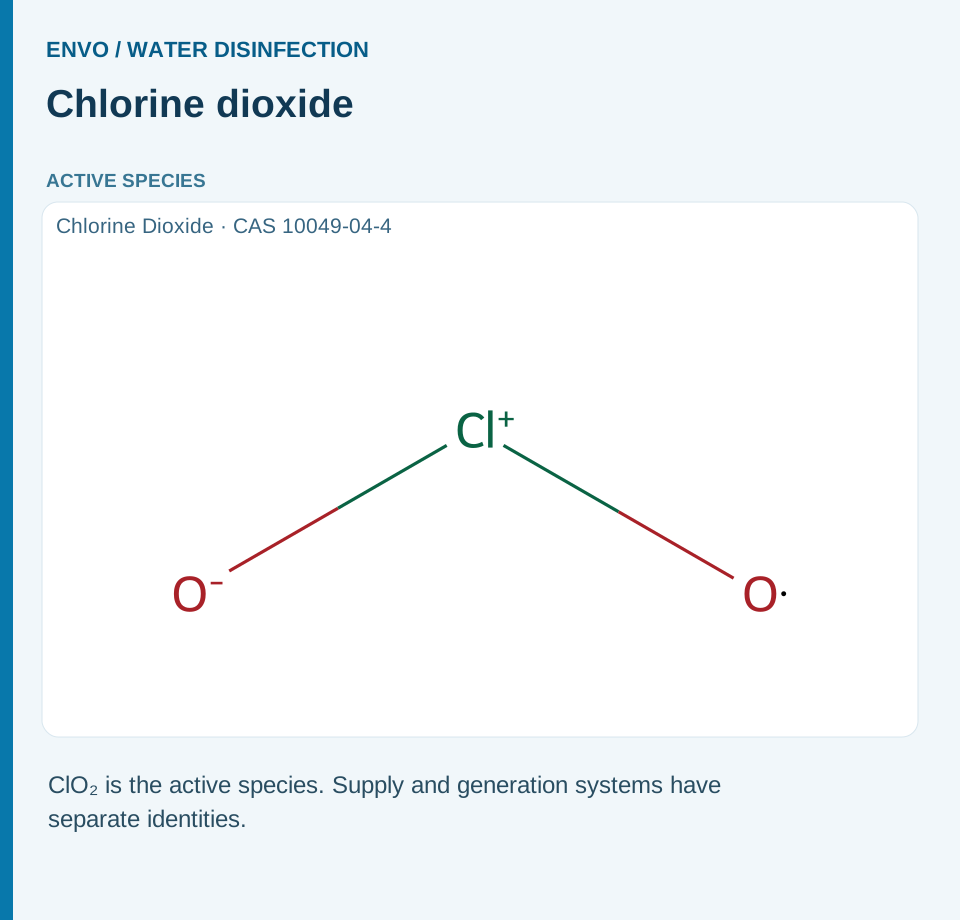
Chlorine and chlorine dioxide / Specialized formulation
Chlorine dioxide product systems · ClO₂
First distinguish specific ready-to-use formulated products, precursor products requiring a prescribed procedure, and on-site generation systems before discussing use and purchasing. Analytical methods must distinguish chlorine dioxide from other oxidizing components.
A selection starting point for formulated products and supporting precursor packages; generation equipment has a separate engineering page.
Bring an existing model or purchasing specification directly into the discussion.
Identity and physical form identify the product; specific concentration, grade, packaging and uses are governed by mutually confirmed formulated-product documents.
01 / Product and applications
Chlorine dioxide is the chemical species performing oxidation; commercial names such as stabilized chlorine dioxide may describe precursor systems, requiring verification of full composition.
Commercial forms vary with formulation or precursor system and require actual supply documents; packaged chlorite cannot be described directly as already-generated chlorine dioxide.
This CAS identifies ClO2 only. Stabilized chlorine dioxide trade names may refer to precursors or other formulations. Check SDS composition and actual active species; sodium chlorite packaging does not contain pure chlorine dioxide by implication.
02 / Specification selection
| Items to confirm | Relevance to purchasing and use |
|---|---|
| Product identity and actual components | Identify whether the purchase is a disinfectant product, precursor or system auxiliary. |
| Test methods and active components | Avoid misreporting total oxidizing capacity as chlorine dioxide. |
| Chlorite and chlorate | Include by-products in application evaluation. |
| Use and equipment documents | Match the actual treatment stage, treated water and system requirements. |
Include parameters, test methods and acceptance checkpoints in purchasing requirements to compare specifications.
03 / Applications and limits
These are starting points for conditional verification. Specific product suitability still requires joint confirmation through product documents, operating conditions and destination requirements.
04 / Common challenges
Check components and product type; a trade name cannot replace identity confirmation.
Verify analytical methods, sampling points and interfering components.
Evaluate precursors, generation quality and actual water samples together.
05 / Documents and evidence
These documents support technical categories and use limits, not ENVO certifications or customer cases. Verification date: 2026-10-26.
06 / Frequently asked questions
No. The latter is usually a precursor; identity and purchasing responsibilities must remain distinct.
No. Generators have specific feedstock and procedure restrictions.
Use compliance involves final water quality, not only disinfection parameters.
Related selection options
Related products are not necessarily direct substitutes; verify each intended use.
 Sample photograph
NaClO₂
A common precursor for chlorine dioxide generation. Start purchasing checks with generator-approved specifications, impurities and delivery form; do not treat the raw material as an already-generated chlorine dioxide product.
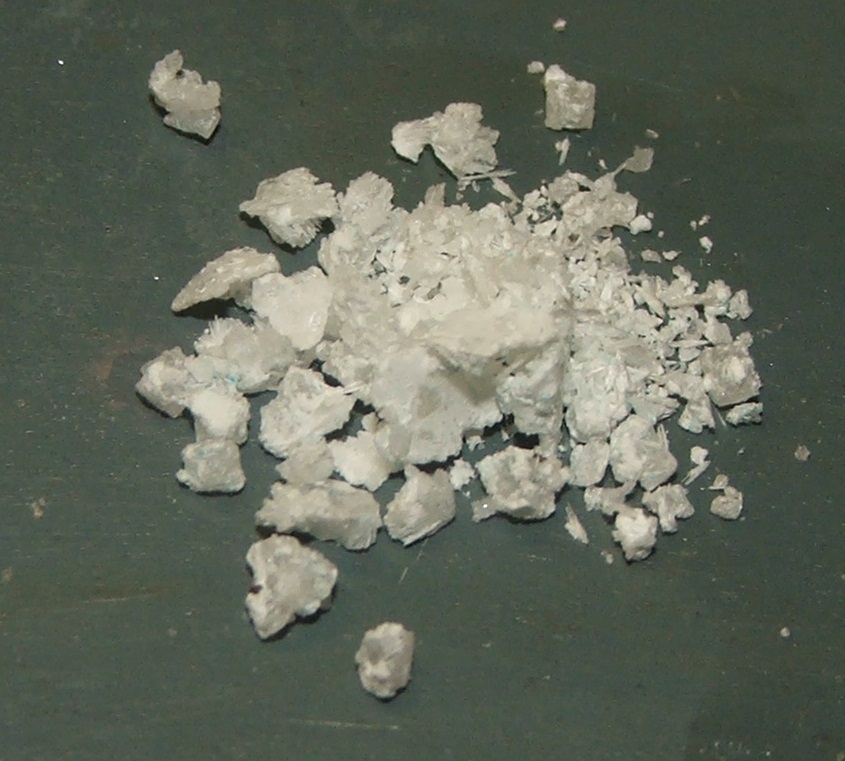 Sample photograph
NaClO₃
A precursor approach compatible only with specific chlorine dioxide generation processes. Public information indicates that its main uses differ from the sodium chlorite approach common at ordinary drinking-water stations; substitution based on similar names is not recommended.
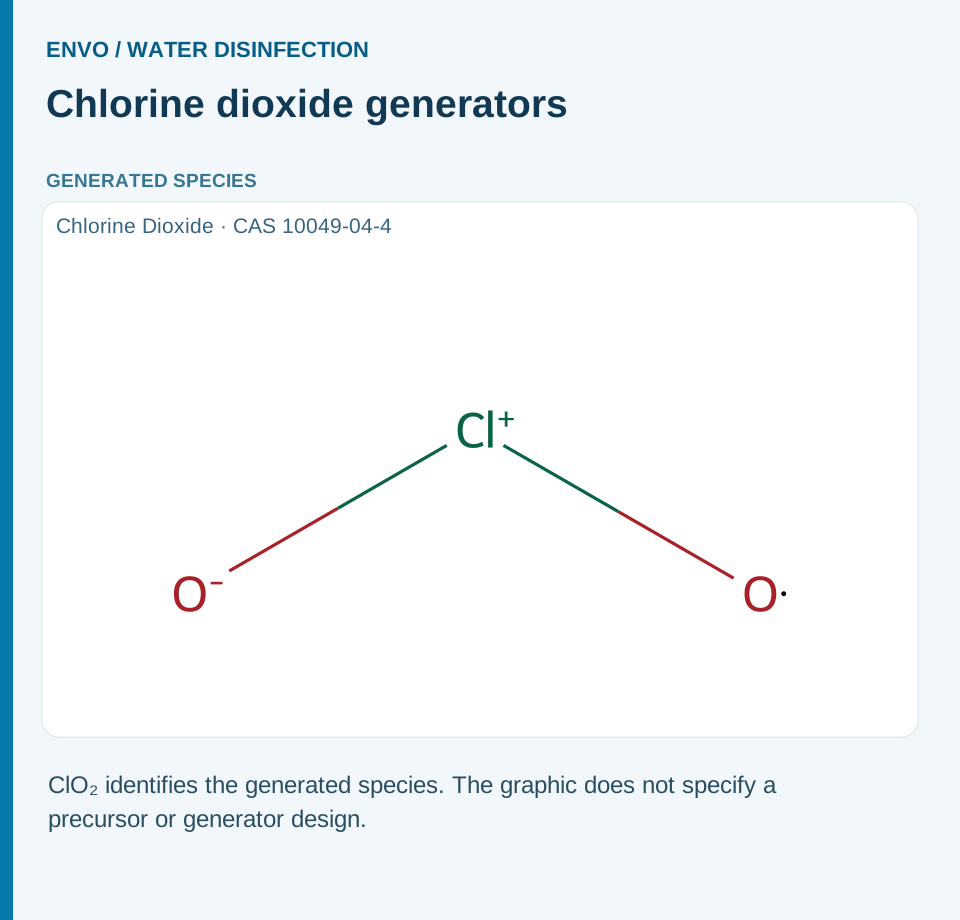 Generated species
ClO₂ generation
An engineered system that produces chlorine dioxide using equipment-approved precursors and processes. Purchasing verification should cover precursor purity, product identity, by-products, dosing points, operation and maintenance together.
When online, portable and laboratory readings differ, first align the analyte, sampling location, time and interference conditions. Total oxidizing capacity, free chlorine and chlorine dioxide cannot be combined into one number.
Read and verify →
Disinfection efficacy is one part of acceptance; final-use water may also have residual, chlorite and chlorate requirements. Establish complete objectives before trials, avoiding discovery of incomplete quality criteria only after microbial results improve.
Read and verify →
Supplier changes in chlorine dioxide systems should address the complete product and equipment requirements. Similar names, packaging colors or quoted concentrations do not demonstrate direct interchangeability.
Read and verify →ENVO · Purchasing and application support
Start with a product name, current model, water-quality report or destination documentation requirements.