Derive acceptance parameters from the intended outlet-water use
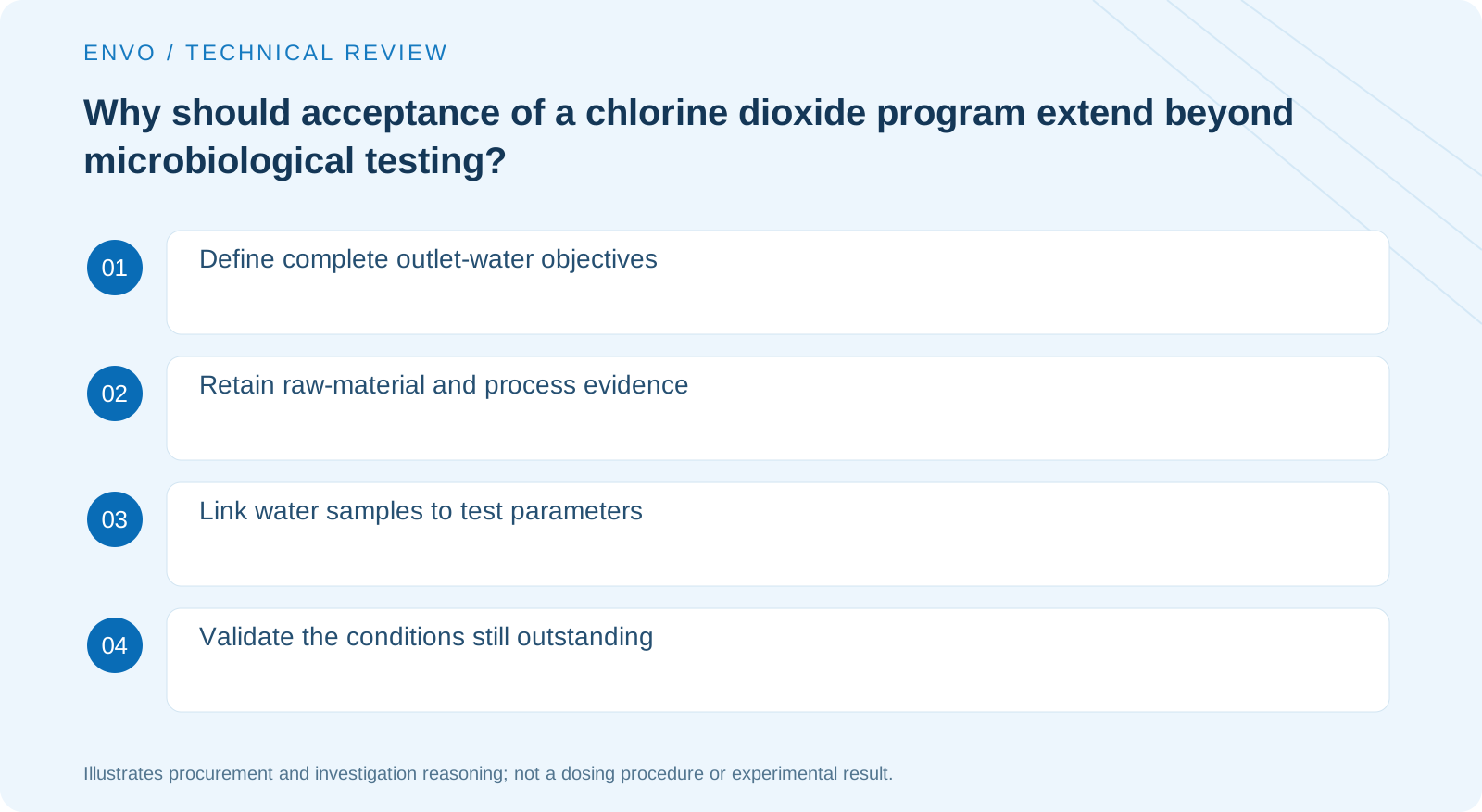
State whether treated water serves drinking, industrial use, reuse or discharge, and have responsible personnel confirm requirements. EPA technical documents discuss chlorine dioxide disinfection and by-products separately as an evaluation framework; older figures cannot replace current local rules. Define the complete assessment during procurement rather than deciding tests after equipment or chemicals arrive.
Retain precursor and process evidence together
Record the relevant formulated-product or precursor batch, supply/use system identity, actual conditions and water source. A by-product anomaly may involve several stages and should not be attributed solely to supplied raw material without evidence. For equipment-and-chemical procurement, identify who supplies raw-material quality information and who validates the process, preventing each party from answering only its local criteria.
Compare results within the same water-sample series
Place target microorganisms, residuals and by-products in a coordinated sampling plan with interpretable locations and operating conditions. Combining favorable results from different dates into one acceptance table loses essential relationships. Laboratories should confirm method suitability and preservation, particularly avoiding total-oxidizing-capacity results being treated as individual component results.
Turn uncertainties into follow-up validation tasks
If microbial targets are achieved but by-product evidence is insufficient, state the scope still awaiting validation rather than declaring the entire proposal accepted. Specialists may arrange additional trials for raw-water changes, operating loads or service conditions. Asking suppliers which documents and testing support are needed is more practical than demanding an unconditional guarantee of complete compliance.
Divide acceptance objectives into separate pass criteria
List microbial control, chlorine dioxide testing, by-products and other applicable water-quality criteria separately, specifying the method, sampling point and responsible party for each. Improvement in one item must not automatically offset failure of another critical item; acceptable by-product results alone likewise do not establish that microbial objectives have been achieved. Use standards applicable to the project's location and purpose, rather than copying values from historical overseas manuals into contractual guarantees. Acceptance records should retain actual operating conditions, particularly data ranges under fluctuating or adverse conditions, instead of showing only the best result. If precursors, equipment or processes change, assess which validation conclusions need updating. Combining separate assessments into a complete conclusion lets customers see whether the proposal meets their requirements without a blanket statement of compliance concealing unfinished work.
Explore further
Can a microbial report replace a by-product report?
No. The final use and requirements determine whether those parameters are needed; the two answer different questions.
Can a raw material COA replace treated-water sample results?
No. Raw material quality and actual treated-water quality are different validation subjects.
References
This article draws on publicly available technical information. Third-party sources do not establish ENVO product approvals, field testing or project experience. Confirm each use against actual supply documents and site conditions.