Water supply and buildings / Application solutions
Decentralized & Point-of-Use Water Treatment
Establish a monitored water-disinfection process suited to available operating and maintenance capabilities.
Illustrative application scene
Environment and objectives
First confirm what is being treated and at which treatment stage.
Rural supplies, wells, small water stations, island camps and point-of-use storage.
Operating conditions to check first
First establish whether the water is for drinking and whether storage, filtration and reliable power are available. Disinfection does not resolve chemical contamination.
Compare candidate treatment approaches
Why each approach is recommended and under which conditions it applies.
01
Disinfectant
Sodium hypochlorite and calcium hypochlorite for drinking-water use
Reason for recommendation
Suitable for small supply systems with controlled dosing and contact conditions.
Conditions of use
Review active-ingredient stability, incoming turbidity, storage and operator capabilities together.
Documents to verify
Intended-use and grade documentation; available-chlorine COA; water report; dosing and contact-equipment documents
An optional treatment approach for a specific small-scale system.
Conditions of use
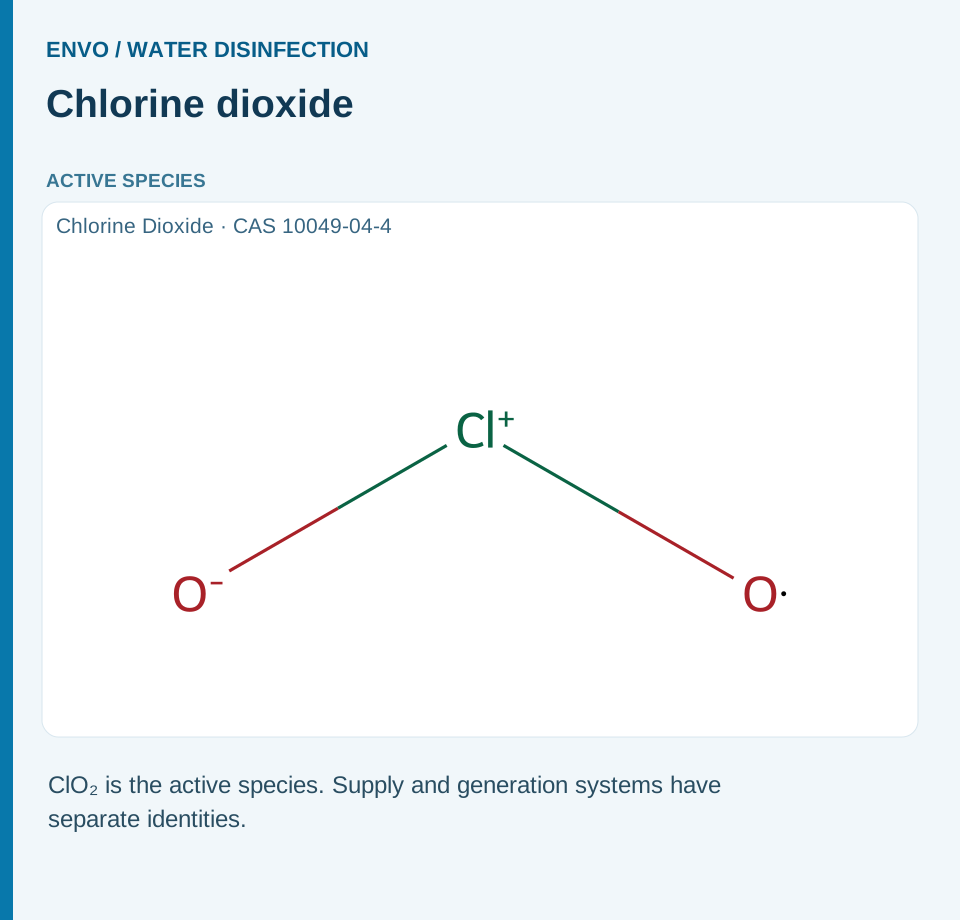
Establish whether the purchase is a formulated product or an on-site generation system. A raw-material name alone does not prove drinking-water suitability.
Documents to verify
Product/equipment instructions; intended-use evidence; residual and by-product test methods
This comparison supports initial purchasing screening. It does not replace the specific formulated product label, equipment instructions or site validation, and provides no universal dosage or on-site mixing instructions.
Related products
Explore candidate products and continue verification.
The following are conditional matches; they do not indicate that every grade is suitable.
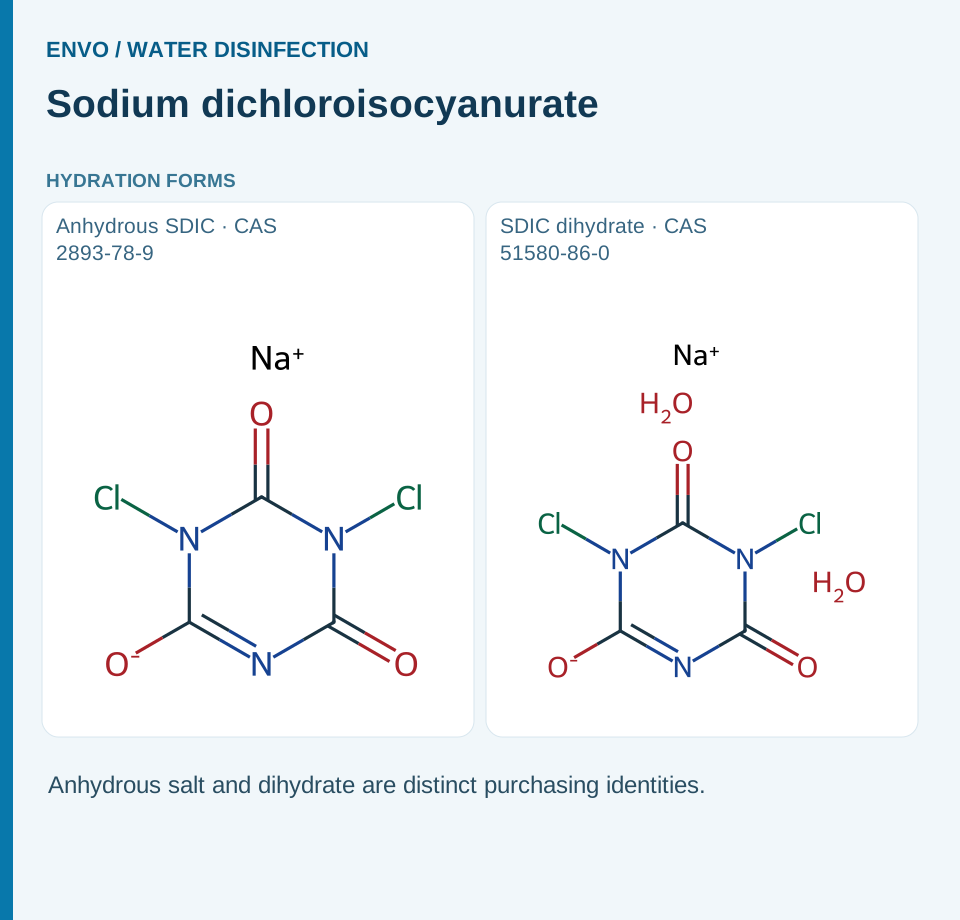
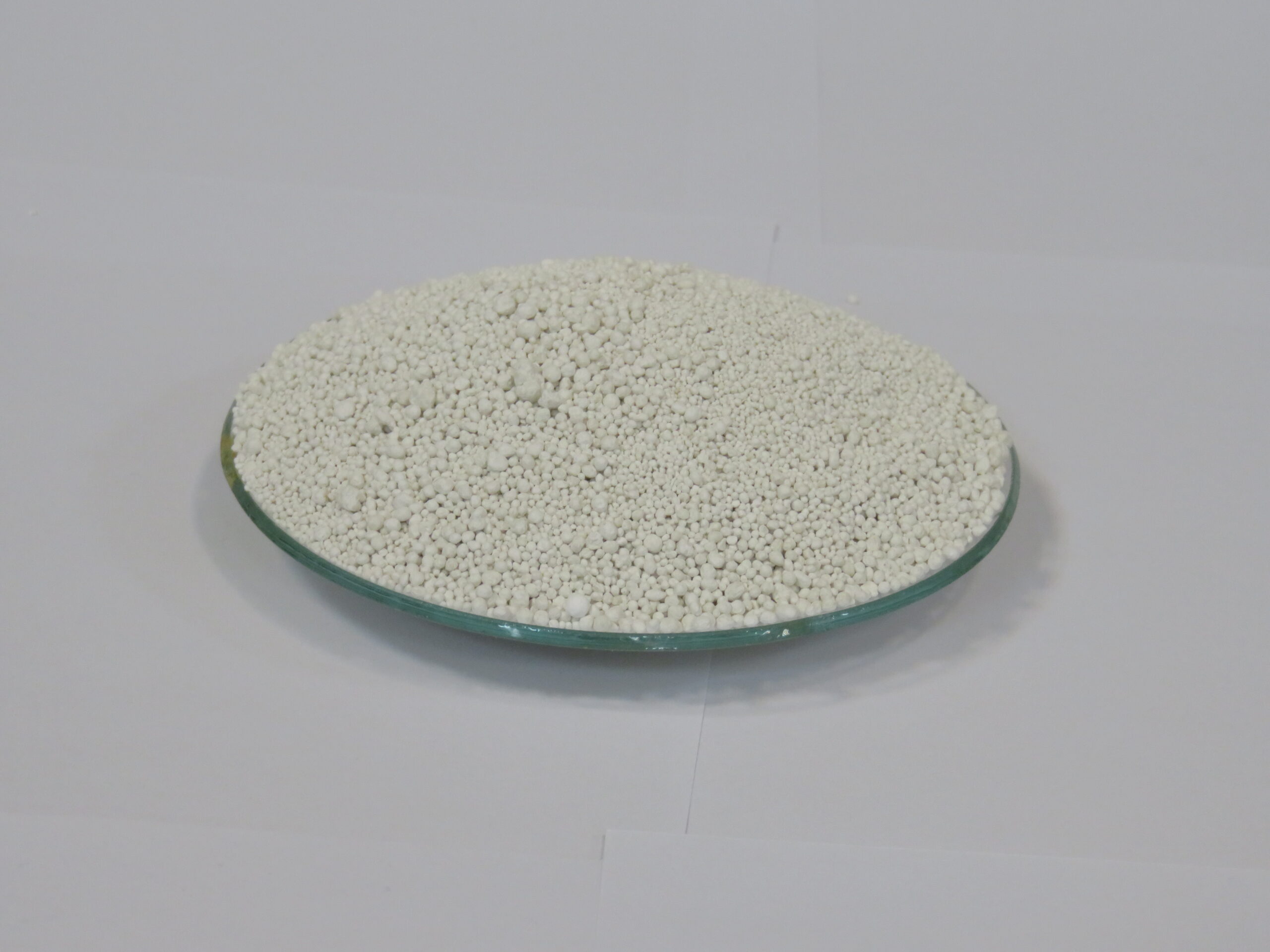
For pool and portable drinking-water disinfection products with defined uses. Distinguish anhydrous and dihydrate forms, and select specifications according to the application, dosage form and documentation requirements.
For pool, water-supply and effluent disinfection where the corresponding use applies. Purchasing priorities are available chlorine, particle size and insolubles, together with calcium loading in the water and dosing equipment.
A chlorination chemical used with liquid metering systems and residual monitoring. Purchasing priorities are available chlorine at delivery, storage turnover and impurity requirements for the intended use.
First distinguish specific ready-to-use formulated products, precursor products requiring a prescribed procedure, and on-site generation systems before discussing use and purchasing. Analytical methods must distinguish chlorine dioxide from other oxidizing components.
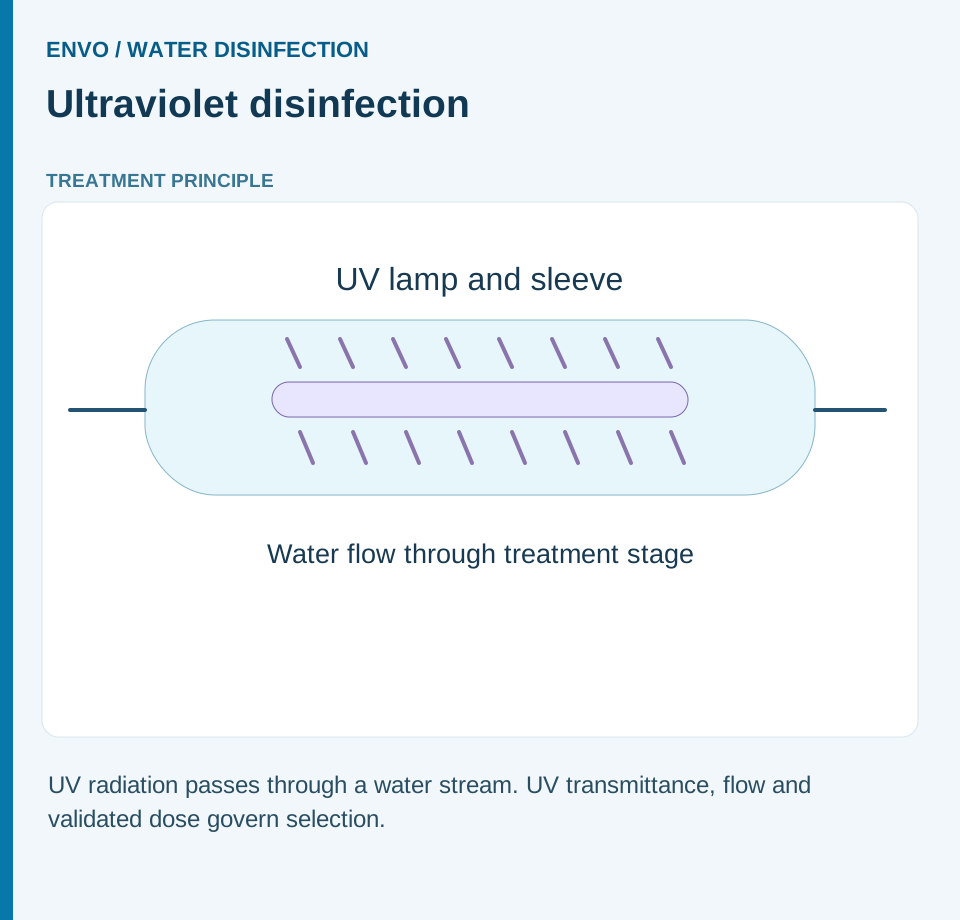
A disinfection barrier based on validated equipment and water quality conditions. Purchasing priorities are validated performance at the design flow rate, UV transmittance, particle effects, alarms and maintenance; lamp power alone is insufficient for comparison.
Turbidity in well water after rain should first be treated as a signal of changed source-water or treatment conditions, rather than simply increasing the chemical dose used for clear water.