Map every transfer
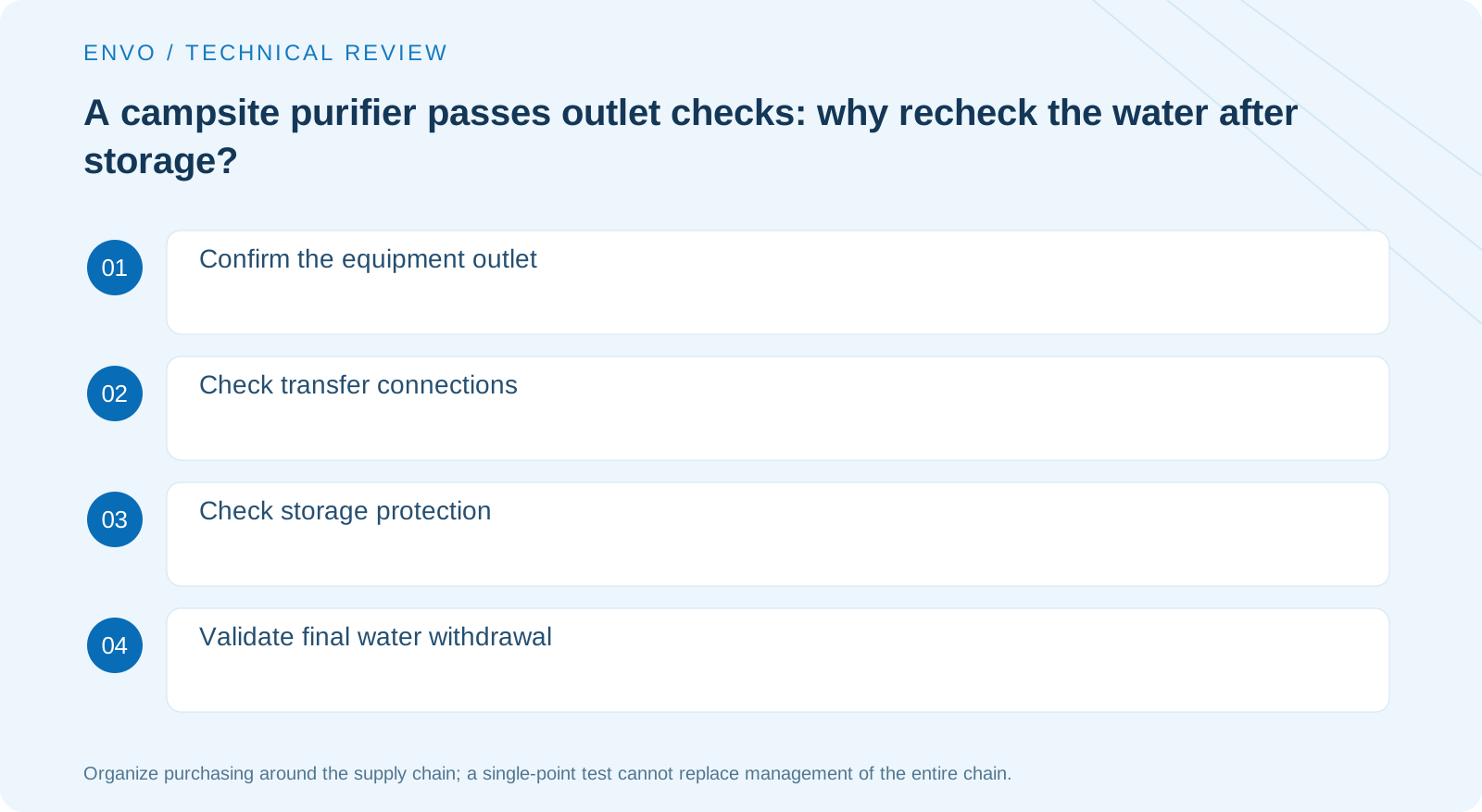
Starting at the equipment outlet, map connectors, temporary hoses, tanks, transfers and withdrawal methods, noting components contacting floors or unclean tools. Distinguish closed transfer from manual scooping to reveal locations outside outlet-test coverage. Add storage duration and use frequency so 'purified water' becomes a supply process that can be checked stage by stage.
Distinguish immediate treatment from storage protection
CDC drinking-water information explains residuals in distribution, while emergency guidance emphasizes safe post-treatment storage. Proposals should establish whether equipment leaves a persistent residual, storage duration, container hygiene and prevention of recontamination at withdrawal. No single answer fits all camps; assess product instructions, storage conditions and local supply requirements together.
Make sampling answer specific questions
If contamination-source tracing is needed, specialists can design corresponding samples at equipment outlets, tank outlets and final withdrawal points, recording collection time and turnover status. Sampling only brand-new empty containers does not represent long-used ones. Investigate fittings, lids, withdrawal tools and cleaning records alongside chemicals rather than immediately blame an outlet anomaly on the product.
Include containers and operational handover in the purchasing scope
Quotation comparisons can include storage/distribution components, permitted container materials, cleaning and maintenance, consumables and training. Specify supplier-provided items and camp-managed responsibilities. Prepare a handover card naming those responsible for treatment, storage, distribution and incident suspension so shifts and temporary personnel can continue the confirmed supply process.
Include standby containers in management arrangements
During camp expansion or temporary shift changes, spare containers and hoses may bypass routine usage records. Add container identifiers, previous uses, commissioning dates and responsible personnel to handover sheets, stating how their condition is confirmed. A drinking-water label on the exterior does not replace checks of intended use and hygienic condition. A change from fixed tanks to manual decanting should be reviewed as a new supply stage. Buyers can then determine whether the gap concerns extra containers, suitable connections or staffing capable of carrying out the required management.
Explore further
Can purchasing disinfectant alone address stored-water risks?
Container, conveyance and water-collection management are also needed. Chemicals cannot replace hygiene across the full chain.
Which parameters should be tested at endpoints?
Determine this from the use and local requirements, designing sampling locations and timing around the stage to be investigated.
References
This article draws on publicly available technical information. Third-party sources do not establish ENVO product approvals, field testing or project experience. Confirm each use against actual supply documents and site conditions.