Clarify what each method measures
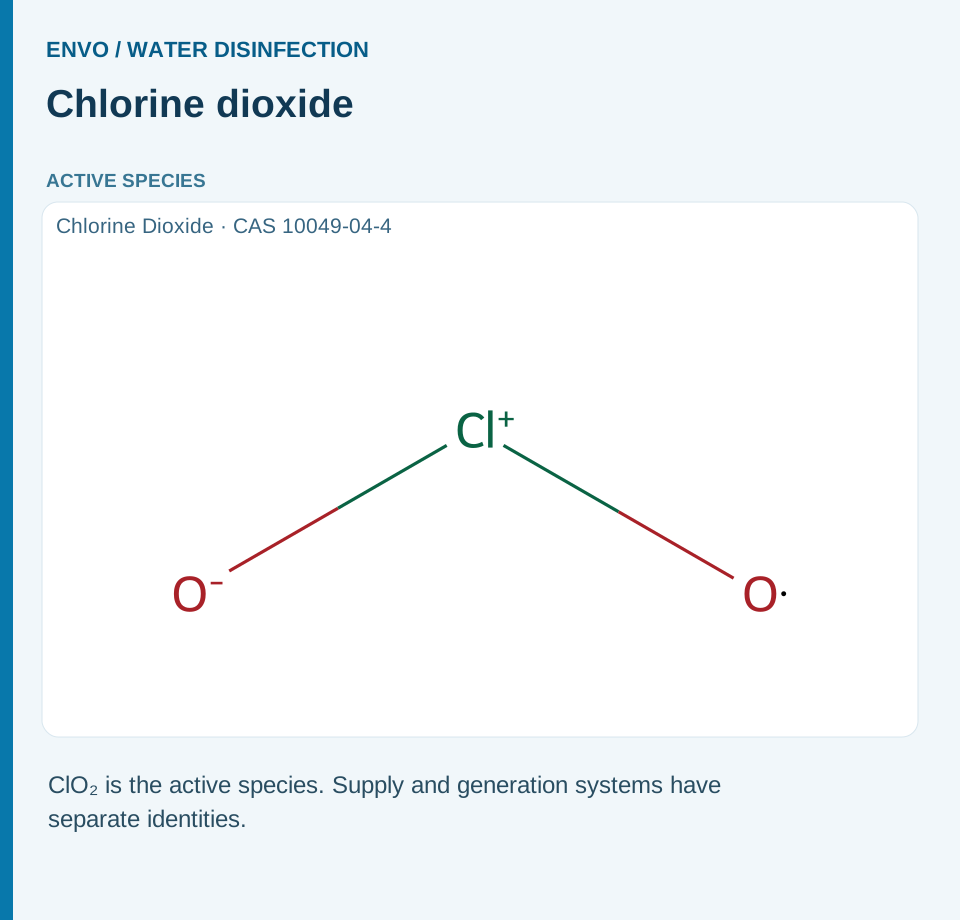
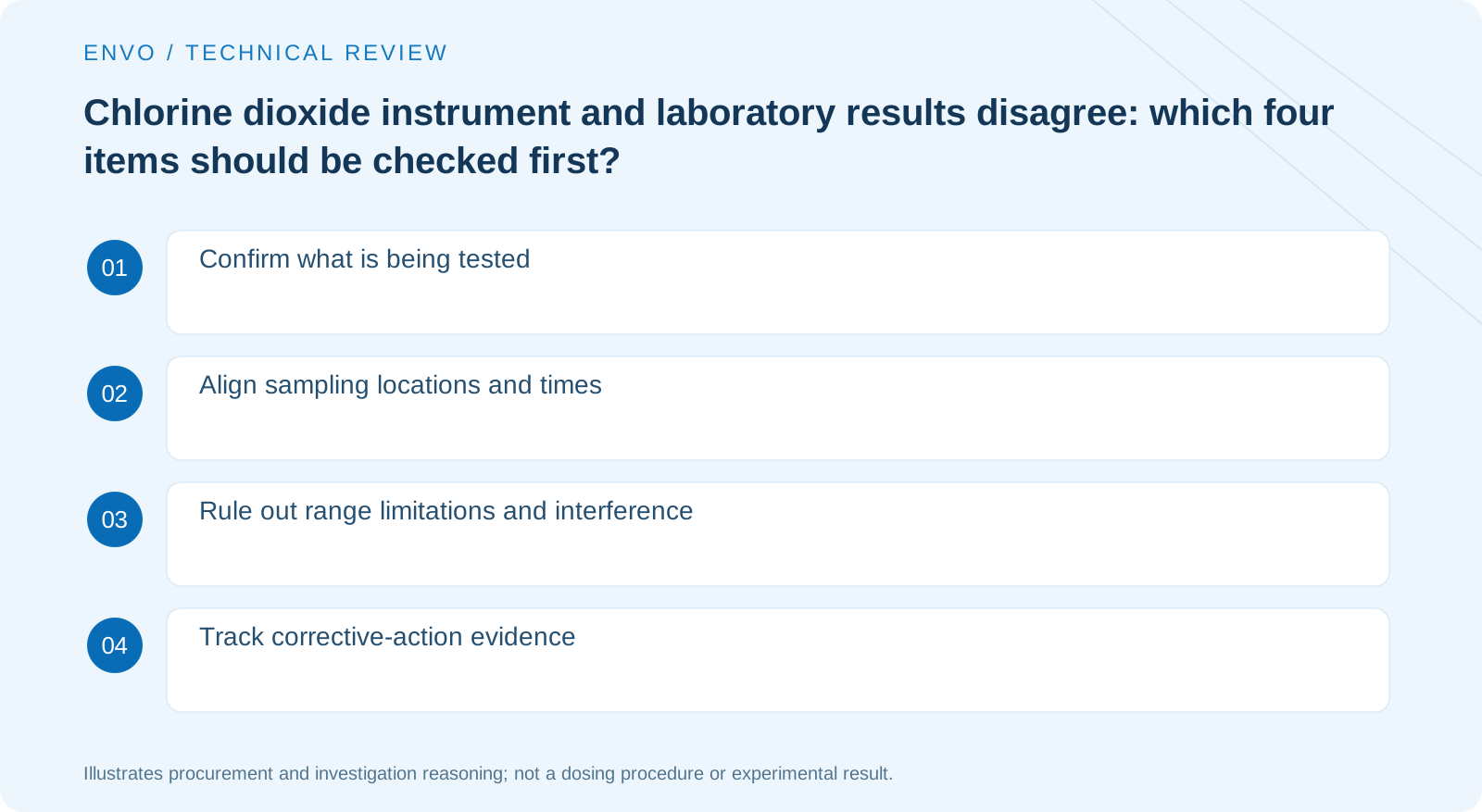
Collect online-sensor instructions, portable-reagent methods and laboratory parameter names to establish whether they measure chlorine dioxide, total oxidants or another residual. EPA alternative-disinfection literature discusses chlorine dioxide and related by-products separately, illustrating the need to distinguish them. Disinfectant in an instrument's name does not make its output inherently equal to the target species' concentration.
Ensure samples actually represent the same period
Use same-point sampling or clearly explained location relationships, recording collection-to-analysis intervals and operating state. Different branches, tank inlet/outlet points and final outlets may reflect genuinely different quality. If generation or chemical delivery fluctuates, investigate timing first rather than select the result closest to expectations as the official value.
Check the measurement range and matrix interference
Testing personnel should review range, calibration and potential interference under the specific method, especially where other oxidants or precursors coexist. Do not convert every instrument result to chlorine dioxide with one fixed factor. Exclude interference using supported selective methods or validated corrections, not improvised reagent mixing.
Record discrepancies in a form that supports corrective action
Classify results by method, location, timing and equipment-state differences and assign confirmation responsibilities. Readings persistently outside a method's applicable range cannot continue supporting operational decisions. Before buying monitoring equipment, provide actual water constituents, target range and process conditions rather than requesting only a 'high-precision chlorine dioxide meter.' This reduces later disputes.
First establish whether both methods measure the same substance
When online instruments and manual analyses disagree, first check whether each method specifically measures chlorine dioxide, also responds to other relevant oxidants, and uses comparable samples and time points. Two results expressed in concentration units cannot necessarily be subtracted to determine instrument error. Provide competent testing personnel with the sampling route, sample holding time and relevant treatment records, rather than just two screen captures. Retain unmodified raw results and method versions during verification; adjusting an instrument until it matches the laboratory value is no substitute for investigation. If the methods ultimately prove to measure different substances, correct the data sheet and operating interpretation instead of selecting the higher reading to claim better performance. Acceptance for the intended use requires reliable methods; a generic website instrument reading cannot replace validation of the actual product and operating conditions.
Explore further
Can ORP be converted directly into chlorine-dioxide concentration?
A direct one-to-one conversion is generally not possible. Use a target-species analytical method suitable for the actual water sample.
Does detecting oxidizing activity prove that the package contains chlorine dioxide?
No. Identity must correspond to the analyte; precursors or other oxidizers may also affect the test.
References
This article draws on publicly available technical information. Third-party sources do not establish ENVO product approvals, field testing or project experience. Confirm each use against actual supply documents and site conditions.