
Microbial counts improve but corrosion continues
Review microbial, corrosion, deposit and sulfide information together.
Non-oxidizing biocides / Chemical
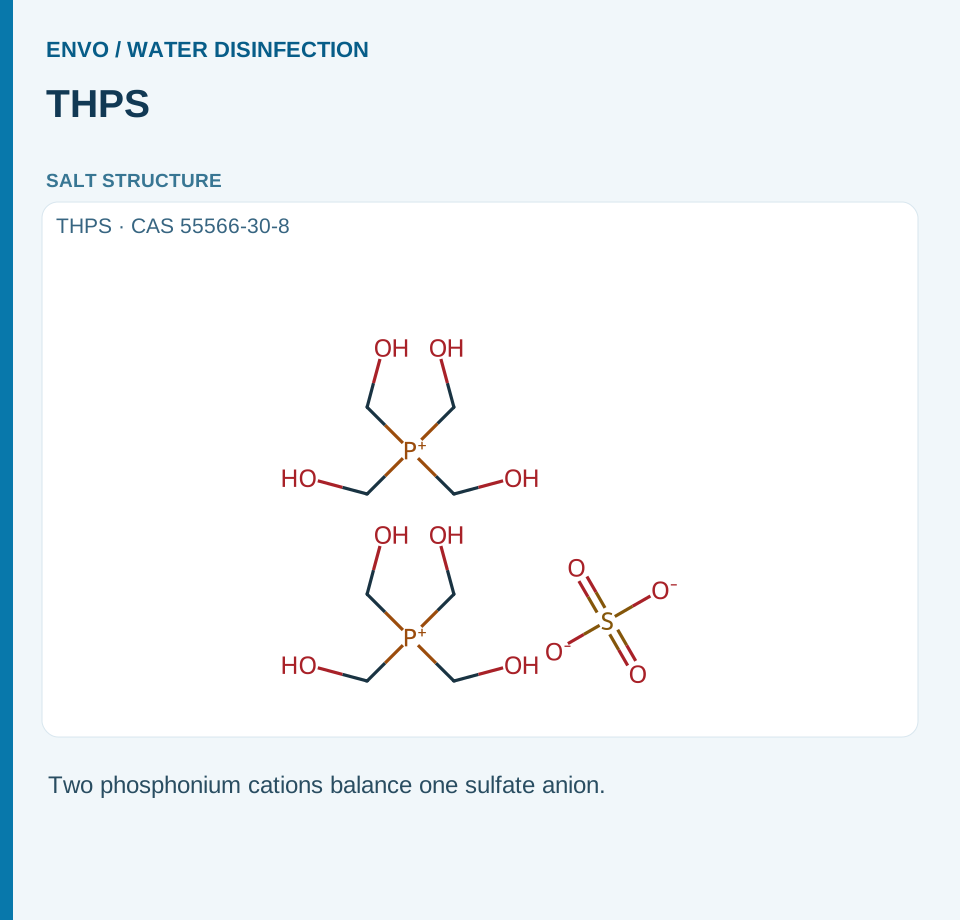
Tetrakis(hydroxymethyl)phosphonium sulfate · THPS
For oil and gas water-treatment biocide formulations with defined uses. Actual salinity, temperature, sulfides and SRB/APB test conditions must form part of the selection basis; a product name alone cannot guarantee field performance.
A candidate ingredient for microbial control in oil and gas production and oilfield water.
Bring an existing model or purchasing specification directly into the discussion.
Identity and physical form identify the product; specific concentration, grade, packaging and uses are governed by mutually confirmed formulated-product documents.
01 / Product and applications
Tetrakis(hydroxymethyl)phosphonium sulfate, a quaternary phosphonium salt; chemically and compositionally distinct from TTPC.
Color, concentration and stability of the delivered solution must match its TDS; this page promises no fixed specification.
THPS is tetrakis(hydroxymethyl)phosphonium sulfate, also described as bis[tetrakis(hydroxymethyl)phosphonium] sulfate. This CAS identifies the sulfate and excludes other chemical products precondensed with urea; verify supplied solutions as mixtures.
02 / Specification selection
| Items to confirm | Relevance to purchasing and use |
|---|---|
| Active ingredient and impurities | Define the purchasing and trial product consistently. |
| Salinity, temperature and sulfides | Reflect actual oilfield conditions. |
| Target organisms and test methods | Distinguish targets such as SRB/APB and their test results. |
| Compatibility with polymers, corrosion inhibitors and demulsifiers | Protect downstream process performance. |
Include parameters, test methods and acceptance checkpoints in purchasing requirements to compare specifications.
03 / Applications and limits
These are starting points for conditional verification. Specific product suitability still requires joint confirmation through product documents, operating conditions and destination requirements.
04 / Common challenges
Review microbial, corrosion, deposit and sulfide information together.
Validate using actual water and target temperature conditions.
Check viscosity, phase behavior and compatibility with relevant additives together.
05 / Documents and evidence
These documents support technical categories and use limits, not ENVO certifications or customer cases. Verification date: 2026-10-26.
06 / Frequently asked questions
No. Verify chemical identity, formulation and conditions of use separately.
Consider sampling methods, operating conditions, corrosion and field efficacy validation together.
Use specific product and actual-water data; the generic name cannot establish a guaranteed value.
Related selection options
Related products are not necessarily direct substitutes; verify each intended use.
 Salt structure
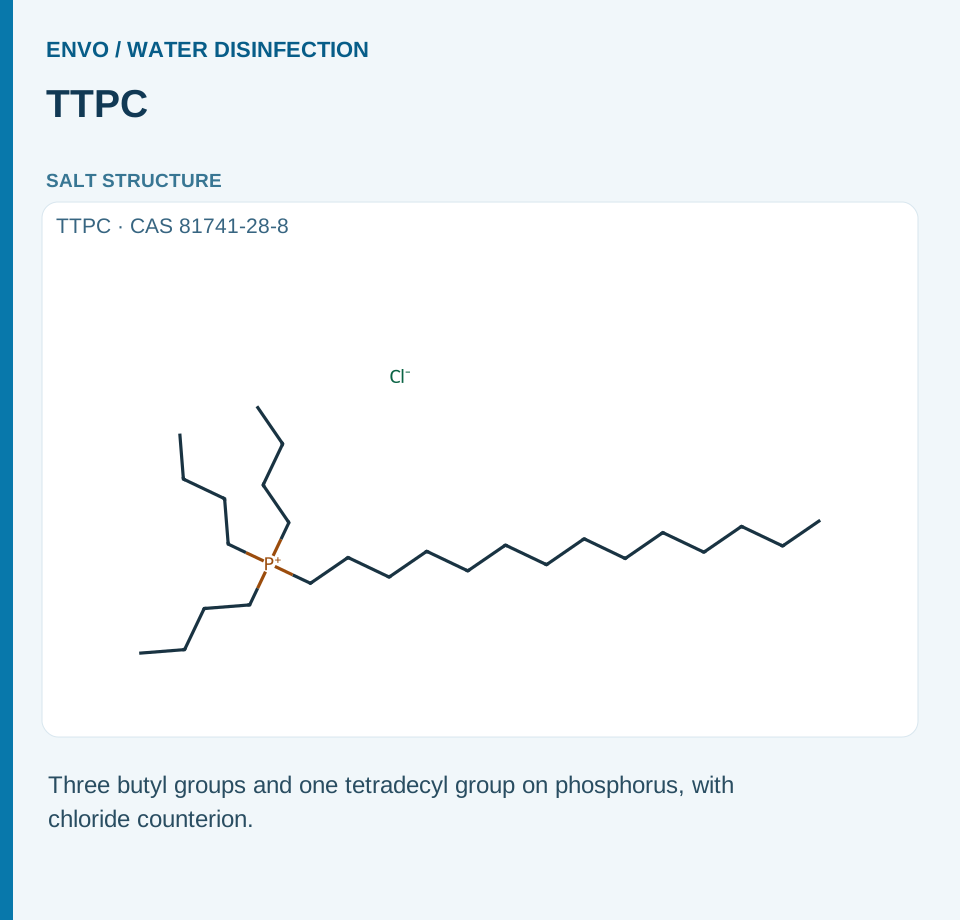
TTPC
A quaternary phosphonium candidate for industrial and oil and gas water. Compatibility of the cationic ingredient with actual fluids is a purchasing priority; it cannot directly replace THPS simply because both are quaternary phosphonium salts.
 Active component
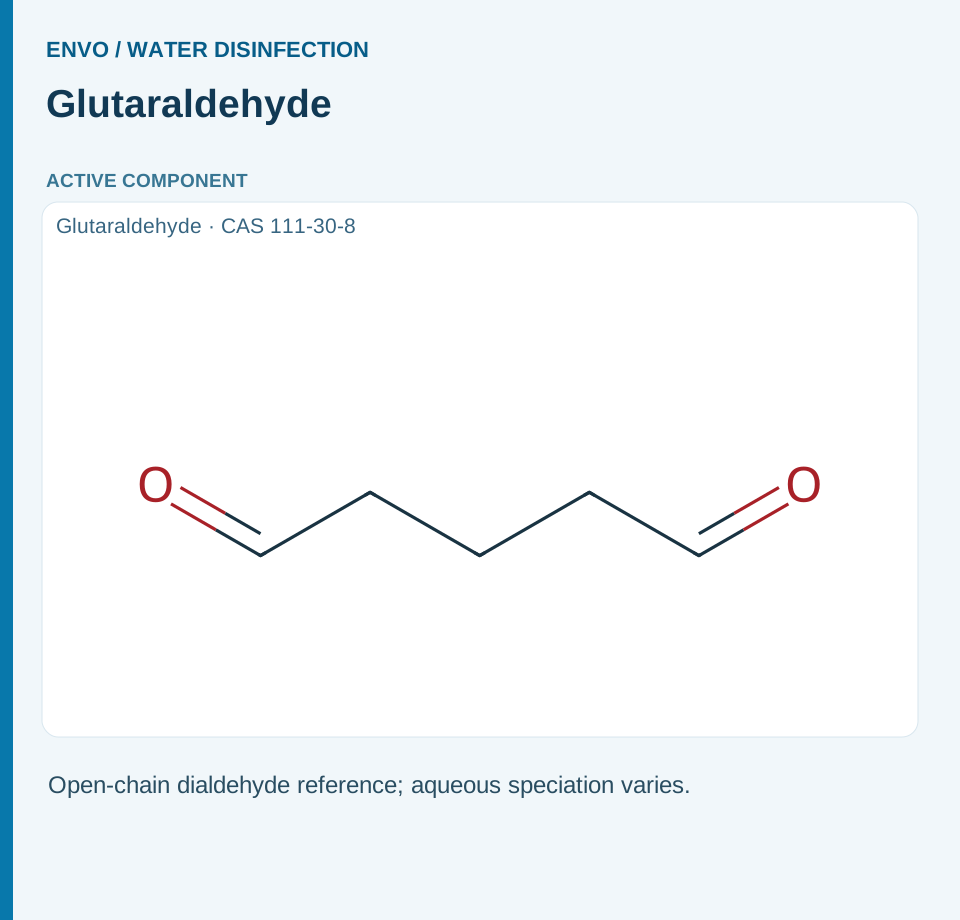
GDA
A candidate non-oxidizing ingredient for industrial recirculating water, papermaking and oilfield water. Purchasing should be supported by validation under actual fluid and contact conditions; industrial grades and formulated products dedicated to medical equipment must be considered separately.
 Example active
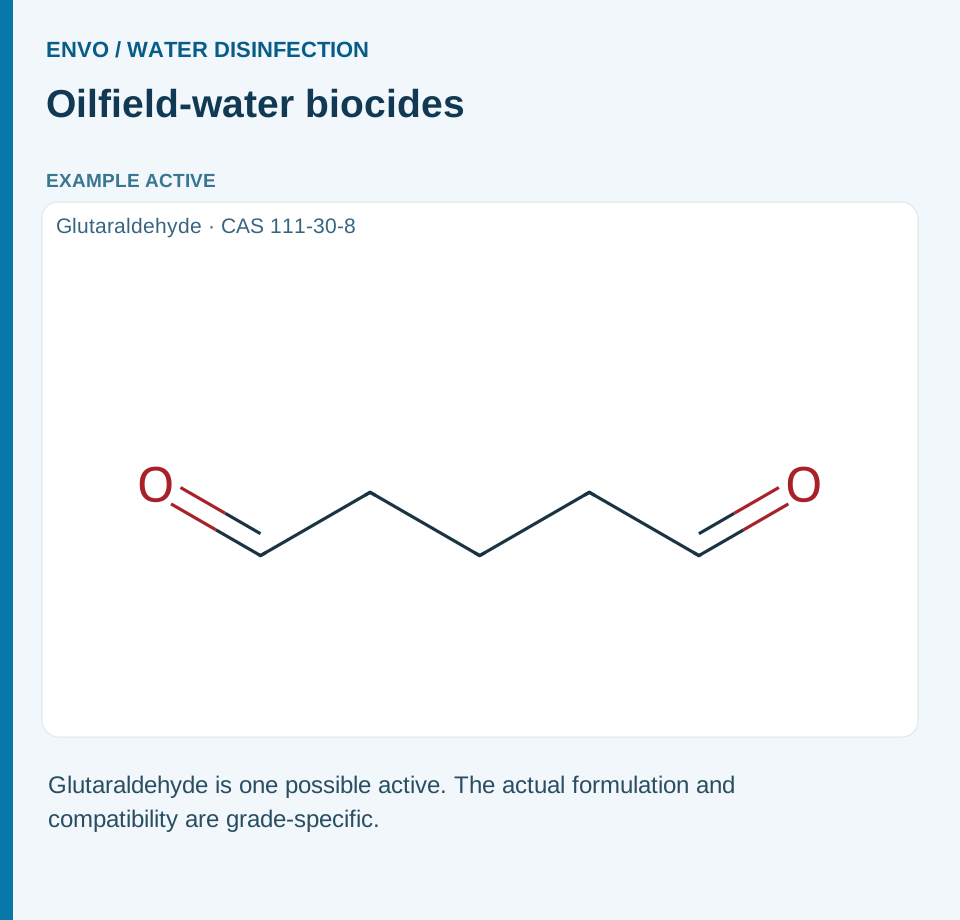
Oilfield formulations
Select for a specific treatment stage: produced water, reinjection, fracturing or surface water storage. Efficacy, corrosion and fluid compatibility require validation under the same actual operating conditions; one test cannot represent an entire oilfield.
Deposit changes and microbial control are different findings. Evaluate oilfield THPS programs by separating sulfide, deposit, microbial and corrosion evidence before analyzing their relationships.
Read and verify →
Salinity, oil, solids and other chemicals together form the oilfield use environment. Evaluate THPS in representative actual water samples rather than finalizing selection on clean-water results alone.
Read and verify →
THPS and TTPC differ in chemical identity and product approaches. Broad category names increase wrong-product and misuse risks; identify products by complete names, models and documents.
ENVO · Purchasing and application support
Start with a product name, current model, water-quality report or destination documentation requirements.