Identify contact between process water and the product before selecting microbial control that will not disrupt the process.
Illustrative application scene
Environment and objectives
First confirm what is being treated and at which treatment stage.
Metal cleaning, textile processing, plastics washing, water curtains, wet scrubbers and process-water reuse.
Operating conditions to check first
Check contact with finished products, color/odor requirements, existing additives and downstream biological treatment. Water-circuit treatment is not the same as finished-product preservation.
Compare candidate treatment approaches
Why each approach is recommended and under which conditions it applies.
01
Non-oxidizing biocides
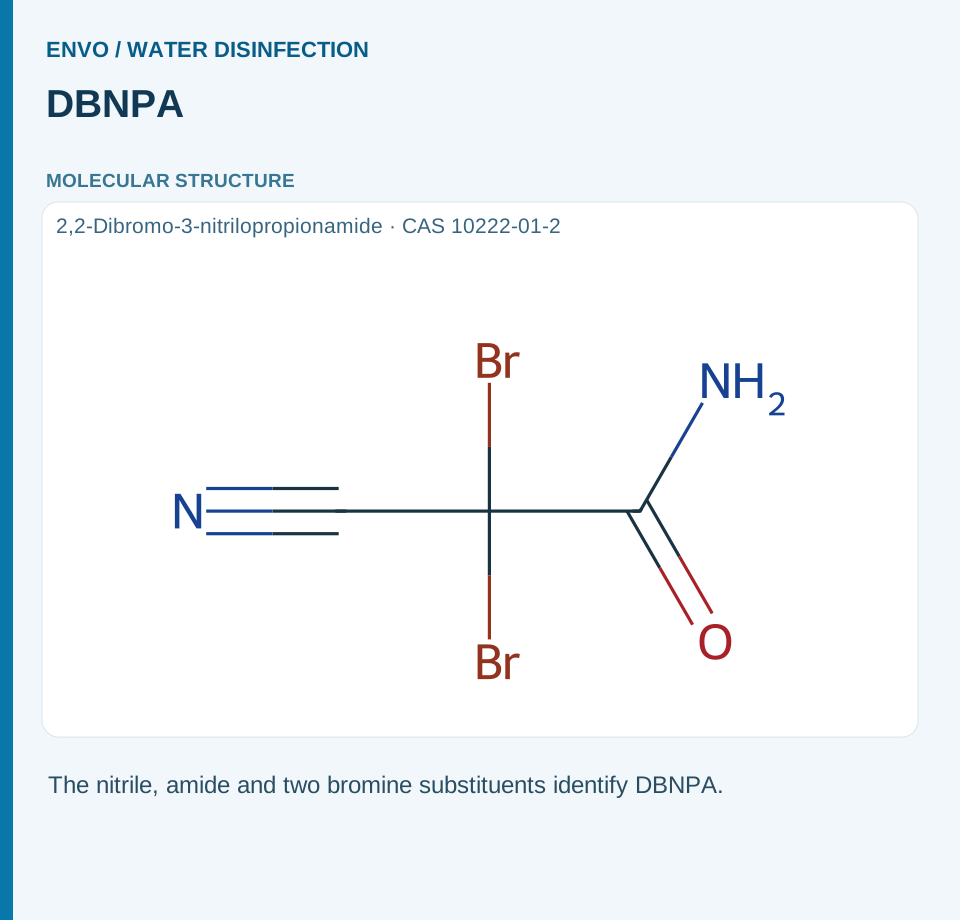
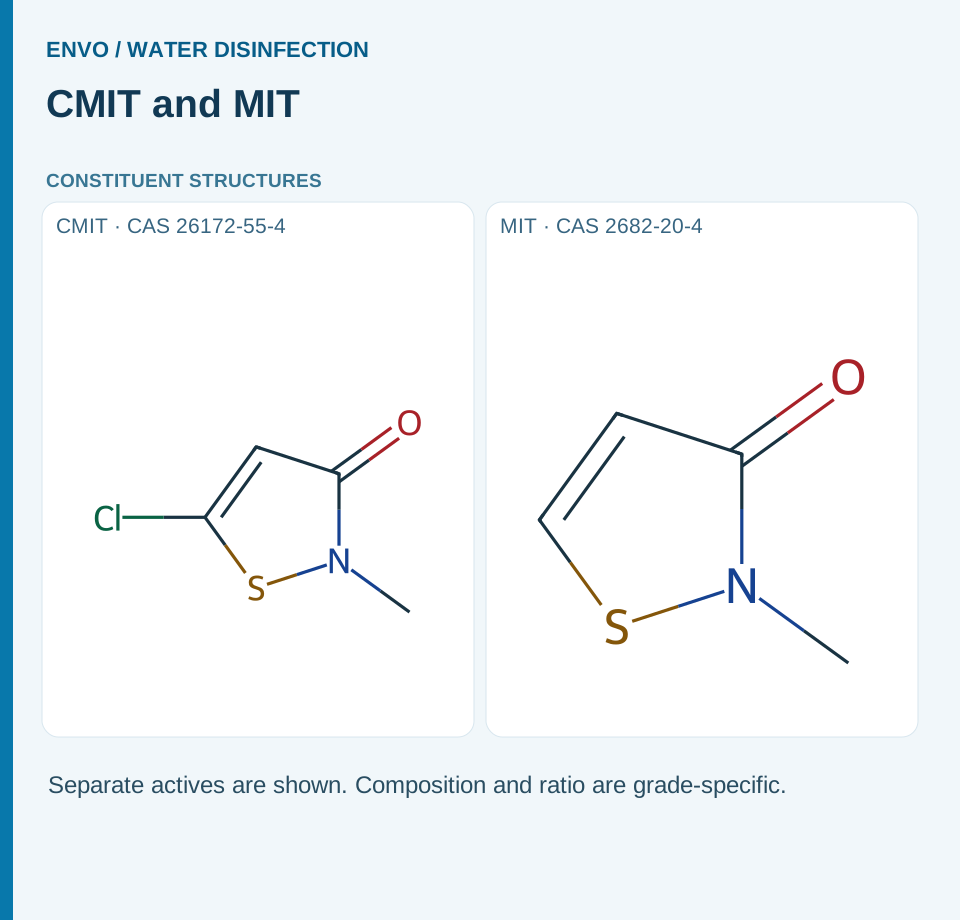
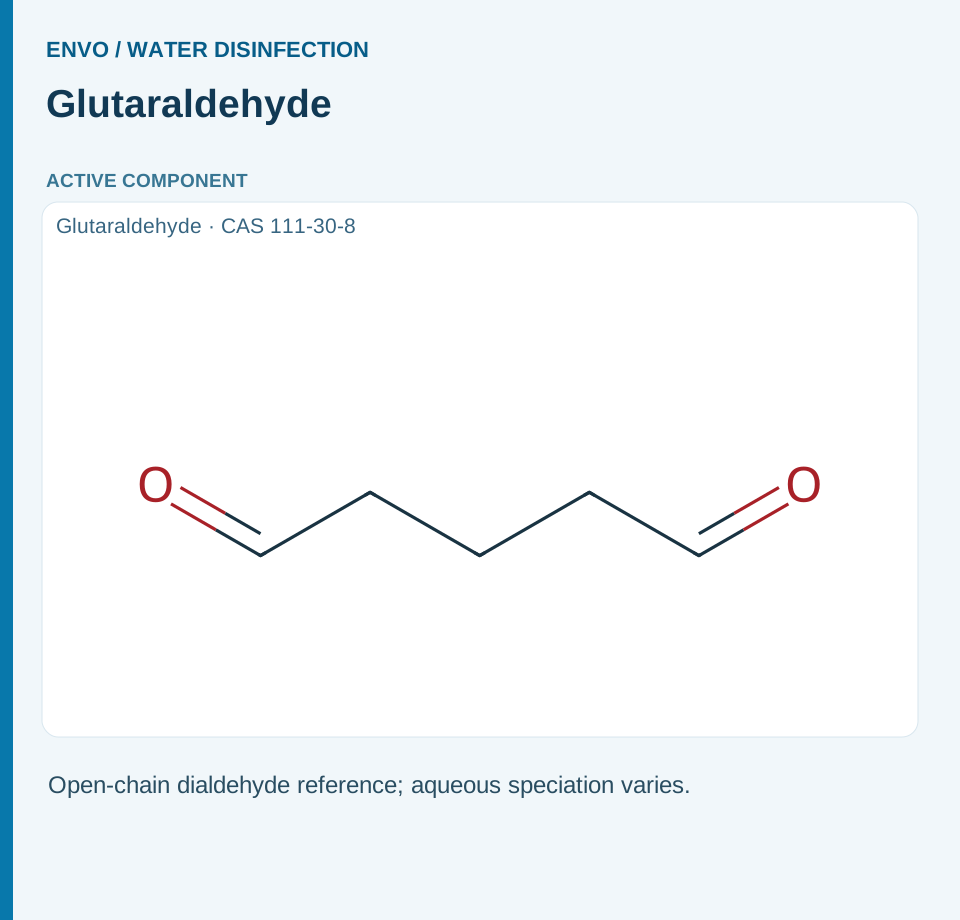
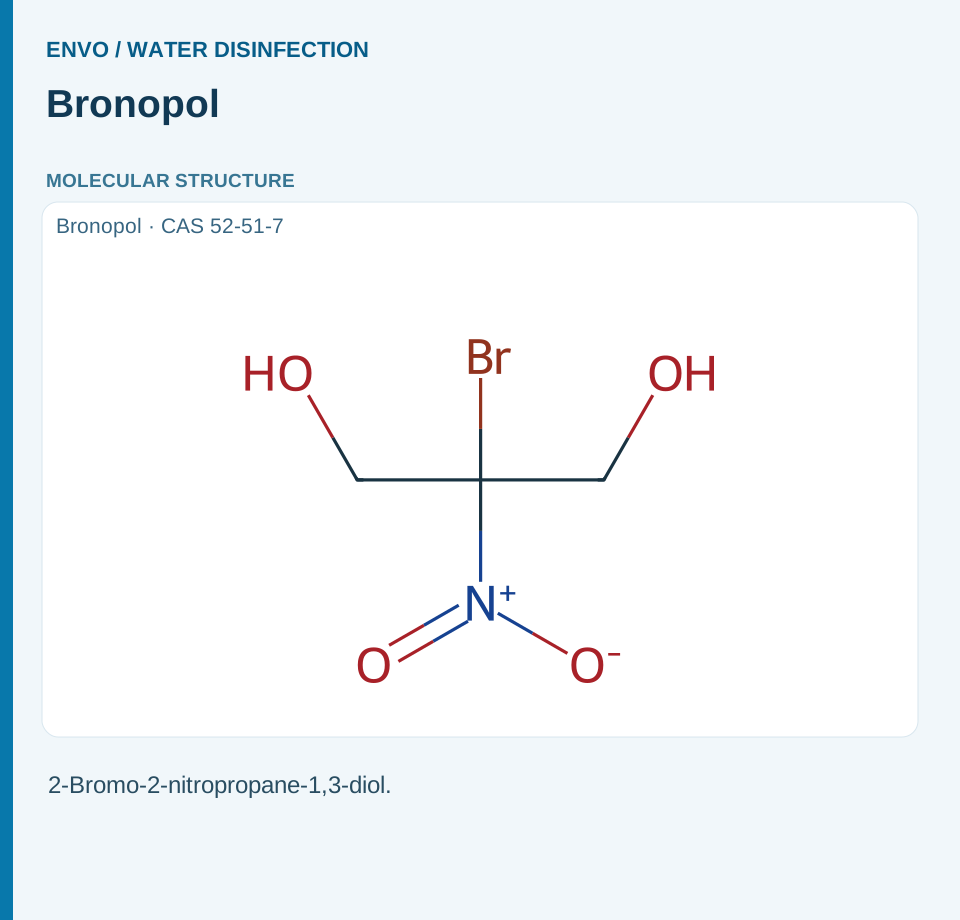
DBNPA, bronopol, CMIT/MIT and glutaraldehyde formulations
Reason for recommendation
Candidates for comparison in industrial process-water microbial control within the label scope.
Conditions of use
Process suitability varies by formulation. Test effects on color, foaming and process compatibility.
Documents to verify
TDS specifying the process use; formulation and COA; compatibility and actual-water trials
This comparison supports initial purchasing screening. It does not replace the specific formulated product label, equipment instructions or site validation, and provides no universal dosage or on-site mixing instructions.
Related products
Explore candidate products and continue verification.
The following are conditional matches; they do not indicate that every grade is suitable.
For microbial control in membrane systems and industrial water where the corresponding use is supported. Select formulated products according to membrane material, treatment stage and water quality; do not replace existing products solely on the basis of an active ingredient name.
For industrial water and process microbial control with clearly defined uses. Distinguish CMIT/MIT from other isothiazolinones and include the stabilization system, actual operating conditions and target-market documentation in purchasing checks.
A candidate non-oxidizing ingredient for industrial recirculating water, papermaking and oilfield water. Purchasing should be supported by validation under actual fluid and contact conditions; industrial grades and formulated products dedicated to medical equipment must be considered separately.
For industrial water microbial control products with defined uses. Check active ingredients, formulation compatibility and actual operating conditions, and distinguish single-active products from formulated blends.
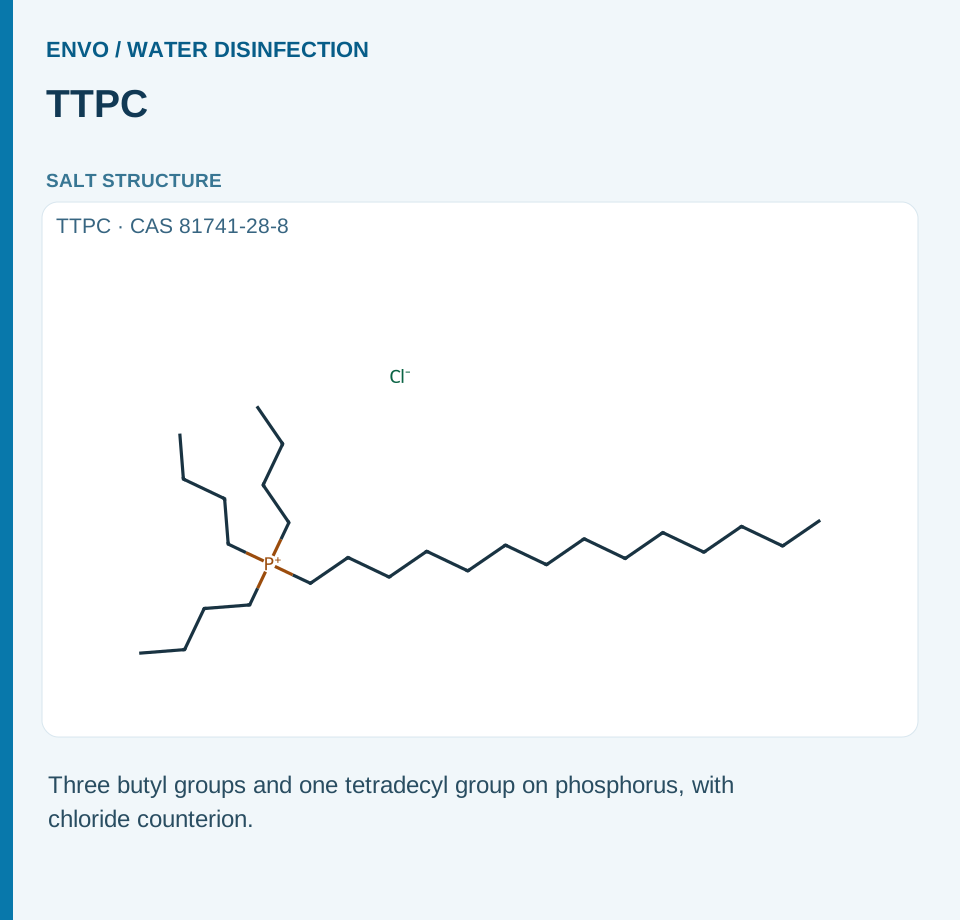
A quaternary phosphonium candidate for industrial and oil and gas water. Compatibility of the cationic ingredient with actual fluids is a purchasing priority; it cannot directly replace THPS simply because both are quaternary phosphonium salts.
When industrial wash water develops odors, deposits or workpiece surface problems, microorganisms may be one line of investigation, but this cannot replace analysis of oils, particles, chemical residues and process changes.