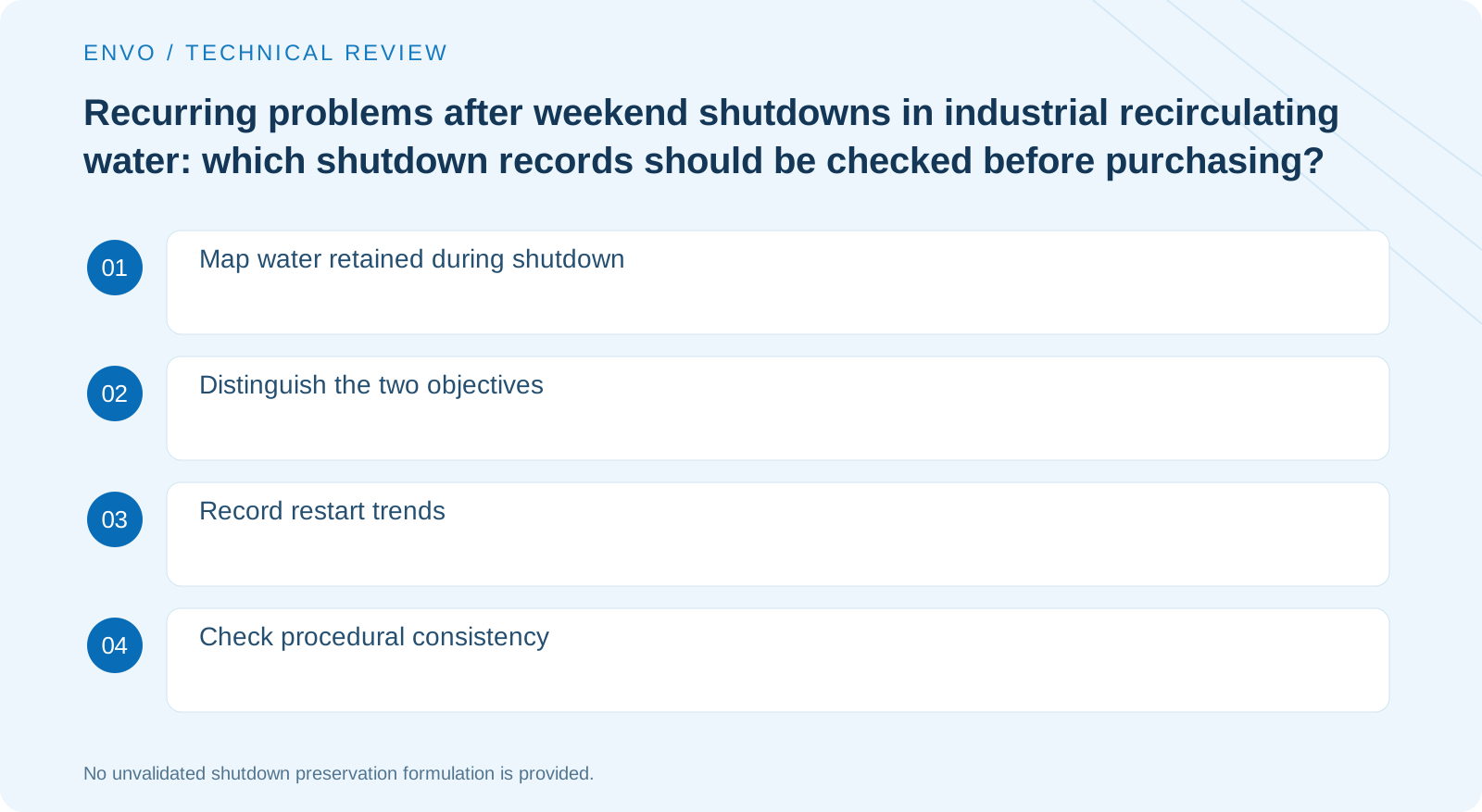
Specify where water and materials remain during shutdown
List recirculation tanks, filters, heat exchangers and dead-end branches, marking residual cleaning solution, oil contamination or production materials. Note which tanks interconnect, which sections are drained and which still circulate slowly. Switching off the main pump does not mean every section is in the same condition, and operating water volume should not be used to estimate the actual scope needing management during shutdown.
Separate shutdown objectives from restart objectives
Shutdown needs may concern storage or equipment protection, while restart requires production-water and process conditions. Industrial biocide literature supports specific candidate uses, not automatic suitability for long-term preservation. Clarify labels, equipment-permitted conditions and subsequent cleaning or removal requirements rather than extend routine operating doses throughout every shutdown.
Compare initial outlet water with steady-state operation
Professionals should plan sampling and record quality and problem changes at multiple times after restart. Anomalies confined to initial flow suggest investigation of retained water and deposits; persistent anomalies require broader circuit and process assessment. Time-series records locate problems better than one startup sample, but this page does not diagnose causes from them.
Reviews should distinguish whether startup first involved main circulation, side-stream filtration or a particular water-using unit. Sequential units may return retained fluid to a common sump later, so startup sump samples can miss subsequent changes. Compare unit startup times with anomaly windows as future investigation evidence rather than prescribe one universal restart sequence.
Check whether restart procedures are consistent
Shifts may open valves, replenish water, start filters and resume dosing in different sequences. Compare actual steps with existing procedures and retain changes and alarms rather than only a startup signature. Equipment and process leads must confirm sequence or interlock changes, avoiding improvised mixing or shock treatment with unknown materials and residues.
Include cyclic operating conditions in quotation requests
Provide shutdown frequency and duration ranges, retained-water locations, restart records and quality requirements so suppliers can identify applicable operating stages. Assessment reports should separate shutdown maintenance from normal-operation effects rather than merge them as good microbial inhibition. Define tasks belonging to cleaning, mechanical maintenance or hydraulic adjustment before deciding a new product is necessary.
Explore further
Does compliance during operation establish suitability during shutdown?
It cannot be extended automatically. Shutdown storage and restart conditions require separate checking.
Should a different chemical class be used every weekend?
Do not rotate independently by the calendar. First investigate the actual problem, applicable documentation and confirmed treatment procedures.
References
This article draws on publicly available technical information. Third-party sources do not establish ENVO product approvals, field testing or project experience. Confirm each use against actual supply documents and site conditions.