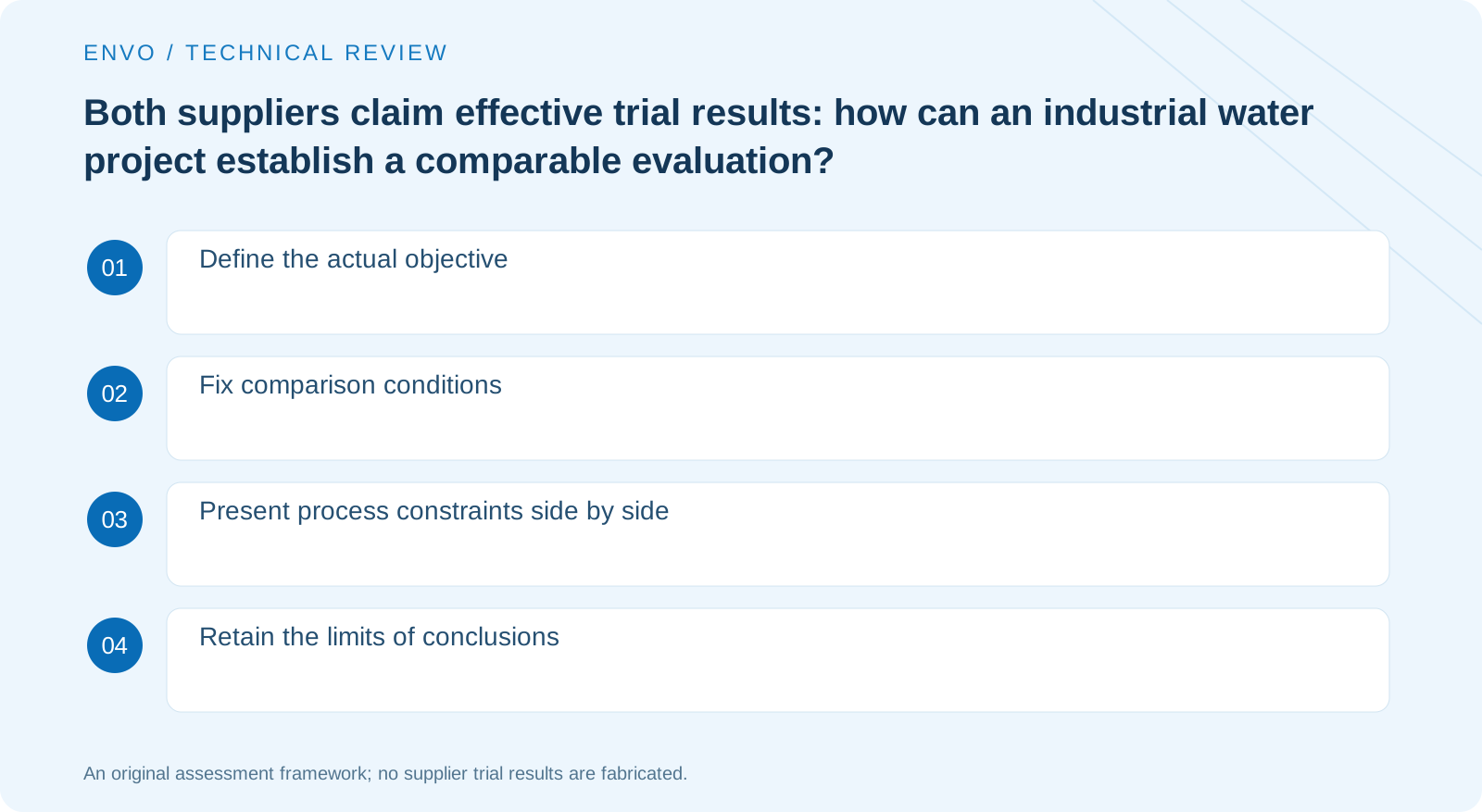
Express project issues as observable objectives
Define the specific circuit, recurring anomaly and production stage rather than merely 'comprehensive microbial control.' Establish the original baseline, equipment or product-quality constraints and acceptable trial scope. An initial objective may be determining whether a treatment merits further validation; the first trial need not claim a finalized long-term program. Complete missing baseline records first.
Make samples and operating conditions comparable
Record sampling location, time, quality, product batch and trial conditions, retaining blanks or suitable controls. Conditions can change after withdrawal from a system, so trial leaders should select appropriate methods. Site-water trials from one supplier and clean-water demonstrations from another cannot be ranked directly by final numbers. Explain comparability between methods first.
Chain-of-custody records should include collection, subdivision, transport and analysis times and who confirmed sample representativeness. If suppliers use different water batches, state that limitation. Customers can standardize shareable background and result formats to focus discussion on discrepancy sources rather than judge professionalism from report layout.
Assess process compatibility and control performance together
LANXESS industrial literature indicates differences among products and market uses. Actual assessment must also cover materials, foam, deposits, product quality and downstream treatment. Improvement in one microbial parameter must not obscure other constraints. Distinguish mandatory conditions from optimization opportunities to avoid procurement decisions driven by one best result.
Define insufficient-data criteria and stopping conditions in advance
Production changes, equipment faults or missing critical data during trials require an explicit decision on suspension or repetition, not simple deletion of abnormal data. Preserve failed and uncertain results. Every site treatment requires approved procedures and competent personnel. This article provides an assessment structure, not dosing instructions or harmful-organism cultivation steps.
Require conclusions to correspond to original records
Final reports should present observations, interpretations, limitations and next steps, not only an attractive bar chart. Buyers can enter two suppliers' results in one assessment table and identify missing evidence item by item. Recommendations depending on unconfirmed site conditions remain subject to validation. This bases selection on comparable information and establishes a reference for later batch or service reviews.
Explore further
Are lower trial results always better?
First confirm parameter meanings, test methods, operating conditions and process constraints; rankings cannot be detached from conditions.
Can one trial prove year-round effectiveness?
Generally not; explain the conditions covered and arrangements for subsequent validation.
References
This article draws on publicly available technical information. Third-party sources do not establish ENVO product approvals, field testing or project experience. Confirm each use against actual supply documents and site conditions.