
1. Define the intended use before the product name
One active can appear in products with different formulations and uses. Pool maintenance, drinking-water treatment and surface disinfection require separate labels and documents. An inquiry might specify a chlorine product for an outdoor public pool using the existing feeder, then name candidate ingredients. This requires suppliers to address a concrete use rather than quote a chemical name alone.
The product code, manufacturer and packaging name must agree across purchasing documents. One manufacturer's drinking-water documentation applies only to the products it covers; it does not transfer that qualification to every raw material with the same ingredient.
2. Distinguish chemical form from supplied dosage form
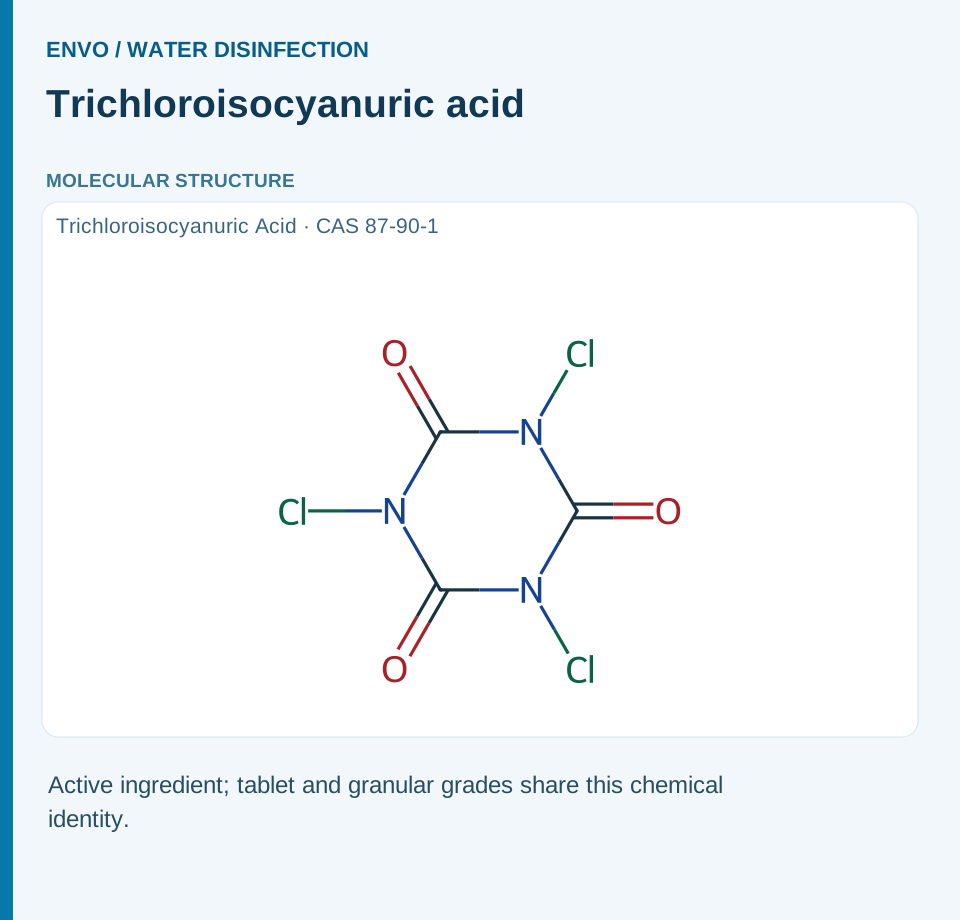
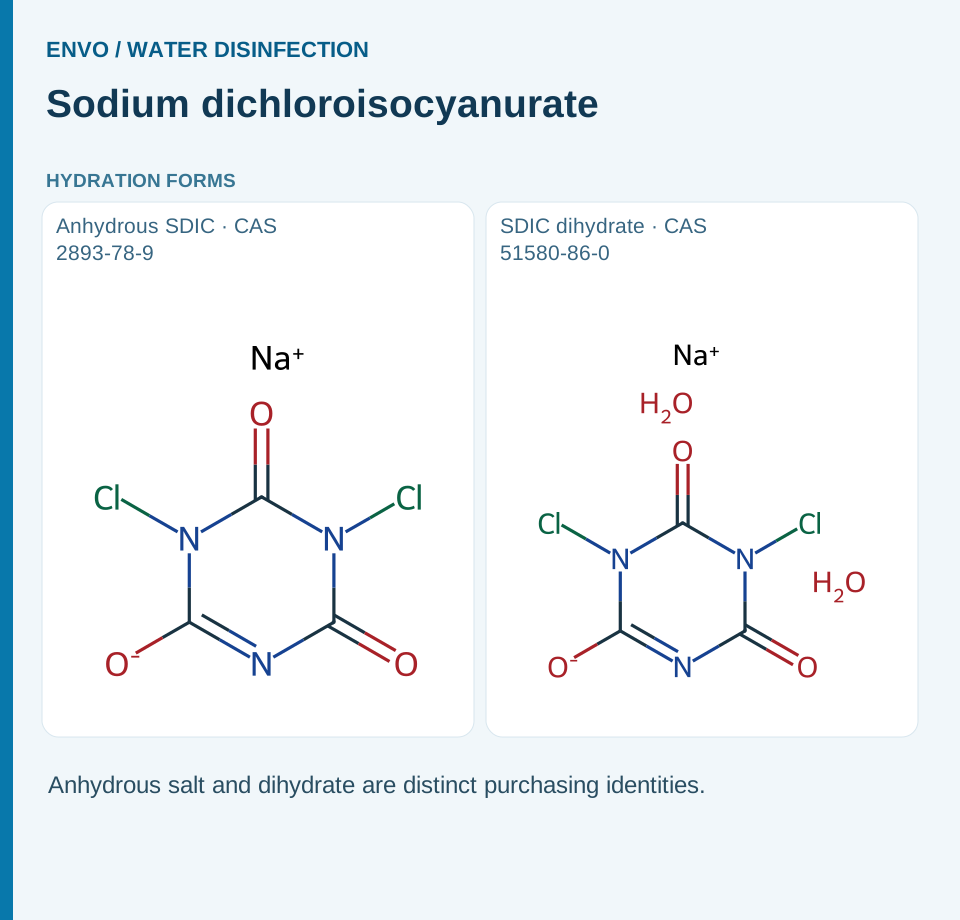
TCCA and SDIC have different chemical forms, and SDIC must further be identified as anhydrous or dihydrate. OxyChem's public information lists forms and available-chlorine specifications separately, demonstrating that 'dichlor' alone is an incomplete purchasing description. Actual specifications must follow the quoted product's technical information and batch results.
Granules, powder and tablets differ in more than packaging. Confirm the permitted dosage form with the equipment supplier and include tablet diameter, thickness, unit weight or granule requirements in the acceptance checklist. Similar appearance is not a sufficient basis for loading a different chlorine product into an existing feeder.
3. Compare available chlorine alongside purchasing costs
Available chlorine is an important comparison parameter, but it does not describe every aspect of quality. Check whether a figure is guaranteed or typical, whether test methods are comparable and whether the delivered batch is tested against the agreed requirements. Assess price together with packaging losses, equipment compatibility, testing and inventory-management costs.
For projects requiring consistent supply, agree in advance that the sample, first delivery and subsequent batches will use the same grade and acceptance criteria. A product can meet its composition specification yet still be difficult to use if its dimensions are unsuitable.
4. Include cyanuric acid in pool-water management
CDC identifies dichlor and trichlor as chlorine products containing cyanuric acid. Their use requires management of cyanuric acid, pH, makeup and discharge, and routine tests alongside chlorine residual. Establish water-management capability during selection rather than addressing it only after the product has been used for some time.
Hot tubs require a separate assessment. CDC advises against using cyanuric acid or chlorine products containing cyanuric acid in hot tubs. Product choices for a typical outdoor swimming pool therefore cannot simply be transferred to a hot tub.
Create a one-page purchasing specification with acceptance criteria
The final checklist should include use, full product name, chemical form, available-chlorine requirements, dosage-form dimensions, packaging, batch documents and equipment confirmation. Add current pool tests, feeder model and operating method so suppliers can identify gaps and offer verifiable choices. Selection should end in a deliverable, inspectable specification that can be managed sustainably.
Explore further
Does higher available chlorine always make a better purchase?
No. Compare available chlorine together with intended use, equipment, dosage form and operating costs. Higher content cannot compensate for missing intended-use documents or incompatible equipment.
Can pool-grade SDIC directly replace NaDCC for drinking water?
A shared ingredient is not enough to justify substitution. Check the specific formulated product's drinking-water use, label, relevant impurities and supporting documents.
References
This article draws on publicly available technical information. Third-party sources do not establish ENVO product approvals, field testing or project experience. Confirm each use against actual supply documents and site conditions.