This comparison supports initial purchasing screening. It does not replace the specific formulated product label, equipment instructions or site validation, and provides no universal dosage or on-site mixing instructions.
Related products
Explore candidate products and continue verification.
The following are conditional matches; they do not indicate that every grade is suitable.
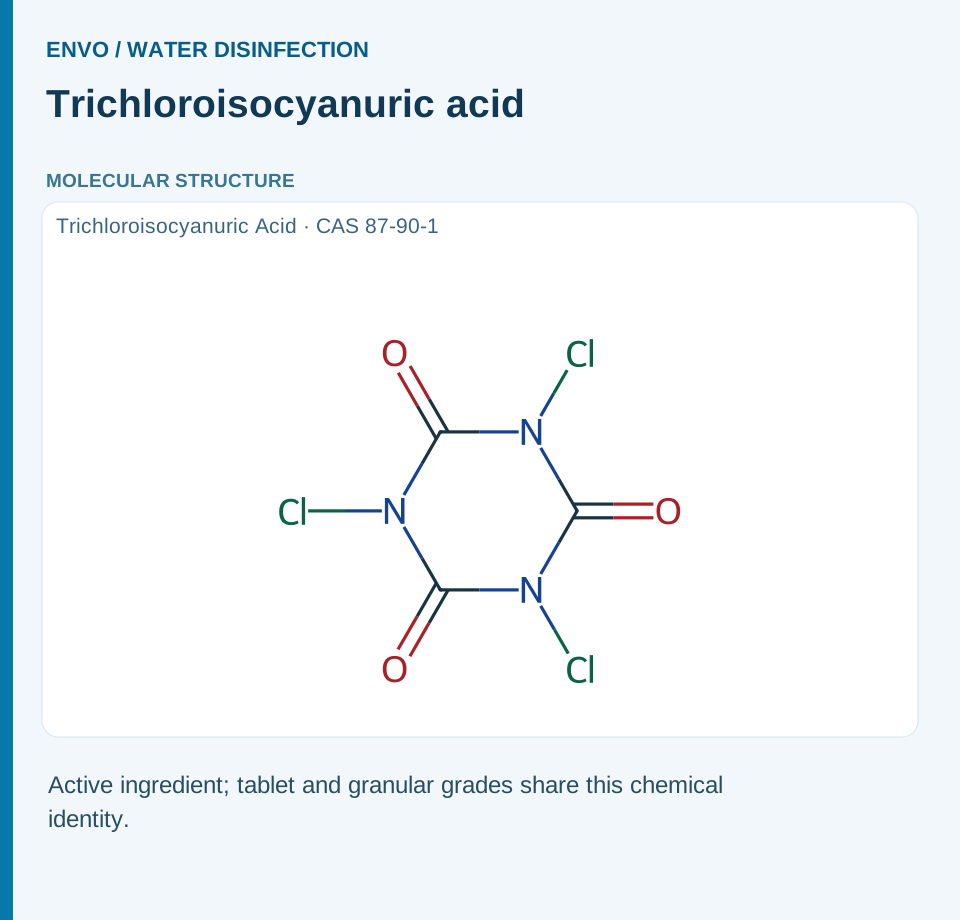
For pool disinfection products with defined uses. Select specifications according to available chlorine, dosage form and dosing equipment, while considering cyanuric acid management and operating costs.
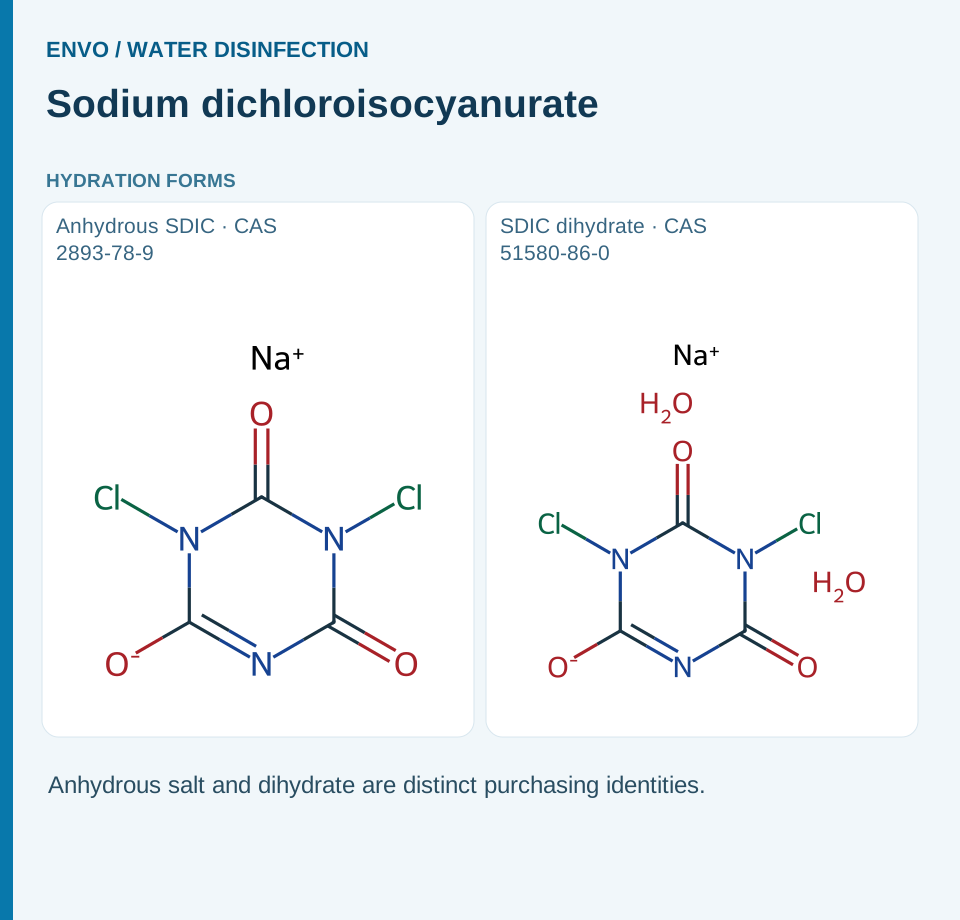
For pool and portable drinking-water disinfection products with defined uses. Distinguish anhydrous and dihydrate forms, and select specifications according to the application, dosage form and documentation requirements.
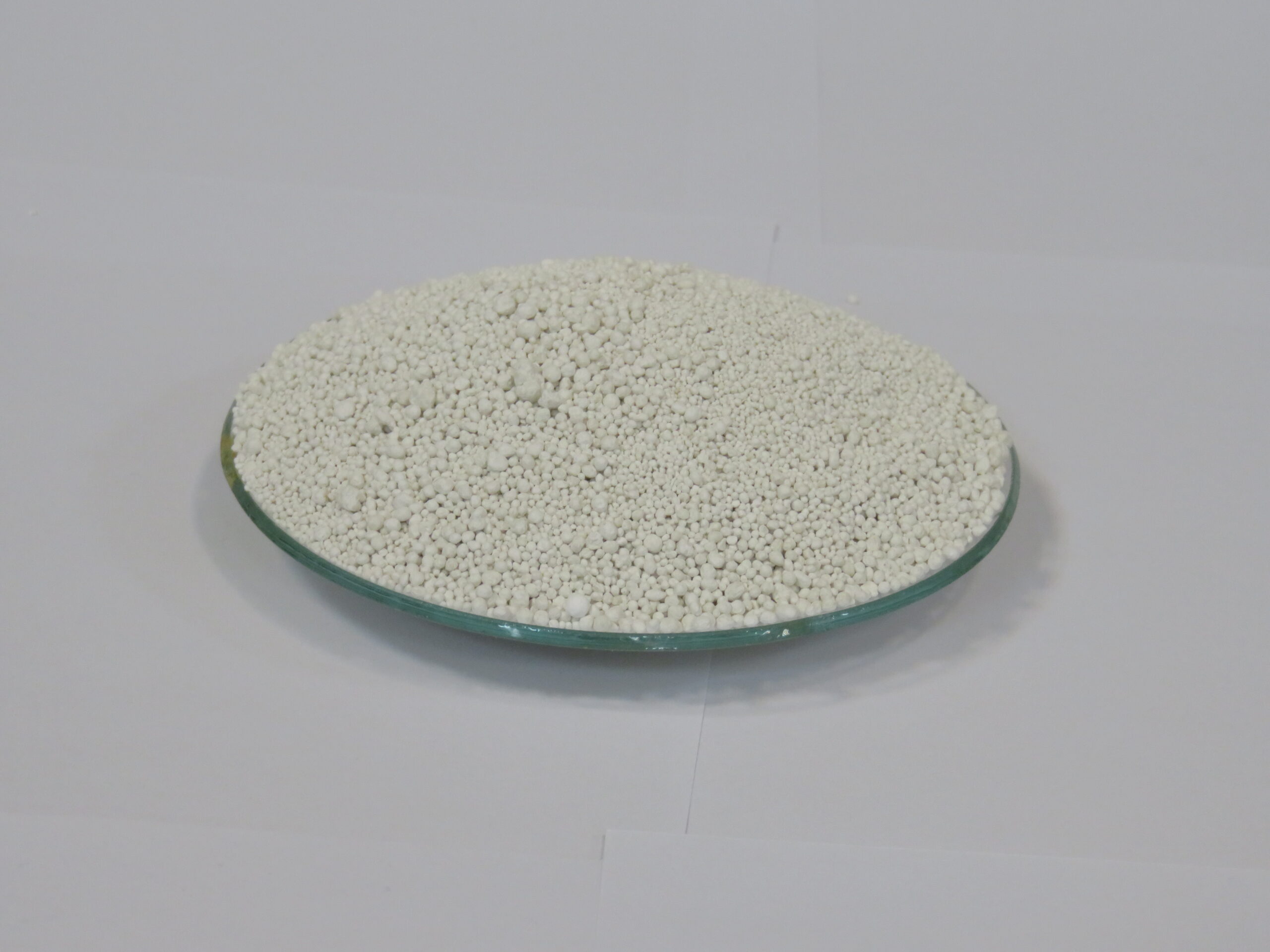
For pool, water-supply and effluent disinfection where the corresponding use applies. Purchasing priorities are available chlorine, particle size and insolubles, together with calcium loading in the water and dosing equipment.
A chlorination chemical used with liquid metering systems and residual monitoring. Purchasing priorities are available chlorine at delivery, storage turnover and impurity requirements for the intended use.
For selecting formulated products with defined uses in spas, pools and industrial recirculating water. Compare available halogen, finished-product composition and feeder compatibility to identify a specification matching the existing system.
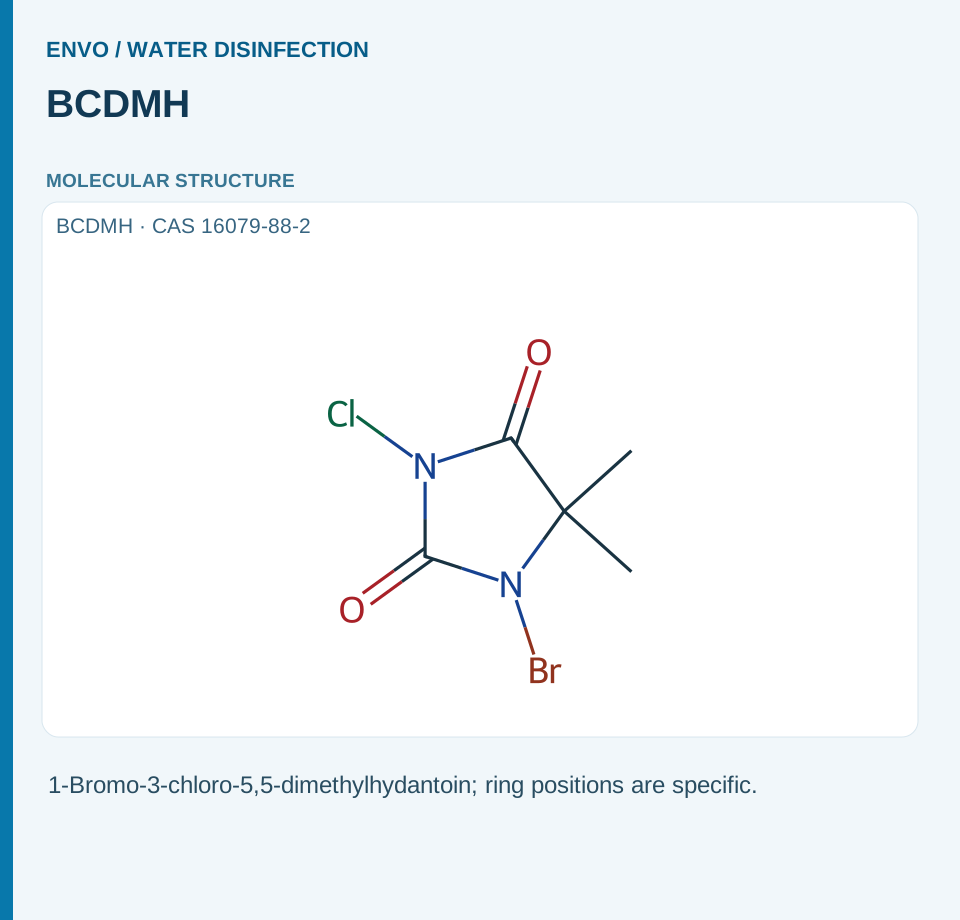
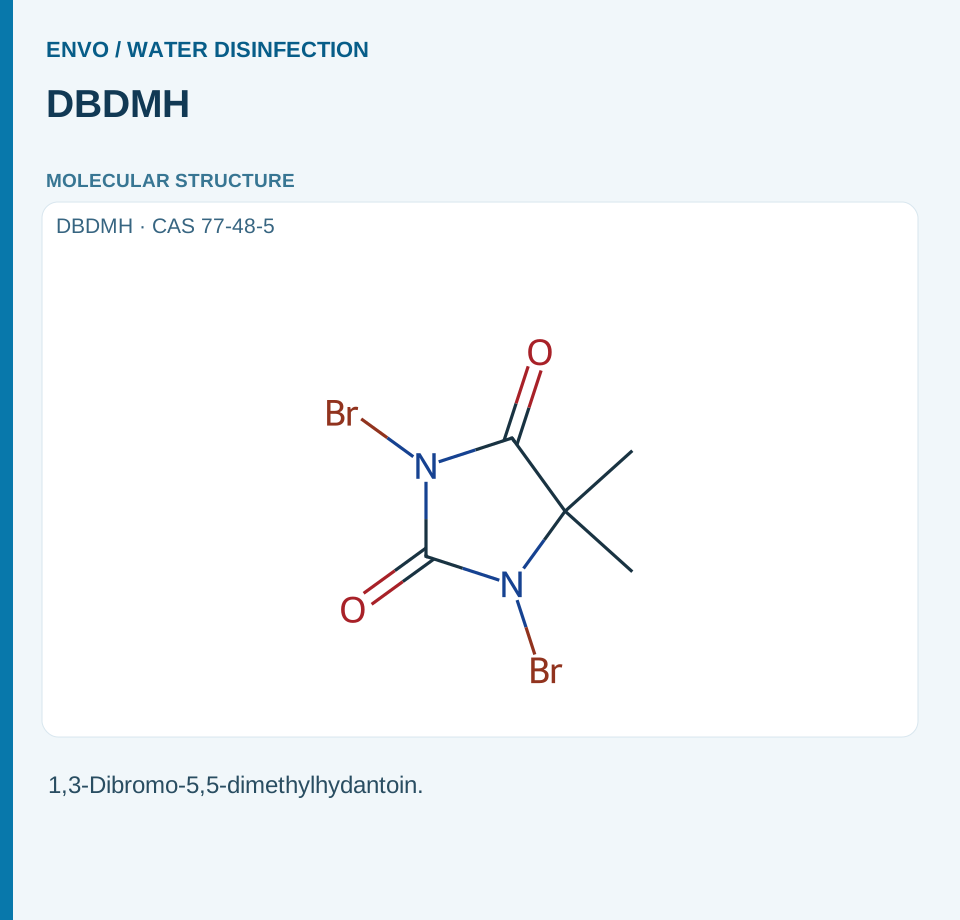
A solid bromine approach using dibromodimethylhydantoin as the active ingredient. Public manufacturer documentation supports technical uses in pool and industrial water; the specific formulated product must still be checked against its current label and equipment.
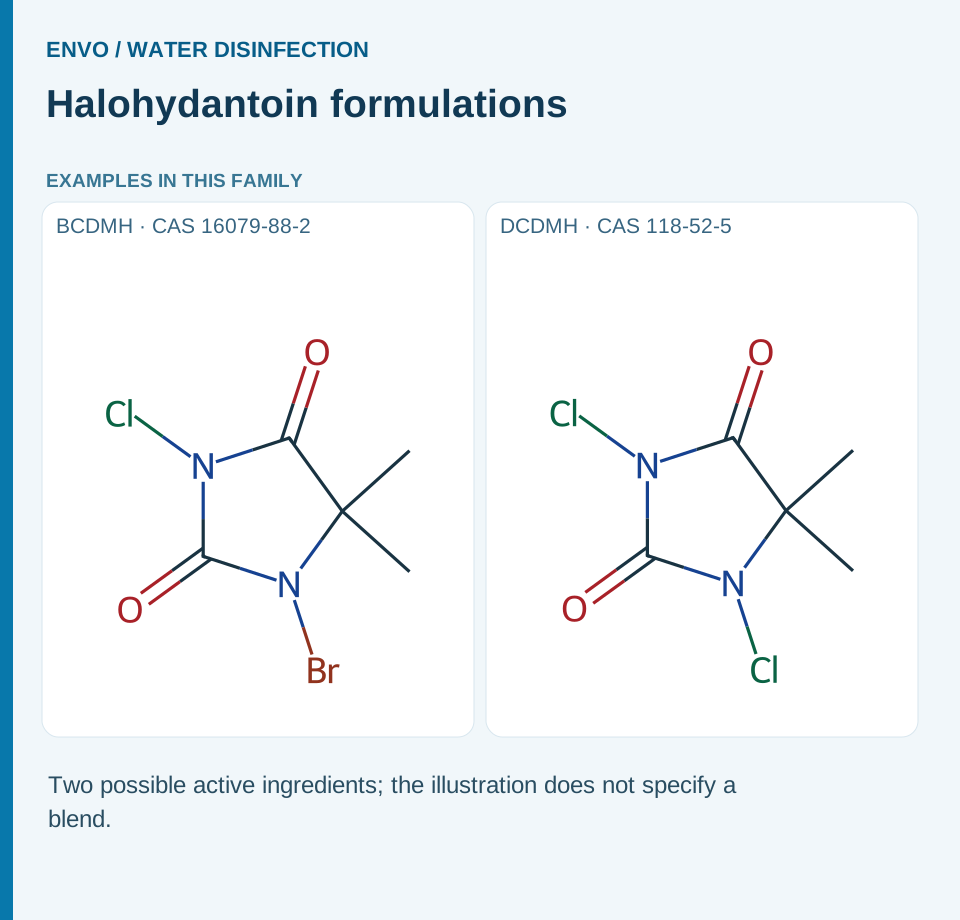
A formulated product category containing specific halogenated hydantoins such as BCDMH and DCDMH. Verify purchasing requirements against the complete product label; a blend's uses cannot be assigned to each individual raw material.
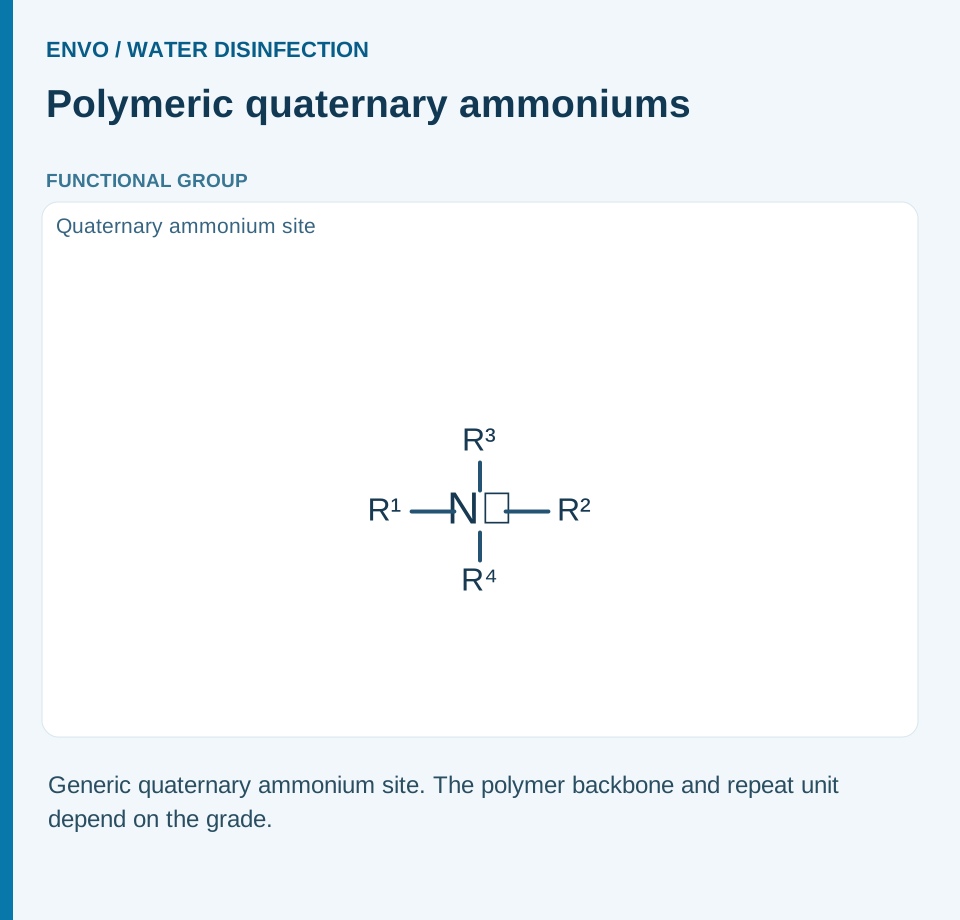
A polymeric quaternary ammonium category found in dedicated pool algaecides and industrial blends. Polyquat does not identify a single chemical; verify the specific polymer, intended use and compatibility with the primary disinfection system.
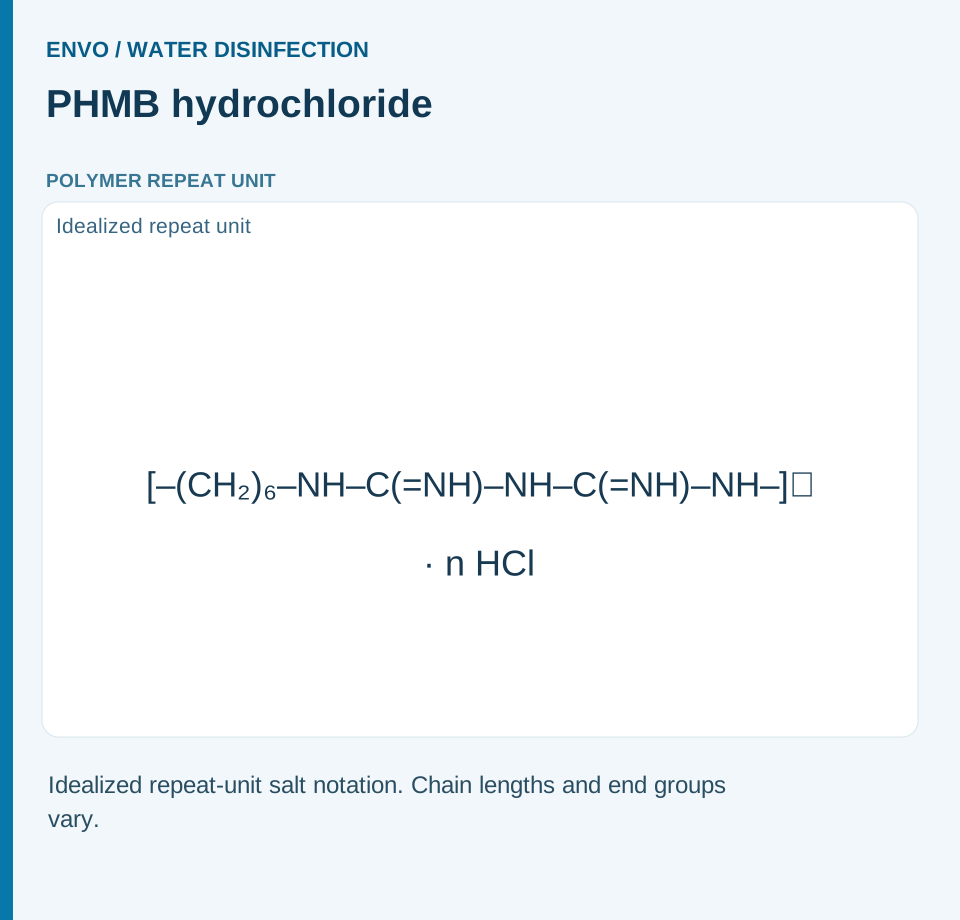
A biguanide approach used in certain alternative pool disinfection systems and industrial blends. Fully verify system conversion, supporting oxidation and maintenance procedures; it cannot simply be added to an existing chlorine program.
A bromine source for specific active bromine systems. Sodium bromide content is not equivalent to available bromine disinfection capacity; verify the complete system, raw-material specification and final use together.
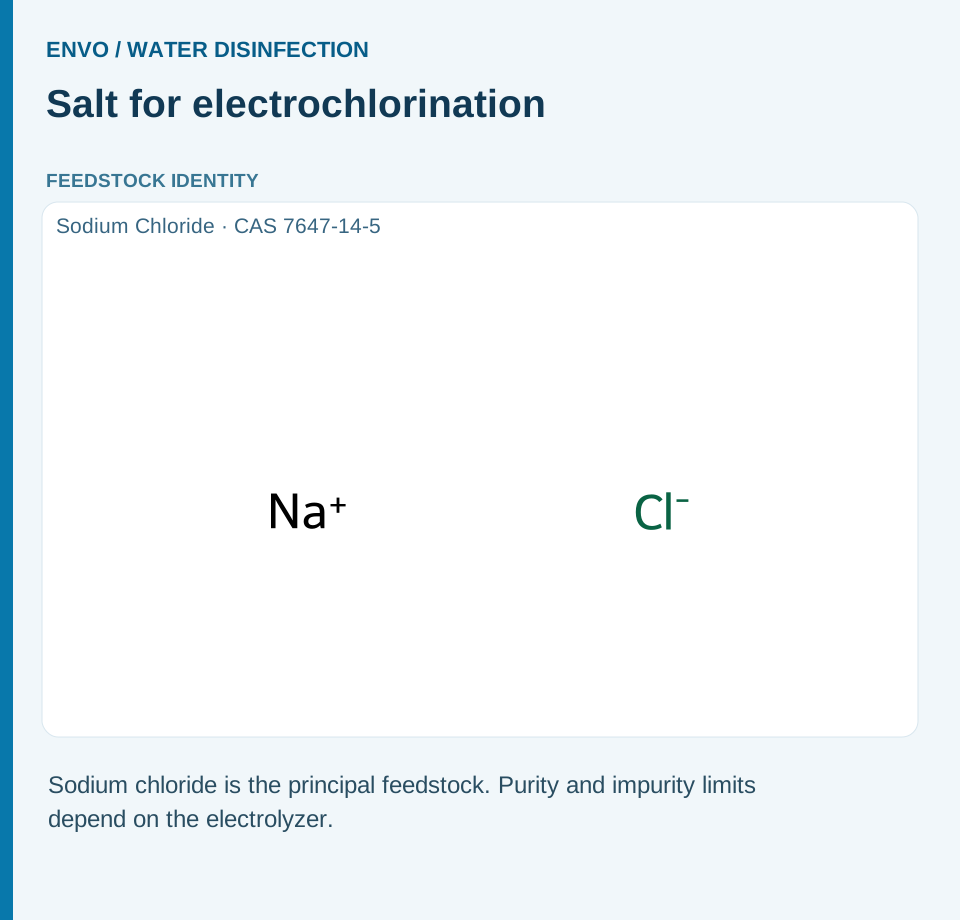
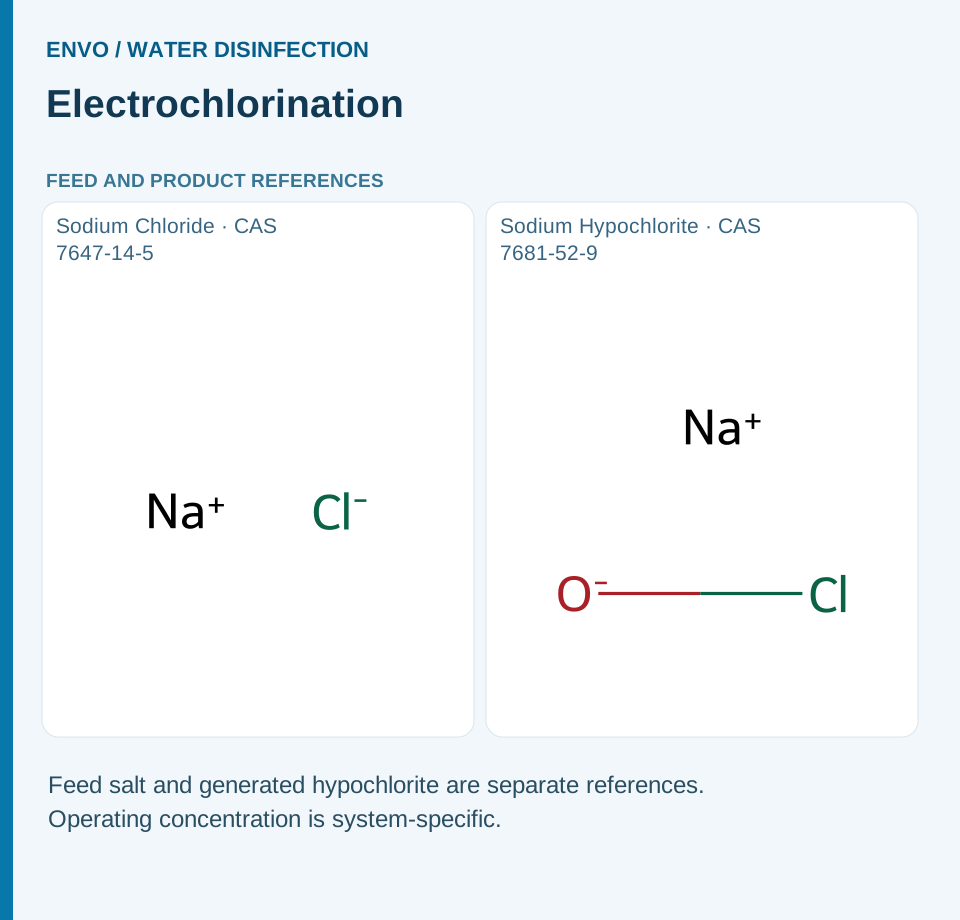
A sodium chloride feedstock for specific electrolysis systems. Check salt impurities, equipment feedwater and electrode maintenance together; food-grade or ordinary industrial-grade descriptions alone do not demonstrate suitability.
A stabilizing auxiliary for applicable pool chlorine systems. It is not a standalone disinfectant. Stabilized chlorine products also affect cyanuric acid management; test before deciding whether additional supplementation is needed.
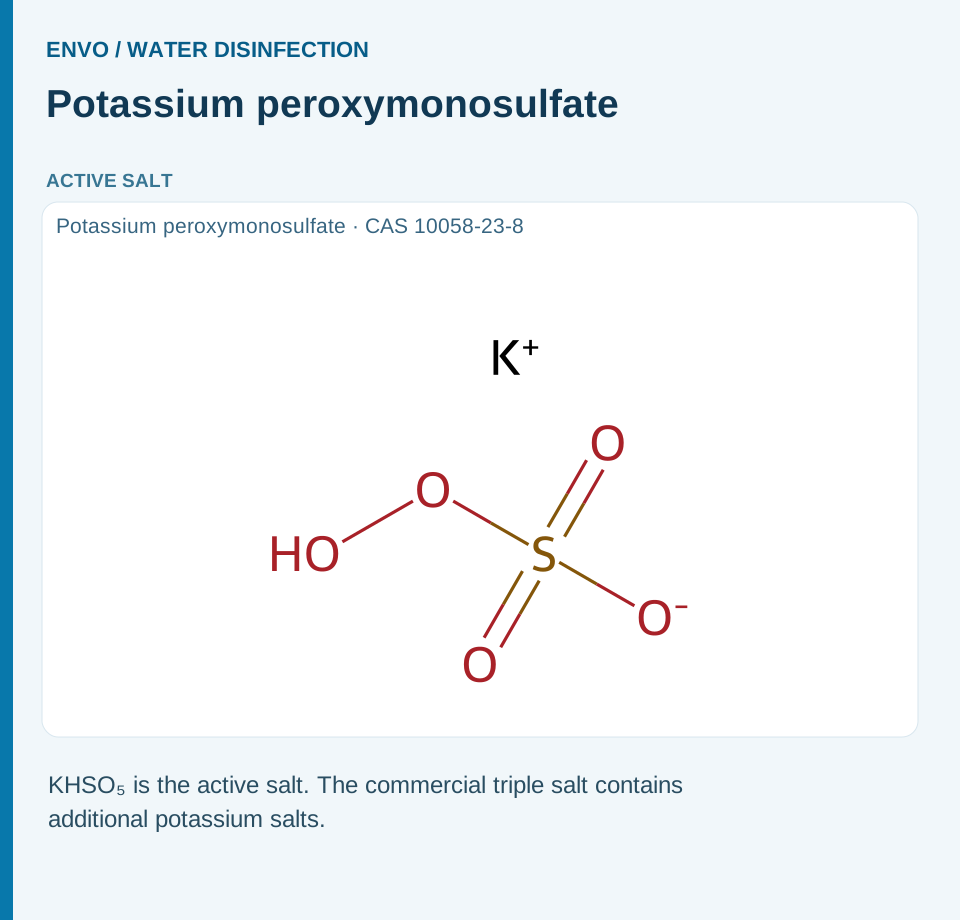
Primarily an oxidizing auxiliary in ordinary pool and spa applications, supporting contaminant management. A non-chlorine oxidizer must not be described directly as the primary disinfectant or used as a substitute for dedicated animal drinking-water blends.
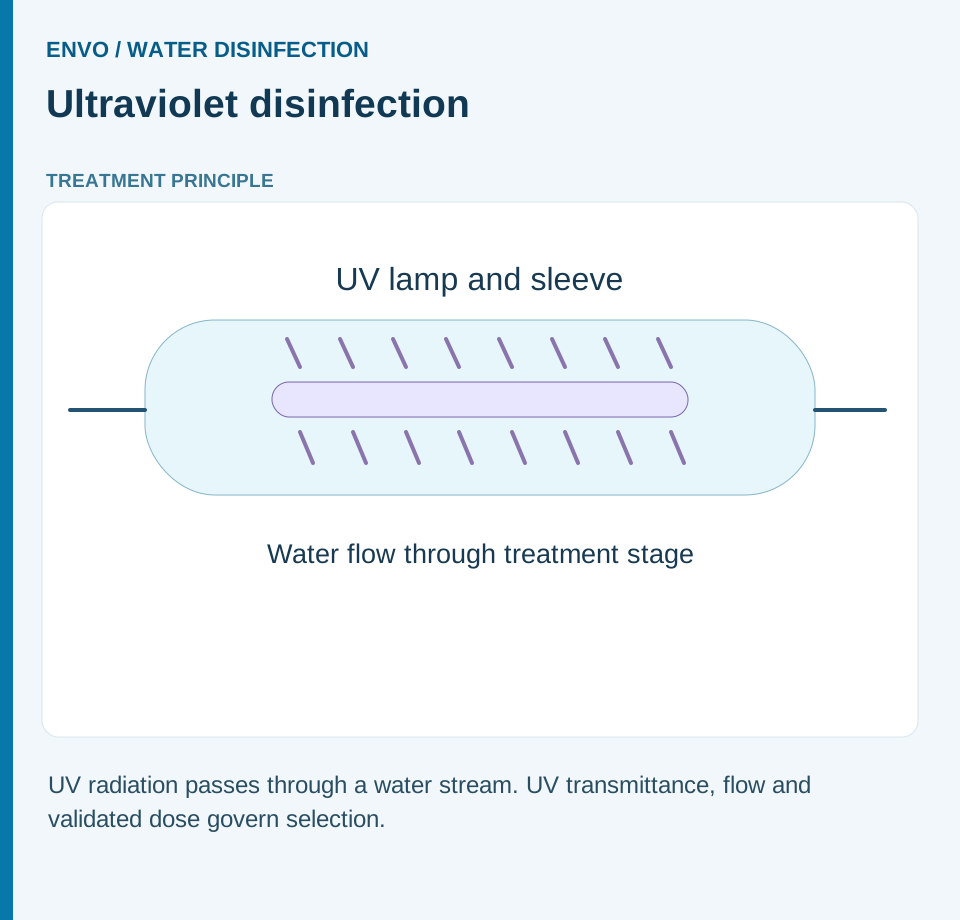
A disinfection barrier based on validated equipment and water quality conditions. Purchasing priorities are validated performance at the design flow rate, UV transmittance, particle effects, alarms and maintenance; lamp power alone is insufficient for comparison.
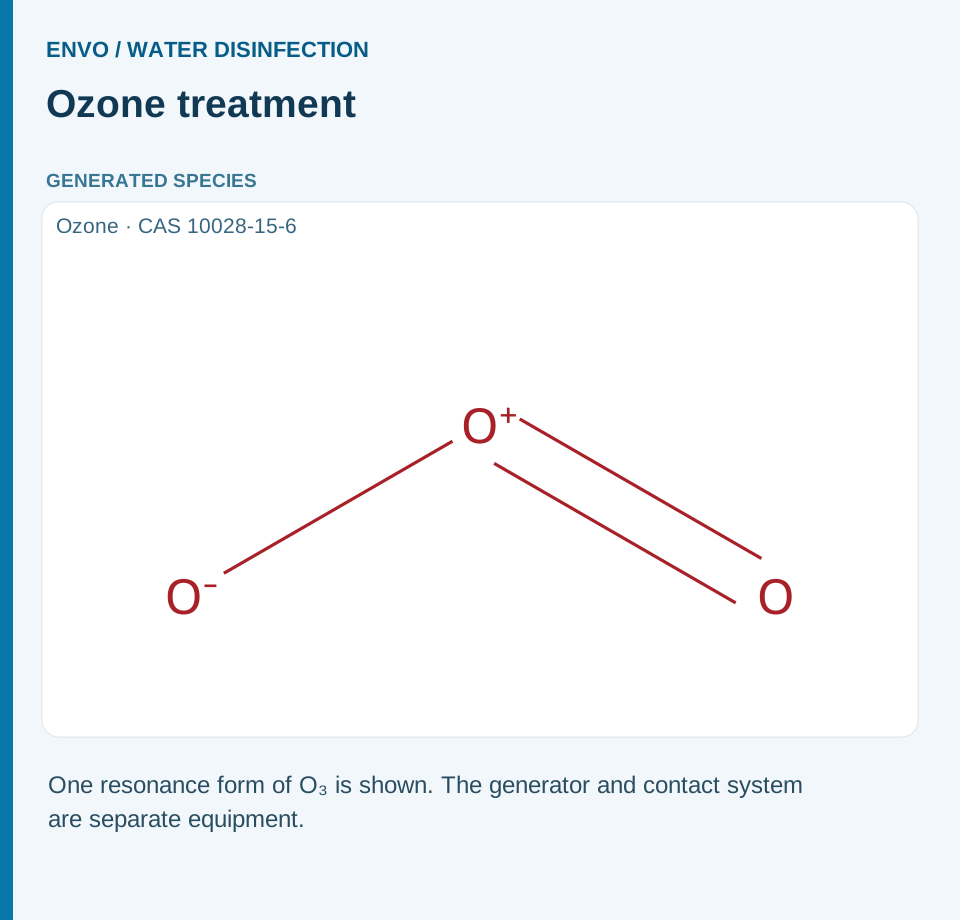
An engineered oxidation and disinfection approach combining generation, gas-water contact, residual control and off-gas management. Raw water composition and downstream use determine by-product and residual requirements; equipment cannot be selected solely by ozone output.
An engineered approach that prepares chlorine-containing treatment solution on site. Freshwater brine and seawater systems require separate checks; selection must cover feedstock, feedwater, generation capacity, ventilation and hydrogen removal, metering and monitoring.