
Process performance changes after switching brands
Compare complete components, stability and water-sample validation.
Peroxygen products / Specialized formulation
Peracetic acid formulations · PAA
For disinfection and process hygiene applications supported by the relevant formulated product. The complete formulation, material compatibility and residual management are more meaningful than comparison of peracetic acid concentration alone.
An oxidizing disinfectant formulation with defined uses.
Bring an existing model or purchasing specification directly into the discussion.
Identity and physical form identify the product; specific concentration, grade, packaging and uses are governed by mutually confirmed formulated-product documents.
01 / Product and applications
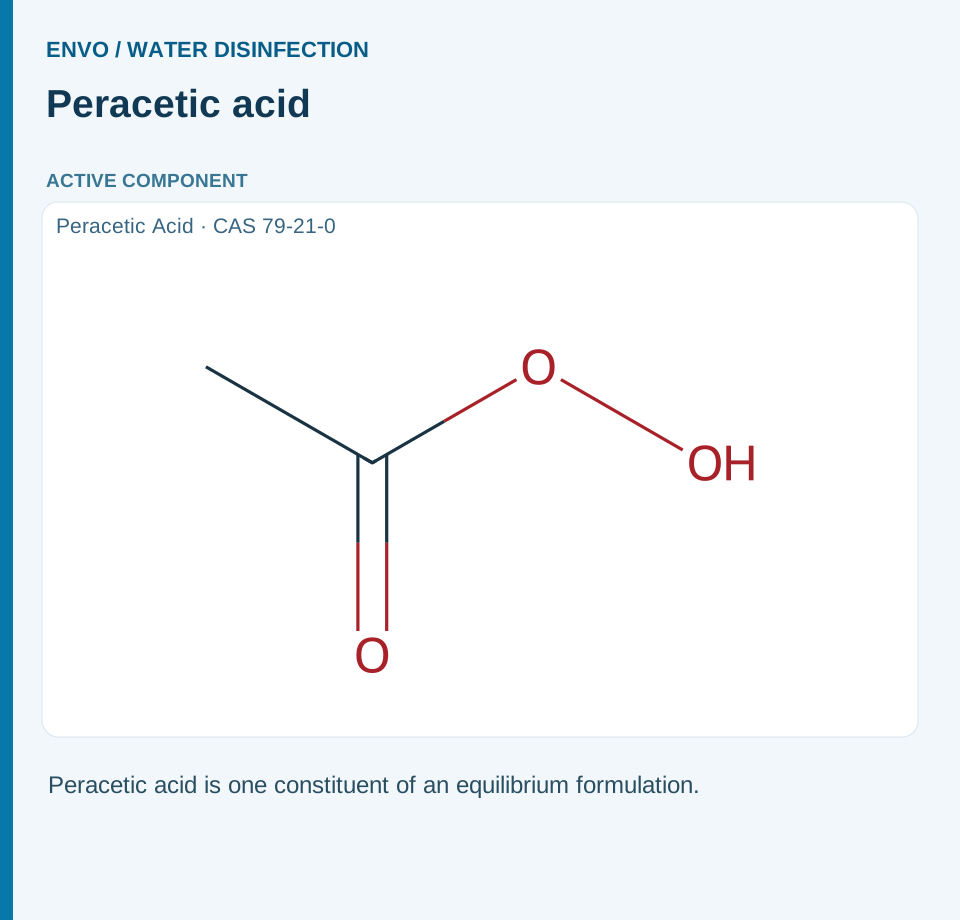
Typically an equilibrium system containing peracetic acid, hydrogen peroxide, acetic acid and water, potentially with stabilizers; confirm every component using product documents.
Products are commonly liquid formulations; color, stabilizers and specifications must match actual supply documents.
PAA is peracetic acid, also called peroxyacetic acid. Commercial products typically contain an equilibrium system of peracetic acid, hydrogen peroxide, acetic acid and water; 79-21-0 is not the sole CAS for the entire formulation. Verify stabilizers and other components in the SDS.
02 / Specification selection
| Items to confirm | Relevance to purchasing and use |
|---|---|
| Separate measurement of peracetic acid and hydrogen peroxide | Matching PAA content does not guarantee identical complete formulations. |
| Direct food contact or equipment hygiene | Determines use documentation and rinsing requirements. |
| Materials, temperature and impurities | Affects equipment and membrane compatibility. |
| Residuals and discharge effects | Effluent evaluation must consider disinfection, oxygen demand and ecological effects together. |
Include parameters, test methods and acceptance checkpoints in purchasing requirements to compare specifications.
03 / Applications and limits
These are starting points for conditional verification. Specific product suitability still requires joint confirmation through product documents, operating conditions and destination requirements.
04 / Common challenges
Compare complete components, stability and water-sample validation.
Check food types and equipment-hygiene labels separately.
Check residuals, chemical demand and overall discharge objectives.
05 / Documents and evidence
These documents support technical categories and use limits, not ENVO certifications or customer cases. Verification date: 2026-10-26.
06 / Frequently asked questions
Also verify components such as hydrogen peroxide and suitable methods, especially when comparing blends.
This depends on the specific product use and equipment procedure; no universal promise is made.
Compare targets, water quality, contact and residual needs before deciding.
Related selection options
Related products are not necessarily direct substitutes; verify each intended use.
 Active component
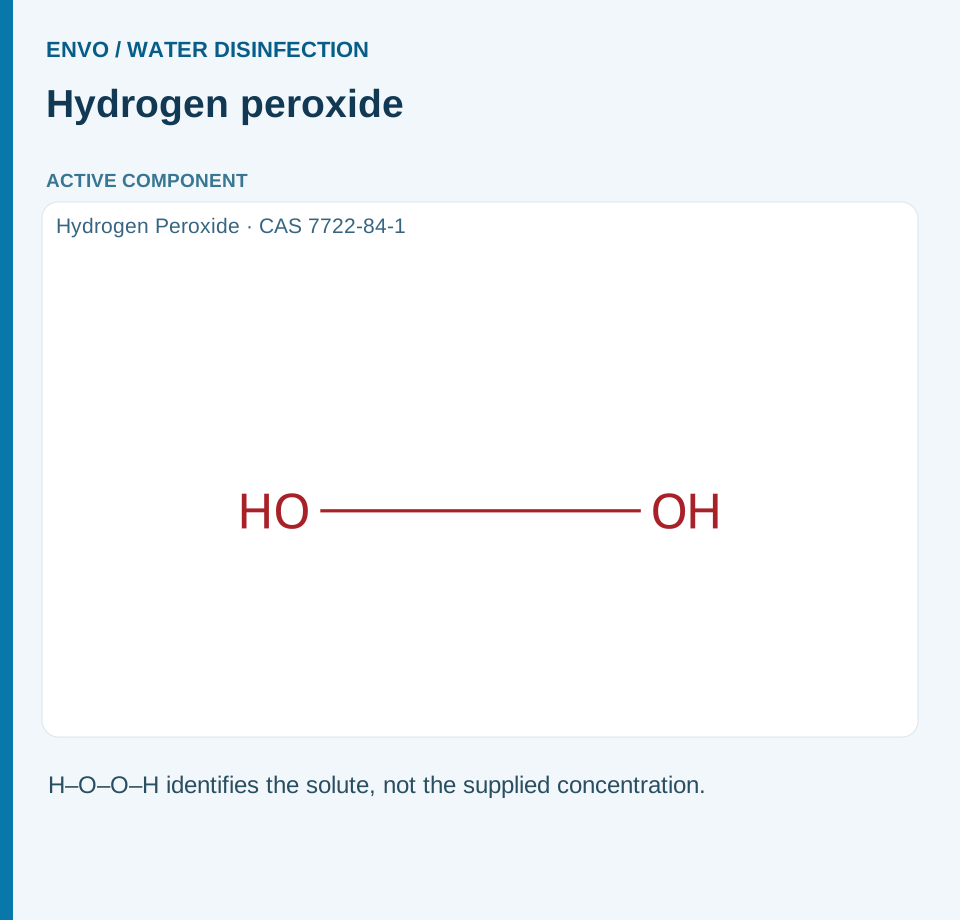
H₂O₂
For oxidation and system hygiene treatment with defined uses. Select according to the treatment target, formulated-product composition and residual-control requirements, distinguishing ordinary industrial products from dedicated-use formulations.
 Examples in this family
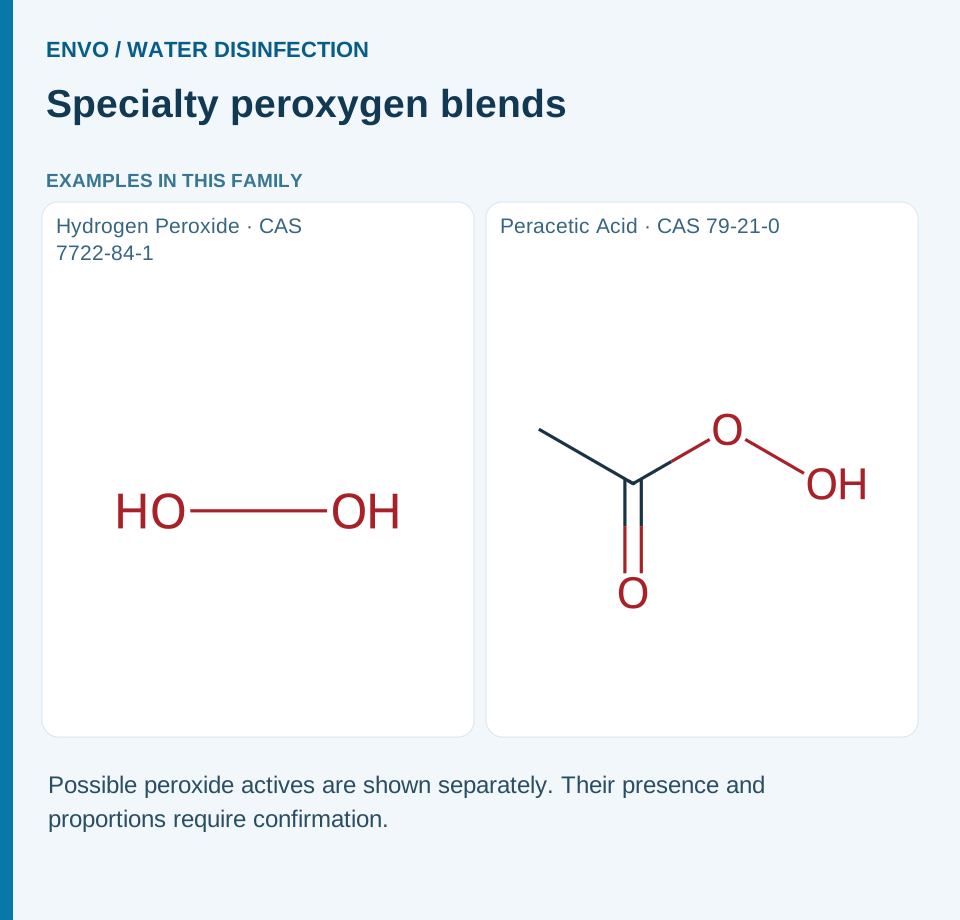
Specialized peroxygen
Peroxygen formulated products screened for defined uses such as agriculture, clean systems or equipment hygiene. Identical active components may come with different impurities, stabilizers and return-to-service requirements; each product requires validation.
 Example active
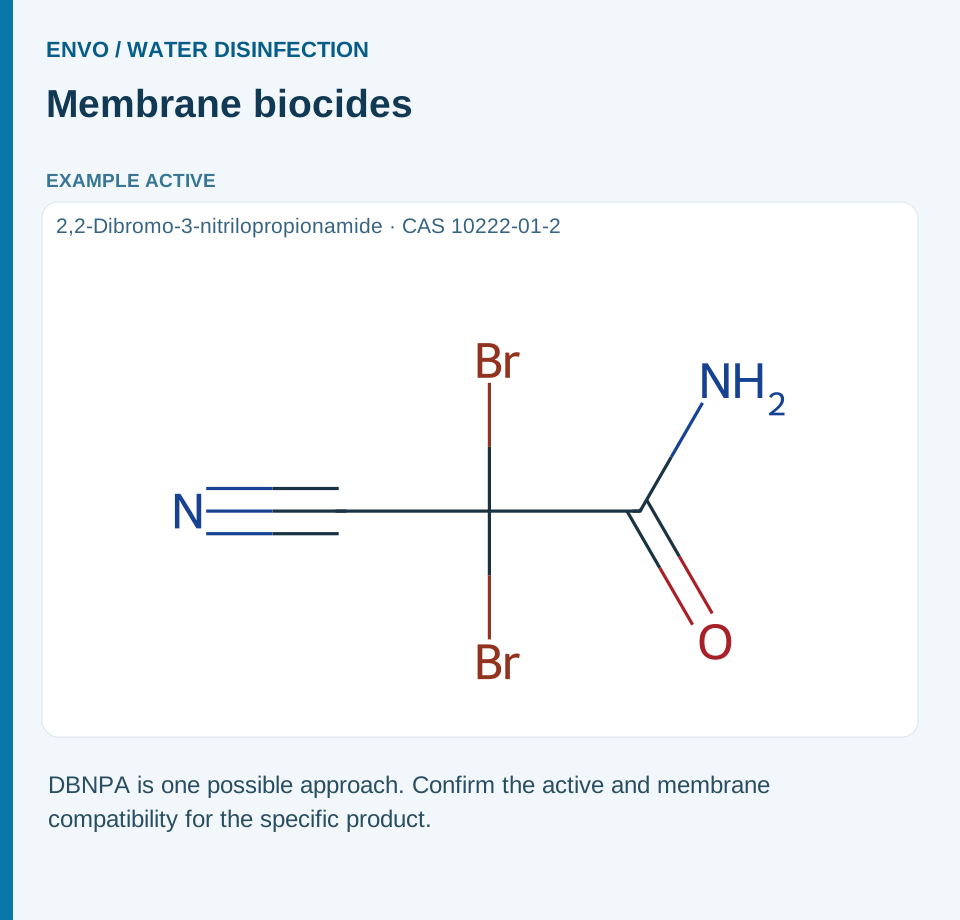
Membrane-specific products
A starting point for verifying formulated products against specific membrane models and treatment stages. DBNPA-based approaches and equipment-permitted peroxygen approaches may be compared, but a membrane-specific description cannot replace evidence from the membrane manufacturer.

Two products with similar nominal PAA may contain different other components. Testing and replacement comparisons must specify each analyte; total oxidizing capacity does not describe the complete formulation.
Read and verify →
Food-contact water and equipment hygiene may both involve peracetic acid, but contact targets and return-to-service conditions differ. Purchasing must define the specific task before choosing the formulated product.
Read and verify →
One successful laboratory trial does not cover every field flow and water-quality condition. Scale-up should track contact, mixing, changing chemical demand and test methods rather than copy a single trial conclusion.
Read and verify →ENVO · Purchasing and application support
Start with a product name, current model, water-quality report or destination documentation requirements.