First read the complete product description rather than its abbreviation
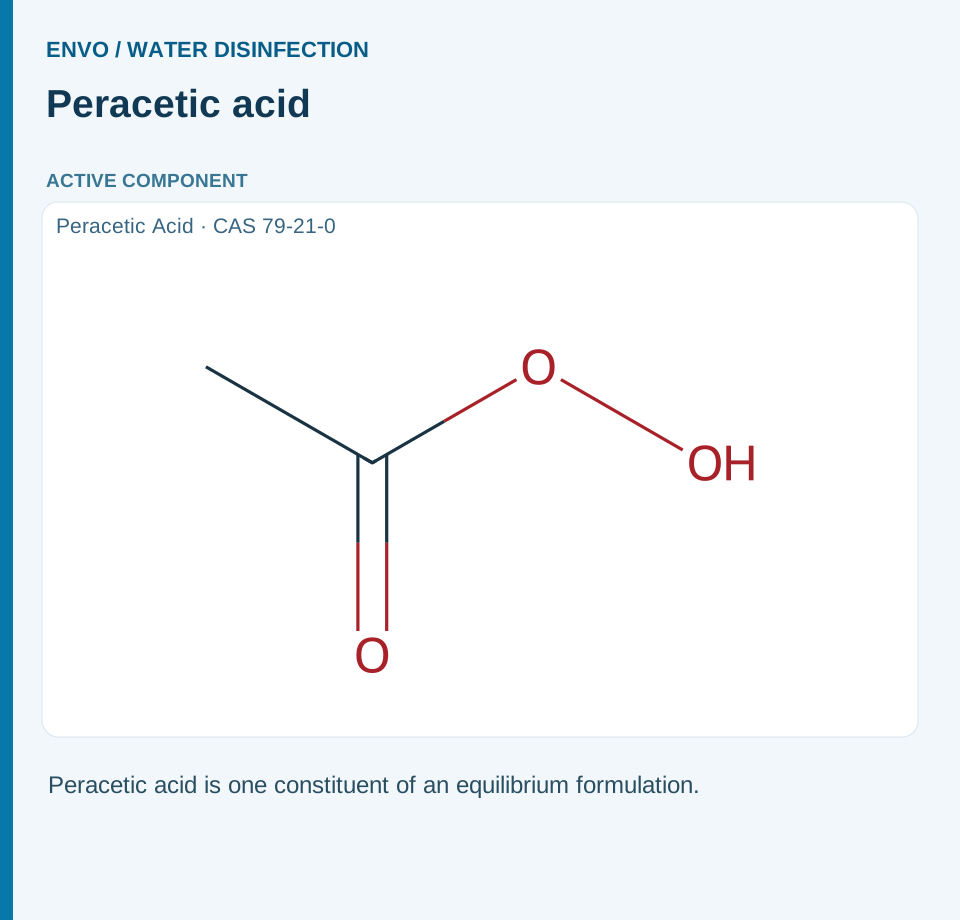
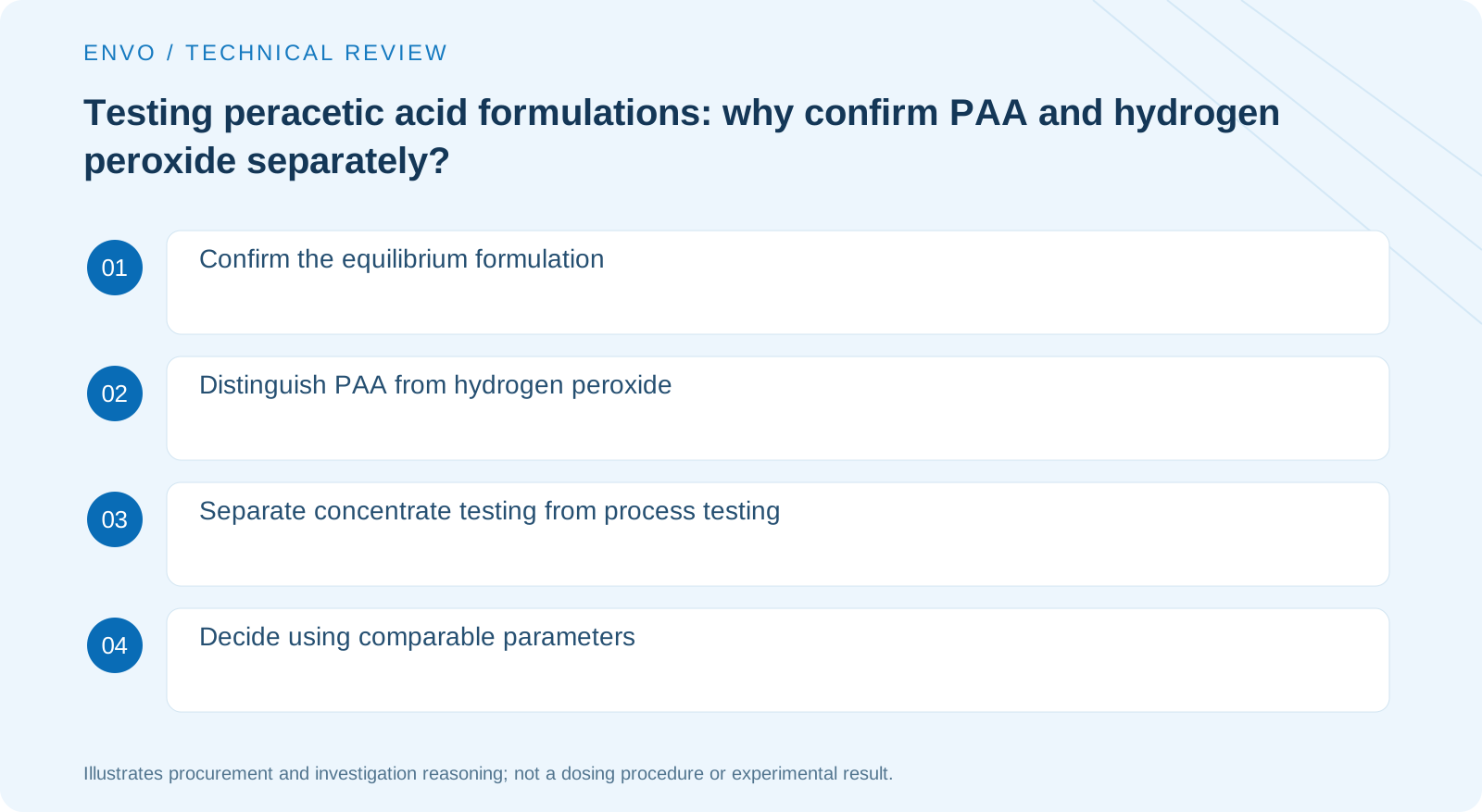
Solvay's wastewater peracetic acid literature describes an equilibrium mixture of peracetic acid, hydrogen peroxide, acetic acid and water. This public example shows that PAA is the starting point for purchasing identification, not the full composition. Obtain documentation for the intended product, confirm which constituents are guaranteed, and assess whether stabilizers, impurities and intended use affect suitability. Buyers need not derive the formulation themselves, but must know which component each quoted figure represents.
Ask the laboratory to clarify the method's ability to distinguish analytes
Provide the actual product type and expected concentration range, and ask the laboratory whether PAA and hydrogen peroxide are measured separately, whether they interfere and what reporting units are used. Total-oxidant readings from different methods cannot directly represent PAA concentration. Record sampling time, sample storage and the interval before analysis to avoid mistaking sample changes for production-batch differences. For similarly named methods, also confirm equivalent pretreatment, calculation basis and usable range.
Separate stock-solution inspection from working-solution monitoring
Concentrate testing supports delivery acceptance, while working-solution or process-water measurements assess site treatment conditions. Their matrices, concentrations and objectives may differ, so one assessment table cannot automatically serve both. If process readings change after switching suppliers, revisit analytical methods, contact conditions and actual water quality before assuming the new product is stronger or weaker. Number retained product samples and use-water samples separately so the laboratory need not rely on verbal descriptions.
What a comparable report should contain
Retain the formulated-product model, batch, sampling location, individual component results, units, methods and testing time in reports. Explicitly identify untested items rather than assuming zero. Organize two suppliers' information side by side using these fields, listing unmatched items separately. This helps distinguish material differences from apparent contradictions caused by different reporting bases, avoiding repeat tests that still produce incomparable results.
Make results support a clear purchasing decision
The comparison table should include product version, guaranteed parameters and applicable uses. Record undisclosed or incomparable items as technical clarification requests before deciding whether a bounded trial is needed. Without sufficient information, the same PAA percentage does not establish equivalent substitution, and third-party brand data cannot guarantee ENVO batches. The final order should cite the confirmed model and testing basis, with subsequent batches assessed to the same standard.
Explore further
Does identical total oxidizing capacity establish identical formulations?
No. Component distributions and formulation conditions may differ, requiring corresponding parameters and methods.
Can a concentrate COA replace on-site residual testing?
No. Their targets, concentration ranges and uses differ.
References
This article draws on publicly available technical information. Third-party sources do not establish ENVO product approvals, field testing or project experience. Confirm each use against actual supply documents and site conditions.