Record the timeline from dispatch to sampling
Record production or packaging date, arrival date, storage location and opening time separately. Shelf-life assessment must follow the specific formulated-product documents, not an online shelf life for a generic ingredient. For delayed deliveries or transport across seasons, first check whether actual conditions departed from those agreed.
Check key parameters beyond appearance
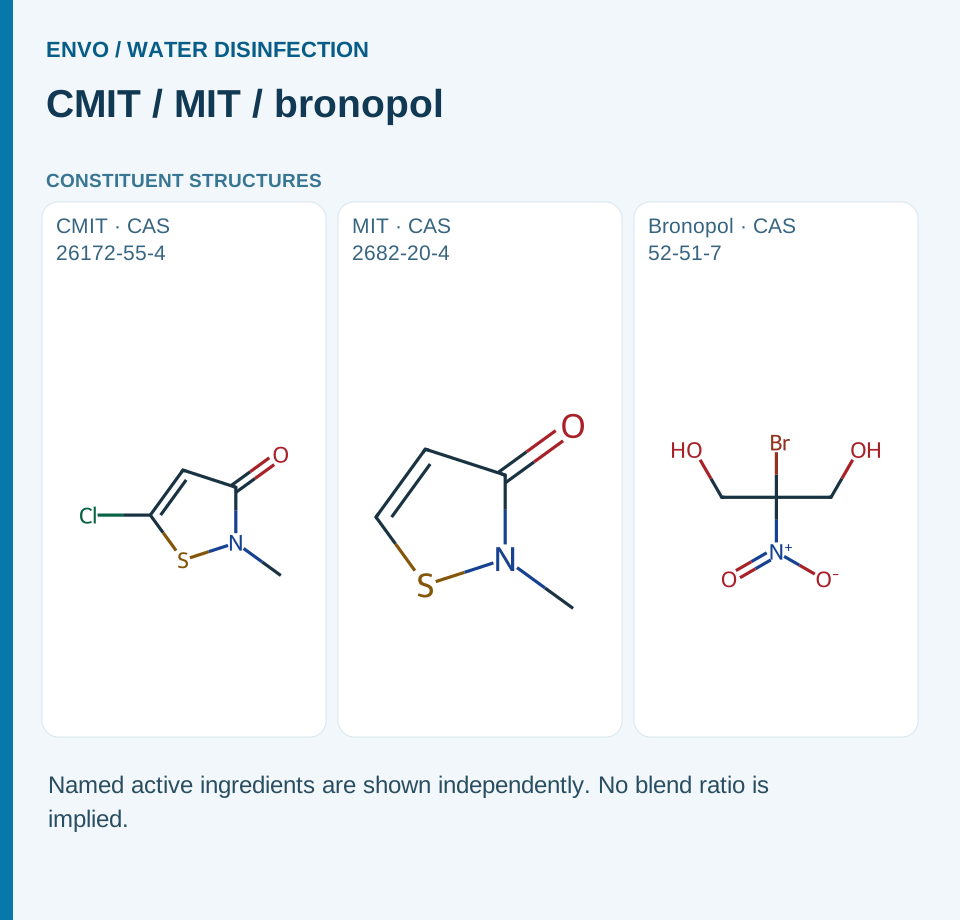
Layering, turbidity or deposits indicate a need for investigation, but transparency does not prove ingredient stability. Verify CMIT/MIT and Bronopol against formulated-product acceptance requirements, comparing factory retains and arrival samples where necessary. Use formulation-suitable methods rather than infer loss of one ingredient from color.
Treat packaging as part of sample identity
Record container type, seal condition, label completeness and batch number to prevent different batches being combined into one composite sample and losing traceability. If damage or abnormalities appear, follow supplier and quality procedures; do not add other substances independently to restore appearance.
Use the same evidence chain for repeat purchases
Establish consistent receipt-inspection and retained-sample records so later batches can be compared. Descriptions of stabilized systems in a manufacturer's public catalog identify points to examine; they do not replace documentation for each delivered batch. A specific batch number and abnormality record make causes easier to locate than a general statement that 'this batch works poorly.'
Use retained-sample relationships to explain batch disputes
Ideally, supplier factory-retained, customer receipt-retained and site-use samples share a product code with clear batches and times. Record packaging, sampling and storage conditions for each. A long-open use sample is not equivalent to a sealed retained sample. Resolve unclear sample identity before discussing quality changes.
If comparable factory and arrival samples agree but site-use samples differ, investigate subsequent storage and receipt. If differences already exist on arrival, review transport, methods and batches together. If only appearance differs while key analyses remain stable, assess whether the actual use is affected. None of these branches should predetermine responsibility; records make later investigation verifiable.
Repeat orders can require precise identification, specified storage conditions and channels for reporting abnormalities without adding an unverified universal shelf life. Turning previous problems into concrete delivery requirements reduces recurrence of similar disputes.
Explore further
Does a clear liquid necessarily mean a stable product?
Not necessarily. Consider critical-component testing and formulated-product documentation together.
Can the raw material's shelf life be applied uniformly?
No. Follow the blend's corresponding formulated-product storage and shelf-life information.
References
This article draws on publicly available technical information. Third-party sources do not establish ENVO product approvals, field testing or project experience. Confirm each use against actual supply documents and site conditions.