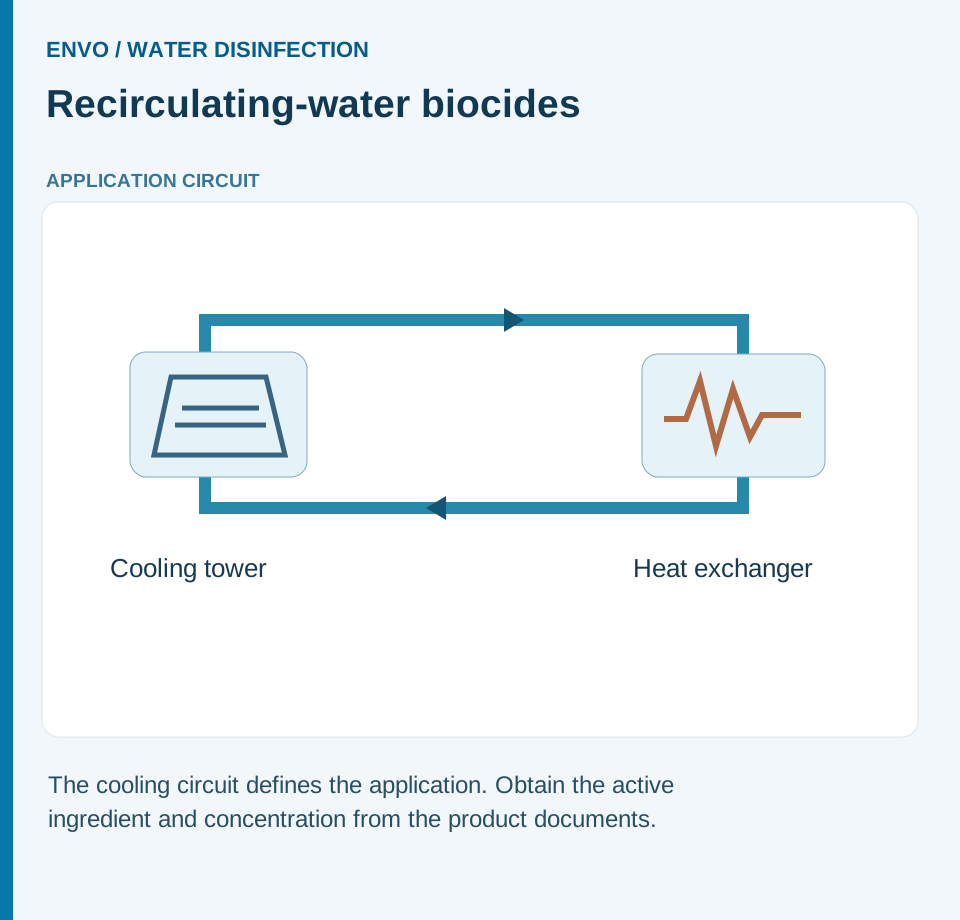

Mark tower-cell status on the main-header diagram
Record each tower's operating, standby, drained or maintenance state and mark shared basins, interconnections and valves. Equipment count alone cannot establish true standby isolation without circuit relationships. Match a status table to the flow diagram so rotating personnel can see which water sections reenter the system after a valve change.
A multi-tower rotation log can record each cell's inlet and outlet valves, fan, pump and shared basin status. A stopped fan does not mean the cell is isolated hydraulically; a shared basin may allow an idle cell to continue exchanging water with operating cells. Recording these connections makes it possible to determine whether sampling results represent an independent tower cell or the whole mixed system.
Do not let an average water sample conceal idle units
CDC cooling-tower guidance emphasizes avoiding stagnation and balancing multiple-tower operation. Overall samples support trends but cannot automatically replace local inspection. Assess standby-basin water age, deposits and maintenance under the water-management plan. Good main-tower performance does not establish equivalent conditions in cells excluded from recirculation for long periods.
Set a hold point before reconnecting to the main system
Before reconnecting an idle unit, confirm shutdown maintenance, remaining soil and proper circulation. Professional procedures govern cleaning and disinfection; this page provides no improvised shock dose. Link restart decisions to operating authority so increased cooling demand does not prompt shifts to activate unchecked standby units.
Check how dosing and monitoring locations change between modes
For different operating combinations, verify that dosing reaches the target circuit and sampling remains representative. Controller displays may not reveal a valve-isolated branch. Equipment and water-treatment teams should jointly review an operating matrix showing valid sensors, alarms and manual checks for each mode rather than accept the system only with all towers running.
Include seasonal rotation in service requirements
Inquiries should include tower cells and operating combinations, seasonal loads and maintenance records, asking how proposals support standby units. Review anomalies, cleaning and shutdowns under comparable conditions rather than only lower total chemical use. This anchors service in real operation instead of substituting more product categories for circuit management.
Explore further
Does a standby tower require no inspection while shut down?
It still belongs in management according to retained water, isolation and restart arrangements.
Can sampling at one location represent every cooling tower cell?
It depends on actual flow paths and sampling purpose; a shared main pipe alone does not establish it.
References
This article draws on publicly available technical information. Third-party sources do not establish ENVO product approvals, field testing or project experience. Confirm each use against actual supply documents and site conditions.