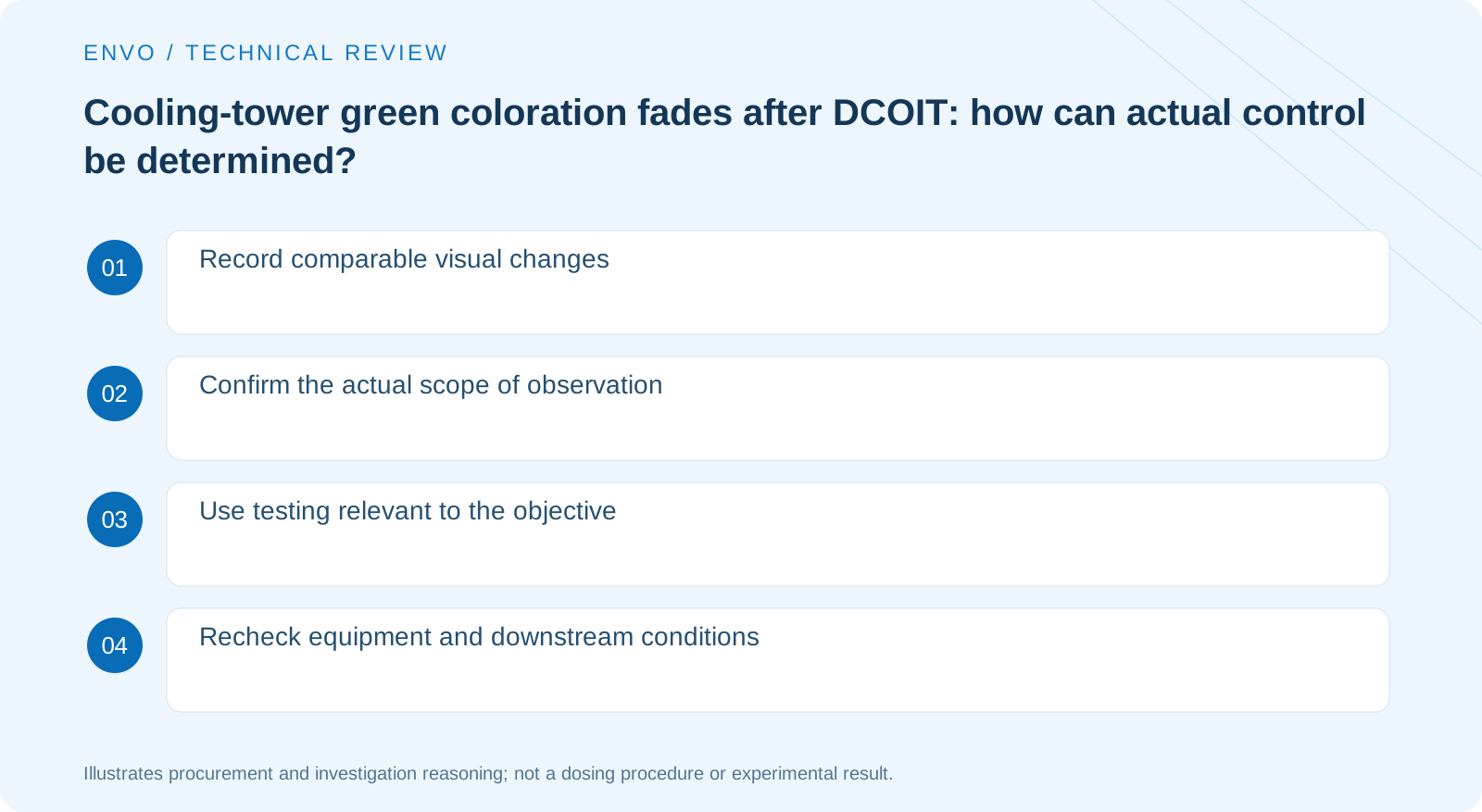
Define color change as an observation
Relevant LANXESS industrial-water product information emphasizes algae control, with color change potentially forming part of observations. Keep photographic location, lighting and timing comparable and identify photographs as visual records only. Color reduction cannot be directly converted into a kill rate, and AI-generated before-and-after images cannot replace actual trials. Visual effects attract attention but need other evidence to explain their meaning.
Confirm which part of the system was observed
Basins, fill, return water and other areas may respond differently; improvement in one visible area does not represent every attached surface. Select inspection points relevant to the problem and record conditions and changes before and after treatment. State observation limits where safe inspection is impossible rather than assuming cleanliness. Keep water-phase tests and surface observations separate because they answer different questions.
Choose evidence appropriate to the target algae
Competent personnel should select methods for the actual target and state their scope and limits. General bacterial counts, one color reading or turbidity alone cannot fully characterize an algae problem. If the real objective is restoring heat transfer or reducing blockage, operating evidence is also required. Improved microbial indicators do not guarantee immediate equipment recovery because existing deposits may still require treatment.
Track residues and later recurrence
After visible improvement, continue site-procedure checks of filtration, cleanup and maintenance, recording later performance under comparable loads. If detached material has no known destination or contamination sources persist, short-term improvement cannot be advertised as a permanent solution. Ongoing management for the product and system should follow valid documentation and professional review. This webpage provides no universal interval or unvalidated duration guarantee.
Use multiple conclusions for acceptance
Reports should separately present visual observations, relevant tests, deposit treatment and equipment-operation results, identifying improvements and unresolved items. Inquiries should describe the most troublesome locations and operating issues so suppliers can propose targeted assessment. Such records are more persuasive than a prettier cooling-tower photograph and prevent unmet process objectives from being concealed behind lighter coloration.
Cleaning and photographic exposure may also affect visible greenness. Keep photography consistent and record mechanical cleaning or water replacement. Where several measures occur together, describe the display as observations after combined treatment rather than attribute every change to DCOIT. Accurate explanation builds more trust than exaggerated before-and-after images.
Explore further
Does disappearance of green color justify claiming that all algae have been removed?
No. Consider relevant testing, observation coverage and subsequent results together.
Can before-and-after color photographs replace site operating data?
No. It is only part of the evidence.
References
This article draws on publicly available technical information. Third-party sources do not establish ENVO product approvals, field testing or project experience. Confirm each use against actual supply documents and site conditions.